


 Close
 21st June 2023
Hyperkinetic movements
Tremors
A tremor is an involuntary, rhythmic muscular contraction causing shaking.
Essential Tremors
Essential tremors (ETs) are highly familial. Most patients present with hand and arm tremors and head tremors. ETs are at 4-10Hz. It occurs in certain postures or during movement. It is exacerbated by heightened emotion, stress, fever, and hypoglycaemia. Most essential tremors improve with alcohol or β-blockers.
The treatments for ETs are:
- β-blockers
- Antidepressants
- Anti-epileptic drugs (AEDs)
- Benzodiazepines
- Botulinum toxin
Resting Tremors
Resting tremors (RT) occur when the muscles are relaxed. It is classically a 3-5Hz pill-rolling of the hands or fingers. RT is seen in Parkinson’s Disease (PD) and parkinsonism. The features and treatment of PD and Parkinsonism are discussed in greater detail later.
Intention Tremors
Intention tremors occur when doing a purposeful movement or task. They get worse as they get closer to their target. It usually affects the upper limbs. The tremors are slow and high amplitude. It is caused by pathology affecting the cerebellum, such as stroke, multiple sclerosis, or neurodevelopmental disorders. Treatment depends on the cause.
Myoclonus
Myoclonus is the involuntary muscular jerking caused by a cluster of muscle or muscle group contractions lasting milliseconds. Myoclonus is typically positive, causing jerking, but it can also be negative, causing muscle tone loss.
The causes of myoclonus are:
- Cortical – intracranial causes such as epilepsy, multiple sclerosis, Parkinson’s disease, stroke, traumatic brain injury, or CNS tumours – EMG – <50ms burst potentials. EEG-EMG polygraphy – EEG discharges are low amplitude and precede myoclonic EMG activity. This confirms cortical myoclonus.
- Subcortical – brainstem myoclonus and propriospinal myoclonus. EMG – bursts of 25-300ms
- Segmental – spinal tumour or spinal cord injury. EMG – discharges of 50-1,000ms.
- Peripheral – A peripheral neuropathy with a motor component. EMG – discharges of 50-200ms in the affected muscles.
- Secondary – e.g. drug toxicity, metabolic disturbances, and liver or renal failure.
Myoclonus is diagnosed with the following tests:
- Examination – its distribution, whether or not it happens at rest, when the arms were outstretched, or during actions.
- Blood tests to rule out metabolic disorders – glucose, electrolytes, thyroid function tests, and drug and toxin testing
- MRI head or spine
- EEG
- EMG
- Somatosensory evoked potentials
- EEG-EMG polygraphy on pairs of agonist-antagonist muscles
- CSF analysis
Treatment of myoclonus depends on the cause:
- If secondary, treating the underlying cause by treating the drug toxicity or correcting the metabolic disturbance
- AEDs, e.g. levetiracetam or valproate– used for cortical myoclonus
- Clonazepam – first line for symptomatic relief
- Botulinum toxin A
Chorea
Chorea is the jerky contractions of muscles causing dance-like movements. The muscle groups commonly involved are the head, arms, trunk, and legs. It is the result of overactivity of dopamine and the basal ganglia, which at times is due to a lack of inhibition by the thalamocortical neurons.
The causes of chorea are:
- Huntington’s disease
- Hyperthyroidism
- Hypoparathyroidism
- Hyperglycaemia
- Autoimmune disorders
- Sydenham chorea
- Stroke
- Drug-induced, e.g. levodopa, phenytoin, and tricyclic antidepressants
- Tardive dyskinesia – occurs secondary to antipsychotic use
The treatments for chorea include:
- Tetrabenazine – depletes striatal dopamine
- Antipsychotics, e.g. haloperidol, olanzapine, or quetiapine
Dystonia
Dystonia is a neurological movement disorder caused by the sudden, uncontrollable contraction of agonists and antagonists of movement, which leads to an abnormal, fixed posture. The causes of dystonia are idiopathic, genetic, or secondary to hypoxic brain injury, stroke, CNS infections, traumatic brain injury, and heavy metal or carbon monoxide poisoning.
Dystonia can affect any muscle in the body but often affects the limbs first and then progresses to other muscle groups. The late stages often affect the neck and facial muscles. Overall, it can involve the face, eyes, neck, vocal cords, torso, limbs and feet. It can eventually cause fixed postures and contractures. It can be associated with pain and fatigue.
There are several types of dystonia:
- Generalised dystonia
- Focal dystonia – affects specific muscles:
- Blepharospasm
- Cervical dystonia – also known as torticollis
- Tardive dystonia – causes slower, twisting movements compared to the fast, chorea-like movements of tardive dyskinesia.
- Multifocal dystonia – affects two or more muscle groups in the body
- Segmental dystonia – affects two or more related muscle groups in the body
- Hemidystonia – affects the same side of the body
The treatments for dystonia are:
- Trihexyphenidyl and benztropine (anticholinergics)
- Benzodiazepines
- Baclofen
- Tetrabenazine (dopamine antagonist)
- Botulinum toxin A – for focal dystonia
- PT and orthotics
How to maximise points in the 2027 Internal Medicine Training (IMT) Application
For 2027, there are 30 points available across six IMT self-assessment domains.

The Internal Medicine Training (IMT) Portfolio: 2027 guide
The days of needing to prepare a physical copy of the ‘dreaded’ internal med

MSRA 2027 Complete Guide
The Multi-Specialty Recruitment Assessment (MSRA) is a computer-based exam used

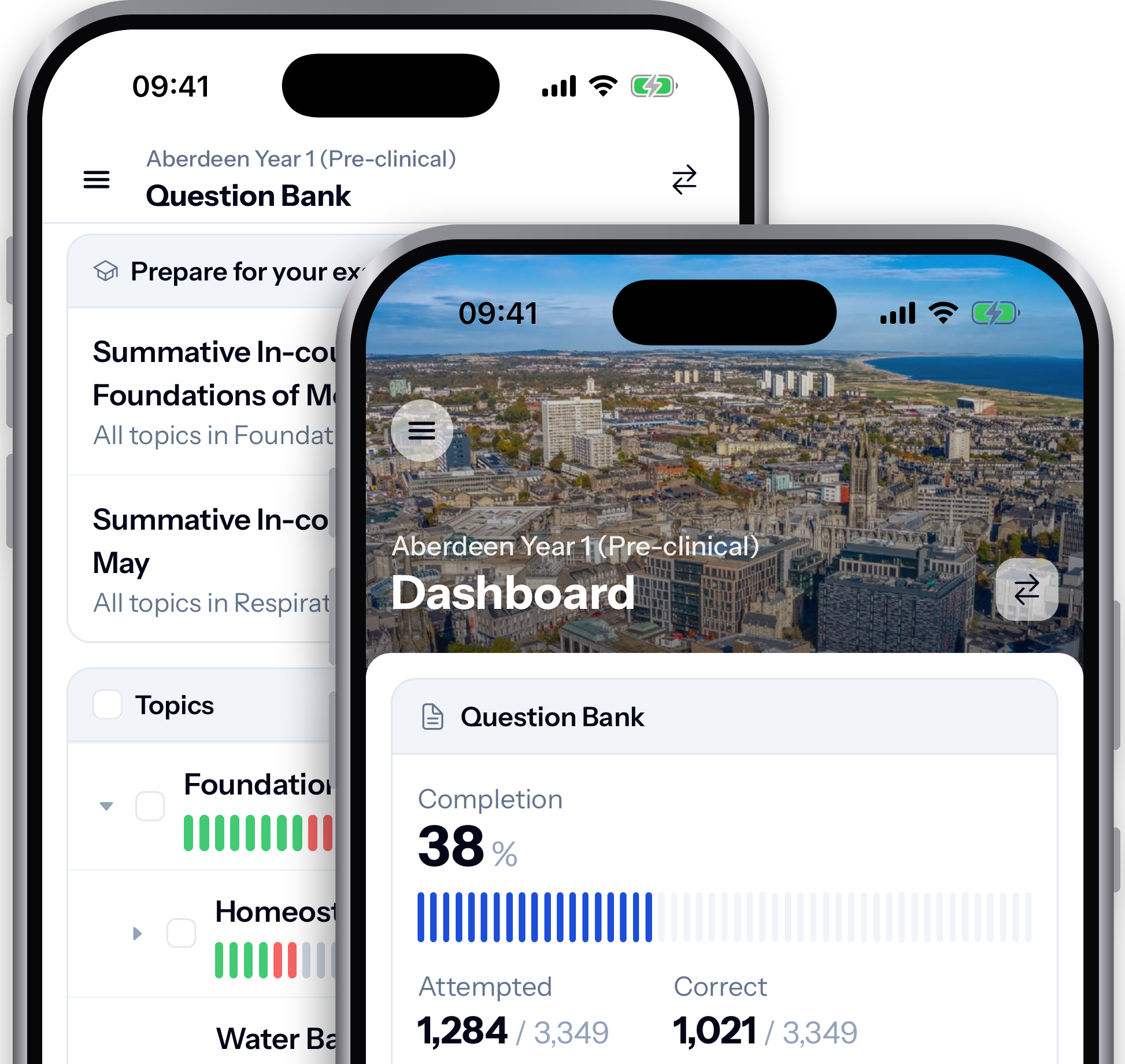
Take your subscriptions with you
Our mobile app allows you to access your interview and exam question banks wherever you are.

