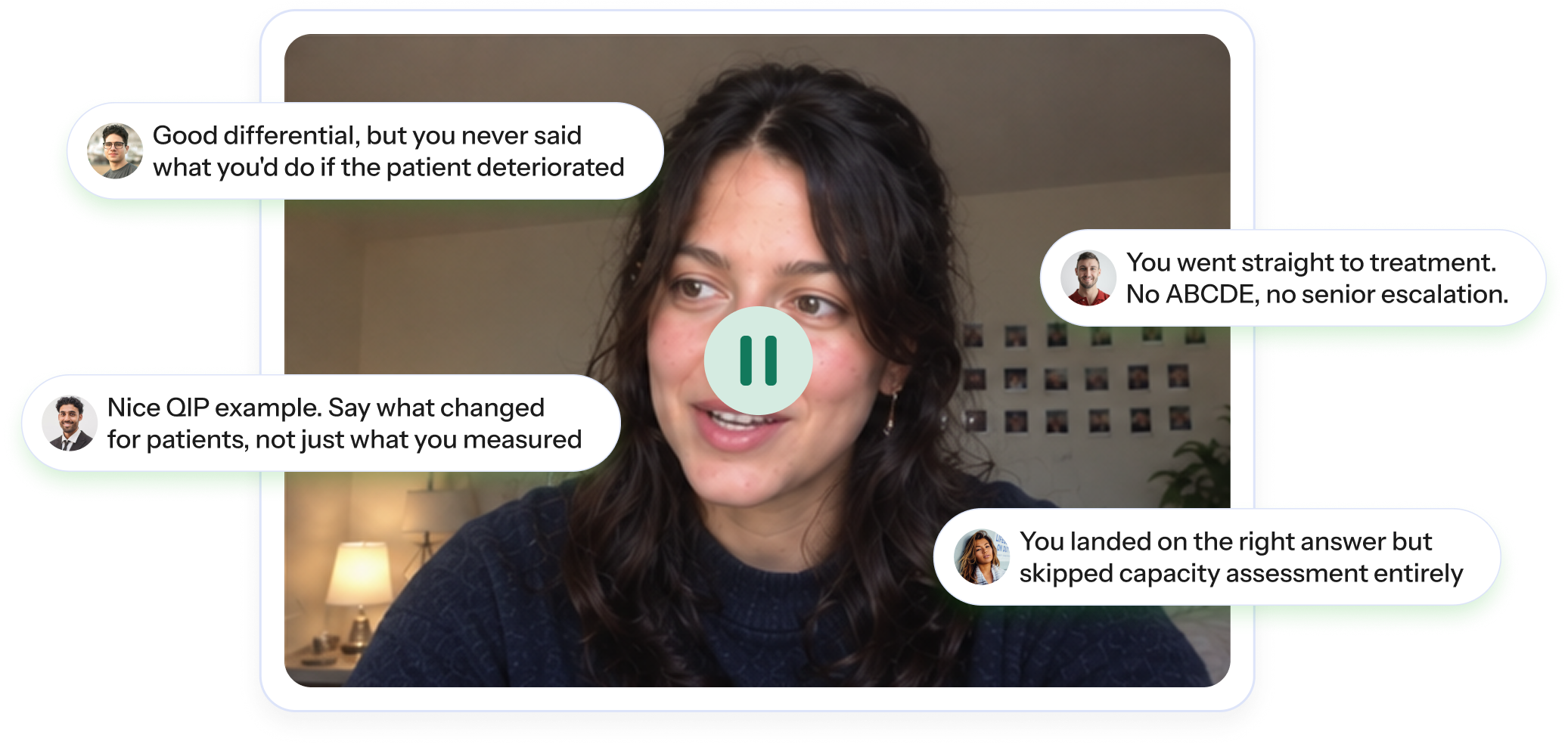
The 2027 Emergency Medicine ACCS CT1 Interview Revision Platform: Question Bank, Live Practice and Mocks with Other Candidates
The Medibuddy Emergency Medicine ACCS CT1 Question Bank includes over 55 scenarios that closely mirror the real interview, each with a model answer written/edited by high-scoring candidates who sat the Emergency Medicine ACCS CT1 interview in 2026.
However, knowing a strong answer isn't the same as delivering it well under pressure, which is why we provide:
Study Groups
Unlimited Live Mocks with real people
Peer Feedback on your mocks from a wide range of candidates
10 years’ experience preparing doctors for interviews
Users of the Medibuddy Emergency Medicine ACCS CT1 Revision Platform have secured some of the most competitive training jobs in recent rounds. Ask around, there's a good chance the trainees in the year above you used us too.
Always up to date
Did you know the interviews change every year? That's why we review and update every Question Bank on the platform twice a year, so you know you're always practising with scenarios based on the latest interview structure.
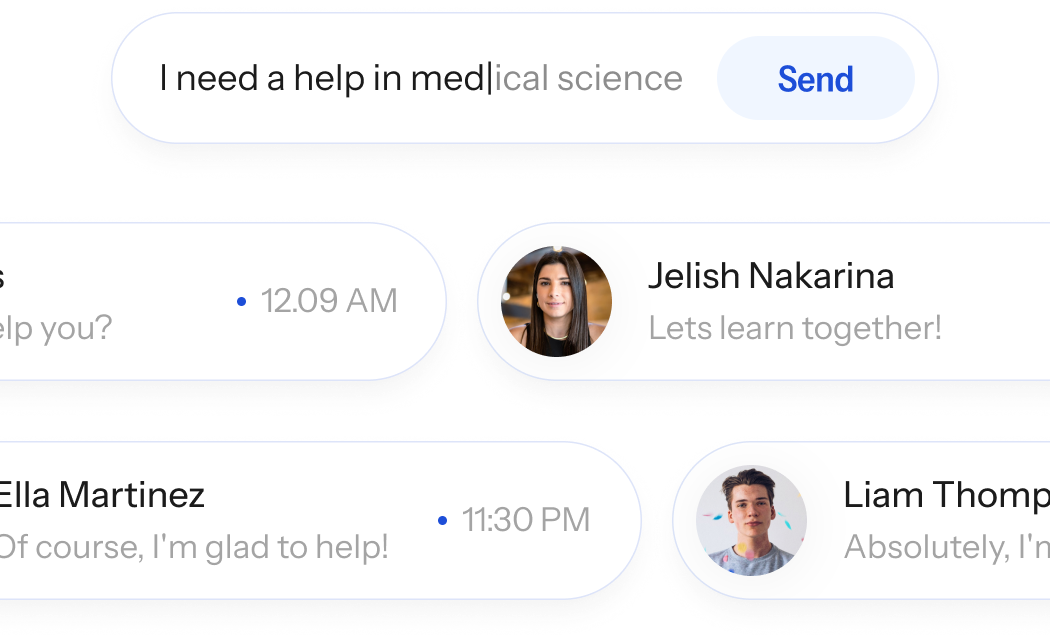
Network and practise real interview scenarios with other candidates
Question Bank
Find out how to structure each response
Over 55 scenarios across the interview, which tell you exactly how to respond to each question.
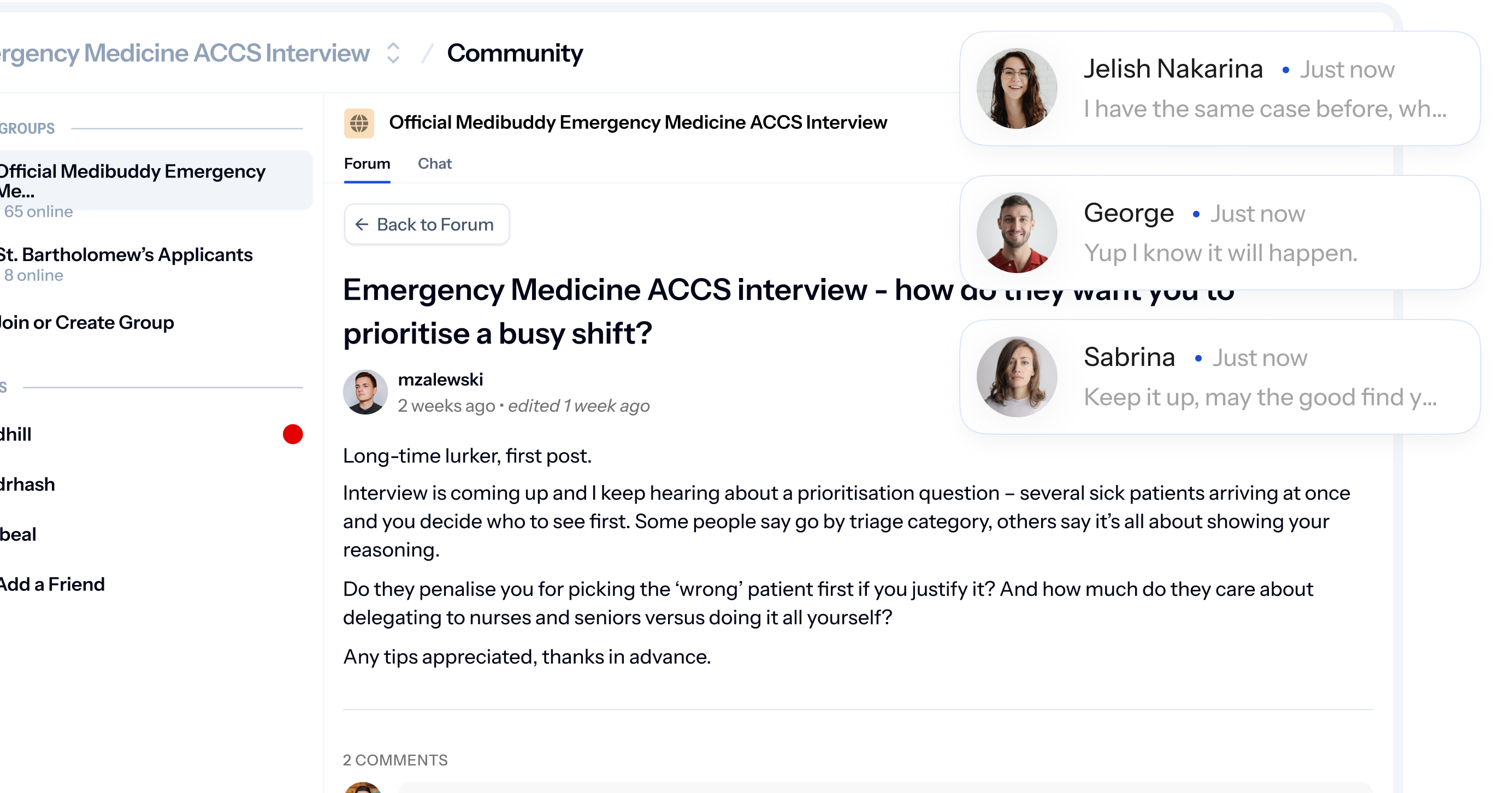
Study Groups
Connect with candidates across the country
Most people only ever practise with one or two friends. Study Groups connect you with candidates right across the country sitting the same interview.
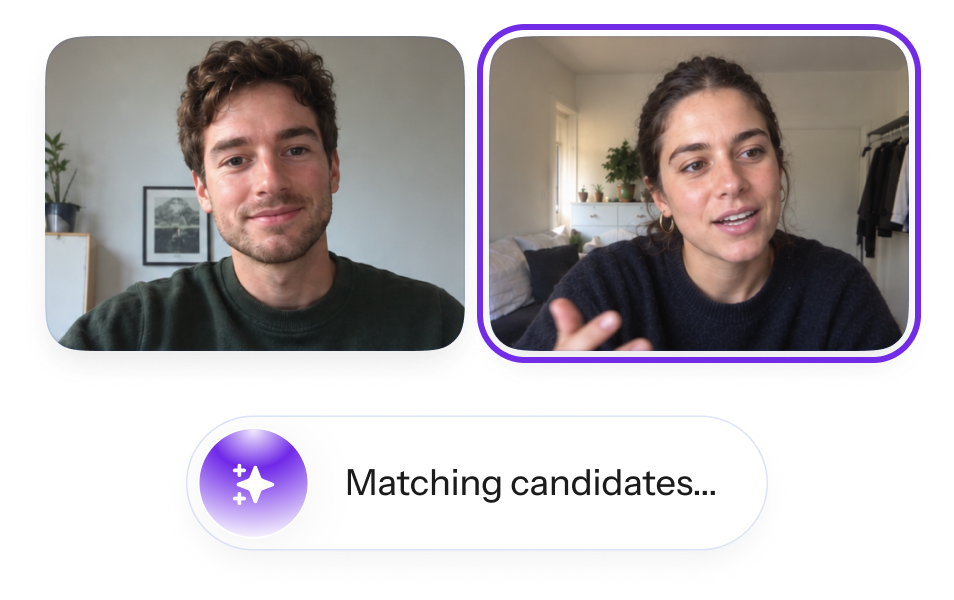
Live MocksBeta
Practise interview technique with different candidates
Arrange or get matched on demand with other candidates and run real scenarios out loud under interview conditions. Those who practise with the widest range of people tend to score the highest.
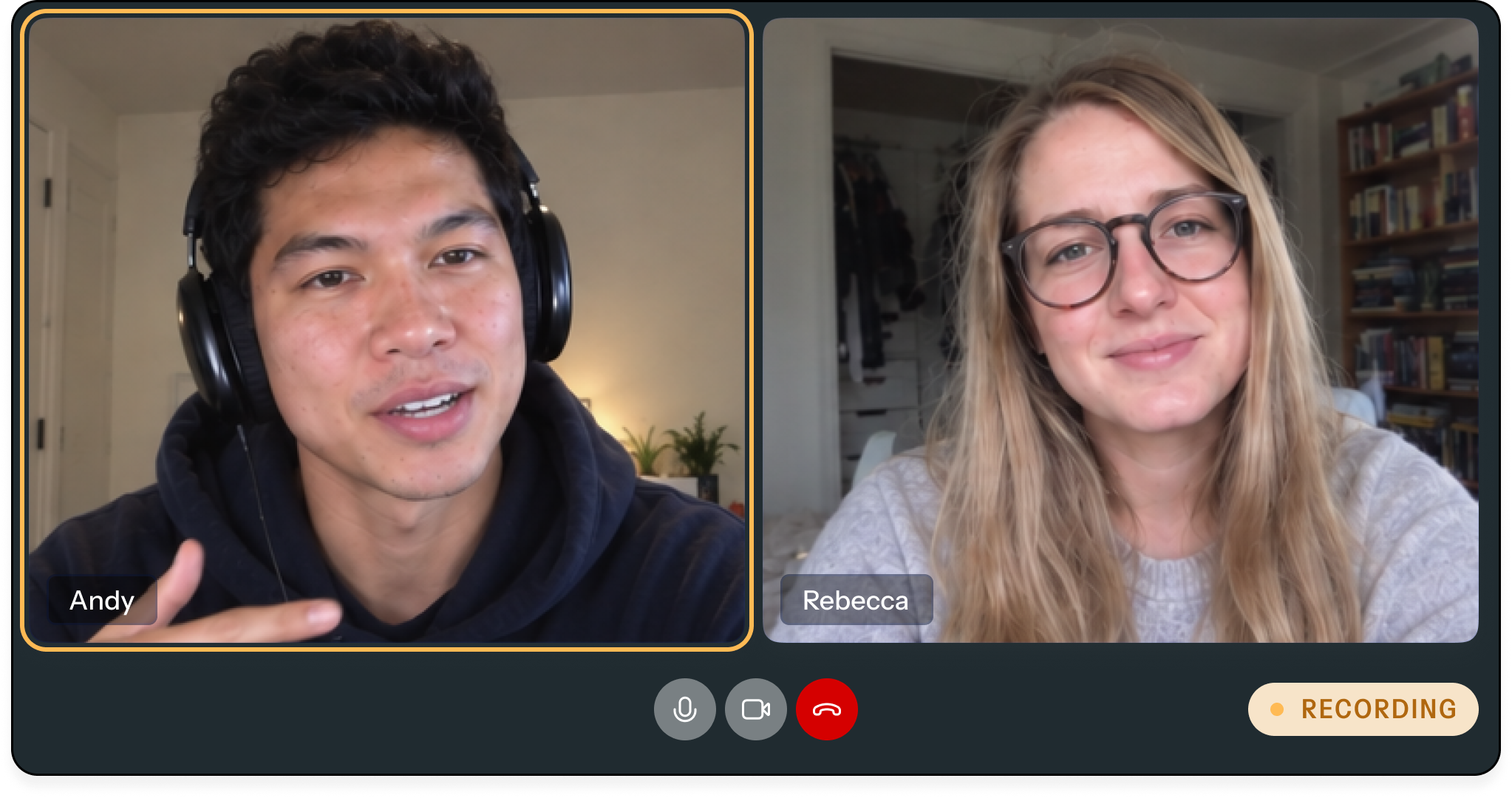
Peer FeedbackBeta
Reviewed by candidates across the platform
Submit your recorded mocks to candidates across the platform and get honest, varied feedback. Reviewing other people's mocks teaches you just as much.
The question bank, and other candidates to practise with, all in one platform.
Emergency Medicine ACCS CT1 Revision Platform • £89.99
Gain access to over 55 scenarios across the interview, and collaborate with other candidates through Study Groups, Live Mocks and Peer Feedback.
A few of the candidates who prepared with us for the Emergency Medicine ACCS CT1 interview.
Tom RichardsInterviewed 2026
"I was successful in my interview and found the question bank very helpful! Nothing was asked that didn't come up from the portfolio part. The ethical/clinical scenario was of course unique but the answers and structure was all covered too!"
Ranked very highly
Verified candidateInterviewed 2026
"I got my top-ranked post and I scored highly in all stations. Medibuddy was my main revision tool."
Top-ranked post
Part 1 • See the questions
The Medibuddy 2027 Emergency Medicine ACCS CT1 Question Bank
The interview is tightly timed, so you have a limited window to deliver the high-scoring answers you need to do well. That means every point has to land, and knowing how to structure each answer is essential. That's why each of our 55-plus scenarios comes with a model answer, written by candidates who scored highly in the Emergency Medicine ACCS CT1 interview, so you know exactly how to approach every question the interviewers throw your way.
What's inside
What's included in the Emergency Medicine ACCS CT1 Question Bank
There's nothing worse than getting to the interview and being handed a scenario you've never seen before. The panel has a huge range of topics to draw on, so the safest approach is to revise across all of them. We provide scenarios for every area, including the common ones and the more unusual cases that have come up before, so you don't get caught out.
Commitment to Specialty
Your chance to show your motivation for emergency medicine and why you're suited to ACCS. We provide example questions and answers so you can present your experience and achievements clearly.
Teamwork & Stress
Scenarios that test how you work within a team and cope under pressure, with model answers showing how to give safe, structured, honest responses.
Teaching, Audit, QIP & Research
Questions on your teaching, audit, quality improvement and research experience, with worked answers so you can present each clearly and score well.
Specialty-Specific Questions
Emergency-medicine questions that probe your understanding of the specialty and the realities of the job, each with a model answer.
Clinical Scenarios
Over 20 clinical scenarios testing your assessment, judgement and management of the acutely unwell patient, each with a model answer so you maximise your points.
Ethical Scenarios
Ethical scenarios testing how you handle challenging professional situations, from relatives and data protection to teaching issues, each with a model answer so you can structure your approach clearly.
Updated for 2027
Individual questions updated across the Question Bank to reflect the latest interview.
Try it
Try an example Emergency Medicine ACCS CT1 question
You are the FY2 in Resus. The red phone rings: a 24-year-old woman is coming in by ambulance. She has a nut allergy and became unwell after eating half an almond croissant at a local bakery. She forgot her EpiPen and takes no other medications. In the ambulance she vomited and complained of abdominal pain, and the paramedics gave one dose of adrenaline en route.
Her observations on arrival: heart rate 124, blood pressure 97/57, respiratory rate 27 on 5L via nasal cannulae.
How would you assess and manage her?
Question
How would you assess and manage her, and what signs might you find?
Example answer
I'd use a systematic A-to-E approach. Airway: check she can talk, listen for stridor and look for angioedema. Breathing: high-flow oxygen, a saturations probe, and auscultate for wheeze. Circulation: two wide-bore cannulas with bloods and a venous gas, blood pressure monitoring cycling every couple of minutes, and an ECG. If she's hypotensive I'd lie her flat with her legs raised and give a 500ml Hartmann's bolus. Disability: conscious level, temperature and glucose. Exposure: look for an urticarial rash, note if she's scratching or sweating, and examine the abdomen and legs.
Question
What dose of adrenaline is needed, when can you repeat it, and what else would you give?
Example answer
Intramuscular adrenaline, 0.5mg of 1 in 1000, which is 0.5ml, repeated every five minutes if needed and guided by her blood pressure, heart rate and respiratory function. Once she's stabilised, a non-sedating antihistamine can help. Steroids are no longer routinely recommended but may be beneficial where the reaction is worsened by underlying asthma. If she stays hypotensive despite fluids and repeated adrenaline, she needs a critical care review for possible inotropes, and severe anaphylaxis can require ventilatory support.
Question
She stabilises. What is your follow-up management?
Example answer
She needs monitoring for at least 6 to 12 hours given the risk of a biphasic reaction, so she'll likely be admitted under the medical team. I'd add a mast cell tryptase to the initial bloods, as it's a useful biomarker to confirm anaphylaxis, and continue antihistamines if she's still itching.
Question
What is the difference between an allergic reaction and anaphylaxis?
Example answer
Anaphylaxis is a life-threatening event that involves the respiratory or cardiovascular system. An allergic reaction can cause itching, a rash or angioedema, but without any respiratory or haemodynamic compromise.
Question
What follow-up advice would you give her?
Example answer
I'd discharge her with two adrenaline auto-injectors and make sure she knows how to use them, encourage her to carry them at all times since she forgot hers today, and stress that anaphylaxis is a life-threatening emergency. I'd suggest a medical alert bracelet identifying her allergy, and arrange referral to an allergy specialist for follow-up.
That's one scenario. There are over 55 more.
Emergency Medicine ACCS CT1 Revision Platform • £89.99
Includes every scenario in the Question Bank, and access to Study Groups, Live Mocks with other candidates and Peer Feedback.
The Emergency Medicine ACCS CT1 interview changes from year to year, and the biggest fear for any candidate is getting to interview day and realising you've revised with a question bank that's totally outdated.
That's why we review and update every Question Bank twice a year, so you know you're revising with scenarios that are likely to come up. We do this in April after the previous year's interviews, and again in October when the new recruitment guidance is published.
Updated for 2027 interviews
12 scenarios updated: 10 clinical, 1 emergency medicine specialty-specific scenario and 1 commitment-to-specialty scenario.
Updated for 2027 Interviews
Part 2 • Practise them live
The only interview resource where you can practise live with other candidates from across the country
Our Emergency Medicine ACCS CT1 Question Bank tells you exactly how to answer real interview scenarios. But how you practise with them will determine how many marks you score. Simply reading answers off a screen won't prepare you for the intense scrutiny you'll face in the interview. And only practising with the same few colleagues or friends limits the amount of feedback you'll get. Medibuddy gives you unique access to Emergency Medicine ACCS CT1 candidates across the country, so you can learn from a variety of perspectives and hear a far wider range of feedback than your own circle could ever give you.
Study Groups
When you prepare in isolation, you're relying on your own interpretation of the interview process, which is one of the quickest ways to get found out on the day. Study Groups connect you with other doctors across the country who are also applying to Emergency Medicine ACCS CT1, so you can engage and network with people preparing for the same interview as you. Everyone brings different experience from different hospitals and deaneries, meaning you won't ever miss out on the key bits of information that could swing the interview in your favour.
Live MocksBeta
Candidates who don't take part in mocks often struggle to adapt to the pressure of the interview. Your knowledge might be correct, but without convincing delivery the interviewers will score you poorly. The best way to improve your delivery is to take part in as many live mocks as possible, which is why we haven't put a cap on how many you can do. We also know how difficult it can be to organise mocks with other people, so all you have to do is join the waiting room and we'll match you with a different Emergency Medicine ACCS CT1 candidate each time. Take turns as both the interviewer and candidate on real Question Bank scenarios, so you can see exactly how other candidates perform in real time, while refining your own interview technique.
Peer FeedbackBeta
Preparing alone means you won't know how you're coming across during the interview. And preparing with the same few candidates means you'll miss opportunities to improve, which is why it's so important to get as many opinions as possible on your performance. With Medibuddy, you can record a mock and submit it for feedback from other candidates on the platform, so you receive a wider range of feedback and refine your answers with each person you practise with. Reviewing other people's mocks is just as valuable, as it shows you how strong candidates handle the same scenarios, which is one of the fastest ways to improve.
The interview
What to expect from the Emergency Medicine ACCS CT1 interview
Emergency Medicine ACCS CT1 is extremely competitive, with a competition ratio of over 14 to 1 in 2025. That makes how well you prepare for the interview more important than ever.
The interview is two components across around 20 minutes, assessing your commitment to the specialty and your communication skills.
Component 1
Commitment to Specialty
Questions on your motivation for emergency medicine, your experience to date, and how you've demonstrated the qualities the specialty is looking for. Our example questions and model answers help you present yourself clearly and convincingly.
Component 2
Communication Skills
A component assessing how you communicate under pressure, including with patients, families and colleagues. Our worked answers show you how to stay structured and human while picking up the marks candidates most often lose.
How the interview is scored
Both components are marked against the Emergency Medicine ACCS CT1 person specification. Our model answers are structured against those criteria, so you know exactly what a strong, well-organised answer looks like at each part of the interview.
Get ready
How to prepare for the Emergency Medicine ACCS CT1 interview
Start with the Question Bank
Work through 55+ scenarios across every area, each with a worked answer from a candidate who scored well in the 2026 interview. Start by reading how a strong answer is formed, then think about how you'd deliver it.
Talk the hard ones through in Study Groups
Study groups are your biggest opportunity to network and connect with other candidates sitting the same interview as you. Everyone on the platform is in the same boat as you, so don't be scared to get involved and ask questions. After all, someone in your study group might just help you work through a scenario you've been struggling with.
Rehearse out loud in Live Mocks
Live mocks are where you begin to put everything you've learned into practice, and we know from experience that those who practise with a wide range of candidates usually do the best. So organise mocks with people from one of your study groups, or get matched with a random Emergency Medicine ACCS CT1 candidate, then take turns as interviewer and candidate using real scenarios until answering out loud under pressure feels normal.
Get reviewed with Peer Feedback before the day
Once you've recorded a mock, you can have other community members review it. This allows you to see how you come across to other people, and gives you time to refine your delivery as you revise, rather than being caught out on the day. Reviewing other people's mocks is just as crucial, as you can see how other candidates navigate the same scenarios as you.
Questions
Frequently asked questions
What does the Emergency Medicine ACCS CT1 interview involve?
The interview is two components across around 20 minutes, assessing your commitment to the specialty and your communication skills.
How competitive is the Emergency Medicine ACCS CT1 interview?
Very. The competition ratio in 2025 was over 14 to 1, so how well you prepare for the interview makes all the difference.
Who writes the model answers?
High-scoring candidates who sat the Emergency Medicine ACCS CT1 interview and secured competitive training posts.
Can I practise with other candidates?
Yes. Every Revision Platform purchase gives you the opportunity to connect with other candidates through Study Groups, Live Mocks and Peer Feedback.
How do the Live Mocks work?
All you have to do is join the waiting room, and we match you with another Emergency Medicine ACCS CT1 candidate. You can then take turns as interviewer and candidate on real Question Bank scenarios, allowing you to gain experience answering out loud to a real person before you ever sit in front of the panel.
What are Study Groups and how do they help?
Study groups are community forums for doctors across the country preparing for the same Emergency Medicine ACCS CT1 interview. You can ask questions, share what you're struggling with, and compare how you'd approach a scenario.
Can I get feedback on my interview performance?
Yes. After you've recorded a mock, you can ask other members to review it, allowing you to see which part of your answer needs fine-tuning.
Why use Medibuddy over other Emergency Medicine ACCS CT1 question banks?
We've been preparing doctors for specialty interviews for 10 years, and the Question Bank is updated every year by editors who've recently scored well in this interview. That means the scenarios always reflect this year's interview. And it doesn't just stop at a question bank. Every purchase includes access to Study Groups, Live Mocks and Peer Feedback, so you can revise alongside candidates across the country.
How do you keep the Emergency Medicine ACCS CT1 Question Bank up to date?
We review and update it twice a year. In April, once that year's interviews are done, and again in October when the new recruitment guidance is published, we run a full update against the new format and scoring. But with official guidance still limited, we kept the overall structure unchanged and updated individual questions.
How long do I get access for?
Access runs for 12 months from the purchase date.
Start preparing for the Emergency Medicine ACCS CT1 interview
The Revision Platform gives you over 55 scenarios to practise and refine with other candidates through Study Groups, Live Mocks and Peer Feedback.
Written by candidates who recently scored well in this interview, and updated every year, it's built to reflect the interview you're about to sit.
Instant access on web and the Medibuddy app • Study Groups, Live Mocks and Peer Feedback with every purchase • 12 months' access
Emergency Medicine ACCS CT1 Revision Platform • £89.99



 Close
Close