Close
Close
Build the Clinical Depth to Perform Confidently in the IMT Interview (2026)
£89.99
Expires: 16 October, 2027

Knowledge course includes:
- 14 comprehensive video lectures
- Differentiate yourself as a top candidate
- Be prepared for all follow-up questions
£147.99
£179.98 total if both bought separately

Expires: 16 October, 2027
Buy our IMT Question Bank in addition to our IMT Clinical Knowledge Course to:
- Access over 80 unique scenarios
- Includes Clinical scenarios and Patient Handover
- Includes Application and Suitability scenarios
- Includes Ethical, Professional and Governance questions
IMT interviews don't just test recall. They assess how well you apply clinical reasoning and structure your answers under pressure.
Most candidates prepare using question banks, focusing on rehearsing common themes and model answers. This works well for structure and familiarity. But when follow-up questions are asked, performance relies on something more: genuine clinical understanding.
The Knowledge Course is designed to build that foundation so you can respond clearly, logically, and confidently across both interview stations.

Why a Question Bank Alone May Not Be Enough
Our IMT Question Bank is designed to help you:
- Practise common interview themes across all three question types
- Structure and rehearse answers
- Familiarise yourself with the two-station interview format
This builds strong preparation for what to say first.
However, interview stations often go beyond initial answers. You may need to:
- Justify clinical decisions
- Explore differentials and safety considerations
- Handle a patient handover under questioning
These are not memory-based tasks. They require applied clinical understanding. Without that depth, answers can become narrow or overly scripted.
Both resources play a different role in building complete interview preparation.


Combining the two resources gives you the structure to answer and the clinical depth to go further.
Build the Clinical Foundation for Strong Interview Performance
The Knowledge Course is designed to complement your question practice by strengthening the clinical understanding behind key IMT topics.
Used together, the two resources help you:
- Structure answers with clearer clinical reasoning
- Respond more confidently to follow-up questioning
- Avoid generic or surface-level answers
- Apply knowledge in structured interview discussions across both stations
This is what allows answers to develop beyond rehearsed responses.

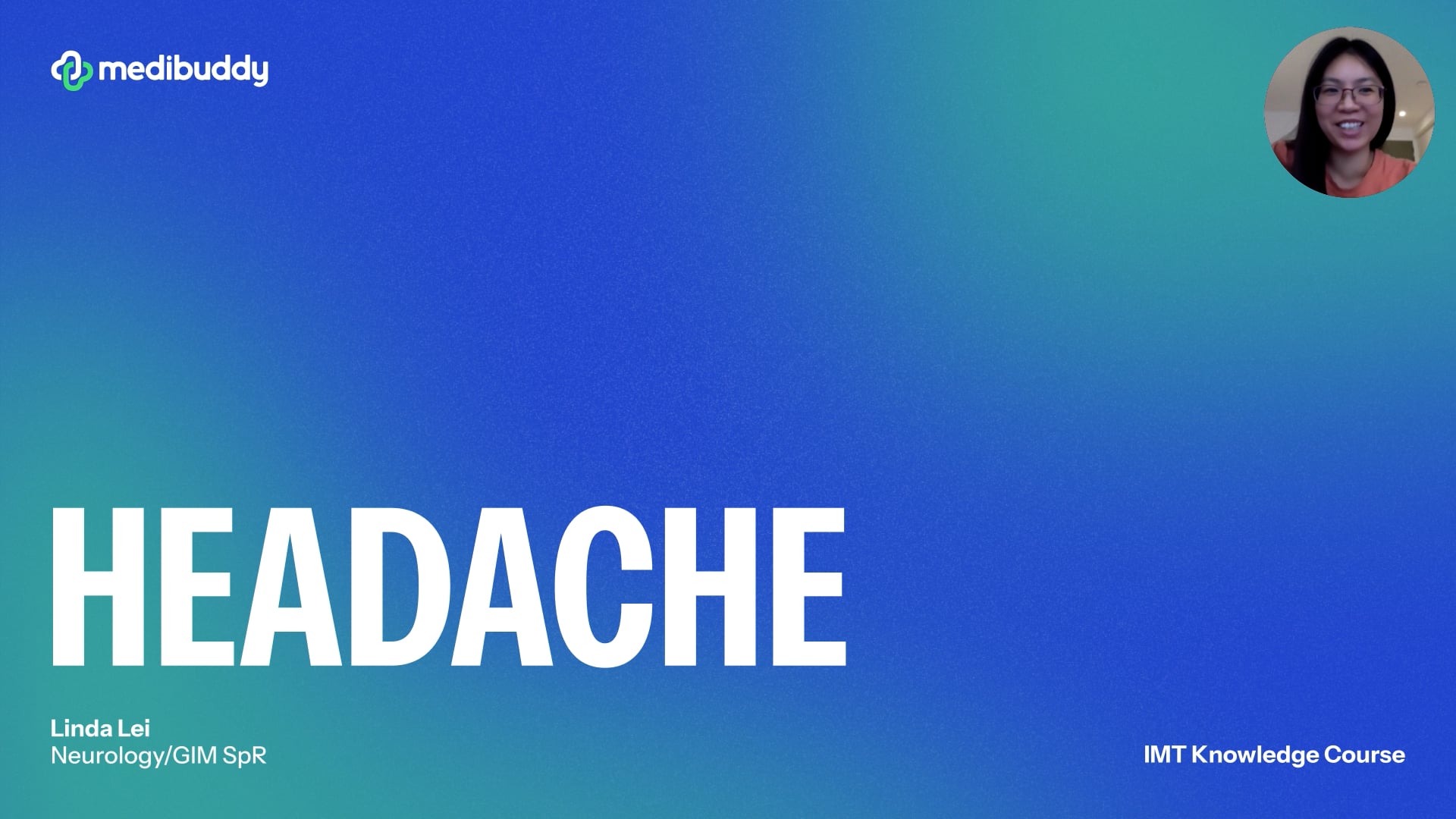
Watch Linda's video on "Headaches", to get a feel for the course. Linda talks through assessing headaches, recognising red flags, and exploring management options for primary and secondary causes.
What You'll Learn in the IMT Knowledge Course
This course includes 14 targeted topics and over 8 hours of in-depth content, covering core IMT interview topics.
Each module focuses on:
- Core clinical understanding
- Presentation and recognition
- Investigation and management principles
- Safety considerations and complications
Adrenal insufficiency

Gain a comprehensive understanding of adrenal insufficiency, including its types, causes, diagnosis, and management, as well as how to recognise and treat adrenal crisis.
Anaphylaxis
Learn to identify anaphylaxis, manage it using the ABCDE approach, consider differential diagnoses, and plan appropriate follow-up care.
Chest Pain

Understand the symptoms, differential diagnoses, investigations, and management of chest pain, with a focus on coronary artery disease and acute coronary syndromes.
Delirium

Explore the importance of recognising and managing delirium, recommended investigations, and approaches to special cases.
Dizziness
Develop a structured approach to diagnosing and managing dizziness, including history, examinations, investigations, and posterior circulation stroke considerations.
Deep vein thrombosis

Understand the pathophysiology, clinical features, assessment tools, and management strategies for DVT, including considerations for special populations.
Epilepsy

Gain insight into the classification, investigation, and management of epilepsy, including seizure types and status epilepticus.
Flank pain

Learn the causes, evaluation, and management of flank pain, emphasising systematic clinical assessment and appropriate investigations.
Headache
Understand the assessment of headaches, recognise red flags, and explore management options for primary and secondary causes, including pregnancy-related considerations.
Overdose
Learn how to assess, investigate, and manage overdoses, with specific focus on paracetamol, tricyclic, and opioid overdoses.
Pulmonary Oedema
Understand the causes, mechanisms, clinical features, and management strategies for pulmonary oedema.
Sepsis
Learn to diagnose, investigate, and manage sepsis, including treatment of infections and considerations for drug resistance and immunocompromised states.
Supraventricular Tachycardias (SVT)
Understand the classification, mechanisms, diagnosis, and management of SVTs, including interpretation of ECG findings.
Unconsciousness
Develop an approach to diagnosing, managing, and understanding the prognosis of unconscious patients.
Learn From Doctors With Recent Experience of the Process
The course is taught by experienced registrars who have completed the IMT selection process.
Teaching is based on recent, practical experience of:
- The structure and flow of both interview stations
- Commonly tested clinical themes in the clinical scenario and patient handover station
- The level of detail expected in answers
- How clinical knowledge is applied in follow-up discussions
The focus is on helping you turn knowledge into clear, structured responses under interview conditions.
Why This Course Matters More Than Ever
IMT remains one of the most competitive training programmes in the UK. In 2025, there were 8,841 applicants competing for just 1,678 posts, with over 2,500 more candidates than the previous year competing for fewer available positions.
In this context, success depends not just on preparation, but on:
- Clarity of thought
- Structured delivery
- Safe clinical reasoning under pressure
£89.99
Expires: 16 October, 2027
Knowledge course includes:
- 14 comprehensive video lectures
- Differentiate yourself as a top candidate
- Be prepared for all follow-up questions
£147.99
£179.98 total if both bought separately
Expires: 16 October, 2027
Buy our IMT Question Bank in addition to our IMT Clinical Knowledge Course to:
- Access over 75 unique scenarios
- Includes Clinical scenarios and Patient Handover
- Includes Application and Suitability scenarios
- Includes Ethical, Professional and Governance questions
Frequently Asked Questions
Who Is This Course For?
This course is designed for candidates applying to IMT who want to:
- Strengthen clinical understanding beyond question practice
- Improve structure and clarity in answers
- Handle follow-up questioning more confidently
- Combine knowledge with interview technique
- Perform more consistently across both interview stations
It is designed to work alongside the IMT Question Bank.
What Is an IMT Knowledge Course?
The Knowledge Course is a structured video-based course covering core clinical topics that commonly appear in IMT interview discussions, particularly in the clinical scenario and patient handover station.
Rather than focusing on memorising model answers, it focuses on:
- Understanding underlying clinical principles
- Applying knowledge to structured scenarios
- Developing clear, logical reasoning in interview-style questions
Who Delivers the Knowledge Course?
The course is taught by registrars who have recently completed the IMT selection process, providing practical insight into how clinical knowledge is applied in interview settings.
Do I Need the Question Bank as Well?
The Knowledge Course and Question Bank work best together. The IMT Question Bank helps you practise applying answers in interview format across all three question types, while the Knowledge Course helps build the clinical understanding behind those answers.
Prepare with Structure, Not Guesswork
Question practice helps you rehearse answers. Clinical understanding helps you adapt them. The Knowledge Course is designed to bridge this gap, helping you move beyond prepared responses and handle follow-up discussions with clarity and structure. Used alongside the Question Bank, it provides both the practice and clinical depth needed for more complete IMT interview answers.
£89.99
Expires: 16 October, 2027
Knowledge course includes:
- 14 comprehensive video lectures
- Differentiate yourself as a top candidate
- Be prepared for all follow-up questions
£147.99
£179.98 total if both bought separately
Expires: 16 October, 2027
Buy our IMT Question Bank in addition to our IMT Clinical Knowledge Course to:
- Access over 80 unique scenarios
- Includes Clinical scenarios and Patient Handover
- Includes Application and Suitability scenarios
- Includes Ethical, Professional and Governance questions
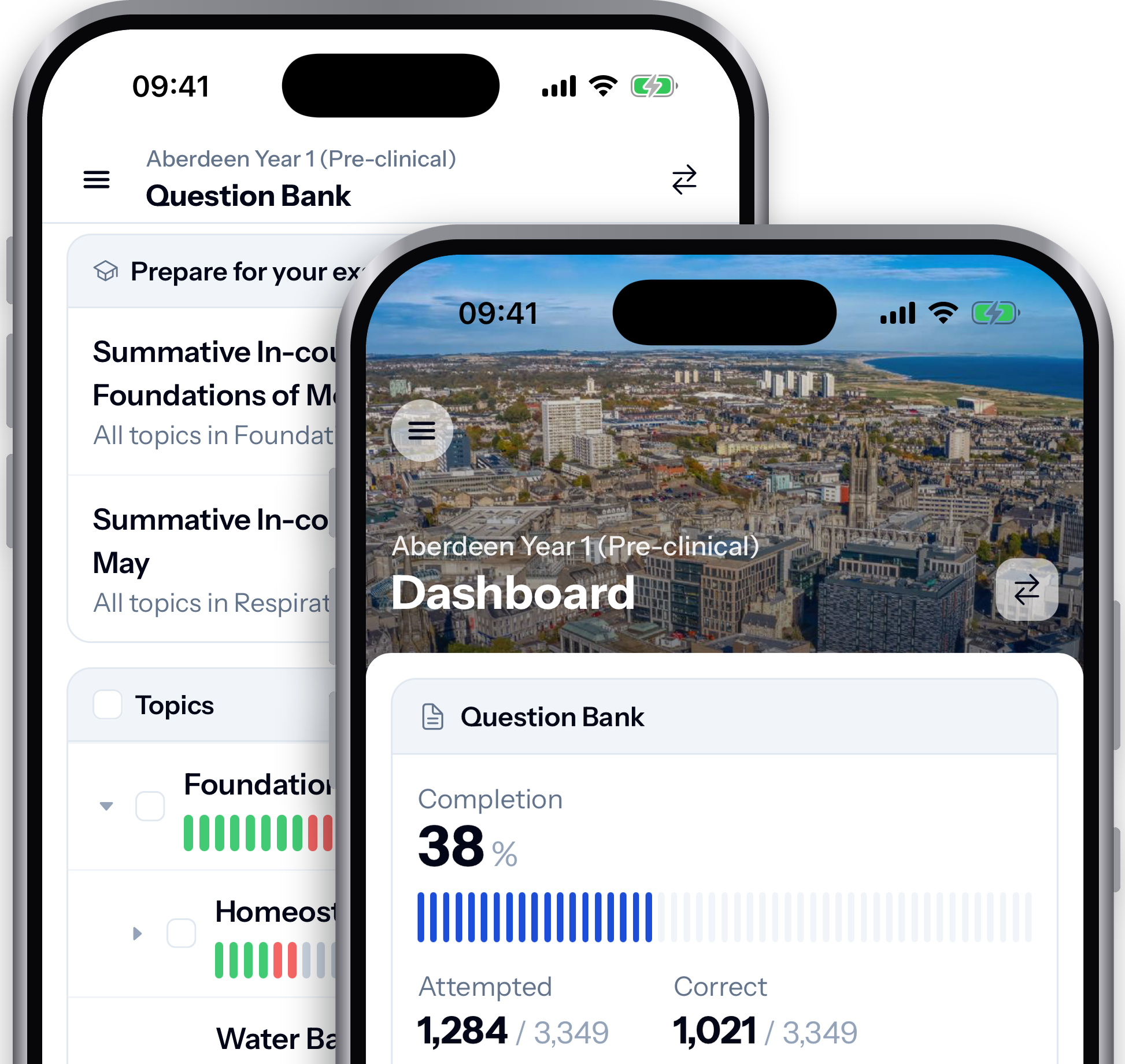
Take your subscriptions with you
Our mobile app allows you to access your interview and exam question banks wherever you are.