The 2027 CST Interview Revision Platform: Question Bank, Live Practice and Mocks with Other Candidates
The Medibuddy CST Question Bank includes over 40 structured scenarios that closely mirror the real interview structure, each with a model answer written/edited by high-scoring candidates who sat the CST interview in 2026.
However, knowing a strong answer isn't the same as delivering it well under interview pressure, which is why we provide:
Study Groups
Unlimited Live Mocks with real people
Peer Feedback on your mocks from a wide range of candidates
10 years’ experience preparing doctors for interviews
Users of the Medibuddy CST Revision Platform have secured some of the most competitive training posts in recent rounds. Ask around, there's a good chance the trainees in the year above you used us too.
Always up to date
Did you know the interviews change every year? That's why we review and update every Question Bank on the platform twice a year, so you know you're always practising with scenarios based on the latest interview structure.
Network and practise real interview scenarios with other candidates
Question Bank
Find out how to structure each response
40+ scenarios across both stations, which tell you exactly how to respond to each question.
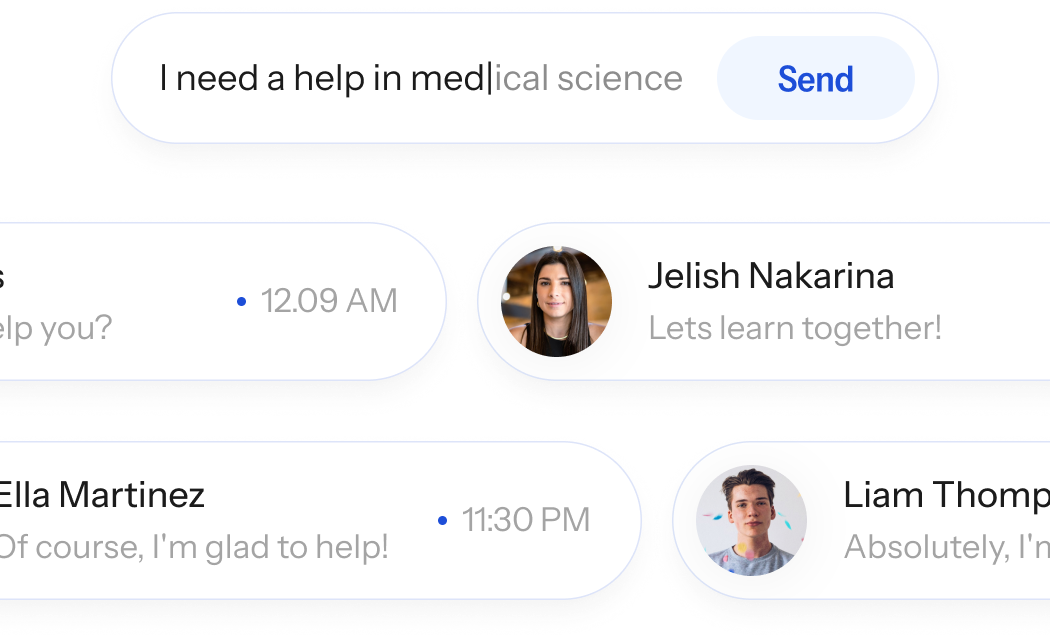
Study Groups
Connect with candidates across the country
Most people only ever practise with one or two friends. Study Groups connect you with candidates right across the country sitting the same interview.
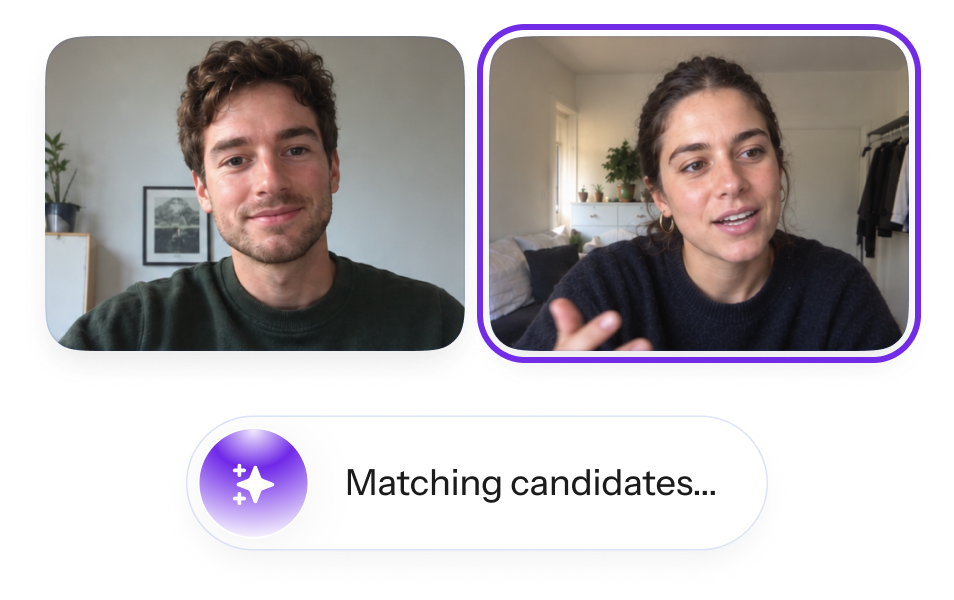
Live MocksBeta
Practise interview techniques with different candidates
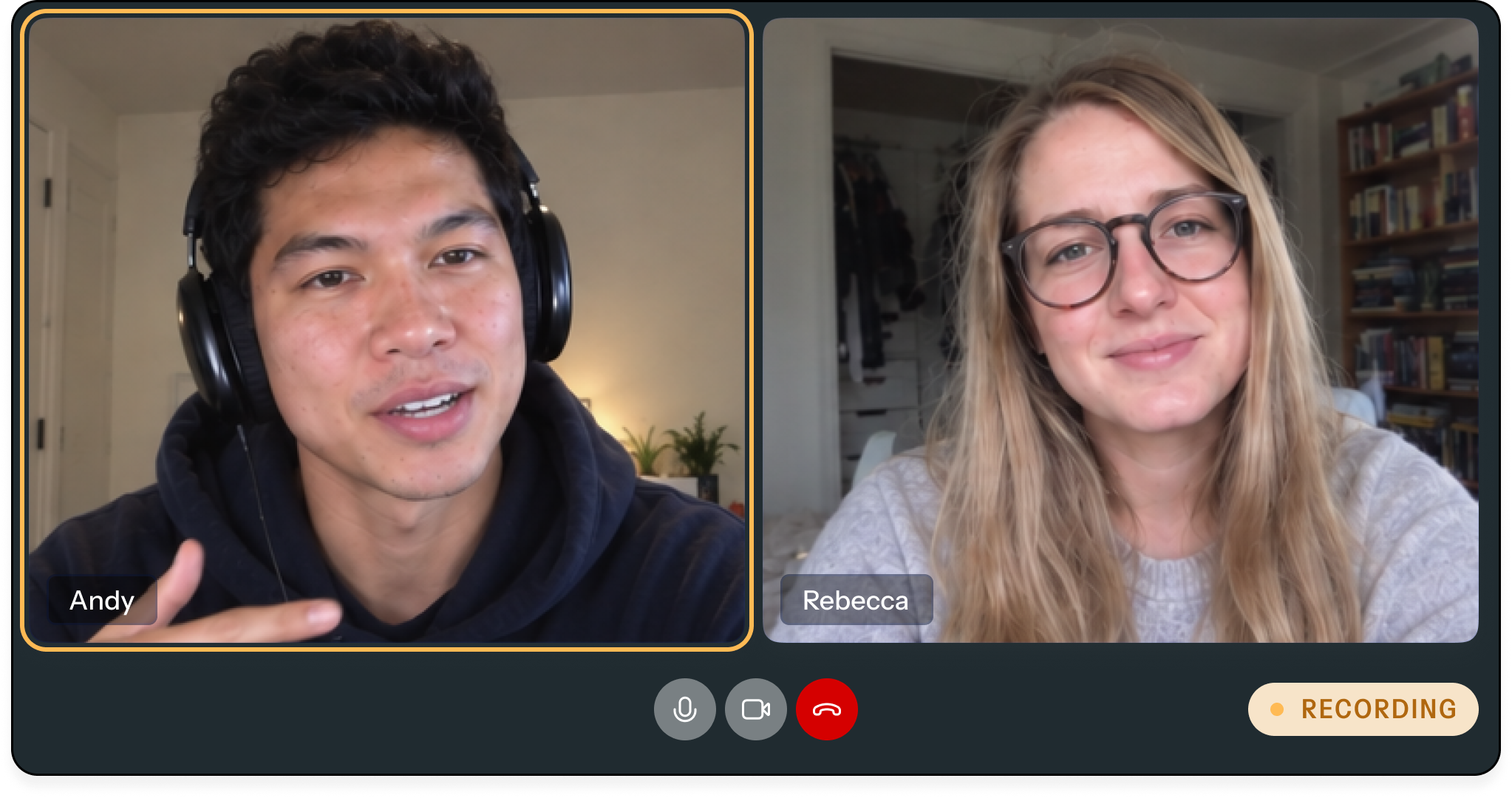
Arrange or get matched on demand with other candidates and run real scenarios out loud under interview conditions. Those who practise with the widest range of people tend to score the highest.
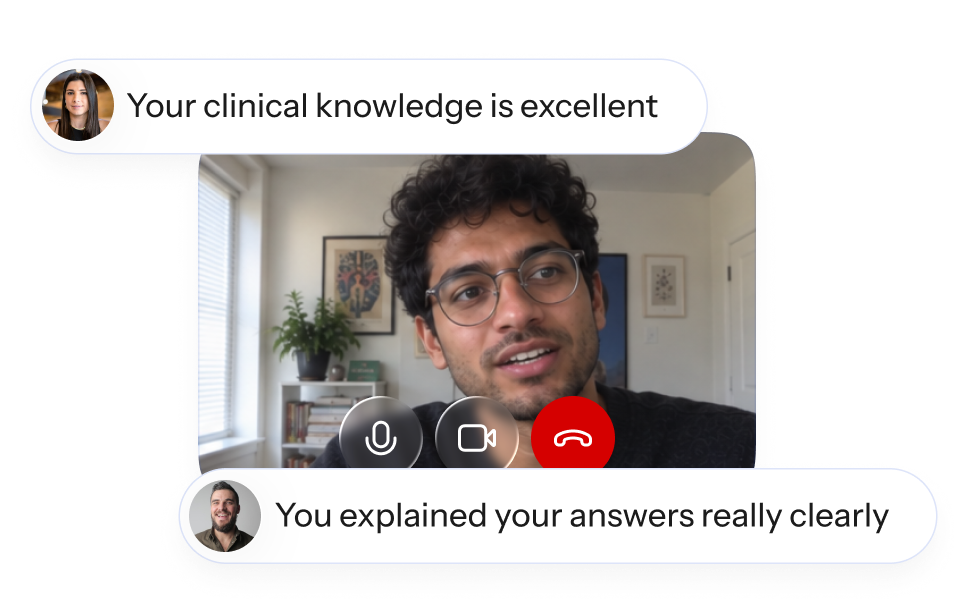
Peer FeedbackBeta
Reviewed by candidates across the platform
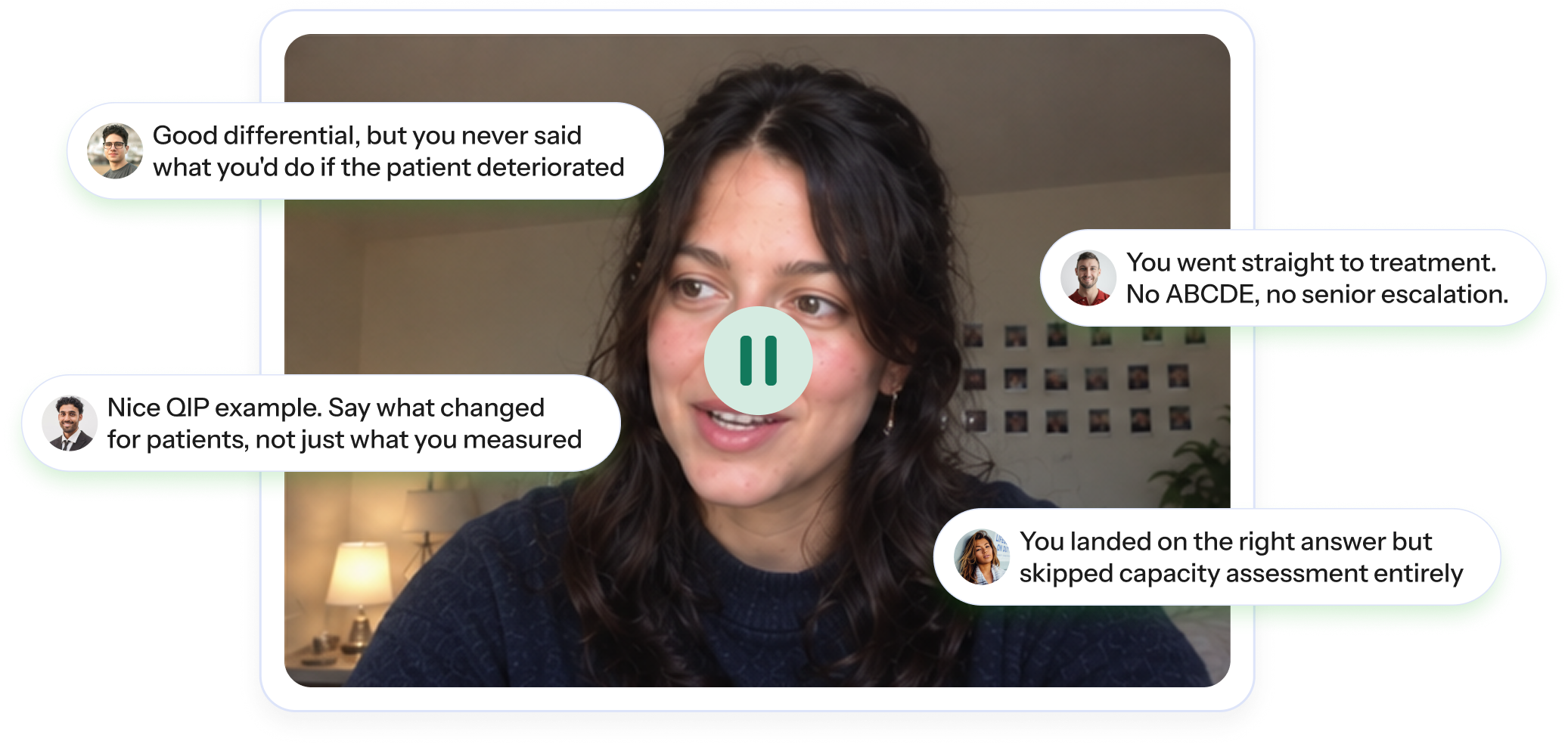
Submit your recorded mocks to candidates across the platform and get honest, varied feedback. Reviewing other people's mocks teaches you just as much.
The Question Bank, and other candidates to practise with, all in one platform.
CST Revision Platform • £89.99
Gain access to over 40 scenarios across clinical, management and portfolio, and collaborate with other candidates through Study Groups, Live Mocks and Peer Feedback.
The Revision Platform, plus the CST Knowledge Course. A model answer shows you how to structure your response, while each Knowledge Course module teaches one surgical presentation in depth, so you can keep going when the panel asks challenging follow-up questions.
Luke Marsh scored 100% at his interview. Hear how he prepared with Medibuddy.
"Medibuddy really helped! It was all I used to prepare and I scored 100% in the interview, so would definitely recommend it to anyone!"
Luke MarshScored 100% at interview
A few more of the candidates who prepared with us for the CST interview.
Prahalad NadellaInterviewed 2026
"Excellent resource, very helpful in preparing for all stations of the interview, helped me secure a top choice ortho-themed CST rotation in London."
Secured top-choice London post
Thomas KurianInterviewed 2026
"I am pleased to say I received an offer for my top theme in my top location. I felt the Medibuddy bank was an excellent resource, and really helped prepare me compared to my previous attempt, where I didn't use it. In particular, I found the structure of the clinical questions prepared me very well."
Part 1 • See the questions
The Medibuddy 2027 CST Interview Question Bank
Each station lasts 15 minutes, so you have a limited window to deliver the high-scoring answers you need to do well in the interview. That means every point has to land, and knowing how to structure each answer is essential. That's why each of our 40-plus scenarios comes with a model answer, written by candidates who scored highly in the 2026 CST interview, so you know exactly how to approach every question the interviewers throw your way.
What's inside
What's included in the CST Interview Question Bank
There's nothing worse than getting to the interview and being handed a scenario you've never seen before. The panel has a huge range of topics to draw on, so the safest approach is to revise across all of them. We provide scenarios for each station, including the common ones and the more unusual cases that have come up before, so you don't get caught out.
Clinical Scenarios
Focused questions on the clinical topics which come up every year, so you can revise effectively. We provide detailed questions with model answers to make sure you maximise your points in this station.
Management Scenarios
The situations you'll meet as a core trainee, where the panel is testing your judgement rather than your recall. We have written numerous management questions and model answers to give you the knowledge and structure to score highly on this station.
Portfolio
A three-minute pre-prepared presentation followed by two minutes of questioning. Practise presenting your portfolio with clarity and structure, so you communicate your strengths confidently and don't lose easy marks on the day.
Updated for 2027
15 clinical & management scenarios and 4 portfolio scenarios refreshed.
Try it
Try an example CST interview question
You are the CT1 on call for general surgery and are called by A&E to assess a 45-year-old man with a one-day history of nausea and epigastric pain that radiates to his back. He is pale and clammy, with epigastric tenderness on examination. He is normally fit and well but drinks about four cans of lager every day.
Observations: heart rate 105, blood pressure 98/62, respiratory rate 16, oxygen saturations 98% on air, temperature 36.5°C.
Question
What would your differential diagnoses be, based on the history?
Example answer
Using a systems approach:
Gastrointestinal: gastritis or peptic ulceration, with or without perforation; pancreatitis; and bowel obstruction. Given the history of alcohol excess, pancreatitis and peptic ulceration are the most likely.
Biliary: gallstone complications such as cholecystitis and cholangitis, though these are usually associated with a fever.
Urological: renal colic and pyelonephritis can cause mid-to-upper abdominal pain radiating to the back.
Cardiovascular: an abdominal aortic aneurysm and myocardial infarction.
Respiratory: a lower-lobe pneumonia can cause referred pain, though there are no respiratory symptoms here and his respiratory observations are within normal limits.
Question
How would you proceed with initially managing this patient?
Example answer
This patient sounds very unwell, so I'd assess him as soon as possible and resuscitate him at the same time using an A to E approach.
Airway: ensure the airway is patent, using adjuncts if required.
Breathing: recheck the oxygen saturation and respiratory rate, administer high-flow oxygen (15L via a non-rebreathe mask), and examine the chest.
Circulation: recheck blood pressure and pulse, assess capillary refill and JVP, and request an ECG. Get IV access with two wide-bore cannulas, start IV fluids (a 500ml bolus, or 250ml if there's a pre-existing cardiac condition), and send bloods — FBC, U&E, LFTs, amylase or lipase, clotting and a group and save — plus a blood gas including serum lactate.
Disability: check conscious level, blood glucose, temperature and pupils.
Exposure: fully expose and examine the patient, including the abdomen, to look for clinical signs supporting my differentials.
I'd also catheterise him for fluid monitoring and give analgesia and an antiemetic to keep him comfortable.
Question
What first-line investigations would you order, and how would you justify them?
Example answer
Bloods: FBC (anaemia or a raised white cell count), U&E (dehydration, AKI or electrolyte disturbance), LFTs (an obstructive picture or liver dysfunction), amylase or lipase (pancreatitis), CRP (infection or inflammation), clotting (liver dysfunction or pre-procedure), LDH and glucose (pancreatitis severity), a group and save (in case of an upper GI bleed or theatre), and an ABG for acid-base status, lactate and severity scoring.
Imaging: an erect chest X-ray if there are signs of peritonitis, to look for gas under the diaphragm suggesting perforation; an abdominal ultrasound to assess the biliary system, pancreas and aorta; and a CT abdomen if needed to confirm the diagnosis or plan surgery.
Question
The lipase comes back at 700 U/L. What is the most likely diagnosis, and the likely cause based on the history?
Example answer
Acute pancreatitis — most likely alcohol-related, given the history of around four cans of lager a day.
Question
What other causes of pancreatitis do you know?
Example answer
Gallstones are the most common cause. The full list is easily remembered with the "I GET SMASHED" mnemonic: Idiopathic, Gallstones, Ethanol, Trauma, Steroids, Mumps, Autoimmune (e.g. SLE), Scorpion bites, Hypercalcaemia / hyperlipidaemia / hypothermia, ERCP, and Drugs such as NSAIDs, azathioprine and thiazides.
That's one scenario. There are over 40 more.
CST Revision Platform • £89.99
Includes every scenario in the Question Bank, and access to Study Groups, Live Mocks with other candidates and Peer Feedback.
Everything in the Revision Platform and the CST Knowledge Course: 18 modules covering different surgical presentations in depth, so you can apply your clinical knowledge to challenging follow-up questions in the interview.
The CST interview changes from year to year, and the biggest fear for any candidate is getting to interview day and realising you've revised with a question bank that's totally outdated.
That's why we review and update every Question Bank twice a year, so you know you're revising with scenarios that are likely to come up. We do this in April after the previous year's interviews, and again in October when the new recruitment guidance is published.
For 2027 that process meant adding 19 scenarios to the CST Question Bank: 15 clinical and management, and 4 portfolio scenarios, reflecting the combined clinical-and-management station format.
Updated for 2027 Interviews
Part 2 • Practise them live
The only interview resource where you can practise live with other candidates from across the country
Our CST Question Bank tells you exactly how to answer real interview scenarios. But how you practise with them will determine how many marks you score. Simply reading answers off a screen won't prepare you for the intense scrutiny you'll face in the interview. And only practising with the same few colleagues or friends limits the amount of feedback you'll get. Medibuddy gives you unique access to CST candidates across the country, so you can learn from a variety of perspectives and hear a far wider range of feedback than your own circle could ever give you.
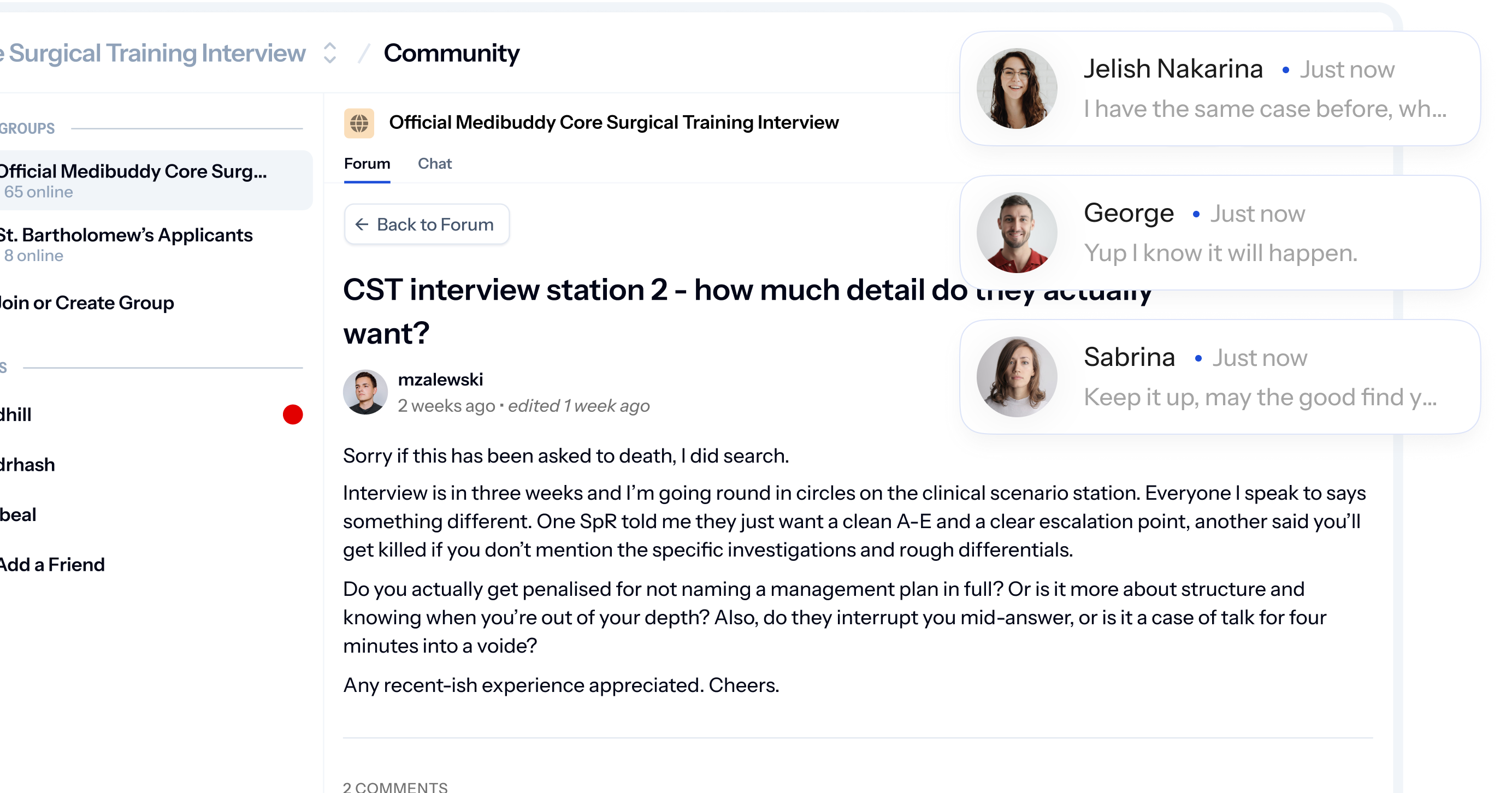
Study Groups
When you prepare in isolation, you're relying on your own interpretation of the interview process, which is one of the quickest ways to get found out on the day. Study Groups connect you with other doctors across the country who are also applying to CST, so you can engage and network with people preparing for the same interview as you. Everyone brings different experience from different hospitals and deaneries, meaning you won't ever miss out on the key bits of information that could swing the interview in your favour.
Live MocksBeta
Candidates who don't take part in mocks often struggle to adapt to the pressure of the interview. Your knowledge might be correct, but without convincing delivery the interviewers will score you poorly. The best way to improve your delivery is to take part in as many live mocks as possible, which is why we haven't put a cap on how many you can do. We also know how difficult it can be to organise mocks with other people, so all you have to do is join the waiting room and we'll match you with a different CST candidate each time. Take turns as both the interviewer and candidate on real Question Bank scenarios, so you can see exactly how other candidates perform in real time, while refining your own interview technique.
Peer FeedbackBeta
Preparing alone means you won't know how you're coming across during the interview. And preparing with the same few candidates means you'll miss opportunities to improve, which is why it's so important to get as many opinions as possible on your performance. With Medibuddy, you can record a mock and submit it for feedback from other candidates on the platform, so you receive a wider range of feedback and refine your answers with each person you practise with. Reviewing other people's mocks is just as valuable, as it shows you how strong candidates handle the same scenarios, which is one of the fastest ways to improve.
Pick your plan
Choose the CST Revision Platform, the Knowledge Course, or both
The Revision Platform gives you access to the Question Bank and the chance to practise alongside other candidates, providing the foundation for your interview preparation. However, when you're doing well, interviewers will often throw in curve-ball questions to test the depth of your clinical knowledge. If you can't answer these questions, you won't get the top marks and your final ranking will suffer. The thing is, you can only answer them well if you really understand the topics, which is why we recommend adding our CST Knowledge Course to your subscription (£31.99 saved if you buy both together).
What the CST Knowledge Course covers
18 video lectures, nearly 10 hours, taught by specialty registrars who've been through CST selection.
Abdominal TraumaAcute PancreatitisAppendicitisChest pain following TraumaCholangitisGallstone diseasesGI ObstructionLower Limb IschaemiaLower Limb TraumaPeptic Ulcer DiseasePost-op drowsinessPost-op abdominal painPyelonephritisPyrexia in General SurgeryRenal ColicSupracondylar Fracture of the HumerusUpper GI BleedUrological Cancers
Every module covers:
Core clinical understanding
Presentation and recognition
Investigation and management principles
Safety considerations and complications
Watch a lecture before you buy
This is Bibek's Appendicitis module: an overview of appendicitis, including the key examination findings, differential diagnoses, and the use of risk scoring and imaging to reach a diagnosis.
Bibek Das, General Surgery SpR. Free to watch, no sign-up.
"The presentations were excellent for the purpose of CST interview preparation. The sessions covered the basic pathophysiology and clinical aspects of the conditions covered."
Instant access on web and the Medibuddy app. The Revision Platform and the Bundle both include Study Groups, Live Mocks and Peer Feedback.
The interview
What to expect from the CST interview
Core Surgical Training remains one of the most competitive entry points into surgical training. In 2025, there were 5,399 applicants for just 630 posts. This was over 2,000 more candidates than the previous year, making the interview more important than ever.
Station 1
Clinical and Management
The interview brings clinical and management together in a single station. Clinical questions focus on emergency or post-operative situations and assess your clinical judgement and prioritisation skills. Management questions test your decision-making, problem-solving, and ability to apply frameworks such as SPIES, CAMP, or STAR in real-time. We keep the two grouped separately in the Question Bank so you can practise each style of scenario in isolation.
Station 2
Portfolio
The portfolio station begins with a three-minute pre-prepared presentation, followed by two minutes of questioning. You will then be asked two 5-minute questions based on portfolio domains selected by the assessors. It's your chance to present your achievements and evidence with clarity and structure, so you communicate your strengths confidently and score well. You can rehearse how you'll talk through your portfolio before the day.
How the interview is scored
Each interview station accounts for 45% of your final mark, with your MSRA score making up the final 10%. Both the Clinical and Management, and Portfolio stations are marked against the criteria on the CST person specification. Our model answers are structured against those criteria, so you know exactly what a strong, well-organised answer looks like at each station.
Get ready
How to prepare for the CST interview
Start with the CST Question Bank
Work through 40+ scenarios across clinical, management and portfolio, each with a worked answer from a candidate who scored well in the 2026 interview. Start by reading how a strong answer is formed, then think about how you might deliver it.
Talk the hard ones through in Study Groups
Study groups are your biggest opportunity to network and connect with other candidates sitting the same interview as you. Everyone on the platform is in the same boat as you, so don't be scared to get involved and ask questions. After all, someone in your study group might just help you work through a scenario you've been struggling with.
Rehearse out loud in Live Mocks
Live mocks are where you begin to put everything you've learned into practice, and we know from experience that those who practise with a wide range of candidates usually do the best. So organise mocks with people from one of your study groups, or get matched with a random CST candidate, then take turns as interviewer and candidate using real scenarios until answering out loud under pressure feels normal.
Get reviewed with Peer Feedback before the day
Once you've recorded a mock, you can have other community members review it. This allows you to see how you come across to other people, and gives you time to refine your delivery as you revise, rather than being caught out on the day. Reviewing other people's mocks is just as crucial, as you can see how other candidates navigate the same scenarios as you.
Build the clinical depth behind your answers
Your initial delivery might be perfect. However, without a deep clinical understanding of the acute presentations, you won't be able to answer those tricky follow-up questions, and the interviewers won't give you the top marks. By adding the CST Knowledge Course to your subscription, you'll gain access to 18 lectures that provide the in-depth knowledge needed to answer the most challenging curve-ball questions in the clinical station.
A candidate on how they used it
Questions
Frequently asked questions
What does the CST interview involve?
The CST interview combines management and clinical into a single station, alongside a separate portfolio station. The portfolio station opens with a three-minute pre-prepared presentation followed by two minutes of questioning. The interview accounts for 90% of your final score, with the MSRA making up the other 10%.
How competitive is the CST interview?
Very. In 2025 there were 5,399 applicants for just 630 posts, over 2,000 more candidates than the previous year competing for 15 fewer places. At that level, once you're through the MSRA, the difference between your preferred post and missing out often comes down to how well you prepare for the interview.
Who writes the model answers?
High-scoring candidates who sat the CST interview and secured some of the most competitive core surgical jobs.
Can I practise with other candidates?
Yes. Every Revision Platform purchase gives you the opportunity to connect with other candidates through Study Groups, Live Mocks and Peer Feedback.
How do the Live Mocks work?
You can organise mocks with people from your study group or join the waiting room, where we match you with another CST candidate. You then take turns as interviewer and candidate on real Question Bank scenarios, allowing you to gain experience answering out loud before you ever sit in front of the panel.
What are Study Groups and how do they help?
Study Groups are community forums for doctors across the country preparing for the same CST interview. You can ask questions, share what you're struggling with, and compare how you'd approach a scenario.
Can I get feedback on my interview performance?
Yes. After you've recorded a mock, you can ask other members to review it, helping you identify which parts of your answer need fine-tuning.
How do you keep the CST Question Bank up to date?
We review and update it twice a year. In April, once that year's interviews are done, and in October and November, once the new recruitment guidance is published, we run a full update against the new format and scoring. For 2027 that process added 19 scenarios: 15 clinical and management, and 4 portfolio.
Why use Medibuddy over other CST question banks?
We've been preparing doctors for specialty interviews for 10 years, and the Question Bank is updated every year by editors who've recently scored well in this interview. That means the scenarios always reflect this year's interview. And it doesn't just stop at a question bank. Every purchase includes access to Study Groups, Live Mocks and Peer Feedback, so you can revise alongside candidates across the country.
What's the difference between the Question Bank and the Knowledge Course?
The Question Bank includes over 40 scenarios with model answers across clinical, management and portfolio, alongside Study Groups, Live Mocks and Peer Feedback. The Knowledge Course builds the clinical understanding behind those answers, so you can reason through follow-up questioning. It contains 18 modules and nearly 10 hours of teaching from registrars across surgical specialties who've recently completed CST selection. They work best together, and the Bundle saves you £31.99 compared with buying both separately.
How long do I get access for?
Access runs for 12 months from the purchase date.
Start preparing for the CST interview
The Revision Platform allows you to practise and refine over 40 interview scenarios with other candidates through Study Groups, Live Mocks and Peer Feedback.
Most candidates add the Knowledge Course for £58.00, which contains 18 video lectures on the topics the panel follows up on hardest. It's the natural add-on if you want to score top marks in the interview.



 Close
Close



 Abdominal Trauma
 Core clinical understanding
 Presentation and recognition
 Investigation and management principles
 Safety considerations and complications

