The 2027 Ophthalmology ST1 Interview Revision Platform: Question Bank, Live Practice and Mocks with Other Candidates
The Medibuddy Ophthalmology ST1 Question Bank includes over 40 scenarios that closely mirror the real interview, each with a model answer written/edited by high-scoring candidates who sat the Ophthalmology ST1 interview in 2026.
However, knowing a strong answer isn't the same as delivering it well under pressure, which is why we provide:
Study Groups
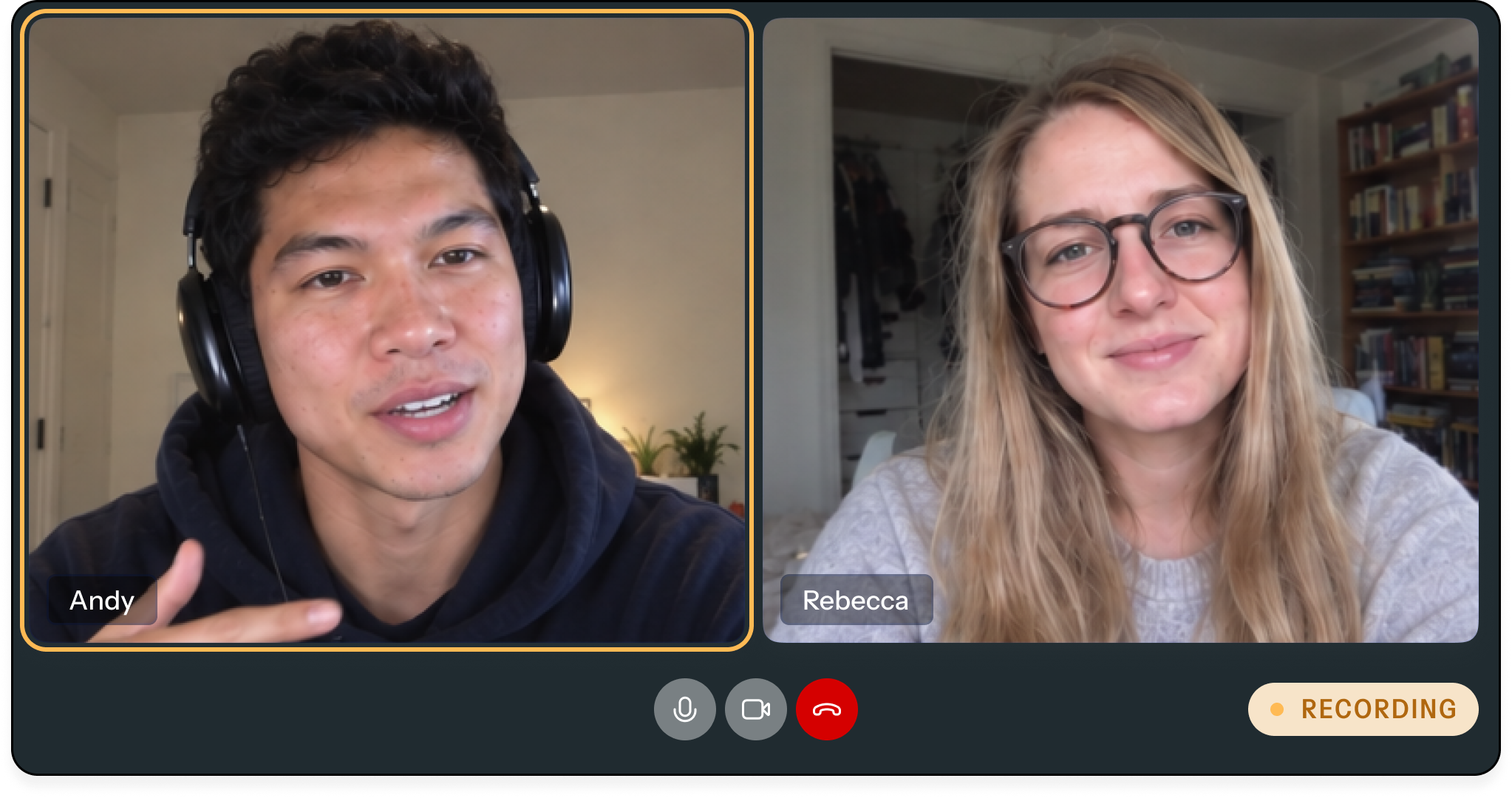
Unlimited Live Mocks with real people
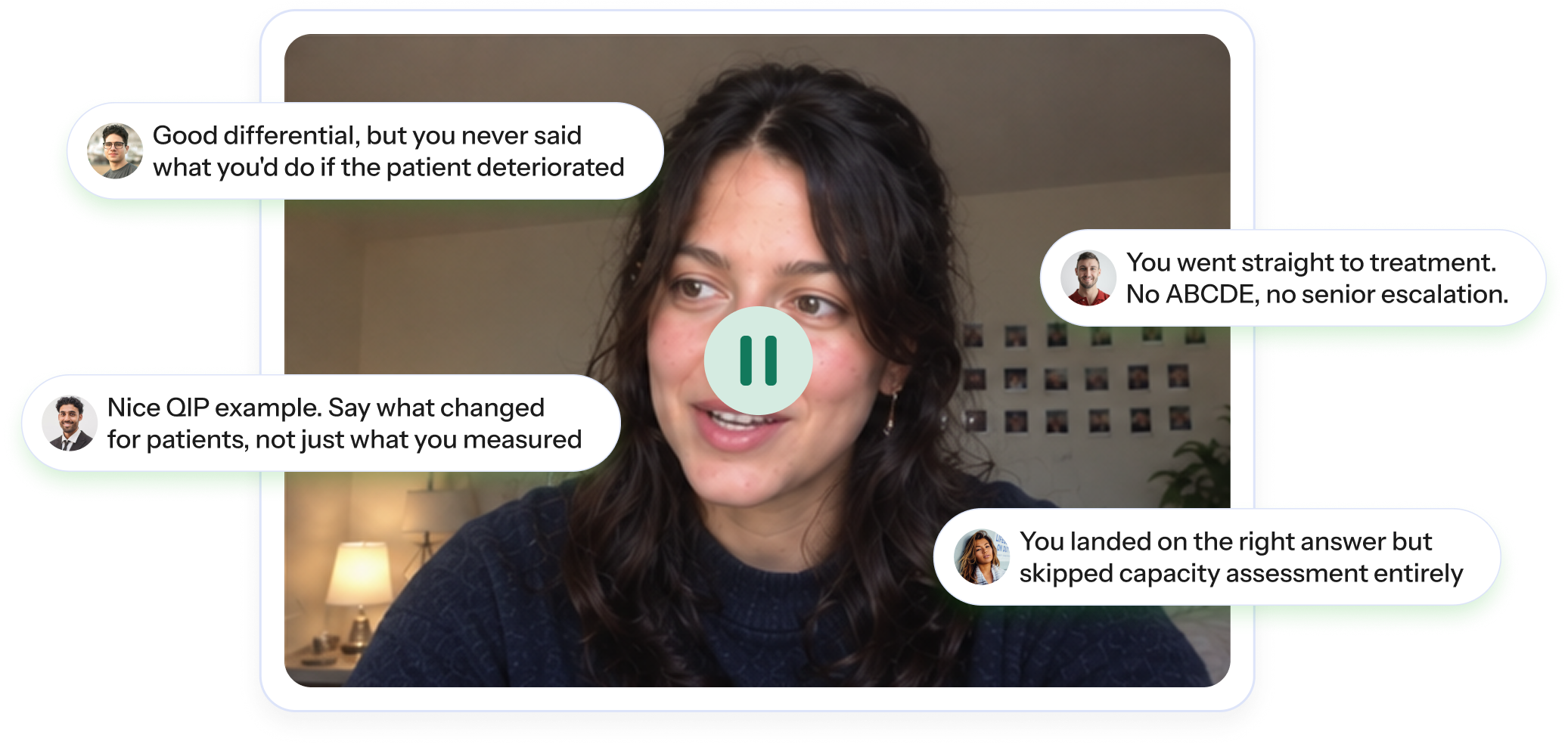
Peer Feedback on your mocks from a wide range of candidates
10 years’ experience preparing doctors for interviews
Users of the Medibuddy Ophthalmology ST1 Revision Platform have secured some of the most competitive training jobs in recent rounds. Ask around, there's a good chance the trainees in the year above you used us too.
Always up to date
Did you know the interviews change every year? That's why we review and update every Question Bank on the platform twice a year, so you know you're always practising with scenarios based on the latest interview structure.
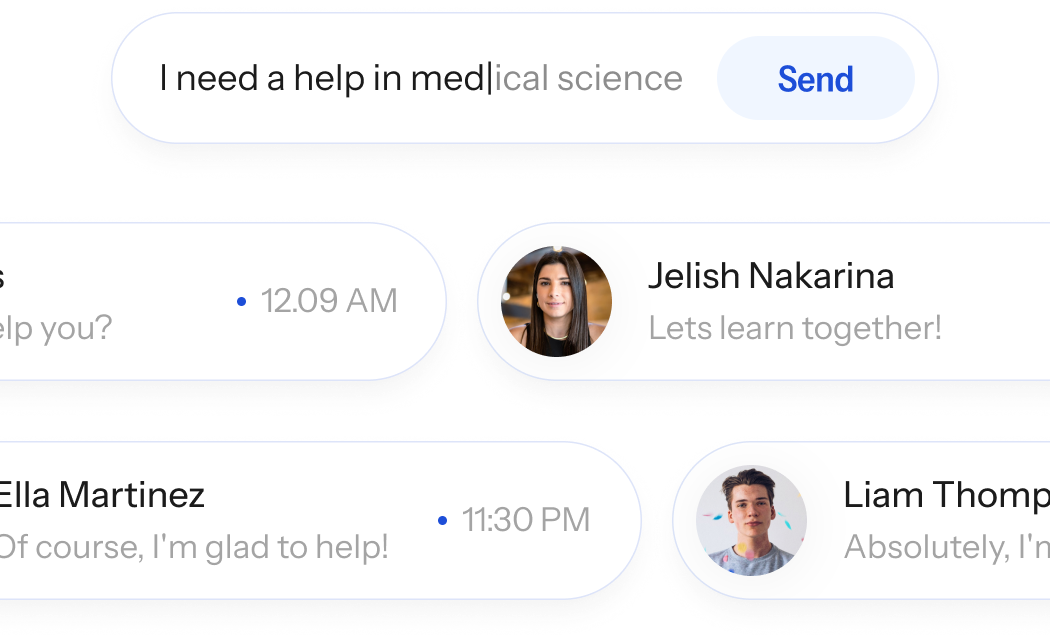
Network and practise real interview scenarios with other candidates
Question Bank
See every scenario, and how to answer it well
Over 40 scenarios across both interview components, which tell you exactly how to respond to each one.
Study Groups
Connect with candidates across the country
Most people only ever practise with one or two friends. Study Groups connect you with candidates right across the country sitting the same interview.
Live MocksBeta
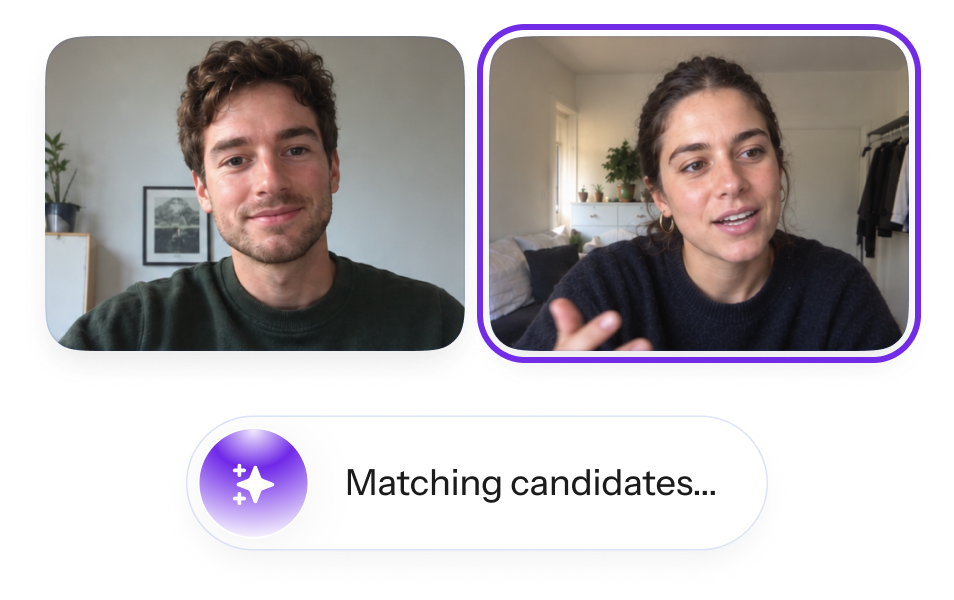
Practise interview technique with different candidates
Arrange or get matched on demand with other candidates and run real scenarios out loud under interview conditions. Those who practise with the widest range of people tend to score the highest.
Peer FeedbackBeta
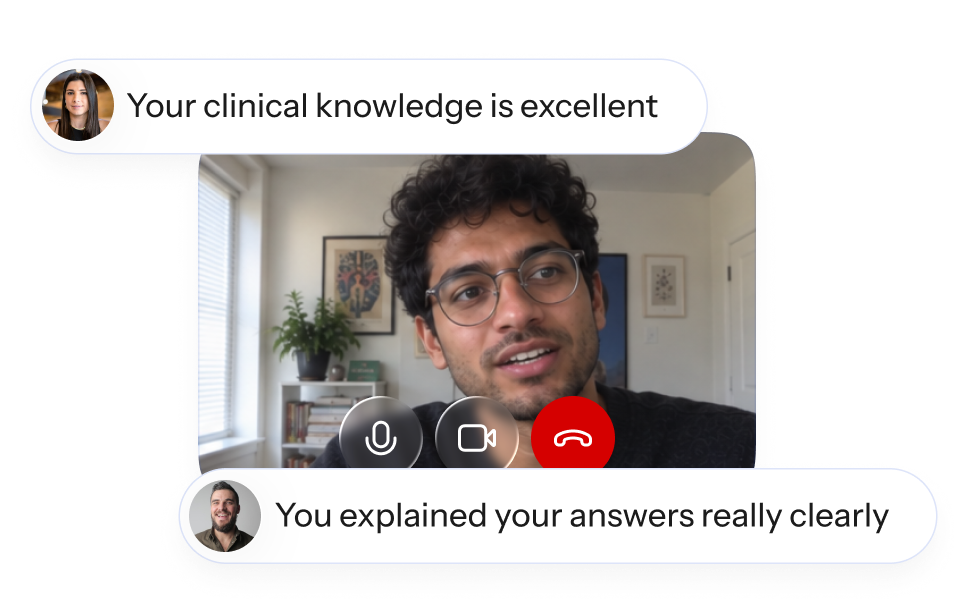
Reviewed by candidates across the platform
Submit your recorded mocks to candidates across the platform and get honest, varied feedback. Reviewing other people's mocks teaches you just as much.
The question bank, and other candidates to practise with, all in one platform.
Ophthalmology ST1 Revision Platform • £89.99
Gain access to over 40 scenarios across both components, and collaborate with other candidates through Study Groups, Live Mocks and Peer Feedback.
A few of the candidates who prepared with us for the Ophthalmology ST1 interview.
Verified candidateInterviewed 2026
"I ranked very highly and I think the question bank definitely helped. Thank you for your wonderful site."
Ranked very highly
Verified candidateInterviewed 2026
"I'm delighted to say I got my top choice ophthalmology post. The Medibuddy case bank definitely helped with practice."
Top-choice post
Part 1 • See the questions
The Medibuddy 2027 Ophthalmology ST1 Question Bank
The interview has two 10-minute components, so you have a limited window to deliver the high-scoring answers you need to do well. That means every point has to land, and knowing how to structure each answer is essential. That's why each of our 40-plus scenarios comes with a model answer, written by candidates who scored highly in the Ophthalmology ST1 interview, so you know exactly how to approach every question the interviewers throw your way.
What's inside
What's included in the Ophthalmology ST1 Question Bank
There's nothing worse than getting to the interview and being handed a scenario you've never seen before. The panel has a huge range of topics to draw on, so the safest approach is to revise across all of them. We provide scenarios for both components, including the common ones and the more unusual cases that have come up before, so you don't get caught out.
Clinical Knowledge Assessment
Scenarios that test your clinical knowledge of the ophthalmic and general presentations likely to come up, each with a model answer so you can show the depth and structure the panel is looking for.
Communication and Ethical Consultation
Difficult communication and ethical consultations, such as breaking bad news to a patient, with worked answers that show you how to stay structured and empathetic and pick up the marks candidates most often lose.
Updated for 2027
5 new communication and 5 new clinical knowledge scenarios added for the latest interview.
Try it
Try an example Ophthalmology ST1 question
You are an FY2 on an ophthalmology rotation, in eye casualty. Mrs Jones, 54, presented with sudden right-sided visual loss today after three days of headaches that failed to settle. Your consultant has examined her, believes she has giant cell arteritis, and her ESR is significantly raised. The consultant has been called to another emergency and has asked you to speak to Mrs Jones about the likely diagnosis, the management and follow-up plan, and to address any concerns.
How would you approach this?
Question
How would you approach this consultation?
Example answer
I'd introduce myself with my name and grade, confirm her identity, and start by checking her understanding of what's happened so far, letting her tell her story and listening actively. Before breaking the news I'd give a warning shot, something like "I've discussed your case with my consultant and I'm afraid I have some worrying news", then deliver it clearly and pause to let it land. I'd use a chunk-and-check approach throughout, giving small amounts of information and checking she's followed, and acknowledge her anxiety and surprise with genuine empathy.
Question
How would you explain the diagnosis?
Example answer
In plain language I'd explain that giant cell arteritis is inflammation of the arteries that supply the nerves at the back of the eye, and that this has damaged them, which is why she's lost vision in that eye. I'd avoid jargon, check she understands as I go, and gently distinguish it from the migraines she's used to, since she may be attributing it to those.
Question
She asks when her sight will come back. How do you handle it?
Example answer
I'd be honest and empathetic. The vision already lost in the affected eye is unlikely to recover, so I wouldn't give false reassurance, but I'd explain that the priority now is protecting her other eye, which is why we act urgently. If she stays distressed or in disbelief, I'd offer to ask the consultant to speak with her too, rather than dismissing her concerns.
Question
How would you explain the treatment and address her steroid concerns?
Example answer
I'd explain the treatment is high-dose steroids, usually intravenous to begin with, and emphasise that the main aim is to protect the other eye from the same damage. I'd take her worry seriously, especially given her mother's experience, and reassure her that kidney problems from steroids are uncommon. I'd be honest about the more common side effects, such as raised blood pressure, mood changes, weight gain and increased appetite, changes in blood sugar, weaker bones, a higher risk of infection and stomach upset, and answer her questions about them.
Question
What follow-up and safety-netting would you offer?
Example answer
I'd set out a clear plan: an urgent referral to the rheumatology or medical team for further tests, and follow-up in the eye clinic to answer her questions as things settle. I'd offer a referral to the eye clinic liaison officer to help her come to terms with the sudden change in her vision, give her written information, and safety-net clearly on what to watch for and when to seek help. I'd close by checking her understanding and offering for the consultant to speak with her if she'd like.
That's one scenario. There are over 40 more.
Ophthalmology ST1 Revision Platform • £89.99
Includes every scenario in the Question Bank, and access to Study Groups, Live Mocks with other candidates and Peer Feedback.
The Ophthalmology ST1 interview changes from year to year, and the biggest fear for any candidate is getting to interview day and realising you've revised with a question bank that's totally outdated.
That's why we review and update every Question Bank twice a year, so you know you're revising with scenarios that are likely to come up. We do this in April after the previous year's interviews, and again in October when the new recruitment guidance is published.
Updated for 2027 interviews
2 scenarios updated, covering medical consultation involving difficult communication or an ethical situation, and clinical knowledge assessment.
Updated for 2027 Interviews
Part 2 • Practise them live
The only interview resource where you can practise live with other candidates from across the country
Our Ophthalmology ST1 Question Bank tells you exactly how to answer real interview scenarios. But how you practise with them will determine how many marks you score. Simply reading answers off a screen won't prepare you for the intense scrutiny you'll face in the interview. And only practising with the same few colleagues or friends limits the amount of feedback you'll get. Medibuddy gives you unique access to Ophthalmology ST1 candidates across the country, so you can learn from a variety of perspectives and hear a far wider range of feedback than your own circle could ever give you.
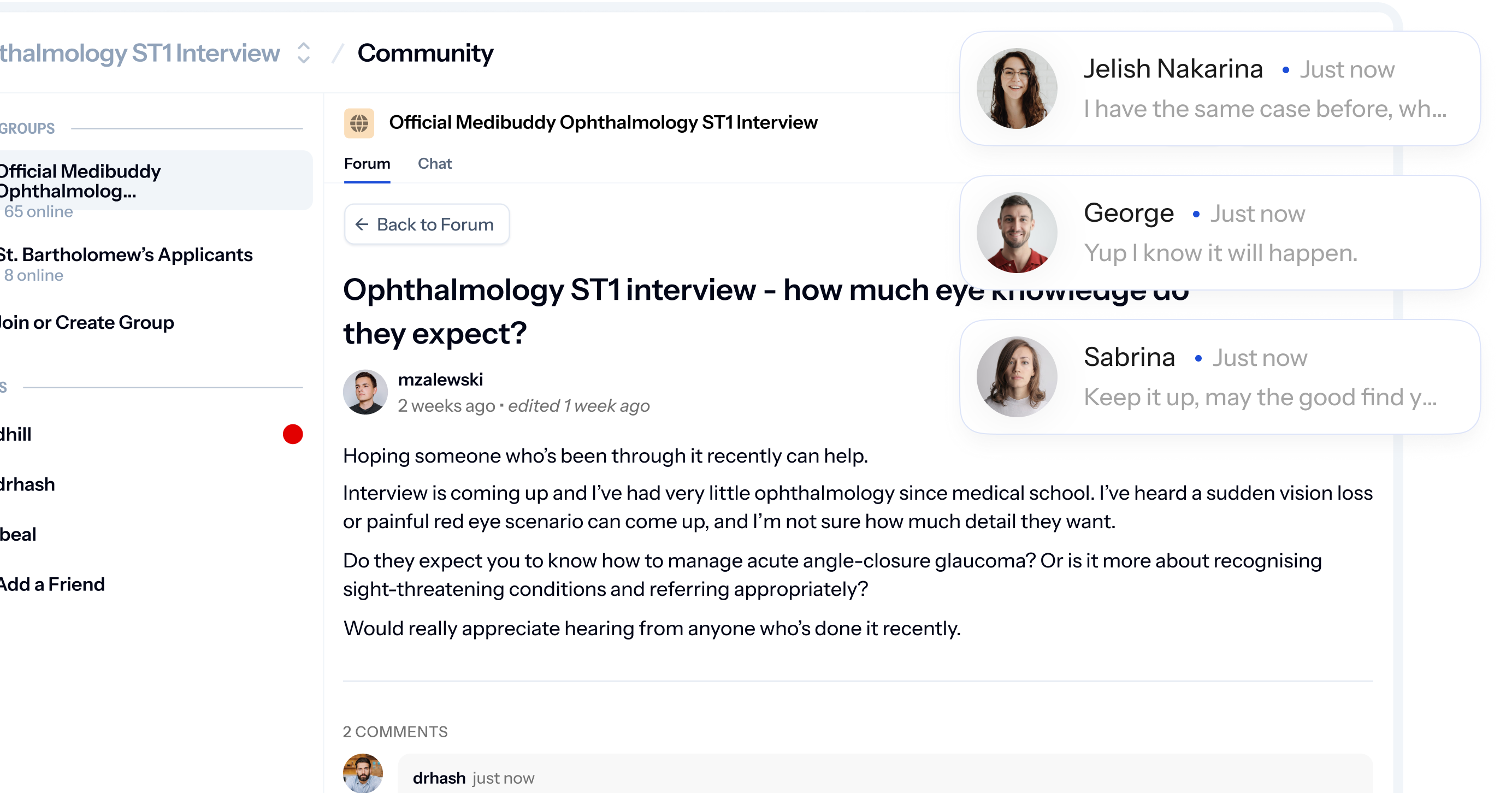
Study Groups
When you prepare in isolation, you're relying on your own interpretation of the interview process, which is one of the quickest ways to get found out on the day. Study Groups connect you with other doctors across the country who are also applying to Ophthalmology ST1, so you can engage and network with people preparing for the same interview as you. Everyone brings different experience from different hospitals and deaneries, meaning you won't ever miss out on the key bits of information that could swing the interview in your favour.
Live MocksBeta
Candidates who don't take part in mocks often struggle to adapt to the pressure of the interview. Your knowledge might be correct, but without convincing delivery the interviewers will score you poorly. The best way to improve your delivery is to take part in as many live mocks as possible, which is why we haven't put a cap on how many you can do. We also know how difficult it can be to organise mocks with other people, so all you have to do is join the waiting room and we'll match you with a different Ophthalmology ST1 candidate each time. Take turns as both the interviewer and candidate on real Question Bank scenarios, so you can see exactly how other candidates perform in real time, while refining your own interview technique.
Peer FeedbackBeta
Preparing alone means you won't know how you're coming across during the interview. And preparing with the same few candidates means you'll miss opportunities to improve, which is why it's so important to get as many opinions as possible on your performance. With Medibuddy, you can record a mock and submit it for feedback from other candidates on the platform, so you receive a wider range of feedback and refine your answers with each person you practise with. Reviewing other people's mocks is just as valuable, as it shows you how strong candidates handle the same scenarios, which is one of the fastest ways to improve.
The interview
What to expect from the Ophthalmology ST1 interview
Ophthalmology ST1 is one of the most competitive specialties, with more than 21 applicants for every post in 2025, up from more than 14 the year before. You're shortlisted on your MSRA score and evidence folder, so the interview itself is decisive.
The interview lasts about 45 minutes and includes a clinical knowledge assessment and a communication or ethical consultation.
Component 1
Clinical Knowledge Assessment
A ten-minute assessment of your clinical knowledge, observed by two consultant ophthalmologists. Our scenarios cover the clinical topics likely to come up, each with a model answer so you know how to structure a strong response.
Component 2
Communication and Ethical Consultation
A ten-minute medical consultation focused on a difficult communication or ethical scenario, such as breaking bad news. Our worked answers show you how to stay structured and empathetic while scoring across the mark scheme.
How the interview is scored
Both interview components are marked against the Ophthalmology ST1 person specification by two consultant ophthalmologists. Our model answers are structured against those criteria, so you know exactly what a strong, well-organised answer looks like at each component.
Get ready
How to prepare for the Ophthalmology ST1 interview
Start with the Question Bank
Work through 40+ scenarios across both components, each with a worked answer from a candidate who scored well in the 2026 interview. Start by reading how a strong answer is formed, then think about how you'd deliver it.
Talk the hard ones through in Study Groups
Study groups are your biggest opportunity to network and connect with other candidates sitting the same interview as you. Everyone on the platform is in the same boat as you, so don't be scared to get involved and ask questions. After all, someone in your study group might just help you work through a scenario you've been struggling with.
Rehearse out loud in Live Mocks
Live mocks are where you begin to put everything you've learned into practice, and we know from experience that those who practise with a wide range of candidates usually do the best. So organise mocks with people from one of your study groups, or get matched with a random Ophthalmology ST1 candidate, then take turns as interviewer and candidate using real scenarios until answering out loud under pressure feels normal.
Get reviewed with Peer Feedback before the day
Once you've recorded a mock, you can have other community members review it. This allows you to see how you come across to other people, and gives you time to refine your delivery as you revise, rather than being caught out on the day. Reviewing other people's mocks is just as crucial, as you can see how other candidates navigate the same scenarios as you.
Questions
Frequently asked questions
What does the Ophthalmology ST1 interview involve?
The interview is around 45 minutes, with two 10-minute components: a clinical knowledge assessment and a communication or ethical consultation with an actor. Candidates are shortlisted on their MSRA score and evidence folder.
How competitive is the Ophthalmology ST1 interview?
Very. In 2025 there were more than 21 applicants for every post, up from more than 14 the year before, so how well you prepare for the interview often makes the difference.
Who writes the model answers?
High-scoring candidates who sat the Ophthalmology ST1 interview and secured some of the most competitive training posts.
Can I practise with other candidates?
Yes. Every Revision Platform purchase gives you the opportunity to connect with other candidates through Study Groups, Live Mocks and Peer Feedback.
How do the Live Mocks work?
All you have to do is join the waiting room, and we match you with another Ophthalmology ST1 candidate. You can then take turns as interviewer and candidate on real Question Bank scenarios, allowing you to gain experience answering out loud to a real person before you ever sit in front of the panel.
What are Study Groups and how do they help?
Study groups are community forums for doctors across the country preparing for the same Ophthalmology ST1 interview. You can ask questions, share what you're struggling with, and compare how you'd approach a scenario.
Can I get feedback on my interview performance?
Yes. After you've recorded a mock, you can ask other members to review it, allowing you to see which part of your answer needs fine-tuning.
Why use Medibuddy over other Ophthalmology ST1 question banks?
We've been preparing doctors for specialty interviews for 10 years, and the Question Bank is updated every year by editors who've recently scored well in this interview. That means the scenarios always reflect this year's interview. And it doesn't just stop at a question bank. Every purchase includes access to Study Groups, Live Mocks and Peer Feedback, so you can revise alongside candidates across the country.
How do you keep the Ophthalmology ST1 Question Bank up to date?
We review and update it twice a year. In April after that year's interviews, and again in October when the new recruitment guidance is published. For the latest interview, we added 5 new communication and 5 new clinical knowledge scenarios.
How long do I get access for?
Access runs for 12 months from the purchase date.
Start preparing for the Ophthalmology ST1 interview
The Revision Platform gives you over 40 scenarios to practise and refine with other candidates through Study Groups, Live Mocks and Peer Feedback.
Written by candidates who recently scored well in this interview, and updated every year, it's built to reflect the interview you're about to sit.
Instant access on web and the Medibuddy app • Study Groups, Live Mocks and Peer Feedback with every purchase • 12 months' access



 Close
Close