The 2027 Radiology ST1 Interview Revision Platform: Question Bank, Live Practice and Mocks with Other Candidates
The Medibuddy Radiology ST1 Question Bank includes over 60 questions that closely mirror the real interview, each with a model answer written/edited by high-scoring candidates who sat the Radiology ST1 interview in 2026.
However, knowing a strong answer isn't the same as delivering it well under pressure, which is why we provide:
Study Groups
Unlimited Live Mocks with real people
Peer Feedback on your mocks from a wide range of candidates
10 years’ experience preparing doctors for interviews
Users of the Medibuddy Radiology ST1 Revision Platform have secured some of the most competitive training jobs in recent rounds. Ask around, there's a good chance the trainees in the year above you used us too.
Always up to date
Did you know the interviews change every year? That's why we review and update every Question Bank on the platform twice a year, so you know you're always practising with questions based on the latest interview structure.
Network and practise real interview scenarios with other candidates
Question Bank
See every question, and how to answer it well
Over 60 questions across both stations, which tell you exactly how to respond to each one.
Study Groups
Connect with candidates across the country
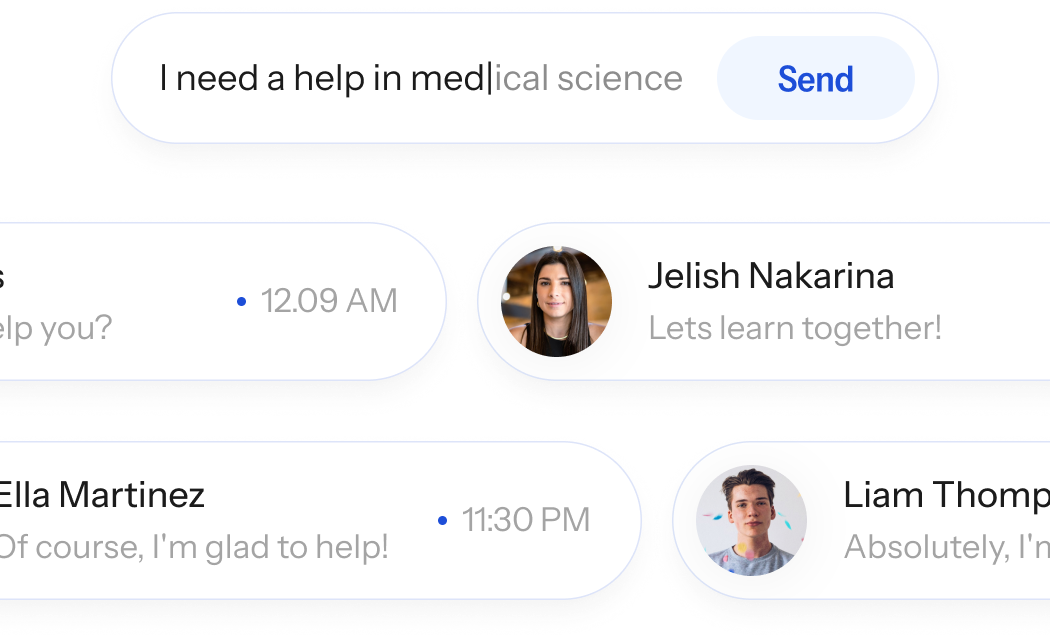
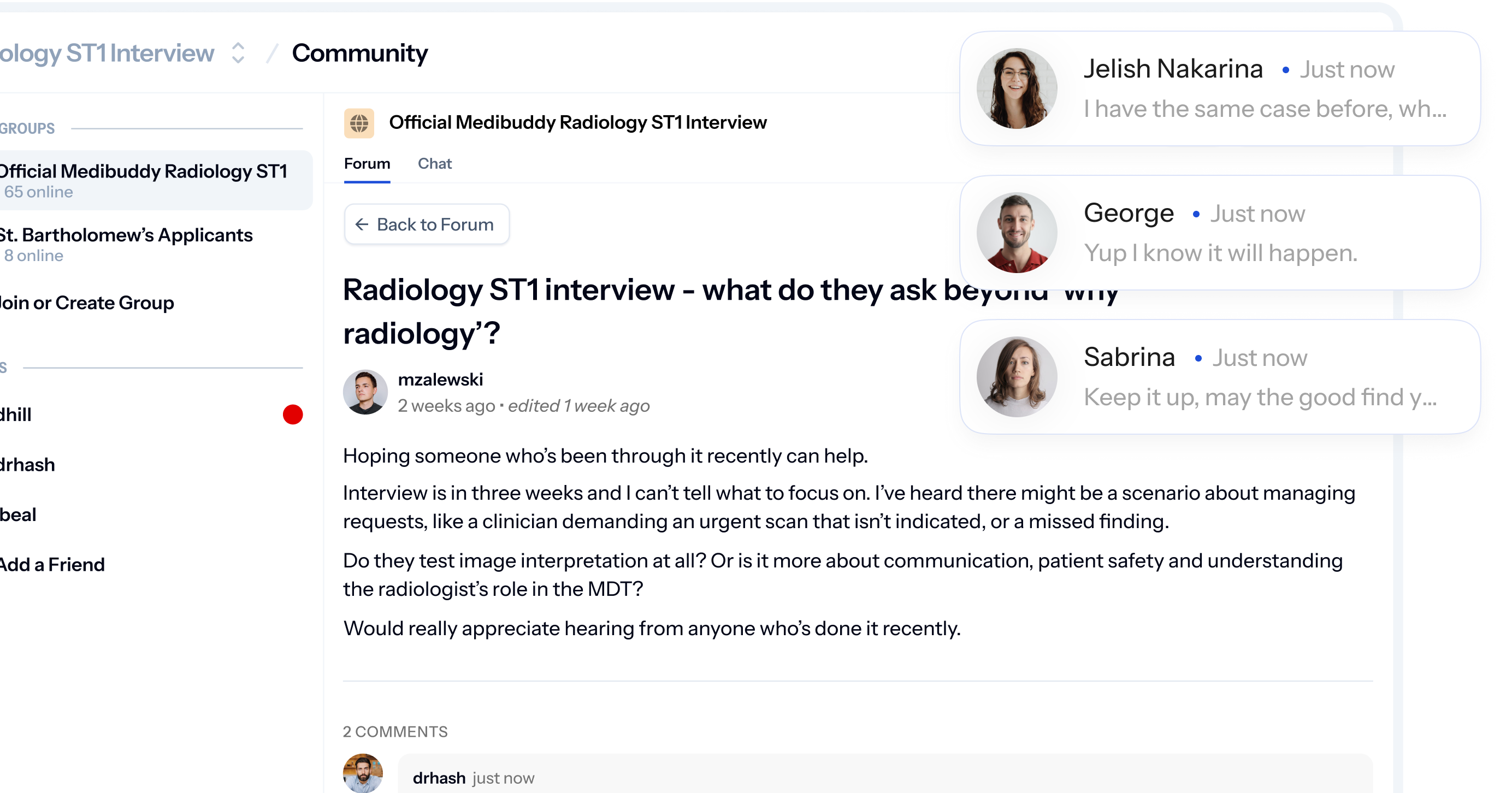
Most people only ever practise with one or two friends. Study Groups connect you with candidates right across the country sitting the same interview.
Live MocksBeta
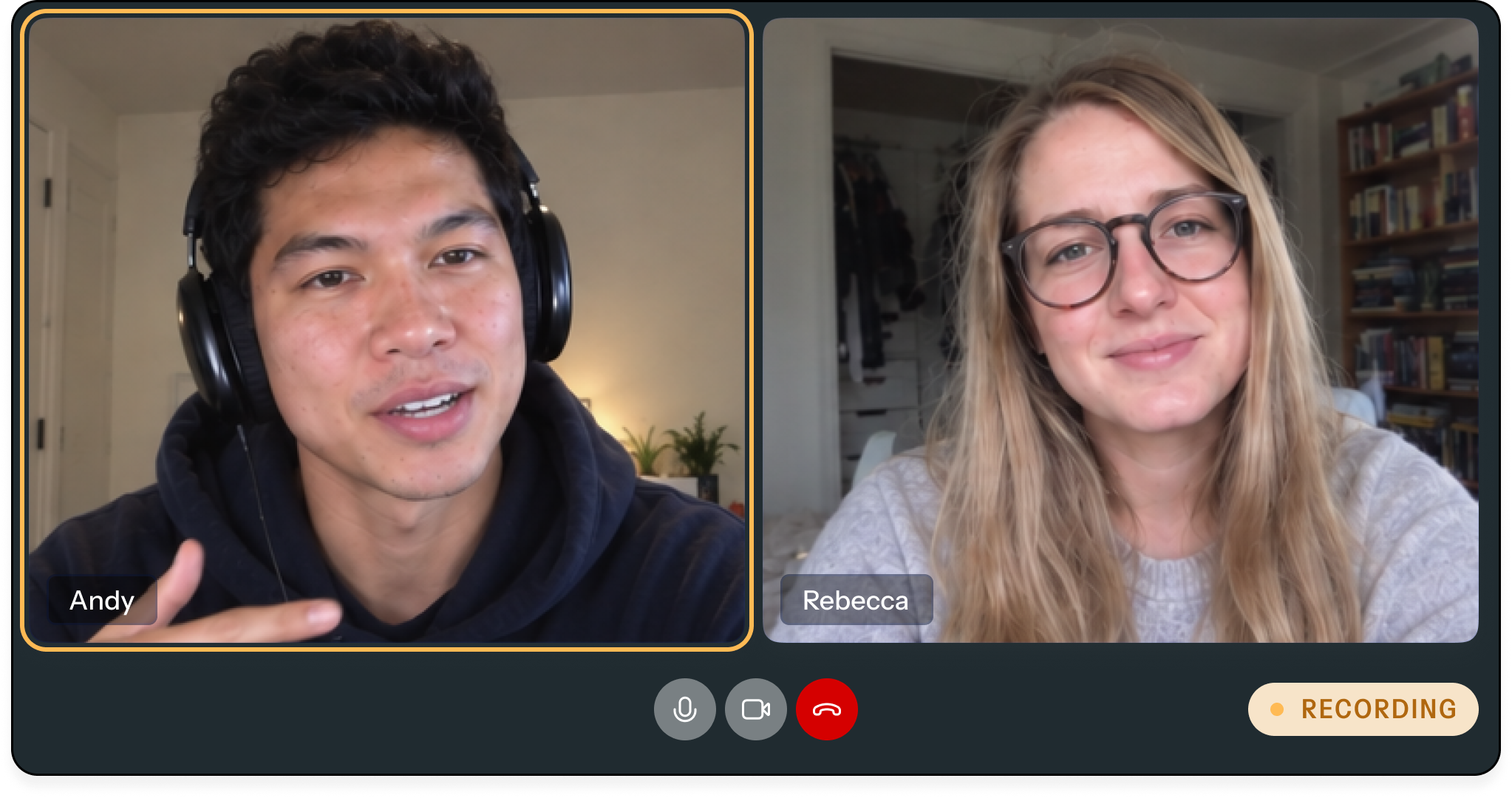
Practise interview technique with different candidates
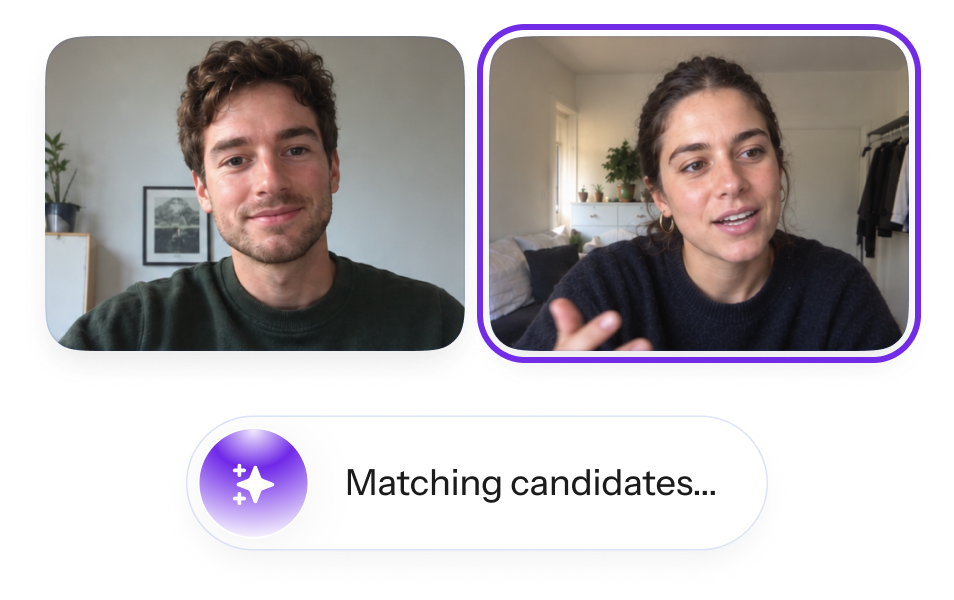
Arrange or get matched on demand with other candidates and run real scenarios out loud under interview conditions. Those who practise with the widest range of people tend to score the highest.
Peer FeedbackBeta
Reviewed by candidates across the platform
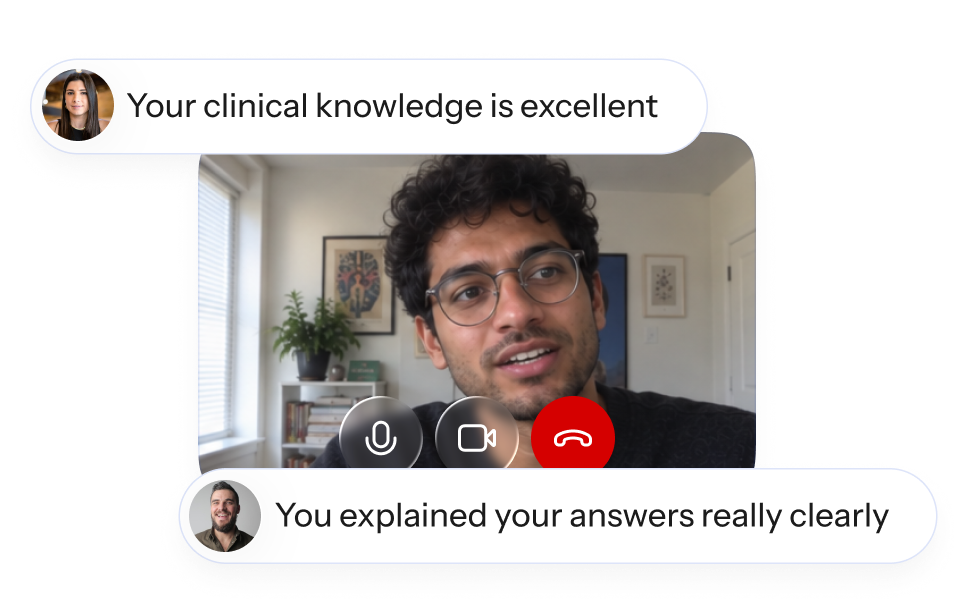
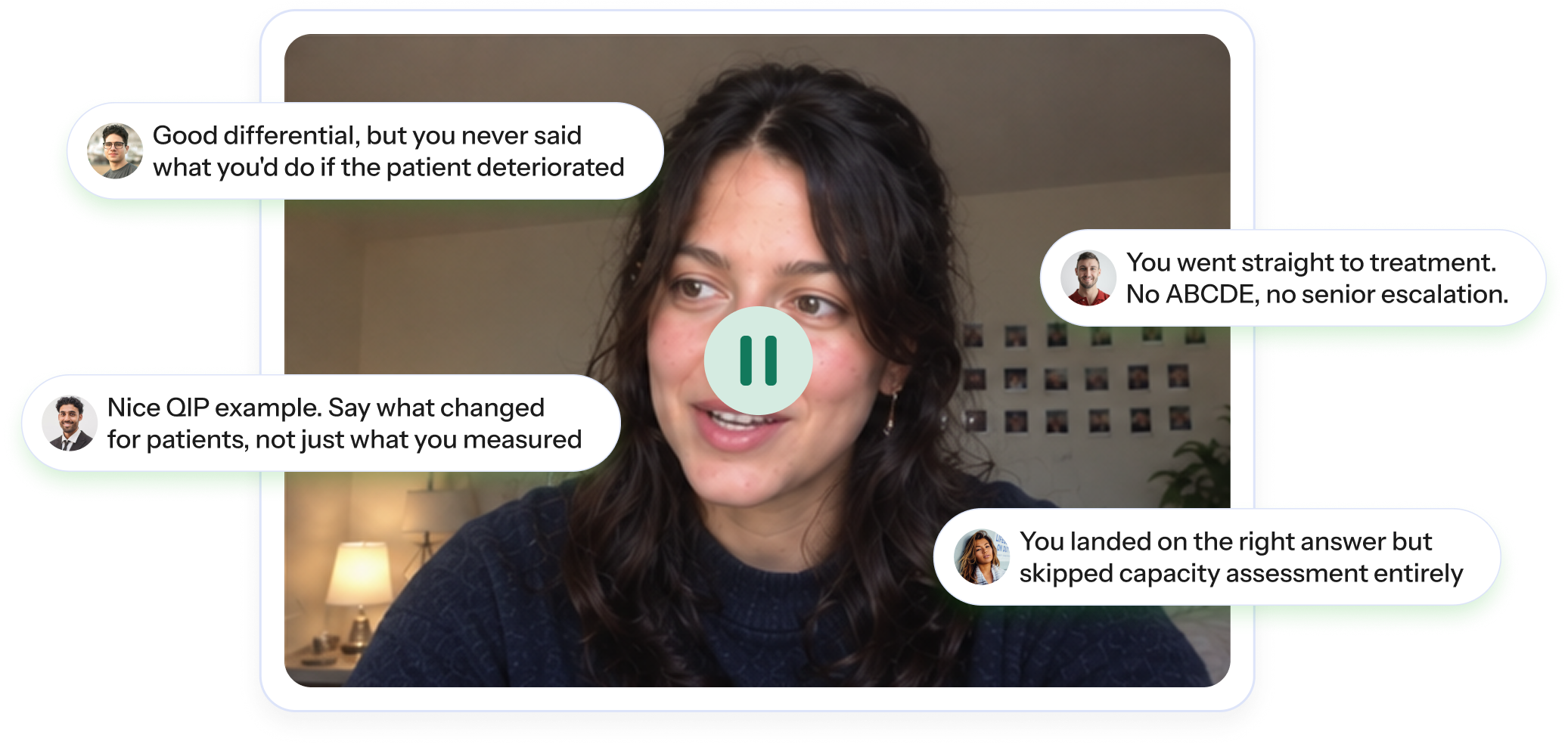
Submit your recorded mocks to candidates across the platform and get honest, varied feedback. Reviewing other people's mocks teaches you just as much.
The question bank, and other candidates to practise with, all in one platform.
Radiology ST1 Revision Platform • £89.99
Gain access to over 60 questions across both stations, and collaborate with other candidates through Study Groups, Live Mocks and Peer Feedback.
A few of the candidates who prepared with us for the Radiology ST1 interview.
JackRadiology ST1 candidate
"Thank you to Medibuddy for providing a comprehensive list of interview questions and a structured way to approach them. I definitely felt more prepared after using the resource, and managed to secure my first choice deanery!"
Secured first-choice deanery
GeorginaRadiology ST1 candidate
"I found the question bank really good! It was very helpful. I practised them with a colleague and found that everything that came up was on the bank, and I felt more knowledgeable about the specialty."
Felt more prepared
Part 1 • See the questions
The Medibuddy 2027 Radiology ST1 Question Bank
The interview is two 15-minute stations, so you have a limited window to deliver the high-scoring answers you need to do well. That means every point has to land, and knowing how to structure each answer is essential. That's why each of our 60-plus questions comes with a model answer, written by candidates who scored highly in the Radiology ST1 interview, so you know exactly how to approach every question the interviewers throw your way.
What's inside
What's included in the Radiology ST1 Question Bank
There's nothing worse than getting to the interview and being handed a question you've never seen before. The panel has a huge range of topics to draw on, so the safest approach is to revise across all of them. We provide questions for both stations, including the common ones and the more unusual ones that have come up before, so you don't get caught out.
Station A: Portfolio and Commitment
Scenarios that guide you in showing your readiness for radiology, from taster weeks, audits and QI projects to research, teaching and your motivation for applying.
Station B: Scenario and Prioritisation
Scenario-based questions that reflect real clinical challenges, testing how you prioritise, handle uncertainty and work in a team under pressure. Each comes with a model answer so you know how to maximise your score.
Updated for 2027
Restructured for the new Stations A & B format.
Try it
Try an example Radiology ST1 question
You are the on-call radiology registrar covering a busy emergency department. Four CT requests arrive at the same time:
A: CT head for a 32-year-old man who fell from height, now confused with a GCS of 14, pupils equal and reactive, no obvious external injuries.
B: CT pulmonary angiogram for a 45-year-old woman with sudden breathlessness and chest pain. She is haemodynamically stable, already started on anticoagulation, saturations 96% on room air.
C: CT abdomen for a 70-year-old man with an acute abdomen and previous abdominal surgery, vomiting, a distended abdomen, heart rate 110, blood pressure 90/60 and a lactate of 5.
D: CT ankle for a 28-year-old man with a trimalleolar fracture awaiting operative planning. The limb is neurovascularly intact and his pain is controlled.
Which scan would you perform first, and in what order would you complete the rest? Justify your reasoning.
Question
In what order would you perform the scans, and why?
Example answer
I'd scan them in the order C, A, B, D. C, the acute abdomen with a raised lactate and hypotension, is the most time-critical and goes first. A, the head injury after a fall from height with a GCS of 14, is next given the risk of an intracranial bleed. B, the suspected PE, comes third because she's stable and already anticoagulated. D, the ankle, is lowest, as the patient is stable with a neurovascularly intact limb and the scan is for operative planning, so it can wait.
Question
Talk me through the top priority, the acute abdomen.
Example answer
The 70-year-old has signs of possible bowel ischaemia or perforation: a distended abdomen, vomiting, tachycardia, hypotension and a lactate of 5, which points to tissue hypoperfusion and possible sepsis. Immediate imaging is critical to identify a life-threatening cause such as strangulation, perforation or mesenteric ischaemia, because delay risks septic shock, multi-organ failure and death. I'd expedite the CT, tell the surgical team it's urgent so they can plan possible immediate surgery, make sure resuscitation is underway while he's prepared, and update them on the findings as soon as I have them.
Question
How would you handle the head injury and the suspected PE?
Example answer
The head injury is second: a fall from height with a GCS of 14 raises real concern for an intracranial injury such as an extradural, subdural or parenchymal bleed, so early imaging matters, and I'd ask the ED team to watch for any neurological deterioration while he waits. The suspected PE is third: she's a serious presentation but haemodynamically stable, already on anticoagulation and saturating at 96% on air, so the CTPA can follow the two more time-critical scans, with the medical team monitoring her and reporting any deterioration.
Question
And the ankle?
Example answer
The ankle is the lowest priority. He's stable, the limb is neurovascularly intact and his pain is controlled, and the scan is for operative planning rather than an immediate threat to life or limb, so it can safely be deferred until the higher-priority scans are done. I'd let the orthopaedic team know to expect a delay and make sure his analgesia is adequate in the meantime.
Question
What else would you consider?
Example answer
I'd keep reassessing, because priorities can change: if the head injury patient's GCS drops or the PE patient becomes unstable, I'd re-order accordingly. I'd keep open communication with every referring team about timing and any changes, coordinate with the radiographers to optimise workflow and use a second scanner if one is available, and make sure each patient is monitored appropriately while they wait.
That's one question. There are over 60 more.
Radiology ST1 Revision Platform • £89.99
Includes every question in the Question Bank, and access to Study Groups, Live Mocks with other candidates and Peer Feedback.
The Radiology ST1 interview changes from year to year, and the biggest fear for any candidate is getting to interview day and realising you've revised with a question bank that's totally outdated.
That's why we review and update every Question Bank twice a year, so you know you're revising with questions that are likely to come up. We do this in April after the previous year's interviews, and again in October when the new recruitment guidance is published.
Updated for 2027 interviews
Reviewed against the latest published guidance and recent candidate feedback.
Updated for 2027 Interviews
Part 2 • Practise them live
The only interview resource where you can practise live with other candidates from across the country
Our Radiology ST1 Question Bank tells you exactly how to answer real interview questions. But how you practise with them will determine how many marks you score. Simply reading answers off a screen won't prepare you for the intense scrutiny you'll face in the interview. And only practising with the same few colleagues or friends limits the amount of feedback you'll get. Medibuddy gives you unique access to Radiology ST1 candidates across the country, so you can learn from a variety of perspectives and hear a far wider range of feedback than your own circle could ever give you.
Study Groups
When you prepare in isolation, you're relying on your own interpretation of the interview process, which is one of the quickest ways to get found out on the day. Study Groups connect you with other doctors across the country who are also applying to Radiology ST1, so you can engage and network with people preparing for the same interview as you. Everyone brings different experience from different hospitals and deaneries, meaning you won't ever miss out on the key bits of information that could swing the interview in your favour.
Live MocksBeta
Candidates who don't take part in mocks often struggle to adapt to the pressure of the interview. Your knowledge might be correct, but without convincing delivery the interviewers will score you poorly. The best way to improve your delivery is to take part in as many live mocks as possible, which is why we haven't put a cap on how many you can do. We also know how difficult it can be to organise mocks with other people, so all you have to do is join the waiting room and we'll match you with a different Radiology ST1 candidate each time. Take turns as both the interviewer and candidate on real Question Bank questions, so you can see exactly how other candidates perform in real time, while refining your own interview technique.
Peer FeedbackBeta
Preparing alone means you won't know how you're coming across during the interview. And preparing with the same few candidates means you'll miss opportunities to improve, which is why it's so important to get as many opinions as possible on your performance. With Medibuddy, you can record a mock and submit it for feedback from other candidates on the platform, so you receive a wider range of feedback and refine your answers with each person you practise with. Reviewing other people's mocks is just as valuable, as it shows you how strong candidates handle the same questions, which is one of the fastest ways to improve.
The interview
What to expect from the Radiology ST1 interview
Radiology ST1 is one of the most competitive specialties, with almost 12 candidates applying for every post in 2025. The interview now carries 70% of your overall application score, up for the second year running, so how you perform on the day is critical.
The interview is two 15-minute stations: Station A and Station B.
Station A
Portfolio and Commitment
This station focuses on your portfolio and how it demonstrates your readiness for a career in radiology. You may be asked about taster weeks, audits or QI projects, research, teaching, conferences or clinical experiences, as well as your understanding of the specialty and your motivation for applying.
Station B
Scenario and Prioritisation
This station explores scenario-based questions that reflect real clinical challenges, testing how you think and handle situations under pressure. Interviewers will probe how you prioritise tasks, handle uncertainty and function in a team.
How the interview is scored
Both stations are marked against the Radiology ST1 person specification. Our model answers are structured against those criteria, so you know exactly what a strong, well-organised answer looks like at each station.
Get ready
How to prepare for the Radiology ST1 interview
Start with the Question Bank
Work through 60+ questions across both stations, each with a worked answer from a candidate who scored well in the 2026 interview. Start by reading how a strong answer is formed, then think about how you'd deliver it.
Talk the hard ones through in Study Groups
Study groups are your biggest opportunity to network and connect with other candidates sitting the same interview as you. Everyone on the platform is in the same boat as you, so don't be scared to get involved and ask questions. After all, someone in your study group might just help you work through a question you've been struggling with.
Rehearse out loud in Live Mocks
Live mocks are where you begin to put everything you've learned into practice, and we know from experience that those who practise with a wide range of candidates usually do the best. So organise mocks with people from one of your study groups, or get matched with a random Radiology ST1 candidate, then take turns as interviewer and candidate using real questions until answering out loud under pressure feels normal.
Get reviewed with Peer Feedback before the day
Once you've recorded a mock, you can have other community members review it. This allows you to see how you come across to other people, and gives you time to refine your delivery as you revise, rather than being caught out on the day. Reviewing other people's mocks is just as crucial, as you can see how other candidates navigate the same questions as you.
Questions
Frequently asked questions
What does the Radiology ST1 interview involve?
The interview is two 15-minute stations. Station A focuses on your portfolio, motivation and commitment to radiology, and Station B is scenario-based, testing how you prioritise and handle situations under pressure.
How competitive is the Radiology ST1 interview?
Very. In 2025 almost 12 candidates applied for every post, and the interview now carries 70% of your overall application, up for the second year running, so the interview is decisive.
Who writes the model answers?
High-scoring candidates who sat the Radiology ST1 interview and secured some of the most competitive training posts.
Can I practise with other candidates?
Yes. Every Revision Platform purchase gives you the opportunity to connect with other candidates through Study Groups, Live Mocks and Peer Feedback.
How do the Live Mocks work?
All you have to do is join the waiting room, and we match you with another Radiology ST1 candidate. You can then take turns as interviewer and candidate on real Question Bank questions, allowing you to gain experience answering out loud to a real person before you ever sit in front of the panel.
What are Study Groups and how do they help?
Study groups are community forums for doctors across the country preparing for the same Radiology ST1 interview. You can ask questions, share what you're struggling with, and compare how you'd approach a question.
Can I get feedback on my interview performance?
Yes. After you've recorded a mock, you can ask other members to review it, allowing you to see which part of your answer needs fine-tuning.
Why use Medibuddy over other Radiology ST1 question banks?
We've been preparing doctors for specialty interviews for 10 years, and the Question Bank is updated every year by editors who've recently scored well in this interview. That means the questions always reflect this year's interview. And it doesn't just stop at a question bank. Every purchase includes access to Study Groups, Live Mocks and Peer Feedback, so you can revise alongside candidates across the country.
How do you keep the Radiology ST1 Question Bank up to date?
We review and update it twice a year. In April after that year's interviews, and again in October when the new recruitment guidance is published. When the interview moved to the new Stations A & B format, we restructured the Question Bank around the two stations.
How long do I get access for?
Access runs for 12 months from the purchase date.
Start preparing for the Radiology ST1 interview
The Revision Platform gives you over 60 questions to practise and refine with other candidates through Study Groups, Live Mocks and Peer Feedback.
Written by candidates who recently scored well in this interview, and updated every year, it's built to reflect the interview you're about to sit.
Instant access on web and the Medibuddy app • Study Groups, Live Mocks and Peer Feedback with every purchase • 12 months' access



 Close
Close