The 2027 Paediatrics ST1 Interview Revision Platform: Question Bank, Live Practice and Mocks with Other Candidates
The Medibuddy Paediatrics ST1 Question Bank includes over 40 scenarios that closely mirror the real interview, and each has a model answer written and edited by high-scoring candidates who sat the Paediatrics ST1 interview in 2026.
However, knowing a strong answer isn't the same as delivering it well under pressure, which is why we provide:
Study Groups
Unlimited Live Mocks with real people
Peer Feedback on your mocks from a wide range of candidates
10 years’ experience preparing doctors for interviews
Users of the Medibuddy Paediatrics ST1 Revision Platform have secured some of the most competitive training jobs in recent rounds. Ask around, there's a good chance the trainees in the year above you used us too.
Always up to date
Did you know the interviews change every year? That's why we review and update every Question Bank on the platform twice a year, so you know you're always practising with scenarios based on the latest interview structure.
Network and practise real interview scenarios with other candidates
Question Bank
See every scenario, and how to answer it well
Over 40 scenarios across all four interview domains, which tell you exactly how to respond to each question.
Study Groups
Connect with candidates across the country
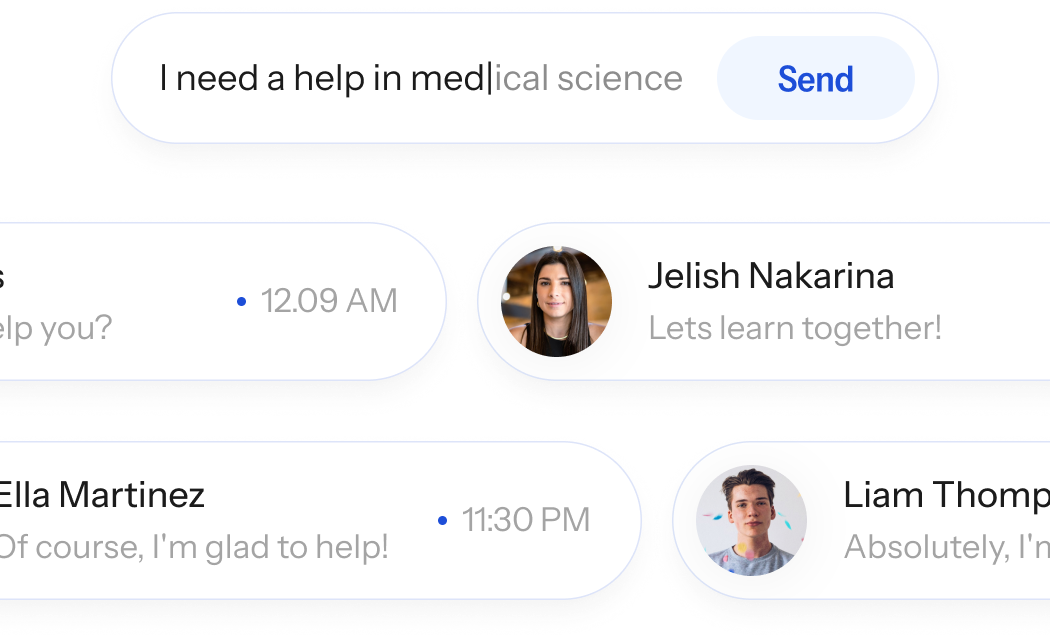
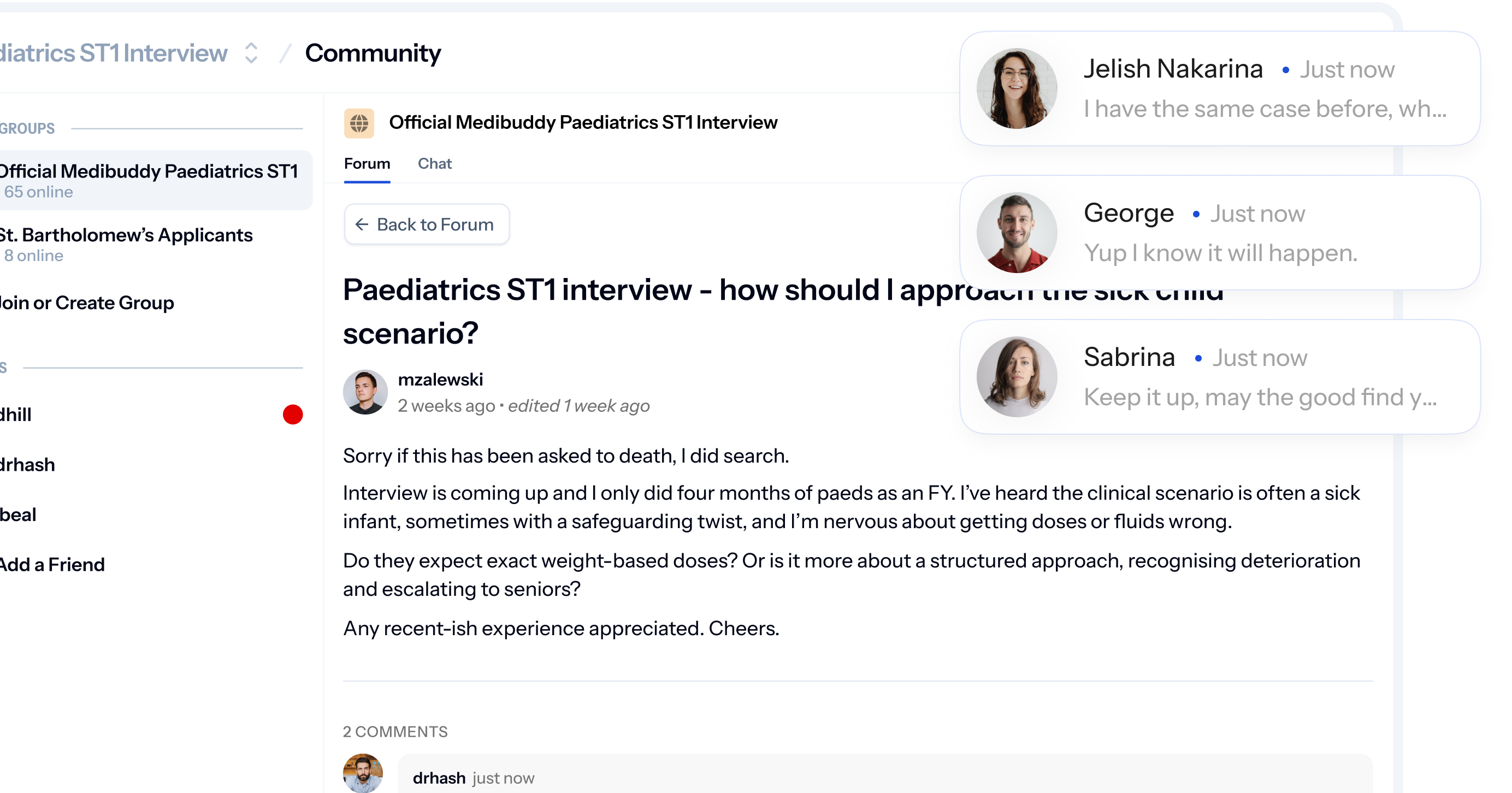
Most people only ever practise with one or two friends. Study Groups connect you with candidates right across the country sitting the same interview.
Live MocksBeta
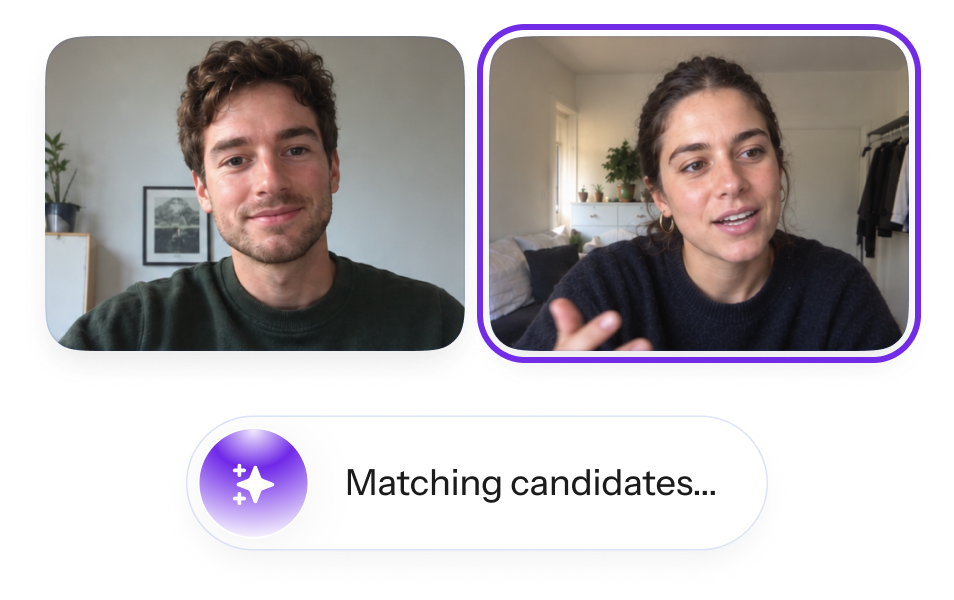
Practise interview technique with different candidates
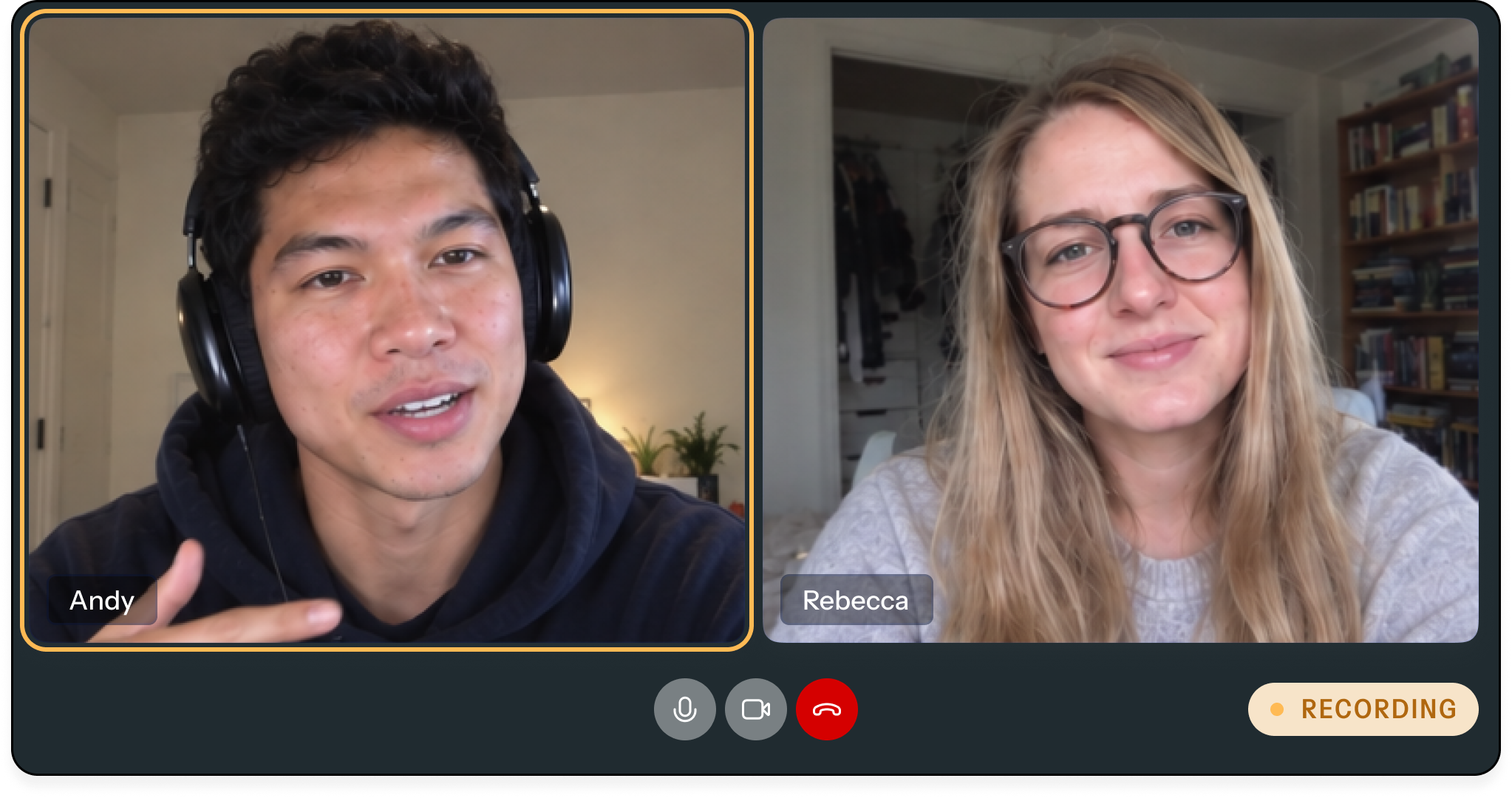
Arrange or get matched on demand with other candidates and run real scenarios out loud under interview conditions. Those who practise with the widest range of people tend to score the highest.
Peer FeedbackBeta
Reviewed by candidates across the platform
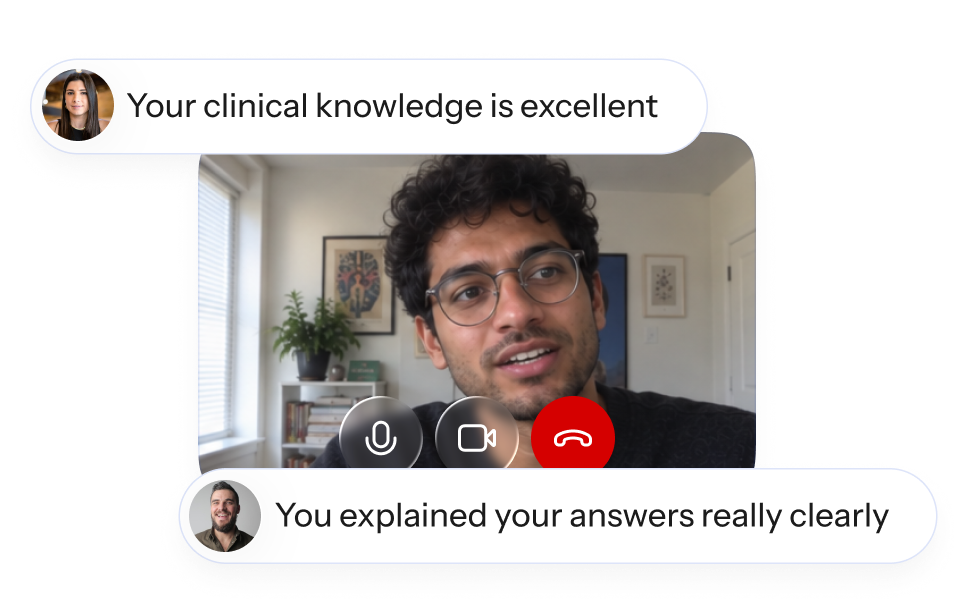
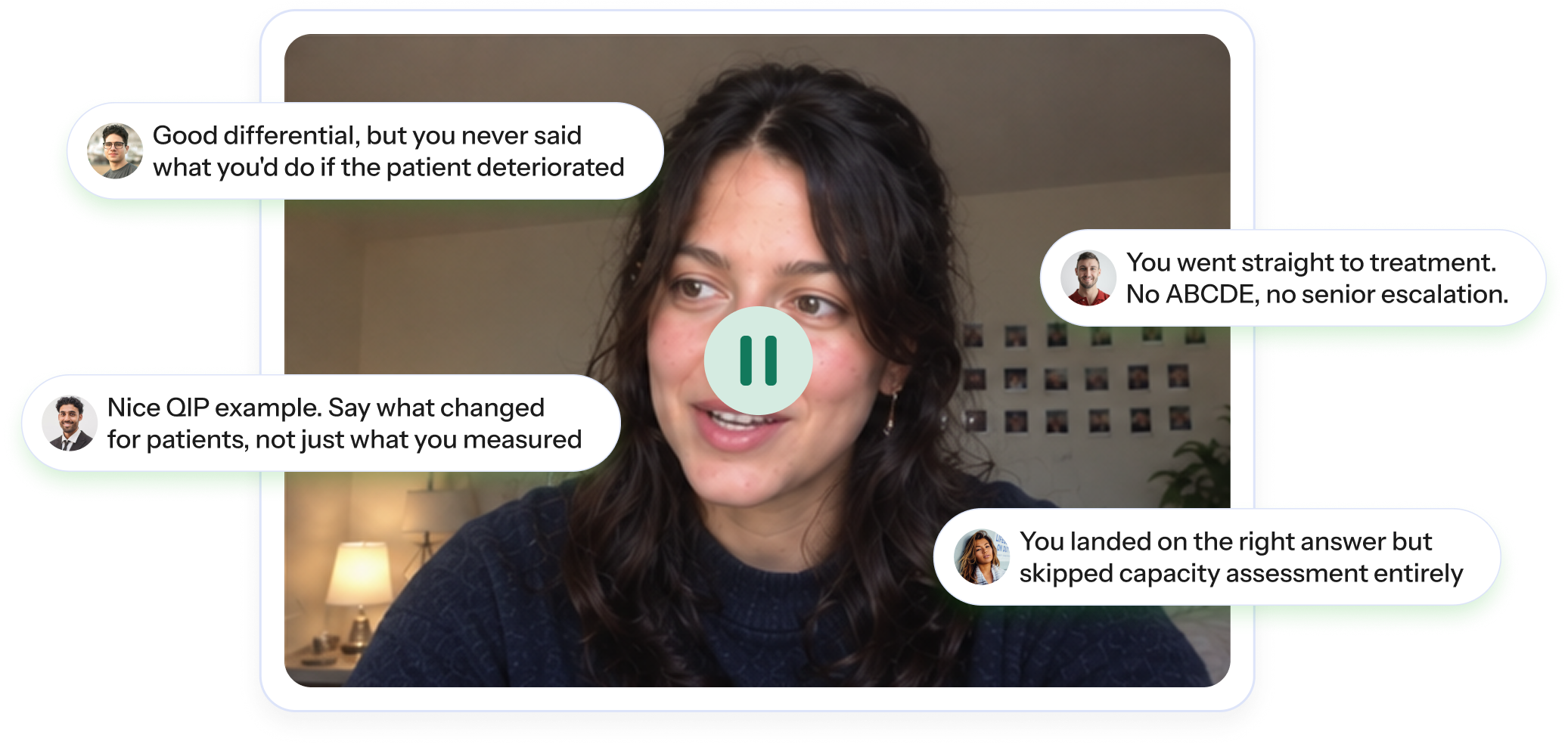
Submit your recorded mocks to candidates across the platform and get honest, varied feedback. Reviewing other people's mocks teaches you just as much.
The question bank, and other candidates to practise with, all in one platform.
Paediatrics Revision Platform • £89.99
Gain access to over 40 scenarios across all four interview domains, and collaborate with other candidates through Study Groups, Live Mocks and Peer Feedback.
The Revision Platform, plus the Paediatrics ST1 Knowledge Course. A model answer shows you how to structure your response, while each Knowledge Course module teaches one paediatric topic in depth, so you can keep going when the panel asks challenging follow-up questions.
A few of the candidates who prepared with us for the Paediatrics ST1 interview.
ChibuikePaediatrics ST1 candidate
"What I loved most about Medibuddy was the conversational, exam-oriented approach, and how it tries to bring everything to life. One could imagine themselves in the scenarios being described. That was quite helpful for someone like me, an IMG with no UK Paediatric experience."
Nikita PadmakumarPaediatrics ST1 candidate
"It was very useful and representative of the real questions."
Part 1 • See the questions
The Medibuddy 2027 Paediatrics ST1 Question Bank
Each domain lasts up to 10 minutes, so you have a limited window to deliver the high-scoring answers you need to do well. That means every point has to land, and knowing how to structure each answer is essential. That's why each of our 40-plus scenarios comes with a model answer, written by candidates who scored highly in the Paediatrics ST1 interview, so you know exactly how to approach every question the interviewers throw your way.
What's inside
What's included in the Paediatrics ST1 Question Bank
There's nothing worse than getting to the interview and being handed a scenario you've never seen before. The panel has a huge range of topics to draw on, so the safest approach is to revise across all of them. We provide scenarios for every domain, including the common ones and the more unusual cases that have come up before, so you don't get caught out.
Communication
Role-play scenarios where you explain a clinical condition, or the reasons for an intervention or transfer, to a parent or colleague. Each comes with a model answer showing how to communicate clearly and score well under pressure.
Career Motivation
Your chance to show your enthusiasm and suitability for paediatrics now that a physical portfolio is no longer required. We provide prompts and ideas to help you prepare focused and convincing answers.
Reflective Practice
Assessed on how well you reflect on your experiences, what you've learnt, and the impact on your practice since. Our worked answers show you how to structure a high-scoring reflection.
Paediatrics Clinical Reasoning
Example scenarios with a clear, methodical approach to common clinical problems, plus comprehensive guidance on how to work through them under pressure.
Updated for 2027
5 scenarios updated.
Try it
Try an example Paediatrics ST1 question
You are an FY2 working in A&E. A nurse asks you to urgently review 8-month-old Kai, who he's worried looks very unwell. His parents brought him in: he's been feeding poorly for two days, and this morning became lethargic and floppy with a fever. He then had a 30-second seizure, witnessed by his parents, who called an ambulance.
How would you assess and manage this child?
Question
How would you approach the initial assessment?
Example answer
This is a critically unwell infant, so I'd escalate immediately — calling the paediatric registrar and resus team, with a low threshold for a 2222 call — and work through an A-to-E assessment, treating problems as I find them.
Airway: check it's patent and that he can maintain it, using airway manoeuvres or an adjunct if needed. Breathing: assess respiratory rate, saturations and effort, auscultate the chest, and give 15 litres of oxygen via a non-rebreathe mask.
Circulation: assess heart rate, blood pressure, capillary refill and perfusion; get IV access and take bloods including cultures and a capillary gas for lactate and glucose; add clotting and a meningococcal PCR if there's a petechial rash; give a 10ml/kg saline bolus and start IV antibiotics.
Disability: check glucose, temperature and conscious level (AVPU or GCS). Exposure: check the nappy and send urine, look for a rash, and assess the fontanelle and neck stiffness.
Question
His obs show a heart rate of 175, BP 78/42, a capillary refill of 4 seconds, GCS 10 and a temperature of 39.2°C, with a bulging fontanelle and a spreading non-blanching purpuric rash. What is your immediate management?
Example answer
This is septic shock with suspected bacterial meningitis, so I'd start the paediatric sepsis pathway without delay and get senior and PICU input. High-flow oxygen, IV or intraosseous access, blood cultures and bloods, and immediate IV antibiotics — I would not delay antibiotics to perform a lumbar puncture.
I'd give a 10ml/kg fluid bolus and reassess frequently, consider aciclovir if HSV encephalitis is possible, and monitor glucose, lactate, urine output and neurological status closely.
Question
The nurse asks whether you should do a lumbar puncture now. What do you say?
Example answer
Not at this point. Kai is shocked, has a reduced GCS and has had a recent seizure, with a spreading purpuric rash — all contraindications to an immediate LP. The priority is to stabilise him and treat with antibiotics; an LP can be considered later, once he's stable and any contraindications have resolved.
Normally, if an LP and antibiotics can both happen within an hour, you'd do the LP first — but never when the child is this unstable.
Question
After antibiotics and fluids he improves — capillary refill back to 2 seconds, BP 88/50, and he's more responsive though still drowsy. What next?
Example answer
Ongoing management with the senior team and PICU, with close neurological and physiological monitoring. A lumbar puncture only once he's stabilised and free of contraindications, sending CSF for microscopy, culture, glucose, protein and PCR.
I'd review the antibiotics once microbiology is back, and involve infection control and public health for contact tracing and prophylaxis (ciprofloxacin for close contacts) where indicated.
Question
What's the key learning point here?
Example answer
Recognise the unwell child, work through A-to-E, treat septic shock, give immediate IV antibiotics, and recognise meningitis — without delaying antibiotics for a lumbar puncture, deferring the LP while contraindications remain, and escalating to seniors and PICU early.
As an FY2 the panel isn't testing detailed CSF interpretation. They want to see you recognise a seriously unwell child, start time-critical treatment, and understand that stabilisation and antibiotics come before the lumbar puncture.
That's one scenario. There are over 40 more.
Paediatrics Revision Platform • £89.99
Includes every scenario in the Question Bank, and access to Study Groups, Live Mocks with other candidates and Peer Feedback.
Everything in the Revision Platform, and the Paediatrics ST1 Knowledge Course: 7 modules covering the paediatric topics behind the clinical reasoning domain, so you can apply your clinical knowledge to challenging follow-up questions.
The Paediatrics ST1 interview changes from year to year, and the biggest fear for any candidate is getting to interview day and realising you've revised with a question bank that's totally outdated.
That's why we review and update every Question Bank twice a year, so you know you're revising with scenarios that are likely to come up. We do this in April after the previous year's interviews, and again in October when the new recruitment guidance is published.
For 2027, this process meant updating five scenarios in the Paediatrics ST1 Question Bank, allowing the question bank to stay closely aligned with the real interview.
Updated for 2027 Interviews
Part 2 • Practise them live
The only interview resource where you can practise live with other candidates from across the country
Our Paediatrics ST1 Question Bank gives you the questions and the model answers. But how you practise with them will determine how many marks you score. Simply reading answers off a screen won't prepare you for the intense scrutiny you'll face in the interview. And only practising with the same few colleagues or friends limits the amount of feedback you'll get. Medibuddy gives you unique access to Paediatrics ST1 candidates across the country, so you can learn from a variety of perspectives and hear a far wider range of feedback than your own circle could ever give you.
Study Groups
When you prepare in isolation, you're relying on your own interpretation of the interview process, which is one of the quickest ways to get found out on the day. Study Groups connect you with other doctors across the country who are also applying to Paediatrics ST1, so you can engage and network with people preparing for the same interview as you. Everyone brings different experience from different hospitals and deaneries, meaning you won't ever miss out on the key bits of information that could swing the interview in your favour.
Live MocksBeta
Candidates who don't take part in mocks often struggle to adapt to the pressure of the interview. Your knowledge might be correct, but without convincing delivery the interviewers will score you poorly. The best way to improve your delivery is to take part in as many live mocks as possible, which is why we haven't put a cap on how many you can do. We also know how difficult it can be to organise mocks with other people, so all you have to do is join the waiting room and we'll match you with a different Paediatrics ST1 candidate each time. Take turns as both the interviewer and candidate on real Question Bank scenarios, so you can see exactly how other candidates perform in real time, while refining your own interview technique.
Peer FeedbackBeta
Preparing alone means you won't know how you're coming across during the interview. And preparing with the same few candidates means you'll miss opportunities to improve, which is why it's so important to get as many opinions as possible on your performance. With Medibuddy, you can record a mock and submit it for feedback from other candidates on the platform, so you receive a wider range of feedback and refine your answers with each person you practise with. Reviewing other people's mocks is just as valuable, as it shows you how strong candidates handle the same scenarios, which is one of the fastest ways to improve.
Pick your plan
Choose the Paediatrics ST1 Revision Platform, the Knowledge Course, or both
The Revision Platform gives you access to the Question Bank and the chance to practise alongside other candidates, providing the foundation for your interview preparation. However, when you're doing well, interviewers will often throw in curve-ball questions to test the depth of your clinical knowledge. If you can't answer these questions, you won't get the top marks and your final ranking will suffer. The thing is, you can only answer them well if you really understand the topics, which is why we recommend adding our Paediatrics ST1 Knowledge Course to your subscription (£31.99 saved if you buy both together).
What the Paediatrics ST1 Knowledge Course covers
7 video lectures, over 4 hours, taught by paediatric trainees and registrars who've recently been through ST1 selection.
ENT ConditionsHaematological & Oncological ConditionsMusculoskeletal ConditionsPaediatric CardiologyPaediatric DermatologyPaediatric GastroenterologyPaediatric Neonatology
Every module covers:
Core clinical understanding
Presentation and recognition
Investigation and management principles
Safety considerations and complications
Watch a lecture before you buy
A sample Knowledge Course module on common paediatric respiratory presentations: how to assess and manage them, and the clinical reasoning the panel is looking for.
Free to watch, no sign-up.
"What I loved most about Medibuddy was the conversational, exam-oriented approach, and how it tries to bring everything to life. One could imagine themselves in the scenarios being described."
Paediatrics ST1 is competitive, with 2,680 doctors applying for just 476 posts. That's more than five candidates for every place.
The 2027 interview consists of four domains, each lasting up to 10 minutes.
Domain 1
Communication
You'll have 5 minutes before the interview to read a role-play scenario where you have to explain a clinical condition, or the reasons for an intervention or transfer, to a parent or colleague. With communication such an integral part of paediatric practice, this scenario aims to assess your ability to interact with patients and parents/carers.
Domain 2
Career Motivation
This is your opportunity to demonstrate your enthusiasm and suitability for paediatrics, so it's vital that you know what's involved in a paediatrics career, and can showcase the required personal attributes and transferable skills.
Domain 3
Reflective Practice
This domain asks you to reflect on a significant event in your career, explain what you learnt from it and show how you'll apply that learning in the future.
Domain 4
Paediatrics Clinical Reasoning
This domain requires you to manage a case-based scenario, and will assess your ability to demonstrate a clear and methodical approach to clinical problems.
How the interview is scored
Each domain is marked against the Paediatrics ST1 person specification. Our model answers are structured against what each domain is really testing, so you know exactly what a strong, well-organised answer looks like.
Get ready
How to prepare for the Paediatrics ST1 interview
Start with the Question Bank
Work through 40+ scenarios across all four domains, each with a worked answer from a candidate who scored well in the 2026 interview. Start by reading how a strong answer is formed, then think about how you'd deliver it.
Talk the hard ones through in Study Groups
Study groups are your biggest opportunity to network and connect with other candidates sitting the same interview as you. Everyone on the platform is in the same boat as you, so don't be scared to get involved and ask questions. After all, someone in your study group might just help you work through a scenario you've been struggling with.
Rehearse out loud in Live Mocks
Live mocks are where you begin to put everything you've learned into practice, and we know from experience that those who practise with a wide range of candidates usually do the best. So organise mocks with people from one of your study groups, or get matched with a random Paediatrics ST1 candidate, then take turns as interviewer and candidate using real scenarios until answering out loud under pressure feels normal.
Get reviewed with Peer Feedback before the day
Once you've recorded a mock, you can have other community members review it. This allows you to see how you come across to other people, and gives you time to refine your delivery as you revise, rather than being caught out on the day. Reviewing other people's mocks is just as crucial, as you can see how other candidates navigate the same scenarios as you.
Build the clinical depth behind your answers
Your initial delivery might be perfect. However, without a deep clinical understanding of common paediatric conditions, you won't be able to answer those tricky follow-up questions, and the interviewers won't give you the top marks. By adding the Paediatrics ST1 Knowledge Course to your subscription, you'll gain access to 7 lectures that provide the in-depth knowledge needed to answer the most challenging curve-ball questions in the clinical reasoning domain.
Questions
Frequently asked questions
What does the Paediatrics ST1 interview involve?
The 2027 interview is four domains, each lasting up to 10 minutes: Communication, Career Motivation, Reflective Practice, and Paediatrics Clinical Reasoning.
How competitive is the Paediatrics ST1 interview?
Very. In the 2025 round there were 2,680 applicants for just 476 posts, more than five candidates for every place.
Who writes the model answers?
High-scoring candidates who sat the Paediatrics ST1 interview and secured competitive training posts.
Can I practise with other candidates?
Yes. Every Revision Platform purchase gives you the opportunity to connect with other candidates through Study Groups, Live Mocks and Peer Feedback.
How do the Live Mocks work?
All you have to do is join the waiting room, and we match you with another Paediatrics ST1 candidate. You can then take turns as interviewer and candidate on real Question Bank scenarios, allowing you to gain experience answering out loud to a real person before you ever sit in front of the panel.
What are Study Groups and how do they help?
Study groups are community forums for doctors across the country preparing for the same Paediatrics ST1 interview. You can ask questions, share what you're struggling with, and compare how you'd approach a scenario.
Can I get feedback on my interview performance?
Yes. After you've recorded a mock, you can ask other members to review it, allowing you to see which part of your answer needs fine-tuning.
Why use Medibuddy over other Paediatrics ST1 question banks?
We've been preparing doctors for specialty interviews for 10 years, and the Question Bank is updated every year by editors who've recently scored well in this interview. That means the scenarios always reflect this year's interview. And it doesn't just stop at a question bank. Every purchase includes access to Study Groups, Live Mocks and Peer Feedback, so you can revise alongside candidates across the country.
What's the difference between the Question Bank and the Knowledge Course?
The Question Bank includes over 40 scenarios with model answers across the four interview domains, alongside Study Groups, Live Mocks and Peer Feedback. The Knowledge Course builds the clinical understanding behind those answers, so you can reason through follow-up questioning. It contains 7 modules and over 4 hours of teaching from paediatric trainees who've recently scored well in the interview. They work best together, and the Bundle saves you £31.99 compared with buying both separately.
How do you keep the Paediatrics ST1 Question Bank up to date?
We update the question bank twice a year. In April, after that year's interviews, we review the scenarios and model answers against what candidates actually encountered on the day. We then review the question bank later in the year when the new recruitment guidance is published. For 2027, that meant five scenarios were updated.
How long do I get access for?
Access runs for 12 months from the purchase date.
Start preparing for the Paediatrics ST1 interview
The Revision Platform gives you over 40 scenarios to practise and refine with other candidates through Study Groups, Live Mocks and Peer Feedback.
Most candidates add the Knowledge Course for £58.00, which contains 7 video lectures on the paediatric topics behind the clinical reasoning domain. It's the natural add-on if you want to score top marks in the interview.
Get The Bundle: Revision Platform + Knowledge Course for £147.99



 Close
Close



 ENT Conditions
 Core clinical understanding
 Presentation and recognition
 Investigation and management principles
 Safety considerations and complications

