Close
Close

 2nd March 2026
UK Foundation Programme Office (UKFPO): Overview 2026
If you’re approaching the end of medical school, you might be starting to think about the UK foundation programme for 2026. This guide provides a handy overview of the UKFPO, how to apply and the UKFPO timeline (so you don’t miss any key dates!). You’ll also find information on other key areas relating to the UKFPO, including the specialist foundation programme (SFP), the foundation priority programme, psychiatry foundation fellowships and less than full time training (LTFT).
Please note: Recruitment to Specialised Foundation Programmes (SFP) is changing for 2026. You can find out more below.
Do you need to take the MLA?
Our new MLA question bank, designed specifically to match the exam syllabus, can help!
The MLA syllabus differs from old-style medical finals or the PLAB.
Ensure that any question bank provider you use hasn’t just changed the name of their old question bank. Medicine is vast, and you may waste considerable time revising topics not in the MLA.
All providers should be able to give you a breakdown of exactly how their question bank matches the MLA content map. Find ours here.
UK foundation programme office (UKFPO)
Following medical school, you’ll undertake the UKFPO – a 2-year, work-based training programme – which aims to develop your clinical and professional skills in the workplace. The UKFPO is a continuation of your medical education and aims to ensure that newly qualified doctors deliver safe and effective patient care. The UKFPO bridges the gap between medical school and specialty or general practice training.
You’ll be allocated your UKFPO role through a ranking process – you can find out more in the ‘how do I apply to foundation training?’ section below – but in short, you’ll first rank the foundation schools in order of your preference, before then ranking the jobs within your allocated foundation school. The ranking process can be time consuming and frustrating; you can find tips on how to make the whole process easier and quicker in our Foundation Job Ranking blog.
How does the foundation programme work?
Through the UKFPO, you’ll complete a number of rotations in different medical and surgical specialties. These are designed to provide a balanced programme which allows you to meet the competencies and outcomes of the Foundation Programme (FP) curriculum set by the GMC.
The UKFPO is split into Foundation Year 1 (FY1) and Foundation Year 2 (FY2). Usually, you’ll undertake three rotations each year, but this does vary depending on your role. Regardless of rotations, FY1 and FY2 provide the following opportunities and outcomes:
FY1
Through undertaking supervised responsibility for patient care, you’ll consolidate your skills from medical school within the workplace. Following successful completion of FY1, you’ll be awarded a Foundation Year 1 Certificate of Completion (FY1CC) and recommended to the GMC for full registration. You can find out more about full registration here.
FY2
Although you’ll still be supervised, you’ll have greater responsibility for patient care, and begin to make management decisions as you progress towards independent practice. You’ll also contribute to the learning and development of the wider healthcare team, including nurses, medical students and less experienced doctors.
On successful completion of FY2, you’ll be awarded a Foundation Programme Certificate of Completion (FPCC). This indicates that you are beginning to demonstrate clinical effectiveness, leadership and decision making skills, which are essential for core, specialty or general practice training, and therefore are ready to begin one of these training programmes.
How do I apply to foundation training?
To apply for the UKFPO, you must register on Oriel and apply through the national FP vacancy during the national application window (see timeline below). You need to complete the national application form, which includes your foundation school preferences.
Once you have applied and submitted your foundation school preferences, you’ll be allocated a foundation school. You can find more information about foundation school preferences, including how to choose a foundation school and how these are allocated, in our Foundation Job Ranking blog.
Within your foundation school, you’ll then need to rank the jobs in order of preference.
Ranking your job preferences can be a difficult and lengthy task, and as it’ll determine which UKFPO role you’ll undertake and where you spend the next two years, it’s not one you want to undertake lightly. The simplest approach is to decide what is more important to you in terms of location and/or specialty and use this to order your jobs accordingly. For example, the applicant below prioritised the job specialties over the location and was interested in surgery.
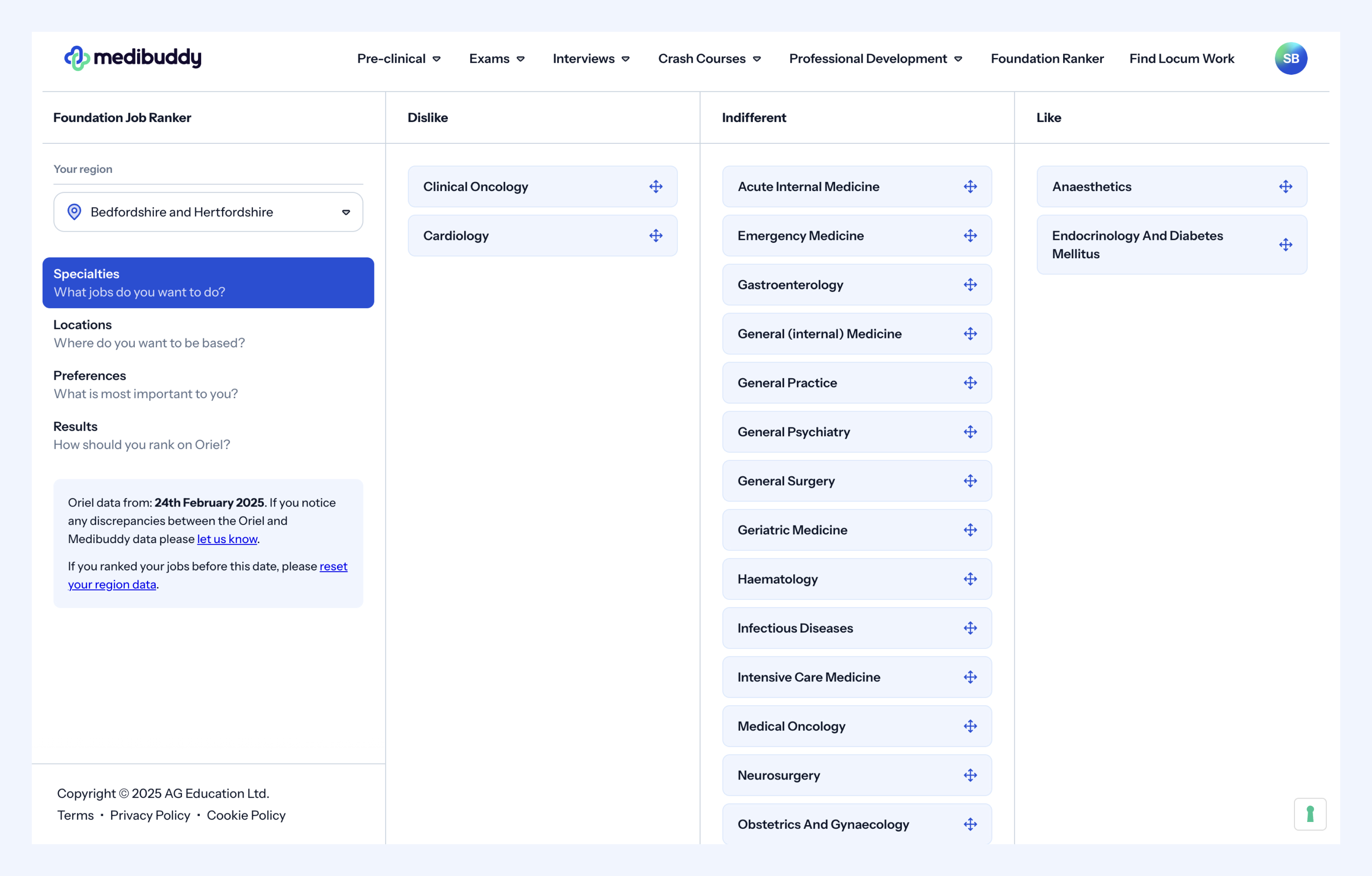
Using the Medibuddy foundation job ranker, they placed any surgery related specialties in the ‘like’ column. Any specialties they didn’t want or would rank low – such as General Practice and Psychiatry – they placed in the ‘dislike’ column, and any other specialties they put in the ‘indifferent’ column. Using this information, the available jobs in their foundation school were then automatically ordered to match their specialty preferences.
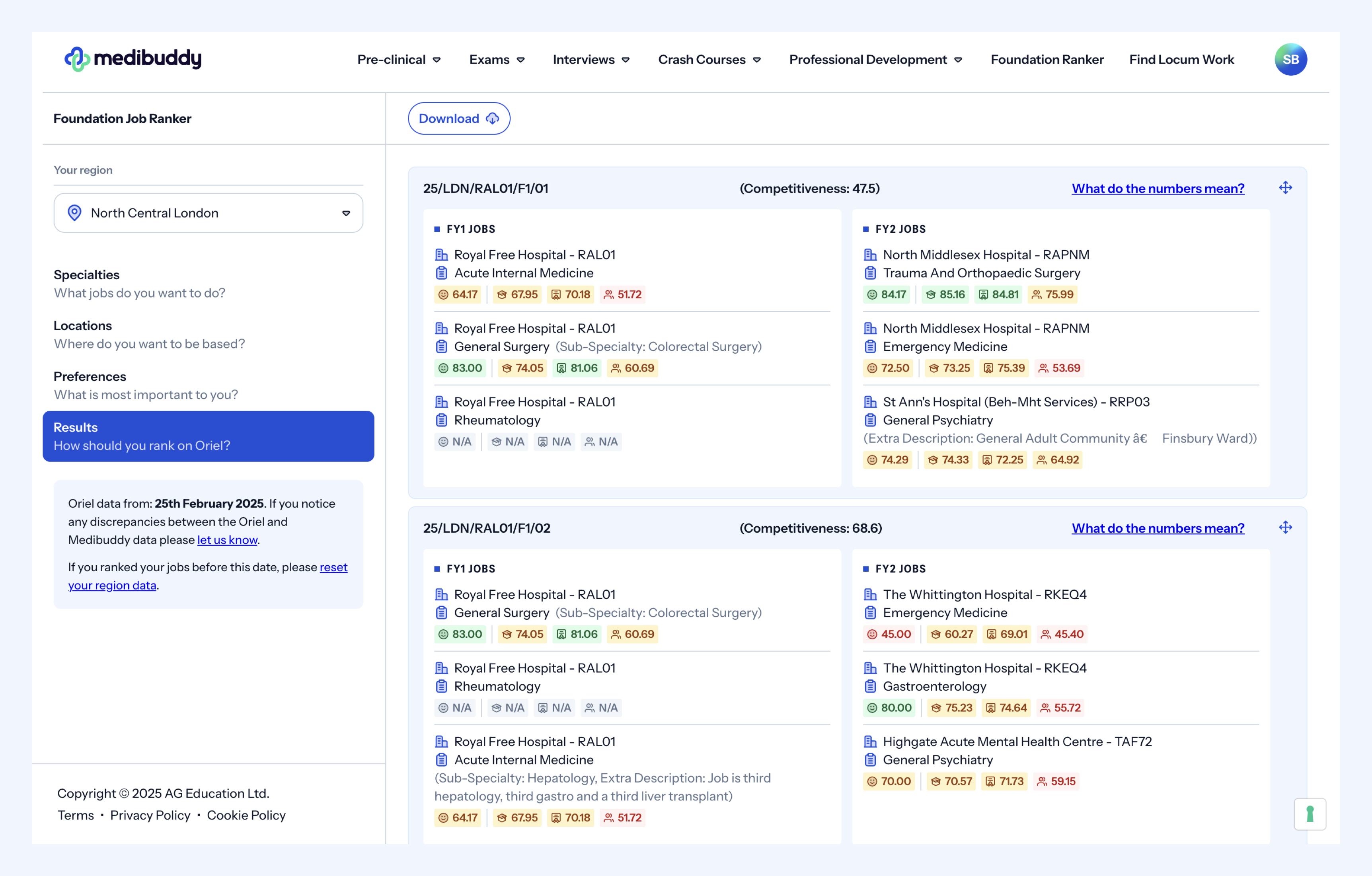
This would then be used to rank their jobs easily and effectively in Oriel.
Note: before you can register and apply on Oriel, you first need to be ‘nominated’, either by your medical school or the UKFPO’s Eligibility Office. You can find out more here.
What is Oriel?
Oriel is the national online application system for medical training in the UK. You complete all aspects of applying for the UKFPO in Oriel.
The Medibuddy foundation job ranker downloads the foundation jobs for your allocated foundation school directly from Oriel. This ensures that the job list in the foundation job ranker is identical to Oriel, making it simple for you to rank your choices easily in our system, before transferring them to Oriel.
For more information on how you rank your programme preferences in Oriel visit our Foundation Job Ranking blog.
Changes to Recruitment for Specialised Foundation Programmes for 2026
The recruitment process for SFP posts has been updated for 2026 in England. SFP posts now use a dual-pathway system:
Pathway 1 – Local Medical School Selection: Some posts are selected by your own medical school, and successful applicants are automatically matched to the SFP programme on Oriel.
Pathway 2 – Preference Informed Allocation (PIA): The remaining posts are allocated through the main Foundation Programme allocation process using PIA. Applicants preference the SFP group after allocation to a foundation school and are then matched to individual SFP programmes.
All applicants must still complete the main Foundation Programme application on Oriel, even if applying via local selection.
These changes aim to create a fair and consistent recruitment process across all SFP posts while ensuring applicants have clear access to both school-selected and centrally allocated posts.
UKFPO allocation process – Preference Informed Allocation (PIA)
Preference Informed Allocation (PIA) was introduced for the UK FP allocation process in 2024 and continues to be used for the 2026 UKFP allocation process.
Under PIA, all applicants are assigned a computer-generated rank. The algorithm on Oriel then works through applicants in this rank order, allocating as many applicants as possible to their first-choice foundation school and then foundation programme. The same rank is used for both school and programme allocation.
This process replaces the previous Foundation Programme Application System (FPAS) points, which combined the Educational Performance Measure (EPM) and Situational Judgement Test (SJT). Applicants are no longer required to take the SJT, and EPM scores no longer influence allocation.
You can learn more about the PIA process here.
Eligibility & Evidence Requirements for UKFP
Removal of Dean’s Statement
Changes introduced in recent years, including the removal of the Dean’s Statement and updates to primary medical qualification (PMQ) evidence requirements, continue to apply. Eligibility route applicants must provide proof of their PMQ through one of the following methods:
- Qualified from Medical School and Possess Medical Degree Certificate:
- Submit a copy of your medical degree certificate.
- Qualified from Medical School but Have Not Yet Received Medical Degree Certificate:
- Provide a letter from your medical school dean confirming your qualification.
- Not Yet Qualified from Medical School:
- Submit a letter from your medical school dean confirming your future qualification.
English language proficiency requirements
Applicants whose primary medical qualification is from a country where English is not the first language must provide evidence of English proficiency via one of the following:
- Primary Medical Qualification (PMQ)
- IELTS Certificate
- OET Certificate
Primary Medical Qualification (PMQ)
A PMQ is accepted as evidence of English language proficiency if obtained from a medical school in a country where English is the first language.
Some important notes to be aware of:
- If you earned your PMQ from a university outside the UK, you will be considered as having studied in the country where the campus is located.
- If you studied at an overseas campus of a UK university, you will be deemed to have studied in the UK.
- If your PMQ is from a country where English is not the first language, you must provide an IELTS or OET certificate.
IELTS Certificates
For UKFP 2026, only the Academic and UKVI (Academic) versions of the IELTS test will be accepted. The minimum required standard remains a score of 7.5 in each skill (speaking, listening, reading, and writing) on the same Test Report Form (TRF). Tests must fall within the period 05 August 2024 to 01 July 2025.
IELTS One Skill Retake: The UKFPO accepts the IELTS One Skill Retake option, provided the final result can be verified on the IELTS verification portal.
OET Certificates
The requirements for OET certificates remain unchanged. Applicants must score 400 in each skill in a single test sitting, and the tests must also be dated between 05 August 2024 and 01 July 2025.
Eligibility condition for applicants whose medical school is listed on the GMC’s qualifications list
If your primary medical qualification (PMQ) appears on the GMC’s list of accepted overseas medical qualifications, you have an additional eligibility condition to meet. You must submit evidence as a letter or email, which the UKFPO will then review on a case-by-case basis.
The deadline to submit this evidence is 04 September 2025. You must provide sufficient evidence by this deadline to ensure your application is accepted.
UKFPO Timeline
To Secure your UKFPO role, the key things you must do are:
- Complete your eligibility application form (if applicable). Or confirm your nomination (this is applicable for UK graduates who will be nominated by their medical school).
- Register on Oriel
- Complete the national application form during the national application window. This is when you’ll rank your foundation school preferences – see our Foundation Job Ranking blog for more information.
- Rank the foundation jobs within your allocated foundation school in order of preference using your location and/or specialty preferences to guide you. Below is an example of an applicant whose parents live near the Royal Victoria Infirmary Hospital (RVI) in Newcastle. As their main objective was to remain close to home for convenience, they chose the RVI and hospitals nearby – such as the Freeman Hospital and Walkergate Park Hospital in Newcastle – as their preferred locations by placing them in the ‘like’ column. The others they’ve then placed in the ‘indifferent’ or ‘dislike’ column, depending on their closeness.
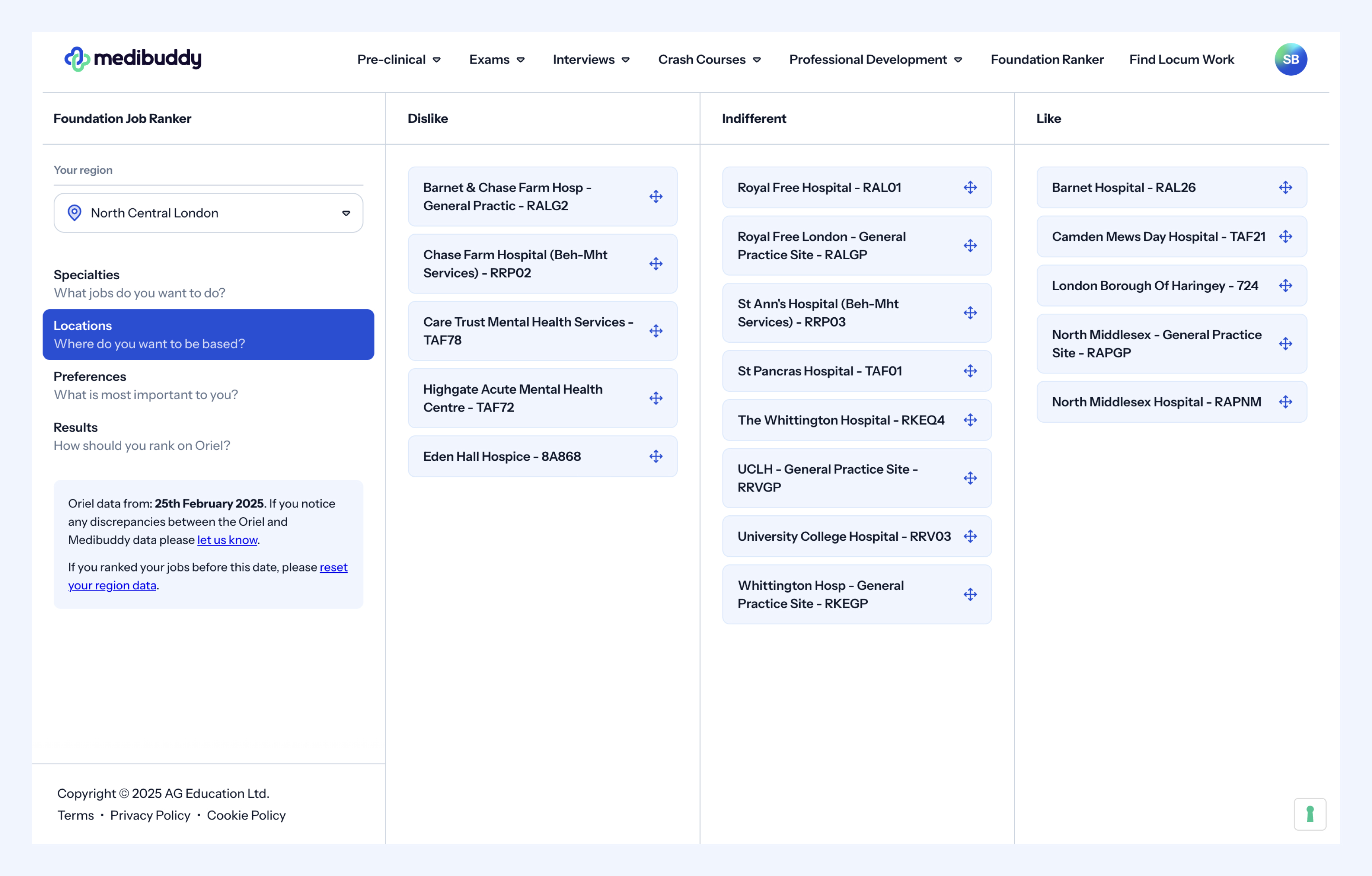
Using these preferences, the foundation job ranker simply arranged the available jobs to ensure that those close to the applicant’s home address were ranked first.
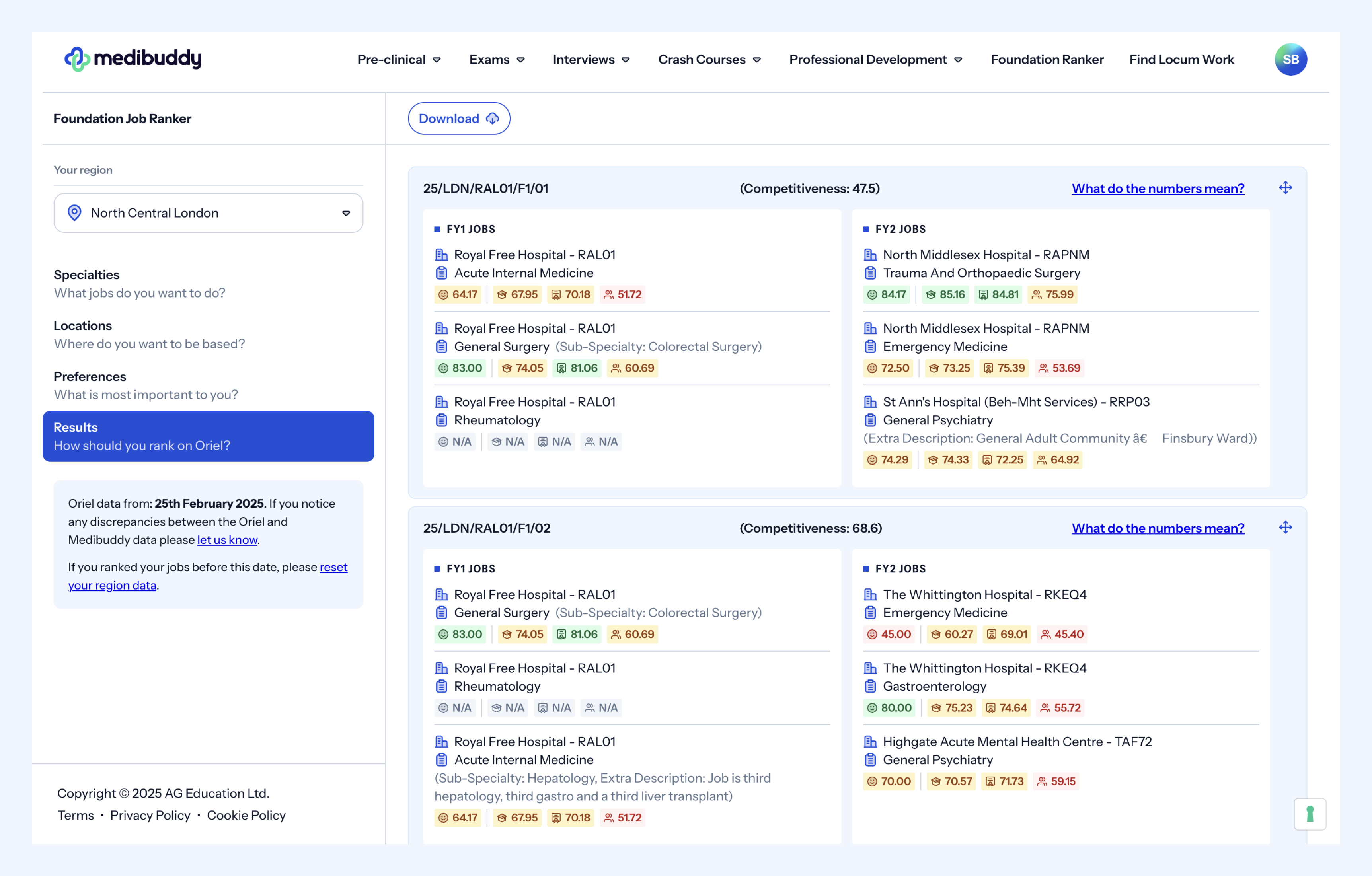
As you can see, jobs at the Royal Free Hospital, North Middlesex Hospital and St Ann’s Hospital have been prioritised, meaning they can now use this to rank their jobs in Oriel easily and quickly.
The following is an overview of the key dates in relation to the UKFPO 2026:
| Recruitment Activity | Dates |
|---|---|
| Eligibility application window | 2 – 23 July 2025 |
| Oriel registration opens | 16 September 2025 |
| National application window | 24 September 2025 – 8 October 2025 |
| Deadline to rank and amend Foundation School/UoA preferences for FP on Oriel | 24 February 2026 |
| Reference submission window opens | 26 February 2026 |
| Allocation to Foundation School | 12 March 2026 |
| Programme preferencing window (1-stage process) | 12 March 2026 (12pm GMT) – 14 April 2026 (12pm BST) |
| Group preferencing window (2-stage process) | 12 March 2026 (12pm GMT) – 23 March 2026 (12pm GMT) |
| Group match results released | 1 April 2026 |
| Programme preferencing window (2-stage process) | 1 April 2026 (3pm BST) – 14 April 2026 (12pm BST) |
| Programme match results released to applicants | 22 April 2026 |
You can also find a full breakdown of all dates relating to the UKFPO 2026, including when guidance is published and pre-allocation dates, here.
Less than full time training (LTFT)
Whilst applying for the UKFPO, you’ll have the option to indicate on your application form if you would like to train on a less than full time basis. Once you have been allocated a foundation school, it is recommended that you discuss this with them. When it comes to ranking the jobs within your foundation school, you should only rank jobs you wish to be considered for – those offering less than full time working – and any you would not accept should be listed in the ‘not wanted’ column.
For more information on how to effectively rank the foundation jobs – whether you’re applying for LTFT or not – visit our Foundation Job Ranking blog. Or, if you’ve already got a region in mind, you can take a look at the various jobs that were available in 2025 using our Foundation Job Ranker (we’ll be updating with the 2026 jobs when Oriel releases them).


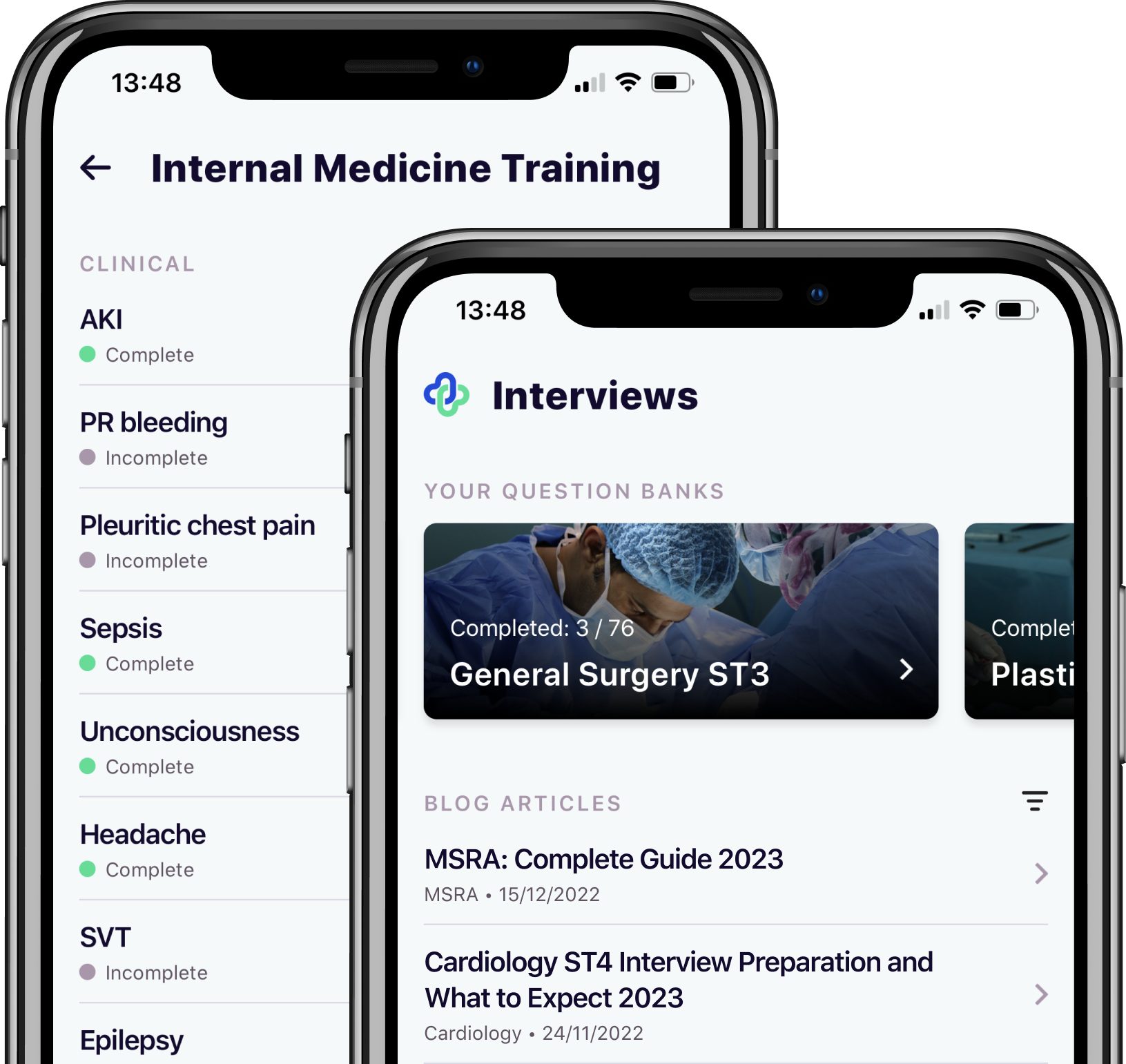
Take your subscriptions with you
Our mobile app allows you to access your interview and exam question banks wherever you are.