Close
Close

 3rd July 2026
Complete Guide to Chemical Pathology ST3 Application and Recruitment (2026)
If you’re putting together a Chemical Pathology Application for the 2026 round, this guide is designed to walk you through it from start to finish. Chemical Pathology is a UK-wide, uncoupled higher specialty programme entered at ST3, with an indicative five years of training under the RCPath 2021 curriculum and recruitment coordinated nationally through Oriel. We’ll cover eligibility, the application timeline, how the self-assessment is scored, what to put in your portfolio, and how the five-application Round 1 cap affects your strategy. The interview itself is summarised briefly here and covered in full on the Chemical Pathology ST3 Interview Question Bank page. Let’s start with the headline facts.
Key Facts at a Glance
- Competition ratio (2025): 2.3:1 (46 applications, 20 posts UK-wide)
- Training length: Minimum 5 years ST1–CCT, around 3 years ST3 to CCT
- Key entry requirement: MRCP(UK) Part 1 at application, full MRCP(UK) by offer (or MRCPCH route)
- Recruitment platform: Oriel, national process coordinated by East Midlands
- Application window (2026): 20 November – 11 December 2025
- Interview date (2026): Virtual interviews on 20 March 2026
Table of Contents
- What Is Chemical Pathology ST3 Higher Specialty Training?
- Is Chemical Pathology ST3 Competitive and What Is the Lifestyle Like?
- Chemical Pathology ST3 Eligibility Criteria and Entry Requirements
- How to Apply for Chemical Pathology ST3 National Recruitment
- Chemical Pathology ST3 Recruitment Timeline and Key Dates (2026)
- Chemical Pathology ST3 Competition Ratios and Application Trends
- How Chemical Pathology ST3 Applications Are Scored (2026)
- Chemical Pathology ST3 Self-Assessment and Portfolio: How to Maximise Your Score
- The Chemical Pathology ST3 Interview: A Brief Overview
- Chemical Pathology ST3 Offers, Preferencing and What Happens Next
- Frequently Asked Questions About Chemical Pathology ST3 Application
- Chemical Pathology ST3 Useful Resources
What Is Chemical Pathology ST3 Higher Specialty Training?
Chemical Pathology is the laboratory medicine specialty that bridges the diagnostic lab and the clinic, covering everything from electrolyte interpretation and endocrine biochemistry to inherited metabolic disorders, lipid disorders and nutrition. Higher specialty training is entered at ST3, after foundation and a period of core medical training (typically Internal Medicine Training or core paediatrics, evidenced by MRCP(UK) or MRCPCH at the point of application).
The programme is uncoupled, run-through from ST3 to CCT, with an indicative minimum length of five years. The curriculum is set by the Royal College of Pathologists (RCPath) and approved by the GMC. Recruitment is coordinated UK-wide via NHS England, with Scotland, Wales and Northern Ireland participating through their own deaneries.
A few things worth knowing before you apply:
- Integrated curriculum. The current RCPath 2021 curriculum merged Chemical Pathology and Metabolic Medicine into a single framework, built around Capabilities in Practice (CiPs) and Generic Professional Capabilities (GPCs). This remains the curriculum in force for 2026 entrants.
- FRCPath exams. You’ll sit FRCPath Part 1 and Part 2 during training; both are required for CCT award.
- End point. Successful completion leads to a Certificate of Completion of Training (CCT) in Chemical Pathology, with entry onto the GMC Specialist Register, the qualification needed for a substantive NHS consultant post.
- Regional variation. Entry criteria and curriculum are uniform across the UK, but deaneries (Wessex, Yorkshire and Humber, Scotland and others) manage their own rotations, host trusts and local advertised programme lengths. For specifics, check the deanery you’re applying to alongside the national applicant handbook.
Is Chemical Pathology ST3 Competitive and What Is the Lifestyle Like?
Chemical Pathology ST3 is a small-numbers specialty with a niche profile, and ST3-specific competition ratios aren’t routinely published in the headline national tables, so it sits outside the high-volume specialties like IMT or radiology. Posts are limited, recruitment is run nationally by the East Midlands office of NHS England on behalf of all four UK nations, and applicants typically come from a physician (MRCP) background, paediatrics, or via the chemical pathology ST1 run-through. That breadth makes ST3 a recognised re-entry point if you’re switching from another medical specialty.
Lifestyle. This is widely regarded as one of the more lifestyle-friendly hospital specialties. Day-to-day work is predominantly lab- and clinic-based: assay validation, quality control, authorising biochemistry results, advising clinical teams on test interpretation, and running clinics in lipids, diabetes, metabolic bone disease and inherited metabolic disorders. On-call is typically phone-based biochemistry advice rather than resident night shifts, though community accounts suggest workload varies by deanery and the integrated Metabolic Medicine clinical commitments do add ward and clinic time.
Career pathway. Since 2021 the curriculum integrates Chemical Pathology with Metabolic Medicine, so you finish with a dual identity: laboratory leadership plus direct patient care. Training runs around 5–5.5 years to CCT, with FRCPath Part 1 and Part 2 along the way. Total time from foundation to CCT is roughly eight years.
Salary. You’ll be paid on the standard NHS resident doctor scale. ST3 entry in England (nodal point 4) sits at roughly £61,825–£65,048 basic (2024/25), rising to around £73,992 at ST6+, plus London weighting (~£4,678) and any on-call enhancements where applicable.
Chemical Pathology ST3 Eligibility Criteria and Entry Requirements
Eligibility for Chemical Pathology ST3 is set by the annual Person Specification published by NHS England and aligned to the Royal College of Pathologists (RCPath) curriculum. The same document applies across England, Scotland, Wales and Northern Ireland, so wherever you’re applying from in the UK, the criteria are the same. Always cross-check the current year’s handbook before you submit, as the wording does shift year on year.
Here’s what you need to have in place by the relevant deadlines for the 2026 round:
- Primary medical qualification: MBBS or equivalent, accepted by the GMC.
- GMC registration: Full registration with a licence to practise at the time of application.
- Foundation competences: Sign-off of Foundation Programme competences (or equivalent), evidenced via a CREST form if you trained outside a UK foundation programme.
- Core training competences: Evidence of CT/ST1–2 level experience managing patients with metabolic and biochemical conditions, normally through Internal Medicine Training, paediatric core training, or ACCS.
- Postgraduate membership exam: For physician applicants, MRCP(UK) Part 1 by the application deadline and the full MRCP(UK) diploma by the offer date. Paediatric applicants need success in the MRCPCH theory exams, with the equivalent diploma route. Irish Basic Specialty Training plus full MRCPI by the offer date is also accepted, as is eligibility for the GIM Specialist Register.
- English language evidence: IELTS Academic (overall 7.5, minimum 7.0 in each domain) or OET Medicine (grade B in each component), in line with GMC standards.
- Right to work: Valid documentation at appointment; from 2026 the Medical Training Prioritisation policy ranks UK graduates and certain settled applicants above IMGs who started UK practice on or after 6 March 2025.
There’s no upper cap on post-foundation experience, so more senior applicants aren’t disqualified, though holding a CCT in the same specialty would make you ineligible. IMGs without GMC registration can enter via PLAB or the RCPath Sponsorship Scheme, which is specifically designed to support overseas chemical pathology entrants.
How to Apply for Chemical Pathology ST3 National Recruitment
Chemical Pathology ST3 is recruited through a single annual national process, led by NHS England East Midlands on behalf of England, Scotland, Wales and Northern Ireland, with all applications submitted via the Oriel portal. The mechanics below reflect the 2026 cycle; always cross-check the live East Midlands timeline and the NHS England 2026 person specification before you submit, as exact wording can change year on year.
Here’s how the process runs in practice:
- Register on Oriel and check eligibility. Set up your Oriel account well before the window opens and read the current Chemical Pathology ST3 person specification line by line. You’ll need to evidence completion of Foundation training (or equivalent), 24 months of Internal Medicine Training (or paediatric equivalent), and MRCP(UK) Part 1 held at the time of application. The full MRCP(UK) diploma must be in hand by the offer date.
- Confirm your application slots. Round 1 caps you at five specialty applications across all of UK recruitment, so plan your choices deliberately. There’s no application fee for using Oriel.
- Complete the application form. The form covers personal details, right to work, qualifications, employment history, fitness to practise declarations, referee nominations (typically three, including your current or most recent clinical supervisor; references are taken up later, usually around offer stage), and the scored self-assessment against the person specification domains.
- Upload your supporting documents. Expect to attach evidence of GMC registration, your primary medical qualification, MRCP(UK) Part 1, Foundation and IMT completion (or equivalent ARCP outcomes), and the portfolio items underpinning each self-assessment claim. Evidence must be in place by the published verification deadline.
- Submit before the deadline. For 2026 entry, applications opened on 20 November 2025 at 10:00 and closed on 11 December 2025 at 16:00 (UK time). Late submissions aren’t accepted, and Oriel can be slow in the final hours.
- Self-assessment verification and shortlisting. The Chemical Pathology selection panel reviews your self-assessment scores against the uploaded evidence and may adjust them up or down. Candidates above the cut-off are invited to interview.
- Interview and offers. Interviews ran 12–19 December 2025 via MS Teams, with Round 1 first offers expected by 31 March 2026. Any unfilled posts go to Round 2 (covering August–December 2026 starts).
If you’re unsuccessful, you’ll receive feedback at longlisting, self-assessment verification and interview stages. There’s no published cap on reapplications. You can apply again next cycle provided you still meet the person specification. Formal appeals exist but require evidence of a procedural failure, not disagreement with scoring judgement.
Chemical Pathology ST3 Recruitment Timeline and Key Dates (2026)
Chemical Pathology ST3 runs on the national Higher Specialty Training timetable, coordinated through Oriel with East Midlands as the lead deanery. Recruitment covers England, Scotland, Wales and Northern Ireland in a single round for posts starting in August 2026, so there’s only one window each year to plan around.
Here are the key dates for the 2026 intake:
| Stage | Date (2025/26) |
|---|---|
| Vacancies advertised | 19 November 2025 |
| Applications open (Oriel) | 20 November 2025, 10:00 |
| Applications close | 11 December 2025, 16:00 |
| Shortlisting outcomes / interview invitations | Late January – February 2026 (at least 7 days before interview) |
| Virtual interviews (England, Scotland, Wales) | 20 March 2026 |
| Virtual interviews (Northern Ireland, NIMDTA) | Set separately by NIMDTA, confirm on the NIMDTA recruitment site |
| Initial offers released via Oriel | Shortly after interviews (late March / early April 2026) |
| Offer holding deadline | ~13:00, 22 April 2026 |
| Offer upgrade deadline | ~16:00, 23 April 2026 |
| Posts commence | 5 August 2026 |
A few practical things to flag. There’s no separate evidence upload portal: self-assessment claims go into the Oriel application form itself, and verification evidence is requested electronically from shortlisted candidates before interview. Hold and upgrade deadlines are taken from the national HST timeline, so do cross-check yours against the NHS England recruitment timeline and your Oriel vacancy advert closer to the time, as exact times can shift slightly year to year.
Chemical Pathology ST3 Competition Ratios and Application Trends
Chemical Pathology is one of the smaller specialties at ST3 entry, which shapes how competition behaves year to year. Because it’s run as a single national recruitment process led by the East Midlands NHS England office, you’re ranked against one UK-wide list rather than competing regionally. NHS England publishes official applicant and post numbers on its Medical Hub each year.
Here’s how the most recent cycles look:
| Year | Applications | Posts (UK) | Ratio | Fill rate |
|---|---|---|---|---|
| 2025 | 46 | 20 | 2.30:1 | 100% (16/16 England; 2/2 Scotland) |
| 2024 | 26 | 18 | 1.44:1 | Not published |
The headline trend is that applications jumped noticeably between 2024 and 2025, while post numbers only nudged up by two. That pushed the ratio from 1.44:1 to 2.30:1, still modest compared with high-volume specialties, but a real shift in a small recruitment round where each extra applicant moves the needle.
A couple of things worth knowing. First, fill rates have consistently sat at or near 100%, so every post tends to be taken up: places aren’t going begging. Second, NHS England doesn’t publish a deanery-level breakdown for Chemical Pathology, so you can’t easily identify “quieter” regions to target. What you can do is take the rising ratio seriously: with only around 20 posts UK-wide, even a strong applicant needs a polished self-assessment and portfolio to land an offer. The 2026 round figures haven’t been published yet at the time of writing.
How Chemical Pathology ST3 Applications Are Scored (2026)
Chemical Pathology ST3 is recruited nationally through NHS England, with the East Midlands office as the lead recruiter for posts across England, Scotland, Wales and Northern Ireland, and applications made through Oriel. Your overall ranking comes from two scored stages: the Oriel application form (including a self-assessment of your portfolio) and the national interview. References are reviewed for fitness to practise but don’t contribute to your score.
The two scoring components
Eligibility is gated by the 2026 person specification, which requires evidence of progress toward FRCPath by examination and MRCP(UK) (or equivalent). Once you’ve cleared those essential criteria, your numerical score comes from:
- Self-assessment on the application form: you self-score against defined domains, then bring evidence to verify each claim at interview.
- Interview score: covering commitment to specialty and specialty-specific clinical and academic questions.
Weighting between application and interview
The lead recruiter doesn’t publish a Chemical Pathology-specific weighting document, but candidate-reported guidance describes a 2:1 interview-to-application split used across sibling pathology specialties (including Haematology): the raw interview mark (out of 40) is doubled to 80, and the self-assessment score (out of 40) is halved to 20, giving a combined total out of 100. On that model, your portfolio self-assessment contributes roughly 20% of your final ranked score and the interview the remaining 80%. Treat this as a working assumption rather than gospel, and confirm it against the lead recruiter’s applicant guidance for 2026.
What this means in practice
| Component | Approximate contribution | What it tests |
|---|---|---|
| Self-assessment (Oriel form) | ~20% | Portfolio evidence across defined domains, verified at interview |
| Interview | ~80% | Commitment to specialty plus specialty-specific clinical and academic stations |
| References | Not scored | Reviewed for fitness to practise only |
Because the interview carries the heavier weight, every self-assessment point you can defend with solid evidence is valuable, but interview performance is where most candidates are differentiated. We unpack what to expect at interview further down, with the full station-by-station breakdown reserved for the Chemical Pathology ST3 Interview Question Bank.
Chemical Pathology ST3 Self-Assessment and Portfolio: How to Maximise Your Score
Chemical Pathology ST3 is scored differently from the procedural specialties you may be used to. There’s no operative logbook, no case numbers: selection runs through a portfolio self-assessment matrix; candidate-reported guidance describes around 38 points distributed across six domains. Every claim you make on the form has to be backed by a PDF uploaded through Oriel’s evidence portal, and unsupported claims get downgraded at verification. With around 2.3 applicants per post in 2025 (46 applications, 20 posts per NHS England), a couple of well-evidenced points can move you up the rank list.
The six domains you’re scoring against
Based on the 2026 person specification and third-party scoring guides, the Chemical Pathology ST3 self-assessment covers:
- Achievements outside medicine: degrees, prizes, sustained extracurricular accomplishments
- Presentations and publications: PubMed-indexed papers score highest; regional/national oral presentations next
- Teaching: formal roles, sustained programmes, and recognised qualifications (PGCert/PGDip/Masters in medical education or FHEA tend to sit at the higher tiers in comparable ST3 frameworks)
- Audit and quality improvement: completed cycles where you can show your specific contribution
- Suitability for specialty: laboratory-relevant exposure, metabolic medicine clinics, RCPath trainee days
- Commitment to specialty: tasters, courses, attended teaching, audit in chemical pathology or metabolic medicine
One important nuance for 2026: candidate-reported guidance suggests the Commitment to Specialty score may not feed into the final shortlisting rank for some specialties, with shortlisting based on the verified self-assessment score. Check the 2026 applicant guidance from the lead recruiter to see how this applies to Chemical Pathology before you decide where to put your effort.
Evidence that actually verifies
The fastest way to lose easy points is sloppy evidence. The self-assessment scoring rules require formal feedback evidence for all teaching scoring options, supervisor or activity-lead letters confirming your specific contribution for audit/QI, and proper documentation (conference programme page plus abstract) for presentations.
Do:
- Get supervisor letters written now, naming you and your contribution explicitly
- Save PDFs of acceptance emails, programme pages and certificates as you go
- Keep an indexed portfolio so each claim maps to a file
- Complete and re-audit any QI cycle you want to claim; closed loops score higher
Don’t:
- Claim a “national presentation” with only a certificate of attendance
- List a publication without a DOI, PubMed ID or acceptance email
- Rely on rota-mate testimonials for teaching; you need formal feedback forms
- Leave evidence-gathering until after applications open in November
If you’re still in Foundation or an IMT post, the highest-yield moves are getting one audit cycle closed with a supervisor sign-off, submitting an abstract to a Royal College of Pathologists or Association for Clinical Biochemistry meeting, and arranging a taster week in a chemical pathology lab with a written reflective record. These are the points most candidates leave on the table.
The Chemical Pathology ST3 Interview: A Brief Overview
Once your application clears longlisting and self-assessment scoring, you’ll be invited to the selection interview. For 2026 entry, Chemical Pathology ST3 interviews are scheduled for 20 March 2026 and will be delivered virtually via the Qpercom platform, with national recruitment led by NHS England (East Midlands).
The interview is scored against the published ST3 person specification, so the same domains you evidenced in your portfolio (clinical knowledge, commitment to specialty, academic achievement, and professional skills) will come up again in conversation. We’re keeping the deep dive on stations, timings and content over on the dedicated interview page, so this guide stays focused on the application itself.
Preparing for the interview? For the full station-by-station breakdown, scenario questions with model answers, and structured practice, head to the Chemical Pathology ST3 Interview Question Bank. It’s put together by high-scoring trainees who’ve recently been through the process.
Chemical Pathology ST3 Offers, Preferencing and What Happens Next
Once you’ve interviewed, the rest of the process runs on Oriel, with NHS England East Midlands acting as lead recruiter for Chemical Pathology ST3 across England, Scotland and Wales. Here’s roughly how it unfolds:
- Rank your preferences on Oriel. Before offers are released, you list deaneries (and any sub-location options) in your true order of preference. Your eventual offer is determined by your interview rank combined with these preferences, so be honest: don’t rank somewhere you wouldn’t actually take.
- Initial offer released. Oriel issues you a single offer matched to the highest preference still available at your rank position. You’ll have a fixed response window (typically 48 hours) to accept, accept with upgrades, hold, or decline.
- Opt in to the upgrade process. If you accept with upgrades, Oriel will automatically move you up to a higher-ranked preference if one becomes available, for example when another candidate declines. This continues until the published upgrade deadline in the Pathology HST timeline.
- Hold-down period. Holding lets you keep an offer while waiting for movement, but once the upgrade window closes, the offer you’re holding becomes final. After that, it’s accept or decline.
- Pre-employment checks and start date. With a confirmed post, your employing trust handles occupational health, references and right-to-work checks ahead of the August start.
Competition has historically been modest (2.3:1 in 2025), so most ranked candidates do receive an offer, though not always at their first-choice deanery.
Frequently Asked Questions About Chemical Pathology ST3 Application
How competitive is Chemical Pathology ST3?
Chemical Pathology ST3 is a low-volume, modestly competitive round. NHS England’s 2025 figures show 46 applications for 20 posts, a ratio of around 2.3:1, up from 1.44:1 in 2024 (26 applications, 18 posts). Fill rates have consistently sat at or near 100%, so posts are reliably taken up even though the applicant-to-post ratio is far below high-competition specialties.
Who is eligible to apply for Chemical Pathology ST3?
You need an MBBS or equivalent, signed-off Foundation competences, and a recognised core training route. Physician applicants need MRCP(UK) Part 1 by application and the full MRCP(UK) diploma by the offer date (or GIM specialist register eligibility, or Irish BST plus full MRCPI by offer). Paediatric applicants enter via the MRCPCH route. Criteria are set in the NHS England 2026 Person Specification.
What exam do I need before applying to Chemical Pathology ST3?
For physician-route applicants, MRCP(UK) Part 1 must be passed at the time of application, with the full MRCP(UK) diploma (Part 2 written and PACES) completed by the published offer date. Paediatric-route applicants need MRCPCH. Alternative routes include GIM specialist register eligibility or Irish Basic Specialty Training with the full MRCPI diploma by offer.
How do I apply for Chemical Pathology ST3?
Recruitment is centralised and run as a single UK-wide process via the Oriel portal, with the East Midlands office leading on behalf of England, Scotland and Wales (Northern Ireland is handled by NIMDTA). For the 2026 round, applications opened on 20 November and closed on 11 December 2025, with virtual interviews on 20 March 2026 for posts starting 5 August 2026.
What scores well on the Chemical Pathology ST3 self-assessment?
The self-assessment within the Oriel form covers domains such as achievements outside medicine, presentations and publications, teaching, and audit/quality improvement. Each claim must be backed by uploaded verifiable evidence, and scores can be adjusted up or down at verification. Peer-reviewed publications, formally presented work at national meetings, and a completed audit cycle with a re-audit tend to score most reliably.
How many Chemical Pathology ST3 posts are available each year?
Numbers are small. NHS England’s competition ratios page recorded 20 posts UK-wide in 2025 and 18 in 2024, with earlier rounds sometimes as low as 5 posts. Exact figures shift year to year and are published annually on the NHS England Medical Hub competition ratios pages, alongside fill-rate data showing posts have been consistently filled.
Can I reapply if I’m unsuccessful at Chemical Pathology ST3?
Yes. There’s no national cap on reapplication for Chemical Pathology ST3, and many successful applicants strengthen their portfolio over a year in a clinical post before reapplying. Use the feedback from your Oriel application, particularly your self-assessment domain scores, to target weaker areas such as publications, formal teaching qualifications, or completed audit cycles.
How does the Chemical Pathology ST3 offer process work?
Offers are made via Oriel after interview ranking. If you opt in to the automatic upgrade process, your offer moves up if a higher-ranked preference becomes available (for example when another candidate declines). Upgrades continue until the published deadline, after which the offer you hold becomes final and must be accepted or declined.
Chemical Pathology ST3 Useful Resources
We’ve pulled together the most useful official and supporting links for your application below. Bookmark the official documents first: they’re the source of truth for the 2026 round.
Official governing body and recruitment sources
- NHS England Chemical Pathology ST3 2026 person specification: the applicant handbook and entry criteria
- East Midlands Deanery Chemical Pathology recruitment page: lead recruiter, timelines and process
- Scotland Medical Training person specifications: devolved equivalent
- RCPath Chemical Pathology training page: 2021 curriculum and Specialty Specific Guidance
- RCPath Year 1 (ST3) ARCP decision aid
- GMC-approved Chemical Pathology curriculum (2021)
- RCPath Trainees’ Advisory Committee: official trainee network across pathology
Exam and curriculum preparation
Most ST3 entrants have little Foundation or Core exposure to Chemical Pathology, so the RCPath 2021 curriculum, the embedded Metabolic Medicine content, and MRCP(UK) materials are your best starting point. RCPath’s New Trainee Welcome Day recordings on YouTube are a friendly orientation to training, FRCPath Part 1/2 and the Stage A exam.
Medibuddy guides
- Chemical Pathology ST3 Interview Question Bank: scenario questions with model answers
- Foundation Programme guide
- Medibuddy blog: wider specialty application guides
Chemical Pathology ST3 recruitment rewards applicants who plan early. Getting MRCP(UK) sorted, lining up your portfolio against the RCPath curriculum and Specialty Specific Guidance, and reading the NHS England person specification line by line will put you ahead of most candidates. With small national post numbers, every self-assessment point genuinely matters.
When you’re ready to focus on the interview itself, work through the Chemical Pathology ST3 Interview Question Bank for scenario questions, clinical biochemistry vignettes and model answers written by trainees who’ve scored well in recent rounds. Good luck, you’ve got this.
Take your subscriptions with you
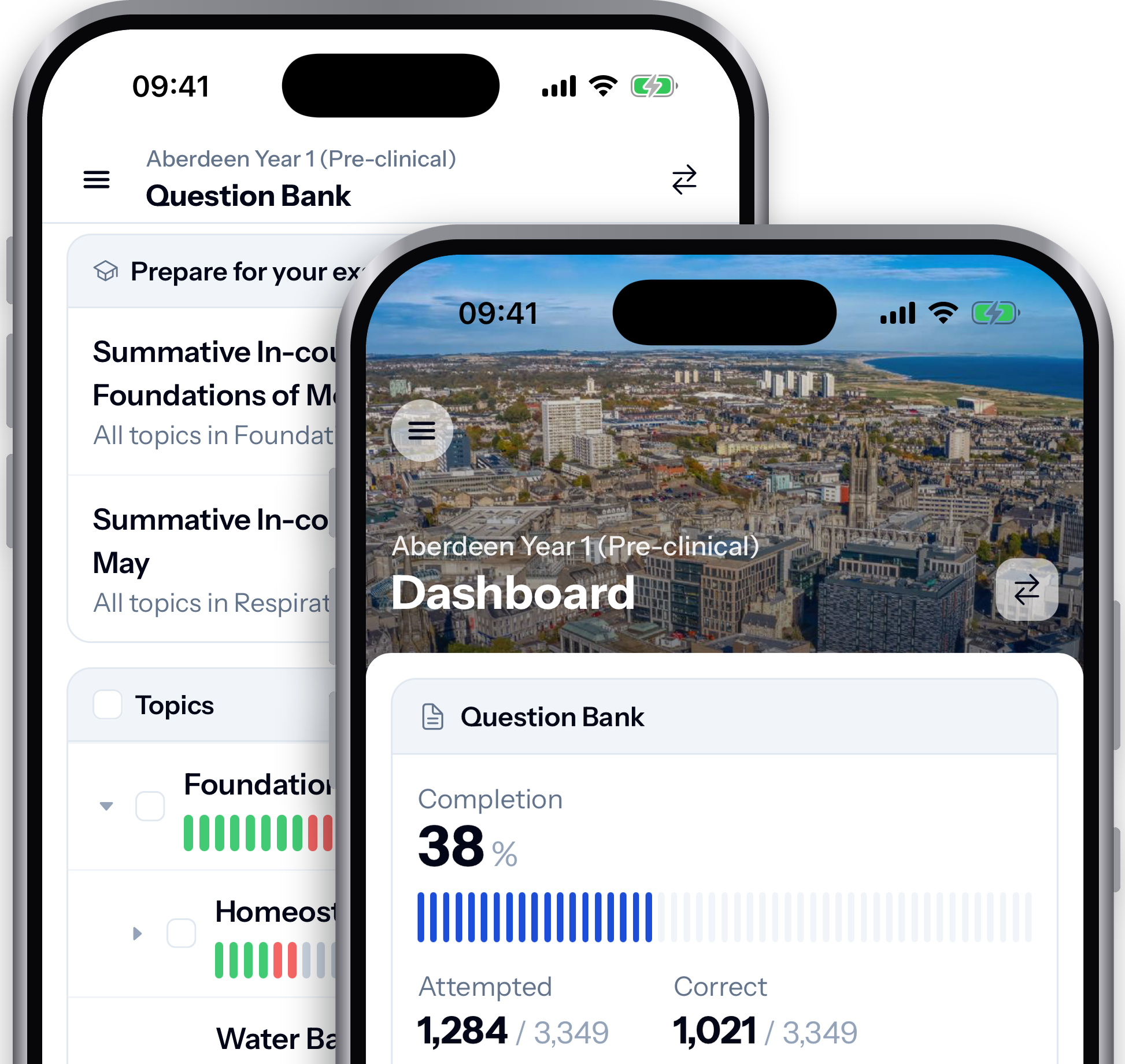
Our mobile app allows you to access your interview and exam question banks wherever you are.