


 Close
Close
 31st July 2023
Gilbert’s Syndrome
Gilbert’s syndrome is an autosomal recessive* condition causing decreased activity of UDP glucuronosyltransferase activity, causing defective bilirubin conjugation to glucuronic acid. The prevalence is likely 1-2% in the general population.
Some patients will never have symptoms, whereas others may be jaundiced during periods of stress, such as intercurrent illness, intense exercise, fasting or pregnancy. Patients may have a family history of jaundice. Bloods show an unconjugated hyperbilirubinaemia without any other significant abnormalities. As the additional serum bilirubin is not conjugated, there will be no urobilinogen increase in the urine.
The differential for an unconjugated hyperbilirubinaemia include causes of haemolytic anaemia (e.g., autoimmune, haemoglobinopathies, red blood cell enzyme disorders, red blood cell membrane disorders) and Crigler-Najjar syndrome. Reticulocytes and other markers of haemolysis should always be checked.
To confirm the diagnosis, bilirubin may be checked after periods of prolonged fasting or after nicotinic acid administration, which increases osmotic fragility of red blood cells, causing a higher proportion to break down than usual.
Gilbert’s is a benign condition, and no specific management is required aside from patient education.
* some rarer variants appear to be inherited in an autosomal dominant pattern
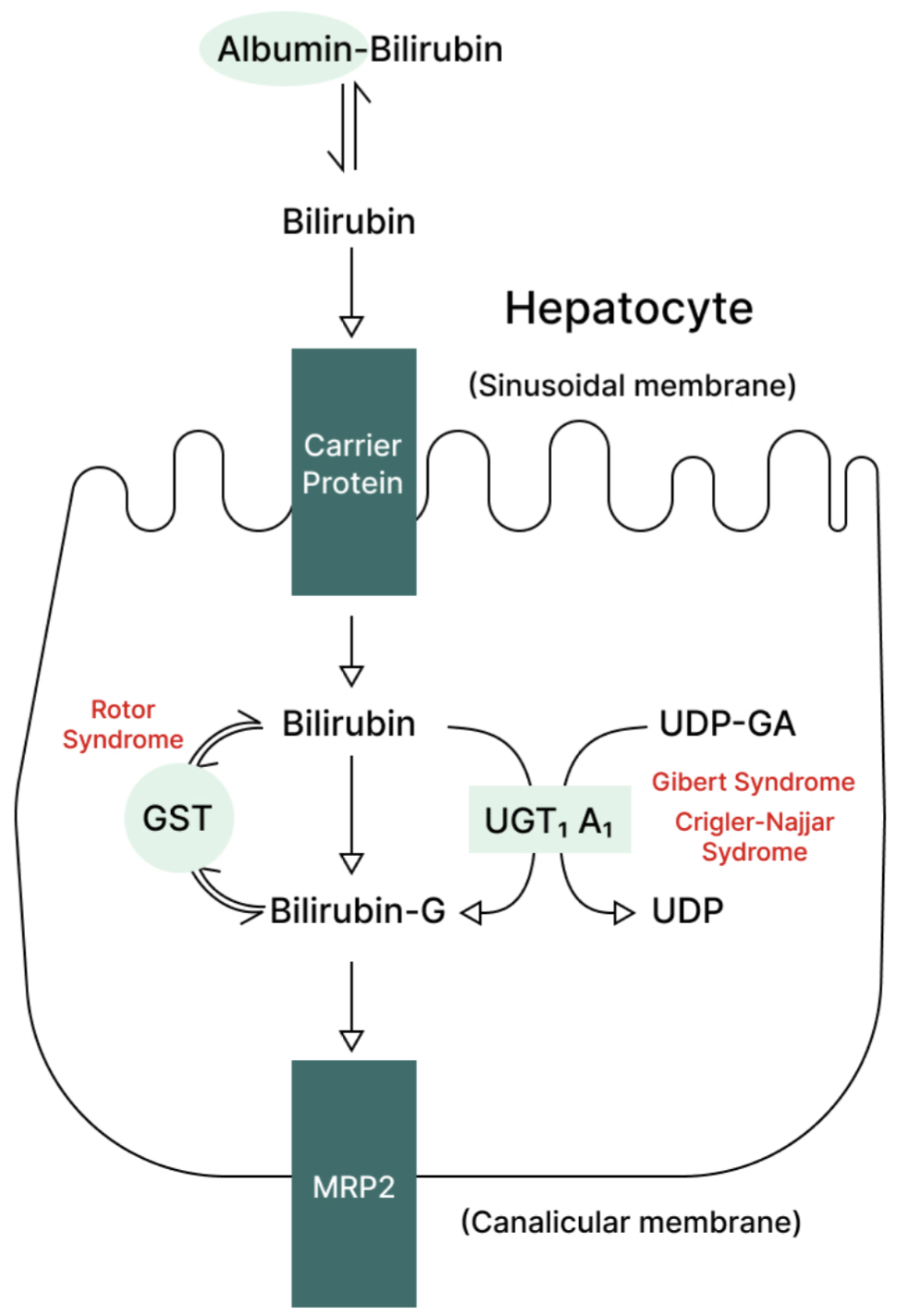
Metabolic pathway for bilirubin in the hepatocyte. Gilbert’s syndrome and Crigler-Najjar syndrome are associated with decreased UDPGT activity; therefore, bilirubin is not conjugated.
Complete Guide to Clinical Genetics ST3 Application and Recruitment (2027)
Written by Medibuddy. Last updated: October 2026. Clinical Genetics is

Complete Guide to Clinical Radiology ST3 Application and Recruitment (2027)
Recruitment paused: NHS England is not running Clinical Radiology ST3+ recru

Complete Guide to Paediatric Surgery ST3 Application and Recruitment in United Kingdom (2026)
Written by Medibuddy. Last updated: October 2026. If you’re planning


Take your subscriptions with you
Our mobile app allows you to access your interview and exam question banks wherever you are.

