


 Close
Close
 31st July 2023
Molecular classification
Viruses can also be classified based on their genomic structure and the resultant method of viral replication. This is known as the Baltimore Classification System (See image below).
For the MRCP exam, being able to determine where a virus may fit within the 7 categories of the Baltimore system is unlikely to be very important. However, it can help us understand how different viruses replicate and hence cause disease, which is crucial to designing antiviral drugs and vaccines. Hence it is worthwhile being aware of. Basic sciences are on the MRCP curriculum.
Some important viruses, as per their molecular classification, include:
- Group I – herpes simplex virus (HSV)
- Group IV – coronaviruses, dengue virus, and poliovirus
- Group V – Ebola virus
- Group VI – human immunodeficiency virus (HIV)
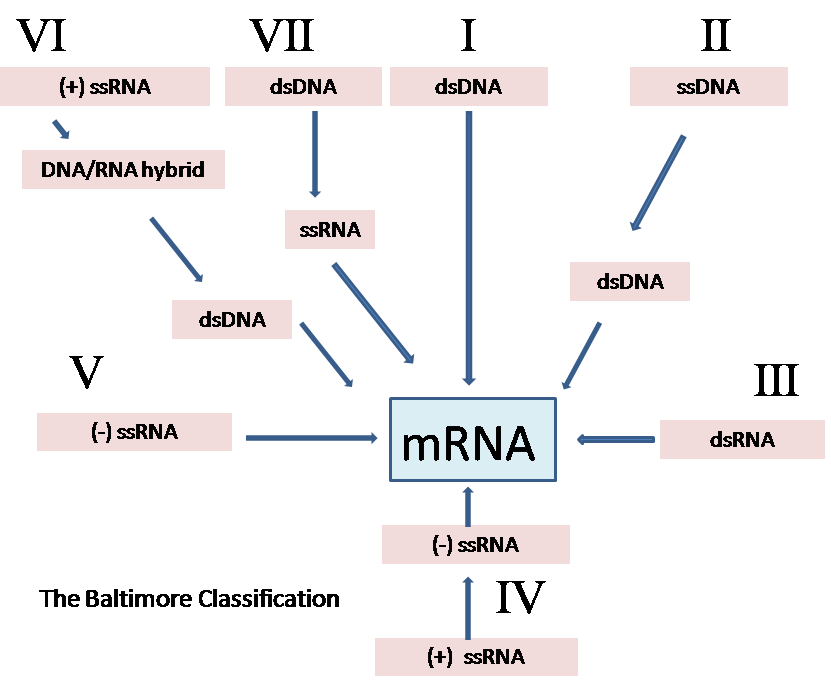
The Baltimore Classification System
Image Source: Wikimedia Commons (2009). Baltimore Classification, Licensed under a creative commons licence. Available for free at: https://commons.wikimedia.org/wiki/File:Baltimore_Classification.png (Accessed: 17 September 2022).
The 7 groups are depicted here, categorised by how they produce the mRNA used to replicate. ds = double stranded, ss = single stranded, (+) = positive sense, (-) = negative sense.
Complete Guide to Clinical Genetics ST3 Application and Recruitment (2027)
Written by Medibuddy. Last updated: October 2026. Clinical Genetics is

Complete Guide to Clinical Radiology ST3 Application and Recruitment (2027)
Recruitment paused: NHS England is not running Clinical Radiology ST3+ recru

Complete Guide to Paediatric Surgery ST3 Application and Recruitment in United Kingdom (2026)
Written by Medibuddy. Last updated: October 2026. If you’re planning


Take your subscriptions with you
Our mobile app allows you to access your interview and exam question banks wherever you are.

