


 Close
Close
 30th October 2023
Family
Family structure
One of the most important factors to consider for any patient is their family and the positive and negative impact of that family unit. The traditional ‘nuclear family’ is less common than it used to be, with many more families consisting of stepparents, unmarried cohabitating parents and single parents, as well as stepsiblings, half-siblings and foster siblings. While this in itself is not a bad thing, it may lead to additional considerations when assessing family dynamics.
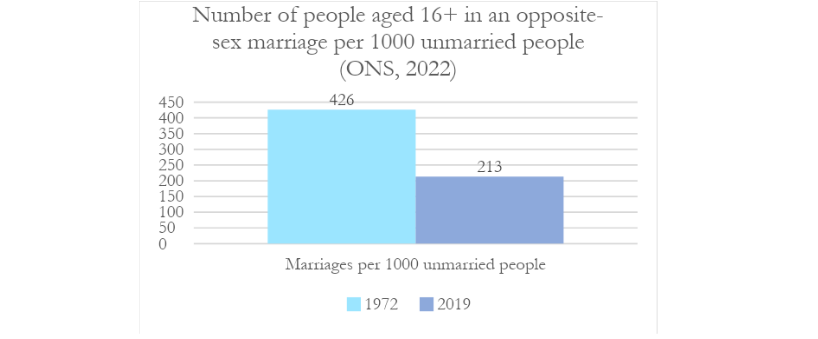
There has been a lot of research about the benefits of a childhood spent in a family where the biological parents are married. There has been evidence that these families tend to be less at risk of poverty and have increased well-being. However, there is also evidence that those from higher income backgrounds are more likely to be married before having children, and so the causal relationship must be questioned. Much of the research comes from a time when marriage was seen as the right path, and having children outside of marriage was stigmatised. The debate on the importance of marriage is ongoing, but it seems that this will be seen as less crucial as time passes (Brown, 2010).
In the case of divorce, there is, again, a lot of research. As one in four or five marriages end in divorce in Western countries, this is an important area of study. When parents separate, a child’s entire life can become uprooted. They will see one or both parents less than they used to, may have to move house or school, or may have to get used to living in two different houses. Their basic identity of being part of a particular family can shift as the dynamics of that family changes. Children can also be traumatised by arguments in the home, develop feelings of guilt if they blame themselves for the split, and can be affected by financial pressures of the divorce (Oren and Hadomi, 2020).
Most children will eventually adapt to their new family situation, and wellbeing consequences resolve after around two years. However, there can still be long term consequences. From a logistical point of view, changes in living arrangements might lead to changes to educational provision. This could lead to changes in academic achievement and even career prospects. There has even been research that suggests that children of divorced parents that do not communicate well with each other are more at risk of poor health, even into adulthood. Another long term consideration is that parents may seek to blame each other for the failure of the relationship. Older children and adults may cut off ties to a parent for a fault that the other parent has led them to believe, which may or may not be justified (Oren and Hadomi, 2020).
On the other hand, sometimes a family split is, in fact, beneficial if it reduces conflict and increases a child’s feeling of safety in the family. Some children in therapy after a divorce describe the divorce as creating a sense of relief that day to day animosity is reduced.
The consequences of divorce on parents must also be recognised. In heterosexual couples, divorce has long been recognised to have worse economic consequences for women than men. This was seen as a reason for an increase in divorce in the 70s and 80s, as women were more likely to be able to leave their spouse and be financially independent due to increased employment rates. From the 90s onwards, this seems to be a less important predictor of divorce as women being employed is now the norm (Raley and Sweeney, 2020). Therefore, the inequality between men and women during divorce is improving, but there are still differences. For example, women are more likely to win custody battles than men, but men are still less likely to experience financial hardship after divorce (Leopold, 2018).
The literature also recognises that the emotional strain of divorce will be different if you are the person who has made the decision to get divorced or if your partner is the one who has made that declaration. Similarly, a divorce that ends with an argument and attempts to ‘win’ the divorce is going to be more painful than a divorce that has ended with a mutual agreement that the relationship has come to its natural end. In these divorces, decisions are made more likely to be made with consideration for both parties (Oren and Hadomi, 2020).
Parenting styles
In Diana Baumrind’s 1991 article, she set out four parenting styles. These in themselves were based on the two categories of parental behaviour developed by Maccoby and Martin in 1983: demandingness and responsiveness.
Demandingness is defined as the amount of control a parent exerts over a child and the expectation to behave a certain way. Responsiveness is how much a parent can empathise and react compassionately to their child.
Baumrind’s parenting styles were as follows (Baumrind, 1991):
| Authoritarian | These parents set rules that they expect their children to follow and will punish their children if they feel that the expected standards are not met. They have high levels of demandingness but do not show very much responsiveness. |
| Authoritative | These parents support their children to grow into the adults that they would like them to be by setting clear expectations but also being receptive to the needs and emotions of the child. Boundaries are set, but these boundaries are explained to the child in an appropriate way. As a result, they show high levels of responsiveness and demandingness. |
| Permissive | Permissive parents believe that their children thrive when they do not have expectations placed on them. They are instead free to do as they please and create their own boundaries. These parents put the emotions of their child above all else. As such, they show high levels of responsiveness but low demandingness. |
| Uninvolved | These parents do not appear interested in what their children are doing or how they are feeling. This style can border on neglect, especially emotionally. There is little demandingness or responsiveness involved in this style. |
These different styles tend to contribute to how children grow into adults. Children with authoritative parents are likely to be more well balanced, have healthy coping styles and have clear aims for the future. On the other hand, children of authoritarian and uninvolved parents can struggle with self-esteem later in life, either due to feeling unimportant or feeling that they are never good enough. Children with permissive parents tend to have lower educational achievement and cognitive skills than children from authoritative homes (Panetta et al., 2014).
References
- Baumrind, D. (1991) ‘The Influence of Parenting Style on Adolescent Competence and Substance Use’, The Journal of Early Adolescence, 11(1), pp. 56–95.
- Brown, S.L. (2010) ‘Marriage and Child Well-Being: Research and Policy Perspectives’, Journal of marriage and the family, 72(5), pp. 1059–1077.
- Leopold, T. (2018) ‘Gender Differences in the Consequences of Divorce: A Study of Multiple Outcomes’, Demography, 55(3), pp. 769–797.
- Office of National Statistics (2022) ‘Marriages in England and Wales: 2019’, Available at: https://www.ons.gov.uk/peoplepopulationandcommunity/birthsdeathsandmarriages/marriagecohabitationandcivilpartnerships/bulletins/marriagesinenglandandwalesprovisional/2019 [Accessed: 12 Jan 2023]
- Oren, D. and Hadomi, E. (2020) ‘Let’s Talk Divorce – An Innovative Way of Dealing with the Long-Term Effects of Divorce through Parent-Child Relationships’, Journal of Divorce & Remarriage, 61(2), pp. 148–167.
- Panetta, S.M. et al. (2014) ‘Maternal and Paternal Parenting Style Patterns and Adolescent Emotional and Behavioral Outcomes’, Marriage & Family Review, 50(4), pp. 342–359.
- Raley, R. and Sweeney, M. (2020) ‘Divorce, Repartnering and Stepfamilies: A Decade in Review’, Journal of Marriage and Family, 82(1), pp. 81-99.
Complete Guide to Clinical Genetics ST3 Application and Recruitment (2027)
Written by Medibuddy. Last updated: October 2026. Clinical Genetics is

Complete Guide to Clinical Radiology ST3 Application and Recruitment (2027)
Recruitment paused: NHS England is not running Clinical Radiology ST3+ recru

Complete Guide to Paediatric Surgery ST3 Application and Recruitment in United Kingdom (2026)
Written by Medibuddy. Last updated: October 2026. If you’re planning


Take your subscriptions with you
Our mobile app allows you to access your interview and exam question banks wherever you are.

