


 Close
Close
 7th January 2024
Pain Management
Background
Introduction
Pain is a very common symptom associated with a range of conditions. Across cancer as a whole, 75% of patients will experience pain; 1/3 have one pain, 1/3 have two pains, and 1/3 have three or more pains. Knowing about pain management will not only help you in the exam – being confident in this will help in clinical practice.
This will focus on management of pain in the palliative care setting as distinct from management of acute pain and chronic pain conditions such as Fibromyalgia. Although this mainly focuses on management of cancer pain, it is worth acknowledging that palliative care physicians increasingly work in the non-malignant setting. Many of the principles will be applicable across both settings.
Pain physiology
Nociceptive pain
This is a physiological process resulting from a painful stimulus. Nociceptors are the pain receptors within the body which can be activated by damage, temperature, or chemicals released from inflamed and injured tissue. These are carried quickly in type A and slowly in type C axons to the dorsal horn, where they are transmitted in the spinothalamic tract to the brain. Not all nociception causes pain, and there is significant variability between nociception and the experience of pain (see ‘Total pain”).
Nociceptors are widespread in the skin and the peripheries, but organs themselves have few. This explains why we typically think that malignant tissue itself is not painful; patients can have liver metastasis, for instance, without experiencing abdominal pain. However, the visceral liver capsule does have nociceptors. In liver disease, where the liver capsule is stretched, this can cause tissue damage, nociceptor activation, and the sensation of pain. This is not limited to the liver and can occur with the visceral pleura of the lung, luminal blockade in the bowel, the peritoneum and other areas. Nociceptive pains can, as such, be subdivided into ‘visceral pain’ in cases like these or ‘somatic pain’ affecting a somatic structure such as muscle or bone.
Pain descriptors may be helpful in identifying the underlying pain syndrome. There is often overlap in the descriptors used, and patients can find it difficult or impossible to describe their pain, particularly where there is an associated delirium or cognitive impairment. That said, somatic pain may be described as ‘aching,’ ‘stabbing,’ ‘throbbing’, or ‘sharp,’ particularly on movement of the affected structure. Visceral pain can also be ‘stabbing’ but is often ‘aching,’ ‘dull,’ or ‘heavy.’ Pain from a luminal blockade, such as bowel obstruction, may be ‘cramping’ or ‘gnawing’ due to visceral nociception and smooth muscle spasm.
Since this is a physiological sensation, nociceptive pain is dependent on a normally functioning and undamaged nervous system. Normal pain physiology interacts with the autonomic system as part of the body’s modulation of pain, creating the classical phenotype of a tachycardic, tachypnoeic, sweaty patient in pain. Patients with chronic pain can lose this autonomic pain modulation, which can worsen their experience of pain. Not ‘looking as though they are in pain’ may be a factor in suboptimal pain management for these patients – don’t be fooled! Acute paroxysms of pain may still produce an autonomic response.
Neuropathic pain
On the other hand, neuropathic pain refers to pain arising from nerve damage within the central or peripheral nervous system. The resulting abnormal function of the nervous system can be painful.
The peripheral nervous system has a complex anatomy. Nerve roots exit the spinal cord. In the extremities, these coalesce to form the brachial plexus in the upper limb and the lumbosacral plexus in the lower limb. There is also the cervical plexus supplying the head and neck and the celiac plexus intra-abdominally. Nerves emerge from plexi. Pathology can affect different parts of the peripheral nervous system, giving rise to different pain syndromes:
- Radiculopathy affects the nerve root, often through compression by malignancy or a herniated disc. This gives a radiating pain in the dermatome supplied by that nerve root.
- Plexopathy will give sensory loss and pain, distributed dermotomal dependent on the area of the plexus affected. This can be due to diabetic amyotrophy or direct invasion of malignant tissue, such as with the celiac plexus in pancreatic cancer. Weakness is also a feature.
- Mononeuropathy will give pain in the distribution of the nerve affected. Post-herpetic neuralgia may cause this pain.
- Length-dependent polyneuropathy is associated with a glove and stocking distribution of sensory loss and pain. This is associated with diabetes and thyroid dysfunction, among many other medical conditions, but also with paraneoplastic phenomena (particularly in lung, breast, or ovarian cancer) or chemotherapy (particularly platinum-based).

Source: Wikimedia Commons (2016). Dermatoms alt, Licensed under a creative commons licence. Available for free at: https://commons.wikimedia.org/wiki/File:Dermatoms_alt.svg (Accessed: 20 February 2022).
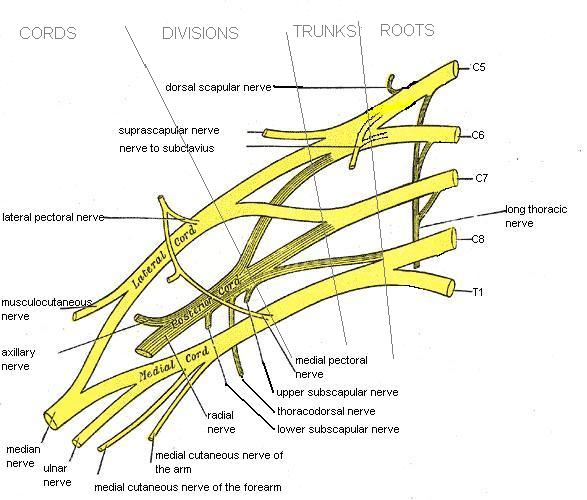
Source: Wikimedia Commons (2008). Brachial plexus, Licensed under a creative commons licence. Available for free at: https://commons.wikimedia.org/wiki/File:Brachial_plexus.jpg (Accessed: 20 February 2022).

Source: Wikimedia Commons (2010). Lumbar plexus, Licensed under a creative commons licence. Available for free at: https://commons.wikimedia.org/wiki/File:Lumbar_plexus.svg (Accessed: 20 February 2022).

Source: Wikimedia Commons (2007). Gray828, Licensed under a creative commons licence. Available for free at: https://commons.wikimedia.org/wiki/File:Gray828.png (Accessed: 20 February 2022).
Central neuropathic pain will arise from damage within the central nervous system. Intracranial causes include stroke, in which there is pain within an area of sensory loss. Spinal cord compression from a tumour can also cause neuropathic pain and sensory loss.
Neuropathic pain is often described differently to nociceptive pain, although, as caveated before, this can be challenging in clinical practice. ‘Dysesthesias,’ or abnormal sensations, including ‘burning,’ ‘shooting,’ ‘stabbing,’ or ‘electrical’ type pains may be reported. Due to the nerve damage, there may be other associated neurological symptoms. As outlined above, sensory loss in the affected area is common, and autonomic function may be impaired. Allodynia (painful touch sensation) and hyperalgesia (excessive response to pain) are also features suggestive of nerve injury.
Total pain
Although a physical symptom, pain is a subjective experience variable from patient to patient. There can be significant psychological, spiritual, and social elements to the sensation of pain, not only the physical problem. These should be considered as part of pain management. Where these factors are all implicated, this is what is known as ‘total pain.’ Managing this requires good communication skills to identify the contributing factors and an MDT approach, including clinical psychology, complementary therapy, and specialist spiritual care.
References
- Twycross R, Wilcock A. Introducing Palliative Care 5th edition 2016. 81-85
- Martini F, Nath J, Bartholomew E. Fundamentals of Anatomy & Physiology 9th edition 2012. 498-499
- Mischkowski D, Palacios-Barrios EE, Banker L, Dildine TC, Atlas LY. Pain or nociception? Subjective experience mediates the effects of acute noxious heat on autonomic responses. Pain. 2018;159(4):699-711.
- Pelosof LC, Gerber DE. Paraneoplastic syndromes: an approach to diagnosis and treatment. Mayo Clinic Proceedings. 2010;85(9):838-854.
- UpToDate [Internet]. Uptodate.com 2021 [Cited 20/2/2022]. Available from: https://www.uptodate.com/contents/overview-of-cancer-pain-syndromes?search=cancer%20pain%20management&source=search_result&selectedTitle=5~150&usage_type=default&display_rank=5#H15
- UpToDate [Internet]. Uptodate.com 2021 [Cited 20/2/2022]. Available from: https://www.uptodate.com/contents/assessment-of-cancer-pain?search=cancer%20pain%20management&source=search_result&selectedTitle=8~150&usage_type=default&display_rank=8#H3
Approach to assessment of pain
General principles
Pain management depends on identifying the underlying cause of the pain. Taking a good pain history is vital. The SOCRATES mnemonic can be a useful starting point for this:
- Site
- Onset
- Character
- Radiation
- Associated symptoms
- Timing and duration
- Exacerbating/alleviating factors
- Severity
A structured pain assessment tool captures many aspects of a person’s pain. There are validated tools which can help to track the patient’s pain over a disease course and also in response to interventions. These have been adapted for both children and adults in a number of languages. The Brief Pain Inventory (BPI) is one such validated tool. Patients outline the pain treatment they have received but also answer questions on a ten-point scale detailing the impact of the pain on activity, mood, work, relations with others, sleep, and enjoyment of life.
Examination of the patient is helpful. As discussed previously, hepatomegaly may point to a liver capsular pain, or sensory loss may suggest a neuropathic pain.
Reversible causes
Based on history and examination, investigations can be undertaken. This may seem counterintuitive. Often, patients are labelled ‘palliative’ or ‘TLC’ and deemed not for further investigation. However, many pains, even in patients with advanced disease, are the result of reversible pathology. Investigating and treating these can have a significant pain control function. For instance, a malignant pleural effusion can cause chest pain. This would be reversible with a pleural drain and pleurodesis. Performing a Chest X-ray could facilitate this. Alternatively, an X-ray may reveal a treatable pneumonia, and a course of antibiotics may give pain relief. More complex investigations, such as an MRI Spine for Metastatic Spinal Cord Compression, would also fall under this bracket, and treatment for the underlying disease – such as radiotherapy – may also be considered.
References
- The Brief Pain Inventory (BPI) [Internet]. [Cited 14/2/2022]. Available at: https://www.mdanderson.org/research/departments-labs-institutes/departments-divisions/symptom-research/symptom-assessment-tools/brief-pain-inventory.html
Approach to management of pain
The World Health Organisation’s Method for Relief of Cancer pain underpins the use of analgesia in cancer pain. Although almost 40 years old, there are several principles within this document which are still relevant to this day.
- “By the clock”: treatment of chronic pain requires regular analgesia as a preventative measure, not just on an ‘as required’ basis.
- “By the individual”: acknowledging that different patients will need different analgesic doses, and ongoing assessment and careful dose titration is important to achieve this.
- “By the mouth”: injections can be painful, and syringe drivers and other medical devices can be burdensome. The oral route is, therefore, preferred.
- “With attention to detail”: patients should be monitored for side effects of analgesia, which should be treated.
- “By the ladder”: the same document created the well-known World Health Organisation analgesic ladder, outlining the stepwise approach to analgesia.

Source: Adapted from World Health Organisation. Cancer pain relief 1986. Geneva [Cited 2/3/2022]. Available at: https://apps.who.int/iris/bitstream/handle/10665/43944/9241561009_eng.pdf
Paracetamol
This is a non-opioid analgesic available over the counter in the UK and traditionally used as step 1 of the analgesic ladder. The recommended dose is 1g four times a day, but this is reduced to 500mg in patients with a weight of <50kg, poor nutritional status, or hepatic impairment. It mainly acts within the CNS and has some weak impact on prostaglandin synthesis. Combining Paracetamol and NSAIDs has been shown to improve analgesia. This suggests differing modes of action; hence, Paracetamol is not considered an NSAID.
Paracetamol, in combination with opioids, has been shown to improve overall pain control and reduce opioid requirements (opioid-sparing). It is, therefore, appropriate to continue Paracetamol alongside strong opioids even at step 3 of the WHO analgesic ladder.
NSAIDs
NSAIDs’ anti-inflammatory effect is through Cyclo-Oxygenase (COX) inhibition, reducing prostaglandin synthesis. This reduces inflammation-induced nociceptive pain. This is particularly effective in visceral and somatic nociceptive pain.
Ibuprofen is available over the counter with a typical starting dose of 400mg three times daily. Naproxen is a commonly used NSAID with a starting dose of 500mg twice daily.
Proton pump inhibitors should be prescribed alongside NSAIDs due to the risk of peptic ulcer disease and gastropathy. This is less likely at lower doses. NSAIDs should be used with caution in renal impairment, thrombocytopenia, and cardiac dysfunction.
COX-2 selectivity
COX-2 is associated with painful inflammation, whereas COX-1 is more physiological. There are more than 20 NSAIDs grouped based on the selectivity of COX-1 or 2 inhibition. Ibuprofen and Naproxen are non-selective, whereas Diclofenac is a preferential COX-2 inhibitor.
Celecoxib is a more selective COX-2 inhibitor, which may be utilised in bone pain or soft tissue disease. The starting dose is 100mg twice daily, which can be uptitrated to 200mg twice daily. Celecoxib has a lower risk of GI side effects and is the Palliative Care Formulary’s NSAID of choice.
Codeine
Codeine is the most typically used weak opioid at step 2 of the WHO analgesic ladder. Other options include Dihydrocodeine and Tramadol.
The body must first metabolise Codeine to Morphine for analgesic effect. Opioid conversions will be discussed later, but Codeine is 1/10 as strong as Morphine. There is little evidence of its use in place of strong opioids; studies show there is better pain control quicker from low-dose morphine than codeine. Where strong opioids are readily available, it is common for step 2 to be bypassed.
If step 2 is utilised, the non-opioid analgesic in step 1 is not stopped. If a weak opioid is not beneficial, uptitration is by stopping the weak opioid and switching to a strong opioid and step 3 of the analgesic ladder.
References
- Twycross R, Wilcock A. Introducing Palliative Care 5ᵗʰ edition 2016. 87-93
- World Health Organisation. Cancer pain relief 1986. Geneva [Cited 20/2/2022]. Available at: https://apps.who.int/iris/bitstream/handle/10665/43944/9241561009_eng.pdf
- Scottish Palliative Care Guidelines [Internet]. 2020 [Cited 20/2/2022]. Available at: https://www.palliativecareguidelines.scot.nhs.uk/
- UpToDate [Internet]. Uptodate.com 2021 [Cited 20/2/2022]. Available from: https://www.uptodate.com/contents/assessment-of-cancer-pain?search=cancer%20pain%20management&source=search_result&selectedTitle=8~150&usage_type=default&display_rank=8#H3
- UpToDate [Internet]. Uptodate.com 2021 [Cited 20/2/2022]. Available from: https://www.uptodate.com/contents/pharmacologic-management-of-chronic-non-cancer-pain-in-adults?search=non%20opioid%20pain%20management&source=search_result&selectedTitle=2~150&usage_type=default&display_rank=2#H3009310947
- Twycross R, Wilcock A, Howard P. Palliative Care Formulary 6th edition 2017. 295-352
- Greater Manchester and Eastern Cheshire Strategic Clinical Networks. Palliative Care Pain & Symptom Control Guidelines for Adults 2019 [Internet] [Cited 20/2/2022]. Available at: https://gmmmg.nhs.uk/guidance/clinical-guidance-and-pathways/
Strong opioids
Strong opioids are step 3 of the WHO analgesic ladder. As discussed above, it is common for step 2 to be bypassed. When a strong opioid is prescribed, the weak opioid must be stopped. Opioids generally are effective across different pain types.
There are a number of options for strong opioids. Most commonly encountered in MRCP part 1 are Morphine, Oxycodone, and Fentanyl. There can be specific indications for choosing one drug over another. However, there is significant overlap between their properties. Not only are different drugs available, but there is good flexibility in routes of administration to give utility in a number of scenarios.
Studies have not shown superiority of morphine over other opioids. However, morphine is the mainstay of analgesic guidelines due to familiarity and availability. There are also cost considerations.
Mechanism of action
The three best-known opiate receptors are mu, kappa, and delta. The most clinically significant is the mu receptor. Most opioid metabolites act as agonists at this receptor. Receptor antagonists such as Naloxone are used in reversal of opioid side effects.
Nociceptive pain increases the number of opiate receptors peripherally. Opioids act upon these receptors peripherally to give analgesia.
Dosing
Starting on strong opioids can be with either immediate release or modified release preparations. Immediate release strategies are given as required for breakthrough pain, whereas modified release attempts to control patient’s pain over a 24-hour period. NICE recommends starting doses of:
- 5mg of oral morphine 4 hourly for immediate release strategy. or
- 15mg modified release morphine twice daily, plus 5mg immediate release as required for breakthrough pain.
The above demonstrates that even with a modified release strategy, it is important to co-prescribe an immediate release preparation. Typical teaching is that a breakthrough dose should be between 1/6 and 1/10th of the regular dose, with a maximum of 4 hourly. Taking a history will establish the dose that works for each individual patient – which could be higher or lower, and can be a guide.
Titration
Dose titration depends on the control of the patient’s pain and the medications they have required. Starting modified release preparation following an immediate-release strategy depends on the doses of immediate-release which have been required to control the pain. If a patient has taken four 5mg doses of immediate-release morphine in 24 hours:
- 4 x 5mg = 20mg daily morphine dose ÷ 2 = 10mg modified release twice a day
- 20mg morphine daily dose ÷ 6 = 3.3mg breakthrough dose
3.3mg is a difficult dose to draw up and give. Normally, morphine is given in measures of 1.25mg, so 2.5mg would be a good as required dose in this example.
Where modified release preparations have already been chosen but have been ineffective, dose increases will be based on breakthrough requirements. However, dose increases are usually kept at between 33-50% per day to avoid complications from rapid titration. Where the modified release dose is uptitrated, the breakthrough dose should also be increased if it is ineffective or not reaching the 1/6 – 1/10ᵗʰ thresholds.
Incident pain
Some pains are related to predictable events. Periods of expected activity, such as shopping, may be associated with pain at home. In the healthcare setting, patients may find receiving personal care painful. This is referred to as ‘incident pain.’ This may be controlled with lifestyle modifications, but immediate-release opioids are also useful for patients who can use this in anticipation of an incident. Increasing the background dose of opioids may not prevent episodes of incident pain, and the use of immediate-release opioids for these pains should not necessarily be used as a guide to increase background dose.
Routes and dose conversion
As mentioned before, there are a number of strong opioids available. Not all drugs are equal. Although some drugs are ‘stronger’ than others, dose titration is a more appropriate method to achieve pain control than switching opioids initially. Opioid rotation is an option where pain is continually not controlled with one drug despite uptitration but would be guided by a specialist. Switching between two different drugs happens frequently in palliative care due to changes in a patient’s condition, such as the development of renal failure. Where patients are already established on analgesia, converting the dose accurately avoids the development of side effects and loss of pain control.
| Initial drug | New drug | Conversion Calculation |
|---|---|---|
| Oral codeine | Oral morphine | Divide by 10 |
| Oral morphine | Oral oxycodone | Divide by 2 |
Source: https://gmmmg.nhs.uk/guidance/clinical-guidance-and-pathways/
Converting from one drug to another is possible using the table above for reference. The key steps are:
- Calculating the total opioid dose (maintenance and breakthrough)
- Converting to oral morphine
- Convert to final opioid
Most conversion tables available for various opioids will quote the conversion to or from oral morphine. It is, therefore, safer, simpler, and more accurate to convert between the drug in question and oral morphine before converting to the opioid of choice.
For instance, if a patient takes 240mg of codeine a day, and the equivalent dose of oxycodone was required:
- 240mg ÷ 10 = 24mg equivalent dose of morphine
- 24mg ÷ 2 = 12mg equivalent dose of oxycodone
Even within the same drug, the relative strength varies across different routes. This has implications in clinical practice. Oral is the preferred route for analgesia, but where this is not available (nausea and vomiting, tablet burden, poor absorption, reduced consciousness), alternatives need to be considered, and conversion may be required.
Transdermal route
The transdermal route is an option where the oral route is not available. This involves the application of patches, most commonly fentanyl or buprenorphine. These patches remain in place for days at a time, the duration different between different brands. The absorption of patches can be increased by heat, for instance, in pyrexia, and can cause side effects and toxicity.
Patches reach a steady state over a period of days. They are typically used in stable, well-controlled pain and are not appropriate for unstable pain. However, if pain becomes unstable, abruptly stopping the patch would not be appropriate. Other opioids can be added alongside the patch in that case.
Both fentanyl and buprenorphine patches are only available in certain doses with less flexibility than oral alternatives. Conversion is not as straightforward as a simple equation. This again demonstrates the utility of morphine as a ‘currency’ for opioid conversions because of the widespread availability of conversion information. There may not be an exact equivalent patch compared to the existing dose of opioid, and a slight dose reduction is preferable.
| Transdermal patch (micrograms per hour) | Oral Morphine equivalent (mg/24 hour) |
|---|---|
| Buprenorphine 5 | 12mg |
| Buprenorphine 10 | 24mg |
| Buprenorphine 20 | 48mg |
| Fentanyl 12 | 30mg |
| Fentanyl 25 | 60mg |
| Fentanyl 50 | 120mg |
Source: https://gmmmg.nhs.uk/guidance/clinical-guidance-and-pathways/
As you can see, even the lowest-strength fentanyl patch is a comparatively large opioid dose. It is, therefore, recommended not to use fentanyl in opioid naïve patients.
Using the table above to switch from 120mg daily oral oxycodone to a fentanyl patch:
- 120mg ÷ 2 = 60mg equivalent dose of oral morphine
- 60mg = Fentanyl 25mcg/hour patch
When switching between modified release agents and transdermal, the patch should be applied at the same time as the final modified release preparation is taken.
Subcutaneous route
Subcutaneous syringe drivers are widely used in palliative care to deliver a range of medications, not just analgesics. Syringe drivers are dosed over 24 hours – with the prescribed drug being put into an infusion over 24 hours. This provides a constant supply of drugs without peaks and troughs. They are commonly used at the end of life. As required, doses can also be made available subcutaneously. There is no ‘immediate-release’ or ‘modified-release’ version of the injection, and it is the same drug either administered as a bolus or over 24 hours. There are often direct oral to subcutaneous conversion equations available within the same drug (such as oxycodone), so conversion to oral morphine is not always necessary.
Syringe drivers should be commenced immediately if the patient is not receiving opioids or is only taking immediate-release oral opioids. If the patient takes modified-release opioids, the syringe driver should be commenced at the time the next modified-release preparation is due.
| Initial drug | New drug | Conversion Calculation |
|---|---|---|
| Oral morphine | SC morphine | Divide by 2 |
| Oral morphine | SC oxycodone | Divide by 3 |
| Oral oxycodone | SC oxycodone | Divide by 1.5 |
| Oral oxycodone | SC morphine | Equivalent |
Source: https://gmmmg.nhs.uk/guidance/clinical-guidance-and-pathways/
Cautions
Renal impairment
There is little evidence for opioid choice in renal impairment. Practice is mainly guided by clinical experience, but there are some important considerations with certain drugs:
- Morphine metabolites are renally excreted. Renal impairment can, therefore, increase the half-life and cause accumulation and an increased side effect burden. At an eGFR of 20-50ml/min, it is used at 75% of the normal dose. Below that, alternative opioids are recommended.
- Oxycodone is preferred in renal impairment to morphine in some hospital trusts, but there is still the risk of accumulation. Modified-release oxycodone should be avoided in stage 4-5 CKD, but immediate release can be used.
- Alfentanil is safe in renal failure and is the drug of choice in stage 4 & 5 CKD if a syringe driver is needed. There is also a sublingual option.
Across all drugs, the dose should be slowly and carefully titrated, as rapid changes can cause accumulation.
Hepatic impairment
Unlike renal impairment, there is no figure by which to grade hepatic impairment, meaning there are no cut-offs for dose changes. Most opioids are metabolised in the liver, so there is an increased risk of toxicity. Drugs should be started at lower doses and titrations slower as a result. With regard to specific drugs:
- Oral morphine bioavailability can be increased to 100% in hepatic impairment. It can be used safely with cautious use but should be avoided if there is both liver and kidney failure, e.g., hepato-renal syndrome.
- Oxycodone effectiveness and onset can be impacted, as can clearance. It should be avoided in moderate to severe hepatic impairment.
- Fentanyl is metabolised to non-active metabolites, so can be safely used in hepatic failure. It is particularly useful where there is both hepatic and renal failure.
Driving
Driving rules are a favourite question in the exam. Taking strong opioids is not a reason to stop driving or inform the DVLA. Although drug driving is an offence, a medical defence can be raised where the drug is legally prescribed and taken in accordance with the advice of the prescriber. Patients who do not follow this advice may be liable to prosecution. It is therefore important to be aware of and alert patients to the following rules:
- Patients should carry evidence of their legal prescription for the drug.
- Drivers should not drive if they are impaired by the drug. To drive if they are drowsy, for instance, is an offence.
- Patients should be advised not to drive when starting or titrating the dose of opioids, as this increases the risk of sedation.
Side effects
Strong and weak opioids cause many side effects. The most important things to be aware of for the exam are discussed here, but this is by no means an exhaustive list.
Constipation
Constipation is a significant side effect, affecting 60% of patients taking opioids. It is the most frequently reported side effect. NICE guidelines recommend commencing laxatives alongside opioids: senna is recommended as a first choice, at 15mg at night with dose titration and addition of other agents based on response.
Mu receptors in the GI nervous system are bound by opioids, causing slowed GI transit, increased water reabsorption, and constipation. This may lead to cramping abdominal pain from an increase in non-propulsive contractions.
Nausea
Opioid-induced nausea is less common than constipation but is still a side effect to recognise and manage. Nausea is a common transient side effect shortly after commencing opioids. Delayed gastric emptying and direct effects on the chemoreceptor trigger zone are two mechanisms where symptoms continue long-term.
Antiemetic therapy, in this case, depends on history:
- In the context of associated bowel dysfunction, constipation should be well managed. A prokinetic antiemetic such as metoclopramide 10mg three times a day would be the first choice.
- If there were no bowel symptoms, a centrally-acting antiemetic such as haloperidol is preferred. Ondansetron could be an option, but this is frequently constipating, so may worsen symptoms.
Respiratory depression
This is a life-threatening, easily reversible emergency. Risk factors for developing respiratory depression include rapid increase in opioid dose, deterioration in renal function, and co-prescription of benzodiazepines and gabapentinoids. Rapid treatment with Naloxone is required to reverse the effect of the opioid.
Naloxone administration can cause a severe acute withdrawal syndrome and pain. The dose must be carefully titrated against the respiratory rate:
- Where the respiratory rate is >8, monitor only. Reduce or remove any opioids.
- Where the respiratory rate is <8, and the patient is arousable, give 100 micrograms IV Naloxone every 2 minutes until respiratory rate >8.
- Where there is no respiratory effort, 400 micrograms IV Naloxone should be given, followed by 800 micrograms after 1 minute if no response.
References
- Twycross R, Wilcock A, Howard P. Palliative Care Formulary 6ᵗʰ edition 2017. 260-467
- Scottish Palliative Care Guidelines [Internet]. 2020 [Cited 28/2/2022]. Available at: https://www.palliativecareguidelines.scot.nhs.uk/
- NICE clinical guideline [CG140]. Palliative care for adults: strong opioids for pain relief. [Cited 28/2/2022]. Available at:
https://www.nice.org.uk/guidance/cg140/chapter/1-Recommendations - Greater Manchester and Eastern Cheshire Strategic Clinical Networks. Palliative Care Pain & Symptom Control Guidelines for Adults 2019 [Internet] [Cited 28/2/2022]. Available at: https://gmmmg.nhs.uk/guidance/clinical-guidance-and-pathways/
- UpToDate [Internet]. Uptodate.com [Cited 28/2/2022]. Available from:
https://www.uptodate.com/contents/cancer-pain-management-with-opioids-optimizing-analgesia?search=cancer%20pain%20management&source=search_result&selectedTitle=1~150&usage_type=default&display_rank=1#H27 - UpToDate [Internet]. Uptodate.com [Cited 28/2/2022]. Available from:
https://www.uptodate.com/contents/prevention-and-management-of-side-effects-in-patients-receiving-opioids-for-chronic-pain?search=opioid%20side%20effects&source=search_result&selectedTitle=3~143&usage_type=default&display_rank=1#H3871239225 - Müller-Lissner S, Bassotti G, Coffin B, et al. Opioid-Induced Constipation and Bowel Dysfunction: A Clinical Guideline. Pain Medicine. 2017;18(10):1837-1863.
- Dean M. Opioids in renal failure and dialysis patients. Journal of Pain and Symptom Management. 2004;28(5):497-504.
Adjuvant analgesia
Adjuvant analgesia is mentioned in step 1 of the WHO analgesic ladder. An adjuvant analgesic is a drug which was not initially marketed for pain but has some analgesic properties, making it useful in pain management. Some are broadly useful, whereas some are beneficial in specific pain syndromes.
Neuropathic agents
There are different agents which are preferred to opioids in the management of neuropathic pain. As discussed previously, patients with cancer often have more than one type of pain, and it is perfectly possible for neuropathic and nociceptive pain to co-exist within the same patient. Management of this can be difficult. Opioids do have some effect on neuropathic pain, so it is not unreasonable to follow the analgesic ladder and trial strong opioids first where there are multiple pains, particularly in cancer.
Clinical guidelines recommend the following escalation strategy where neuropathic agents are sought:
- Amitriptyline first line, 10mg at night, with slow titration to a maximum dose of 70mg.
- If ineffective, switch to gabapentin, 100mg three times a day, with titration in 300mg steps to 1200mg three times a day. This can be combined with amitriptyline if this has been partially effective.
- Duloxetine third line, 30mg a day slowly titrated to maximum 120mg.
We will go through the considerations of each drug in turn.
Amitriptyline
Amitriptyline is a tricyclic antidepressant (TCA) but is used at different doses for neuropathic pain than it is for depression. Neuropathic pain can be particularly troublesome at night, affecting sleep quality, which has a number of ramifications; amitriptyline helps sleep, hence its use as first choice.
Many drugs in palliative care can cause prolongation of the QT interval on ECG predisposing to potentially fatal arrhythmia such as Torsades de Pointes. Amitriptyline is one such drug, and the ECG must be checked prior to commencing therapy. Additionally, a history of arrhythmia, heart failure, or ischaemic heart disease would be a contraindication to amitriptyline.
Unfortunately, Amitriptyline is often not tolerated. Patients may experience delirium or sedation. There is also the risk of antimuscarinic side effects. If it is not tolerated, nortriptyline can be considered, but this would be guided by a specialist palliative care physician. Alternatively, patients may progress to the next step of treatment with gabapentinoids. Where patients have been on amitriptyline for more than 8 weeks, it must not be stopped abruptly.
Gabapentinoids
Gabapentin is the first choice in many guidelines, but many of you will also be familiar with pregabalin. They are classed as anti-epileptics, blocking presynaptic neurotransmitter release. Pregabalin has historically been a more expensive drug, but the difference is not as significant now. Pregabalin is advantageous as a twice-daily option, reducing tablet burden. Studies have shown similar efficacy for both drugs; local guidelines will play a role in choice.
Current guidelines recommend gabapentin as a second-line option for neuropathic pain (doses above). Pregabalin is recommended where there is a response to gabapentin, but side effects are intolerable. It is ordinarily commenced at 75mg twice daily. Dose reductions are recommended for frail patients or those with renal impairment.
Common side effects include drowsiness and confusion. As mentioned in ‘respiratory depression,’ gabapentinoids are a risk factor for opioid-induced respiratory depression, and studies have shown patients are more likely to suffer an opioid-related death when also taking gabapentin. Given the complex nature of cancer pain control, it is common for patients to be co-prescribed gabapentinoids and opioids. These patients must be closely monitored and have doses cautiously titrated.
Duloxetine
This is fourth line for neuropathic pain after trialling a combination of TCA and gabapentinoid. Earlier treatment is indicated in pain caused by diabetic neuropathy, for which it is specifically licensed. A serotonin noradrenaline reuptake inhibitor, it has shown a good effect in painful peripheral neuropathy – both related to diabetes and chemotherapy. It is commenced at 30mg daily and titrated to a maximum of 120mg a day.
Steroids
Corticosteroids are used for a number of symptoms in the treatment of cancer. Glucocorticoid steroids have greater anti-inflammatory properties. By reducing oedema at the site of the tumour, they play an important role in cancer pain management. The evidence for their usefulness is based on clinician experience rather than extensive trial data. In practice, they are widely used for a number of different pain syndromes:
- Nociceptive pain: cancer can exist in enclosed spaces. In hepatomegaly, the liver capsule may stretch and cause pain. The anti-inflammatory effect can reduce this stretching and give pain relief.
- Neuropathic pain: reducing inflammation can improve ongoing compression or injury to the nerve from the malignancy – for instance, in spinal cord compression.
- Bone pain: dexamethasone is often used in treatment of metastatic bone pain to prevent worsening during radiotherapy treatment.
- Obstruction: reducing the inflammation from a malignant bowel obstruction, for instance, can increase the size of the bowel lumen and alleviate symptoms and pain.
Side effects
The utility of steroids is balanced against their many side effects. Courses of steroids may be given in short ‘pulses’ to avoid developing these. Below is by no means an exhaustive list, and a more thorough discussion of steroid side effects can be found elsewhere. However, some important things to bear in mind include:
- An increase in blood sugars is seen. Blood sugars should be checked regularly and at least daily if in a healthcare setting. In pre-existing diabetics, control may be worsened.
- Steroids are associated with an increase in adverse gastrointestinal events, including ulceration and GI bleeding. A proton pump inhibitor should be started alongside higher doses of steroids as such.
- Psychiatric disturbances, ranging from depression to paranoia, are possible. The steroid should be stopped to resolve this.
- Steroids are immunosuppressants, so long-term use may be associated with opportunistic infections.
- Avascular necrosis of bone can cause pain and loss of function within the affected area.
- Osteoporosis may cause pathological fractures, affecting pain and function. Bone protection strategies should be considered in those on long-term steroids.
- Recurrent or long doses must not be stopped abruptly due to the risk of hypoadrenalism.
Benzodiazepines
Benzodiazepines are typically used in palliative care for agitation, anxiety, insomnia, or seizures. They are GABA receptor modulators, causing presynaptic inhibition. This can have a function in neuropathic pain, where clonazepam is an option. This would be a decision taken by a specialist however.
In skeletal muscle spasm and spasticity, benzodiazepines may be used, particularly at the end of life. However, baclofen is preferred for both indications, particularly where longer courses are needed.
Bisphosphonates
Bisphosphonates include pamidronate and zoledronic acid. They inhibit the activity of osteoclasts, reducing the breakdown of bone. As such, they are used in hypercalcaemia and cancer-related bone pain.
They can be used prophylactically orally or IV to prevent bone pain or fractures in patients with breast cancer and myeloma. Treatment of bone pain, however, is given IV due to poor bioavailability orally. It is generally used where there is widespread metastatic disease, as radiotherapy is preferred where this is localised. Pain relief can take about two weeks and has a variable duration dependent on the agent chosen.
Patients may suffer transient worsening of bone pain following administration of bisphosphonates. Up to 50% of patients develop a viral-like illness, including fevers, 48 hours after administration. For the exam, the most significant side effect to be aware of is the development of osteonecrosis of the jaw. This is more common in those with previous dental procedures and poor dental health – so a dental review may be required before administration.
Antispasmodics
Buscopan (Hyoscine butylbromide) is available over the counter in the UK. This is an antimuscarinic. It has anti-secretory properties, which can be used for secretions, and antispasmodic properties, which help manage smooth muscle spasm-type pain in the GI tract. This can help with colic, a deep, twisting pain which comes in waves.
Oral bioavailability is poor, but Buscopan can be given subcutaneously, either as required or in a syringe driver.
Nerve blocks
There are several different interventional pain management strategies. These are complex and performed comparatively rarely. For the purpose of the exam, being aware of the options for nerve blockade will be sufficient.
Nerve blockade involves the injection of drug (typically alcohol or phenol) into a part of the peripheral nervous system to reduce pain. This is considered where medications have not controlled the pain, and a nociceptive pathway is clearly identified. It is useful in visceral nociceptive pain, and intervention prevents nociceptive activity in the nerve. This isn’t an option in neuropathic pain, where the nerve is already damaged.
Celiac plexus block
The celiac plexus innervates the upper abdominal organs and is frequently implicated in pain related to pancreatic cancer. The plexus is accessed either percutaneously with CT guidance or endoscopically under ultrasound guidance. This is a safe procedure, and data suggest it provides excellent pain relief.
Superior hypogastric block
This is an option for visceral pelvic pain, often associated with pelvic malignancies. This is usually accessed intraoperatively or through CT guidance.
References
- Twycross R, Wilcock A, Howard P. Palliative Care Formulary 6th edition 2017. 210-302
- Twycross R, Wilcock A. Introducing Palliative Care 5th edition 2016. 356-374
- Watson M, Lucas C, Hoy A, Back I. Oxford Handbook of Palliative Care 2005. 228-229.
- Greater Manchester and Eastern Cheshire Strategic Clinical Networks. Palliative Care Pain & Symptom Control Guidelines for Adults 2019 [Internet] [Cited 1/3/2022]. Available at: https://gmmmg.nhs.uk/guidance/clinical-guidance-and-pathways/
- UpToDate [Internet]. Uptodate.com [Cited 2/3/2022]. Available from: https://www.uptodate.com/contents/cancer-pain-management-role-of-adjuvant-analgesics-coanalgesics?search=cancer%20pain%20management&source=search_result&selectedTitle=2~150&usage_type=default&display_rank=2#H18
- UpToDate [Internet]. Uptodate.com [Cited 2/3/2022]. Available from: https://www.uptodate.com/contents/major-side-effects-of-systemic-glucocorticoids?source=history_widget#H11
- UpToDate [Internet]. Uptodate.com [Cited 2/3/2022]. Available from: https://www.uptodate.com/contents/cancer-pain-management-interventional-therapies?source=history_widget#H380437852
- Department for Transport. Guidance for healthcare professionals on drug driving 2014. [internet] [Cited 2/3/2022]. Available from: https://assets.publishing.service.gov.uk/government/uploads/system/uploads/attachment_data/file/325275/healthcare-profs-drug-driving.pdf
- Gomes T, Juurlink DN, Antoniou T, Mamdani MM, Paterson JM, van den Brink W. Gabapentin, opioids, and the risk of opioid-related death: A population-based nested case-control study. PLoS Medicine. 2017;14(10):e1002396.
- NICE clinical guideline [CG 173]. Neuropathic pain in adults: pharmacological management in non-specialist settings. [Cited 1/3/2022]. Available at:
https://www.nice.org.uk/guidance/CG173/chapter/1-Recommendations#treatment - Greater Manchester Medicines Management Group. Neuropathic pain in adults-guideline for primary care 2019 [Internet] [Cited 1/3/2022]. Available at: https://gmmmg.nhs.uk/wp-content/uploads/2021/08/GMMMG-Neuropathic-Pain-Guidance-approved-by-PaGDSG.pdf
Complete Guide to Clinical Genetics ST3 Application and Recruitment (2027)
Written by Medibuddy. Last updated: October 2026. Clinical Genetics is

Complete Guide to Clinical Radiology ST3 Application and Recruitment (2027)
Recruitment paused: NHS England is not running Clinical Radiology ST3+ recru

Complete Guide to Paediatric Surgery ST3 Application and Recruitment in United Kingdom (2026)
Written by Medibuddy. Last updated: October 2026. If you’re planning


Take your subscriptions with you
Our mobile app allows you to access your interview and exam question banks wherever you are.

