


 Close
Close
 17th January 2024
Presentation
Sarcoidosis can have an indolent and non-specific presentation with multi-systemic symptoms and can sometimes be a challenging diagnosis to make. Patients with lymph-node limited disease may be entirely asymptomatic, and the respiratory exam is usually normal in patients with pulmonary sarcoidosis. Below are outlined some of the most common symptoms and signs based on site of disease.
Signs and symptoms
Symptoms and signs can be best appreciated by delineating them by different presentations of disease. Patients often have multiple groups of presenting symptoms depending on their sites of disease.
Lymph node disease:
- Fevers
- Night sweats
- Fatigue
- Weight loss
- Myalgia
Lung parenchymal disease:
- Dyspnoea
- Reduced exercise tolerance
- Cough
- Pleuritic chest pain
- Chest tightness
Skin manifestations:
- Erythema nodosum – tender, erythematous nodules found mostly on the shins
- Erythema multiforme – target lesions
- Lupus pernio – violaceous, plaque-like lesions on the nose and cheeks which, when biopsied, show non-caseating granulomas
- Calcinosis cutis – skin deposition of calcium
- Skin plaques
- Papules and papulonodules
- Subcutaneous nodules
- Erythroderma
- Nummular eczema
- Nail changes such as pitting, scarring, thickening and clubbing (3)
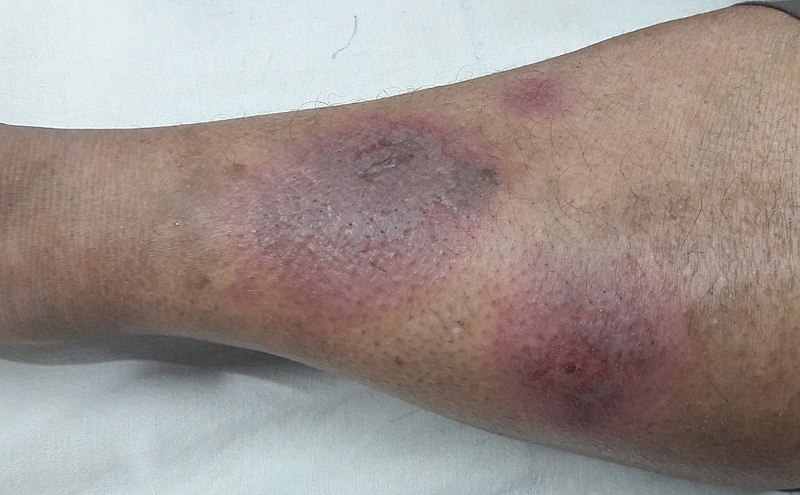
Image Source: Wikimedia Commons (2018). Erythema Nodosum, Licensed under a creative commons licence. Available for free at: https://commons.wikimedia.org/wiki/File:Erythema_Nodosum.jpg (Accessed: 6 June 2022).

Image Source: Wikimedia Commons (2010). Lupus Pernio 01, Licensed under a creative commons licence. Available for free at: https://commons.wikimedia.org/wiki/File:Lupus_pernio_01.jpg (Accessed: 6 June 2022).
Eye manifestations:
- Uveitis – blurred vision, red, watery eyes, photophobia
- Scleritis/episcleritis
- Proptosis
- Iris nodules
- Lacrimal gland involvement, causing sicca syndrome
Cardiac manifestations:
- Arrhythmias, most commonly conduction abnormalities
- Sudden cardiac death from ventricular arrhythmias or complete heart block
- Symptoms of congestive cardiac failure such as shortness of breath, peripheral oedema
- Symptoms and signs of pulmonary hypertension
Neurological manifestations – neurosarcoidosis can affect any part of the nervous symptom, most commonly:
- Cranial nerve palsies, commonly facial nerve palsy, optic nerve dysfunction
- Brain parenchyma can be affected, resulting in a range of neurological symptoms and signs, including cognitive impairment
- Peripheral neuropathy
- Myelopathy – causing leg weakness and sensory changes
- Meningitis
Musculoskeletal manifestations:
- Polyarthritis, often acute
- Dactylitis
Endocrine and metabolic manifestations:
- Parotid gland enlargement
- Hyperprolactinaemia, resulting in amenorrhoea and galactorrhoea in women
- Hypercalcaemia, resulting in renal stones
Gastrointestinal manifestations:
- Asymptomatic liver enzyme derangement
- Hepatomegaly
- Jaundice
- Right upper quadrant pain
Haematological manifestations – can produce non-specific symptoms related to the following blood dyscrasias:
- Lymphadenopathy
- Non-specific symptoms of fatigue, easy bruising and infection can also occur with lymphopenia, anaemia and thrombocytopenia.
Lofgren’s syndrome – this is an acute presentation of sarcoidosis characterised by bilateral hilar lymphadenopathy, erythema nodosum and polyarthralgia, often predominantly affecting the ankles.
Complete Guide to Clinical Genetics ST3 Application and Recruitment (2027)
Written by Medibuddy. Last updated: October 2026. Clinical Genetics is

Complete Guide to Clinical Radiology ST3 Application and Recruitment (2027)
Recruitment paused: NHS England is not running Clinical Radiology ST3+ recru

Complete Guide to Paediatric Surgery ST3 Application and Recruitment in United Kingdom (2026)
Written by Medibuddy. Last updated: October 2026. If you’re planning


Take your subscriptions with you
Our mobile app allows you to access your interview and exam question banks wherever you are.

