


 Close
Close
 26th January 2024
Differential Diagnosis
Although the skin changes in scleroderma are characteristic, other conditions may have similar skin changes. For example, indurated skin (scleroderma) may be seen in conditions such as hypothyroidism, diabetes mellitus, amyloidosis, rheumatoid arthritis, Sjogren’s syndrome and multiple myeloma. Scleroderma presents with hardening of the skin and pigment changes; however, there are plaques with a red/brown type of appearance as opposed to the pigmentary changes seen in cutaneous sclerosis, which tend to be hyperpigmented and/or depigmented. The fingers are usually spared in scleroderma, while in cutaneous sclerosis, skin induration and thickening are commonly found on the palms and fingers.
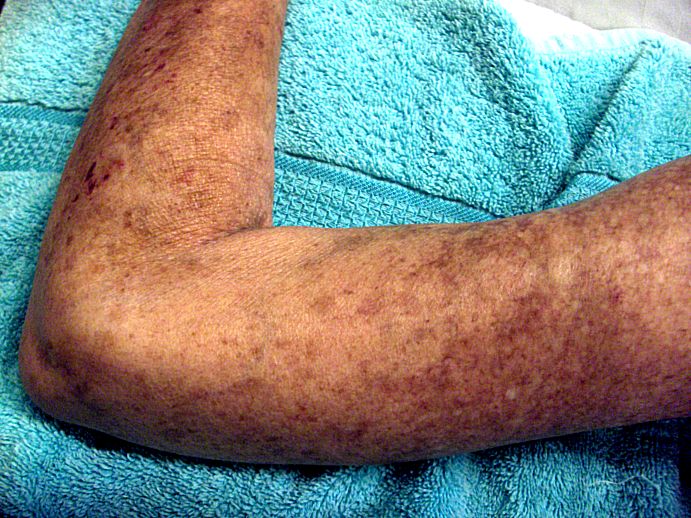
Image Source: Wikimedia Commons (2022). Left Arm Scleroderma Patient, Licensed under a creative commons licence. Available for free at: https://upload.wikimedia.org/wikipedia/commons/6/60/Left_Arm_Scleroderma_Patient.jpg (Accessed: 10 July 2022).
Raynaud’s phenomenon occurs in more than 90% of patients with systemic sclerosis; however, Raynaud’s phenomenon may occur in isolation and, as such, is referred to as primary Raynaud’s phenomenon. However, there are no digital ulcerations or ischemia associated with primary RP.

Image Source: Wikimedia Commons (2022). Raynaud syndrome on female airman’s hand, Licensed under a creative commons licence. Available for free at: https://upload.wikimedia.org/wikipedia/commons/1/1f/Raynaud_syndrome_on_female_airman%27s_hand.jpg (Accessed: 10 July 2022).
Complete Guide to Clinical Genetics ST3 Application and Recruitment (2027)
Written by Medibuddy. Last updated: October 2026. Clinical Genetics is

Complete Guide to Clinical Radiology ST3 Application and Recruitment (2027)
Recruitment paused: NHS England is not running Clinical Radiology ST3+ recru

Complete Guide to Paediatric Surgery ST3 Application and Recruitment in United Kingdom (2026)
Written by Medibuddy. Last updated: October 2026. If you’re planning


Take your subscriptions with you
Our mobile app allows you to access your interview and exam question banks wherever you are.

