


 Close
Close
 21st February 2024
The Lacrimal Apparatus
The lacrimal apparatus is the system responsible for the removal of tears from the eye’s orbit.
Following lacrimal fluid secretion from the lacrimal gland, tears flow over the eye’s surface and collect in the lacrimal lake, situated at the medial canthus. From this point, they travel through a network of canals into the lacrimal sac. The lacrimal sac, which serves as the widened part of the nasolacrimal duct, is found within a groove formed by the lacrimal bone and the frontal process of the maxilla. Tears then descend through the nasolacrimal duct and ultimately discharge into the inferior meatus of the nasal cavity.
The lacrimal gland is positioned within the superior and lateral aspects of the orbit, above the outer edge of the eye. The gland receives its blood supply primarily from branches of the ophthalmic artery. Parasympathetic nerve fibres, carried by the facial nerve, stimulate tear production, while sympathetic fibres regulate blood vessel constriction within the gland. The primary purpose of the gland is to secrete lacrimal fluid, which protects, lubricates and supplies the cornea with nutrients.
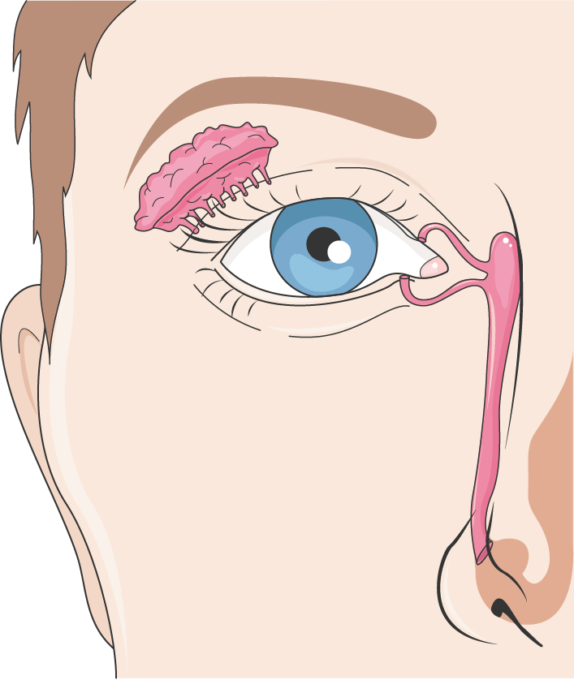
Image Source: Tear-duct, Licensed under a creative commons licence. Available for free at: https://smart.servier.com/smart_image/tear-duct/ (Accessed: 28 September 2023).
Clinical relevance: Disorders of the lacrimal gland can have significant implications for ocular health. Dry Eye Syndrome can occur from reduced tear production from the lacrimal gland, causing discomfort and potential corneal damage. Dacryoadenitis is inflammation of the lacrimal gland, often due to infection or autoimmune diseases, which can result in pain and swelling. Tumours can develop within the lacrimal gland, which may require surgical intervention. In certain cases, lacrimal gland surgery is necessary to treat various conditions or alleviate excessive tearing (epiphora).
Complete Guide to Clinical Genetics ST3 Application and Recruitment (2027)
Written by Medibuddy. Last updated: October 2026. Clinical Genetics is

Complete Guide to Clinical Radiology ST3 Application and Recruitment (2027)
Recruitment paused: NHS England is not running Clinical Radiology ST3+ recru

Complete Guide to Paediatric Surgery ST3 Application and Recruitment in United Kingdom (2026)
Written by Medibuddy. Last updated: October 2026. If you’re planning


Take your subscriptions with you
Our mobile app allows you to access your interview and exam question banks wherever you are.

