


 Close
Close
 27th February 2024
X-linked recessive
X-linked recessive conditions are more commonly seen in males, with females often acting as carriers for the gene mutations. Males cannot pass on the mutation to their male children, but females will always act as carriers. A pedigree can show affected males in the generation above the index case. Female carriers will have a 50% chance of bearing a male affected by the condition or a female acting as a carrier for the condition.
Females can occasionally display the diseases’ phenotype through skewed X-inactivation ( X-inactivation favouring the expression of the mutant allele) or if they are homozygous for the mutant allele. Variable expressivity secondary to mosaicism, variable penetrance, and de novo mutations within X-linked mutations can result in an atypical pedigree, preventing the visualisation of a clear inheritance pattern.
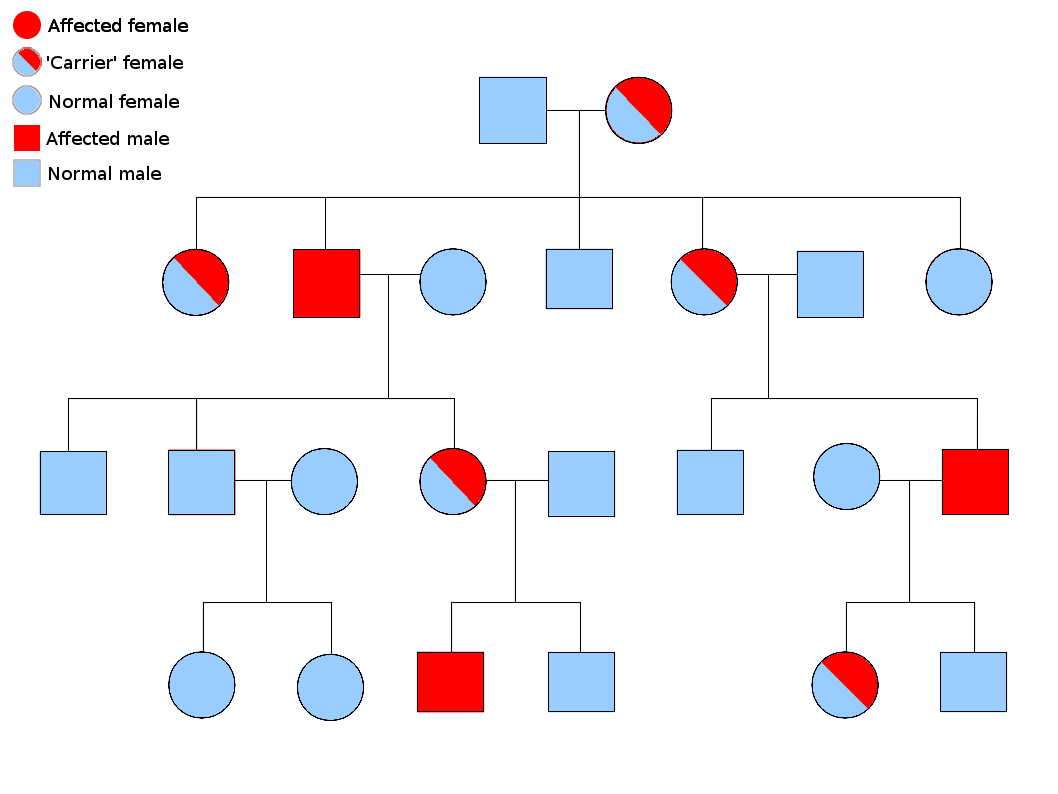 Image Source: Wikimedia Commons (2013). Sex linked inheritance, Licensed under a creative commons licence. Available for free at: https://commons.wikimedia.org/wiki/File:Sex_linked_inheritance.png (Accessed: 5 January 2024).
Complete Guide to Clinical Genetics ST3 Application and Recruitment (2027)
Written by Medibuddy. Last updated: October 2026. Clinical Genetics is

Complete Guide to Clinical Radiology ST3 Application and Recruitment (2027)
Recruitment paused: NHS England is not running Clinical Radiology ST3+ recru

Complete Guide to Paediatric Surgery ST3 Application and Recruitment in United Kingdom (2026)
Written by Medibuddy. Last updated: October 2026. If you’re planning


Take your subscriptions with you
Our mobile app allows you to access your interview and exam question banks wherever you are.

