


 Close
Close
 5th August 2024
Subarachnoid haemorrhage
SAH refers to bleeding into the subarachnoid space, usually as the result of a ruptured intracranial aneurysm. Those with hypertension, autosomal dominant polycystic kidney disease, a smoking history or a family history of SAH are at increased risk of developing SAH.
- Patients report a severe, sudden ‘thunderclap’ headache associated with vomiting and meningism. In severe cases, it can present with coma or sudden death.
- A diagnosis can be confirmed by CT brain or lumbar puncture. Studies have shown that a CT performed within 6 hours of symptom onset can detect almost all cases, showing hyperdensity in the subarachnoid space. This sensitivity decreases over time, therefore in the majority of cases a lumbar puncture should also be performed if the scan is negative. This should be done at least 12 hours after the onset of a headache so that the xanthochromia can be accurately detected.
- Patients should be warned about the risk of developing a headache post lumbar puncture. The risk of this can be reduced by replacing the stylet before removing the LP needle.
- Note that hyponatraemia and hyperglycaemia can be features of SAH.
- All cases of confirmed SAH should immediately be discussed with the neurosurgery team. The use of nimodipine has been shown to improve outcomes.
- Around 30% of patients die within 30 days of a SAH and many survivors experience cognitive impairment.
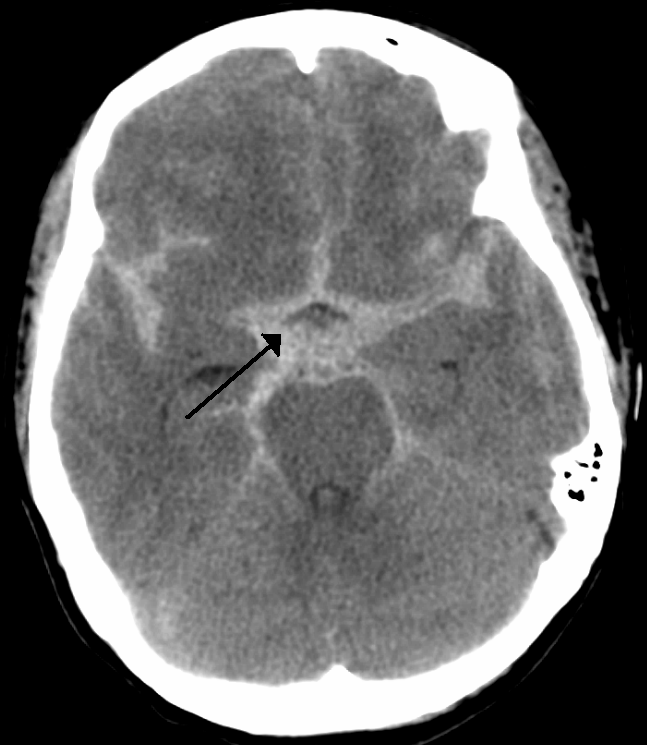
Image Source: Wikimedia Commons (2010). SubarachnoidP, Licensed under a creative commons licence. Available for free at: https://commons.wikimedia.org/wiki/File:SubarachnoidP.png (Accessed: 16 January 2024)
A condition that presents similarly to SAH is reversible cerebral vasoconstriction syndrome. This condition is caused by reversible constriction of the cerebral arteries and presents with recurrent thunderclap headaches. Some people also experience focal neurological deficits. Triggers such as stress, valsalva manoeuvres or exertion are often reported. The characteristic neuroimaging finding is multifocal segmental cerebral artery vasoconstriction on cerebral angiography. There may also be evidence of subarachnoid haemorrhage or ischaemia on imaging.
Complete Guide to Clinical Genetics ST3 Application and Recruitment (2027)
Written by Medibuddy. Last updated: October 2026. Clinical Genetics is

Complete Guide to Clinical Radiology ST3 Application and Recruitment (2027)
Recruitment paused: NHS England is not running Clinical Radiology ST3+ recru

Complete Guide to Paediatric Surgery ST3 Application and Recruitment in United Kingdom (2026)
Written by Medibuddy. Last updated: October 2026. If you’re planning


Take your subscriptions with you
Our mobile app allows you to access your interview and exam question banks wherever you are.

