


 Close
Close
 17th February 2025
Investigations in bronchiectasis
Key investigations and findings in bronchiectasis include:
- Blood tests:
- White cell count and CRP to rule in/out infection
- Raised eosinophils may be suggestive of allergic bronchopulmonary aspergillosis
- To investigate an underlying cause, e.g. rheumatoid factor, immunoglobulins, HIV test
- Sputum culture: pathogenic organisms are often found in sputum and it is advisable to send a sputum culture and sensitivity, as well as a viral and atypical screen. Pseudomonas aeruginosa is often found and can correlate with more severe lung damage. It is more likely to be antibiotic resistant than other common respiratory pathogens.
- CXR: classically shows the tram-track sign (thick-walled, dilated bronchi).
- HRCT (gold standard for diagnosis): classically shows dilated airways, with or without a thickened bronchial wall (tram-track sign) and signet-ring sign (airway appearing larger than accompanying blood vessel) (Figure 2).
- Pulmonary function tests: obstructive picture and reduced FEV1.
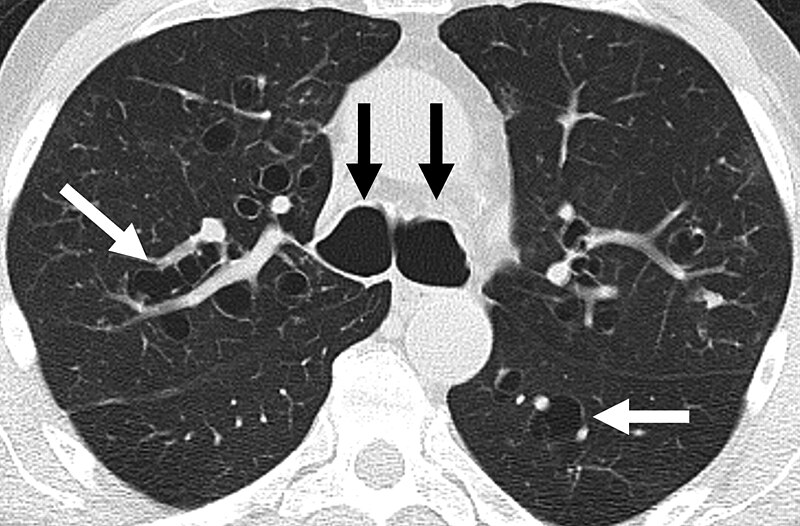
Image Source: Wikimedia Commons (2012). Bronquiectasia, Licensed under a creative commons licence. Available for free at: https://commons.wikimedia.org/wiki/File:Bronquiectasia.jpeg#file (Accessed: 19 January 2024).
Complete Guide to Clinical Genetics ST3 Application and Recruitment (2027)
Written by Medibuddy. Last updated: October 2026. Clinical Genetics is
Clinical Genetics ST3

Complete Guide to Clinical Radiology ST3 Application and Recruitment (2027)
Recruitment paused: NHS England is not running Clinical Radiology ST3+ recru
Clinical Radiology ST3

Complete Guide to Paediatric Surgery ST3 Application and Recruitment in United Kingdom (2026)
Written by Medibuddy. Last updated: October 2026. If you’re planning
Paediatric Surgery ST3


Take your subscriptions with you
Our mobile app allows you to access your interview and exam question banks wherever you are.

