


 Close
Close
 24th February 2025
Signs and symptoms of RA
RA is typically polyarticular, symmetrical and may be fleeting and migratory. The intra-articular features are pain, erythema, swelling and early morning stiffness of the small joints, typically of the hands, causing significant loss of function and deformity over time. The classic skeletal deformities include ulnar deviation of the wrist, swan-neck and Boutonnière deformities of the fingers (see Figures 3-4) and atlanto-axial subluxation of the cervical spine.
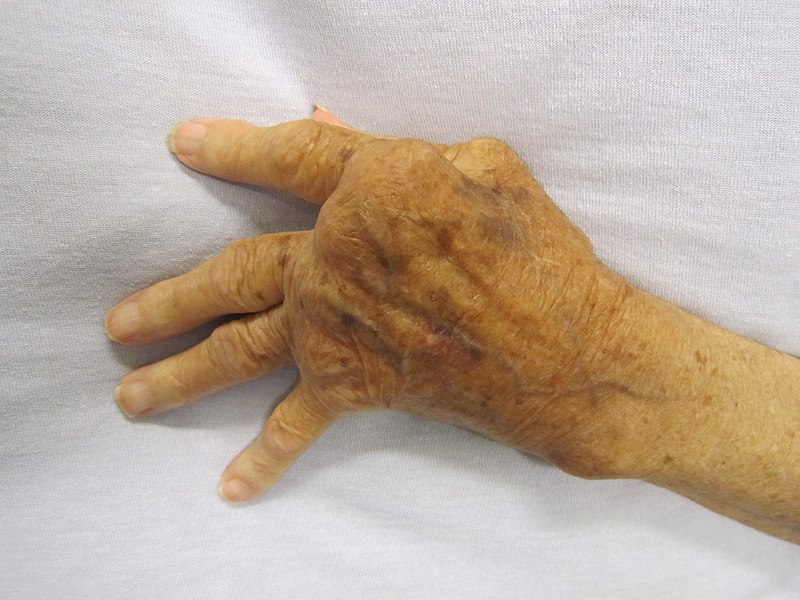
Image source: Wikimedia Commons (2010). Rheumatoid Arthritis, Licensed under a Creative Commons licence. Available for free at: https://commons.wikimedia.org/wiki/File:Rheumatoid_Arthritis.JPG (Accessed: 17 January 2024).
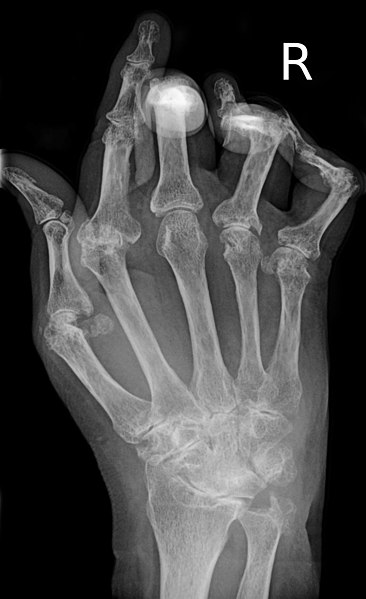
Image source: Wikimedia Commons (2015). RheumatoideArthritisAP, Licensed under a Creative Commons licence. Available for free at: https://commons.wikimedia.org/wiki/File:RheumatoideArthritisAP.jpg (Accessed: 17 January 2024).
Constitutional symptoms may include fatigue, malaise, weight loss and rashes. Specific extra-articular manifestations can be classified by system:
| System | Manifestation |
|---|---|
| Cardiac/cardiovascular | Amyloid, pericarditis, vasculitis |
| Respiratory | Pulmonary fibrosis, pulmonary nodules, exudative pleural effusions, pleurisy, bronchiolitis obliterans |
| Ophthalmic | Sicca syndrome, episcleritis, scleritis, corneal ulcers |
| Neurological | Radiculopathy due to joint laxity causing nerve impingement, mononeuritis multiplex |
| Miscellaneous | Felty’s syndrome (RA, splenomegaly and neutropenia), lymphadenopathy |
Table 1 Extra-articular manifestations of RA (not an exhaustive list)
Complications of established RA include anaemia of chronic disease, osteoporosis, septic arthritis (due to immunosuppressive therapies), cardiovascular sequelae due to chronic inflammation (think of Virchow’s triad) and consequential mental health issues of living with this chronic, often relapsing and remitting condition. Interestingly, malignancy rates (particularly Hodgkin’s lymphoma) are elevated in those with RA.
Given the varied and widespread possible signs and symptoms with RA, a thorough clinical history and examination is crucial in making the diagnosis and a high index of suspicion is required, especially in the context of pre-existing autoimmune disease.
Complete Guide to Clinical Genetics ST3 Application and Recruitment (2027)
Written by Medibuddy. Last updated: October 2026. Clinical Genetics is

Complete Guide to Clinical Radiology ST3 Application and Recruitment (2027)
Recruitment paused: NHS England is not running Clinical Radiology ST3+ recru

Complete Guide to Paediatric Surgery ST3 Application and Recruitment in United Kingdom (2026)
Written by Medibuddy. Last updated: October 2026. If you’re planning


Take your subscriptions with you
Our mobile app allows you to access your interview and exam question banks wherever you are.

