


 Close
Close
 5th May 2025
Background
Atrial arrhythmias are arrythmias that are generated above or at the level of the atrioventricular node (AVN) and follow the normal His-Purkinje bundle system to rapidly activate the ventricles. These encompass a wide variety of abnormal heart rhythms caused by a multitude of underlying aetiologies. When assessing and managing atrial arrhythmias, follow the standard resus council guidelines for managing arrhythmias:
- Is there evidence of haemodynamic instability? If so, needs synchronised DC shock
- Is the rhythm fast or slow?
- Are the QRS complexes broad or narrow (i.e. <120ms)? Atrial arrhythmias are generally narrow complex (although beware of atrial tachycardias with variable block/aberrant conduction which may appear broad complex!)
- Is the rhythm regular or irregular?
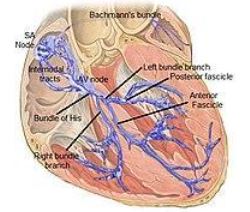
Image Source: Wikimedia Commons (2017). Cardiac Conduction System, Licensed under a creative commons licence. Available for free at: https://commons.wikimedia.org/wiki/File:Cardiac_conduction_system.jpg (Accessed 1 May 2025).
Complete Guide to Clinical Genetics ST3 Application and Recruitment (2027)
Written by Medibuddy. Last updated: October 2026. Clinical Genetics is

Complete Guide to Clinical Radiology ST3 Application and Recruitment (2027)
Recruitment paused: NHS England is not running Clinical Radiology ST3+ recru

Complete Guide to Paediatric Surgery ST3 Application and Recruitment in United Kingdom (2026)
Written by Medibuddy. Last updated: October 2026. If you’re planning


Take your subscriptions with you
Our mobile app allows you to access your interview and exam question banks wherever you are.

