


 Close
Close
 23rd May 2025
Anatomy and Physiology
The pituitary gland, or hypophysis, is a pea-sized endocrine gland that lies in the sella turcica of the sphenoid bone. It is connected to the hypothalamus by the infundibulum which contains the hypophyseal-portal vessels. The pituitary gland is also known as the “master gland” as it regulates the actions of other endocrine organs throughout the body. Anatomically and embryologically it is divided into the anterior lobe, or adenohypophysis, and posterior lobe, or neurohypophysis.
The adenohypophysis is embryologically derived from an evagination of ectoderm named Rathke’s pouch. It secretes: growth hormone (GH) (Stimulates growth), prolactin (PRL) (stimulates milk production), adrenocorticotropic hormone (ACTH) (stimulates cortisol and androgen production by adrenal cortex), thyroid-stimulating hormone (TSH), follicle-stimulating hormone (FSH) (stimulates production of oestrogen and growth of oocytes), and luteinising hormone (LH) (stimulates production of oestrogen and progesterone by ovaries and testosterone by testes).
The neurohypophysis is continuous with the hypothalamus and embryologically originates from neuroectoderm. It secretes hormones that are produced in the hypothalamus: Antidiuretic hormone (ADH) (increases water reabsorption from kidneys which will increase blood pressure and oxytocin (stimulates uterine contraction in labour and lactation).
The pituitary gland works in close relation to the hypothalamus via the hypothalamic-pituitary-adrenal axis (HPAA). The hypothalamus secretes hormones into hypophyseal-portal veins which reach the pituitary and stimulate secretions of hormones by the adenohypophysis. Dopamine and somatostatin, also secreted by the hypothalamus, inhibit the release of PRL and GH. The pituitary also communicates with the hypothalamus via negative feedback where high levels of hormones secreted by the pituitary inhibit the hypothalamus from secreting the respective hormones that trigger their release.
Disorders of the pituitary gland often arise from levels of these hormones being too high or low.
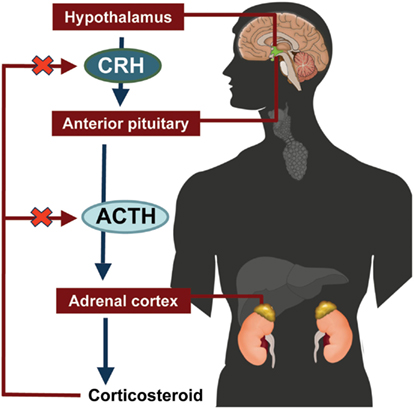
Image Source: Wikimedia Commons (2013). Curid, Licensed under a creative commons licence. Available for free at: https://commons.wikimedia.org/w/index.php?curid=44663207 (Accessed 13 May 2025).
Complete Guide to Clinical Genetics ST3 Application and Recruitment (2027)
Written by Medibuddy. Last updated: October 2026. Clinical Genetics is

Complete Guide to Clinical Radiology ST3 Application and Recruitment (2027)
Recruitment paused: NHS England is not running Clinical Radiology ST3+ recru

Complete Guide to Paediatric Surgery ST3 Application and Recruitment in United Kingdom (2026)
Written by Medibuddy. Last updated: October 2026. If you’re planning


Take your subscriptions with you
Our mobile app allows you to access your interview and exam question banks wherever you are.

