


 Close
Close
 27th May 2025
Diagnosis
Symptoms of PAI include:
- Fatigue
- Weakness
- Myalgia and arthralgia
- Weight loss
- Nausea, vomiting, abdominal pain
Signs of PAI include:
- Mucocutaneous hyperpigmentation – commonly on areas of friction e.g. palms, knuckles.
- Hypotension and postural hypotension.
- Less commonly vitiligo, premature greying, goitre (with Hashimoto’s thyroiditis).
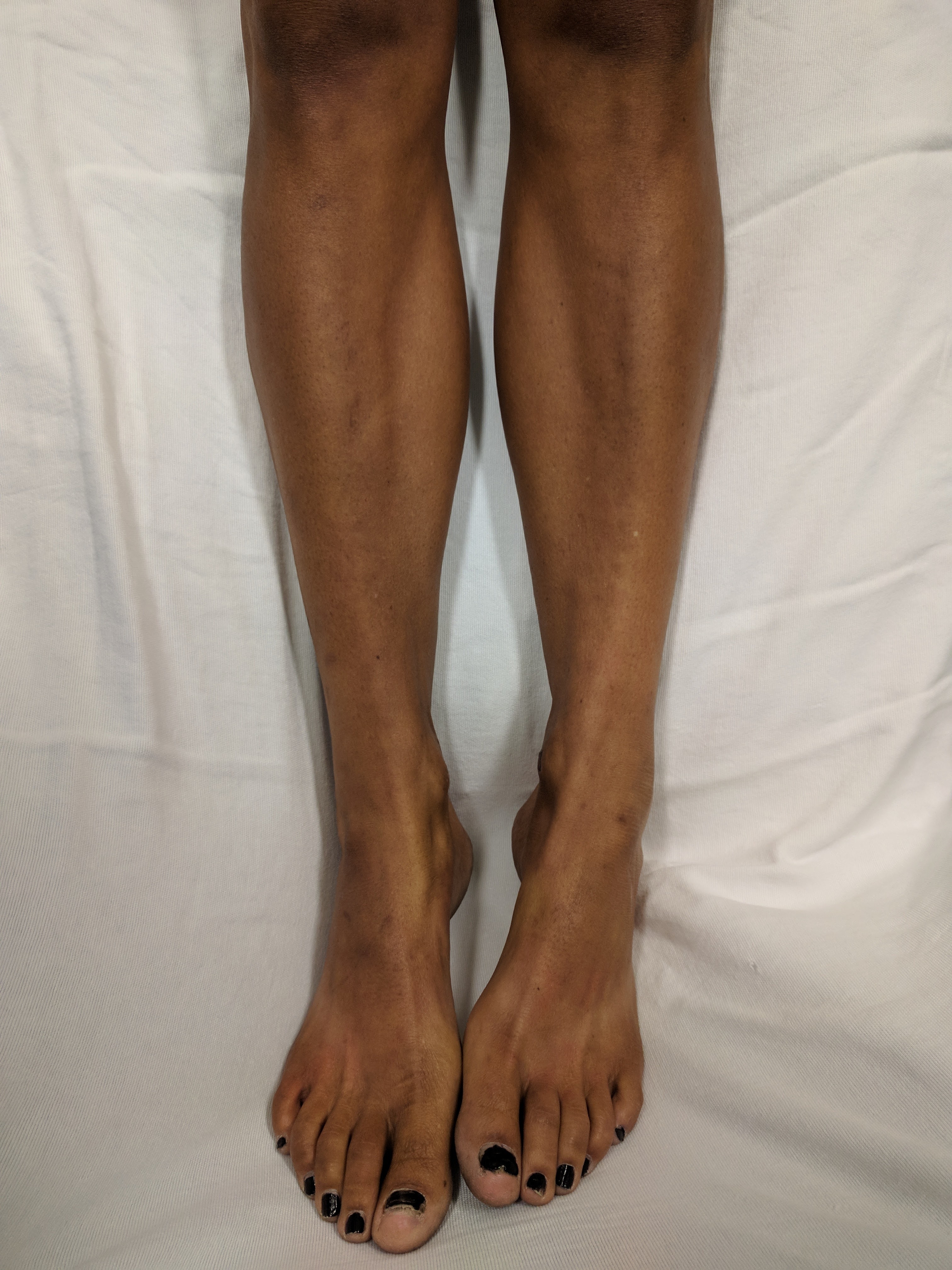
Image Source: Wikimedia Commons (2018) Addison’s Leg’s, Licensed under a creative commons licence. Available for free at: https://upload.wikimedia.org.wikipedia/commons/6/69/Addison%Legs.jpg (Accessed 13 May 2025).
The following laboratory findings are typical in PAI:
| Biochemical test | Findings in PAI |
|---|---|
| Sodium | ↓ in 90% of cases |
| Potassium | ↑ in 50% of cases |
| Calcium | ↑ in 10-20% of cases |
| FBC | Anaemia, mild eosinophilia and lymphocytosis |
| Glucose | ↓ often in children |
| LFTs | ↑ transaminases |
| Morning cortisol | ↓ levels <100 nmol/L warrant urgent admission, 100-500 nmol/L warrants endocrinology referral |
| ACTH | ↑ in primary adrenal insufficiency but ↓ in secondary |
| RAAS | ↑ renin and ↓ aldosterone in PAI |
Table 1: laboratory findings in primary adrenal insufficiency.
should result in a rise in cortisol for a physiologic response. However, in primary adrenal insufficiency this does not occur i.e. the cortisol will remain low when re-checked following administration of synacthen, as the adrenal glands do not respond to stimulation.
To investigate the underlying aetiology, the following investigations should be considered:
- Adrenal autoantibody testing.
- Chest x-ray to investigate lung neoplasm or tuberculosis.
- Tuberculosis skin prick or ELISA testing.
- Abdominal x-ray which may show adrenal calcification.
- CT or MRI of adrenal glands.
- MRI of hypothalamus and pituitary if suspicion of a central cause.
Complete Guide to Clinical Genetics ST3 Application and Recruitment (2027)
Written by Medibuddy. Last updated: October 2026. Clinical Genetics is

Complete Guide to Clinical Radiology ST3 Application and Recruitment (2027)
Recruitment paused: NHS England is not running Clinical Radiology ST3+ recru

Complete Guide to Paediatric Surgery ST3 Application and Recruitment in United Kingdom (2026)
Written by Medibuddy. Last updated: October 2026. If you’re planning


Take your subscriptions with you
Our mobile app allows you to access your interview and exam question banks wherever you are.

