


 Close
Close
 5th June 2025
Diagnosis
EDS is initially diagnosed clinically – musculoskeletal and skin manifestations are the primary features, with only joint hypermobility seen across all subtypes. A full skin examination may reveal some of the above-mentioned features. Hypermobility is assessed using the Beighton 9-point scale (see Table () below) – a score of 5 or more suggests generalised hypermobility. There are major and minor criteria defined for all subtypes in order to achieve a clinical diagnosis. This can then be followed by genetic testing for 11 out of the 12 subtypes that have known related genes. Hypermobile EDS, despite being the most common, has an unknown aetiology.
| Joint | Finding | Points |
| Fifth/little finger (left) | With the forearm and palm of the hand resting on a flat surface, dorsiflexion MCP >90 degrees | 1 |
| Dorsiflexion MCP </= 90 degrees | 0 | |
| Fifth/little finger (right) | With the forearm and palm of the hand resting on a flat surface, dorsiflexion of MCP >90 degrees | 1 |
| Dorsiflexion MCP </= 90 degrees | 0 | |
| Left thumb | With the arm straightened, hands pronated, wrist flexed, the thumb can dorsiflexed to touch the forearm | 1 |
| Thumb cannot be dorsiflexed to tough the forearm | 0 | |
| Right thumb | With the arm straightened, hands pronated, wrist flexed, the thumb can dorsiflexed to touch the forearm | 1 |
| Thumb cannot be dorsiflexed to tough the forearm | 0 | |
| Left elbow | With the arm straightened and hand supinated, elbow hyperextends more than 10 degrees | 1 |
| Elbow does not hyperextend beyond 10 degrees | 0 | |
| Right elbow | With the arm straightened and hand supinated, elbow hyperextends more than 10 degrees | 1 |
| Elbow does not hyperextend beyond 10 degrees | 0 | |
| Left knee | While standing with knees locked, the knee hyperextends more than 10 degrees | 1 |
| The knee does not hyperextend beyond 10 degrees | 0 | |
| Right knee | While standing with knees locked, the knee hyperextends more than 10 degrees | 1 |
| The knee does not hyperextend beyond 10 degrees | 0 | |
| Spine | Patient can bend forwards and touch the ground with palms lying flat without bending knees | 1 |
| Patient cannot touch floor with palms without bending knees | 0 | |
Table 2: Summary of Beighton Score
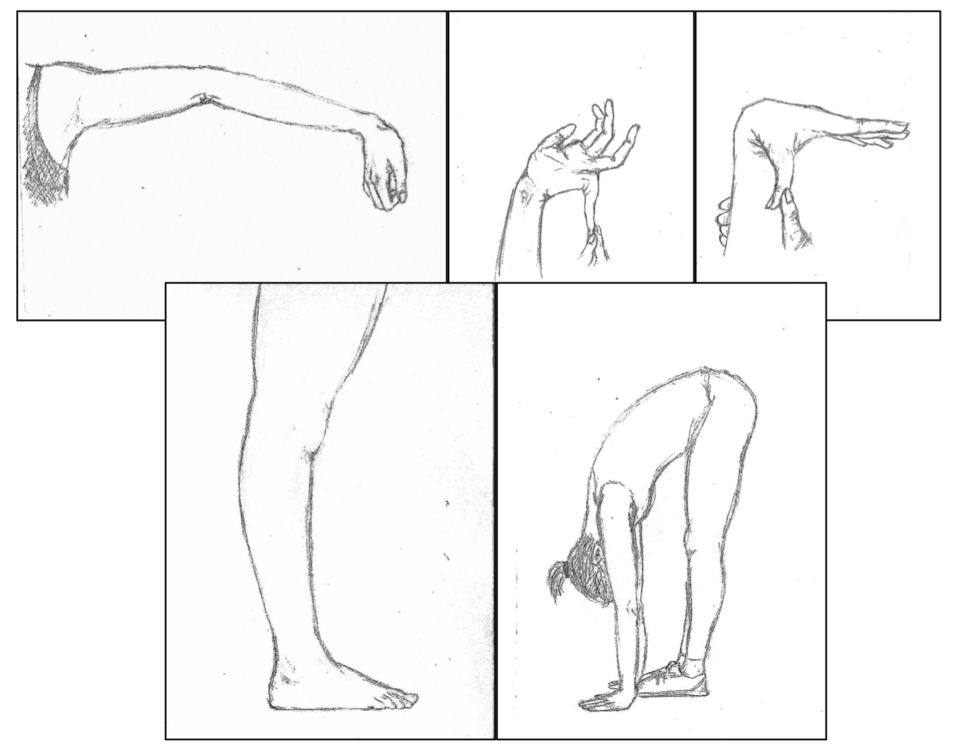 Image Source: Wikimedia Commons (2017). Ehlers-Danlos Skala Beighton, Licensed under a creative commons licence. Available for free at: https://commons.wikimedia.org/wiki/File:Ehlers-Danlos_skala_Beighton%27a.png (Accessed 19 May 2025).
Complete Guide to Clinical Genetics ST3 Application and Recruitment (2027)
Written by Medibuddy. Last updated: October 2026. Clinical Genetics is

Complete Guide to Clinical Radiology ST3 Application and Recruitment (2027)
Recruitment paused: NHS England is not running Clinical Radiology ST3+ recru

Complete Guide to Paediatric Surgery ST3 Application and Recruitment in United Kingdom (2026)
Written by Medibuddy. Last updated: October 2026. If you’re planning


Take your subscriptions with you
Our mobile app allows you to access your interview and exam question banks wherever you are.

