


 Close
Close
 6th June 2025
Nail Changes Associated with Systemic Disease
Koilonychia
Spoon nails (koilonychia) are soft nails that look scooped out. It is a nail change that can be a sign of hypochromic anaemia, especially iron deficiency. Even though Koilonychia has been associated with iron deficiency in case reports, it is more likely seen as an occupational change in nails and may be idiopathic; ruling out iron deficiency anaemia in these patients is the only work-up necessary in this condition.
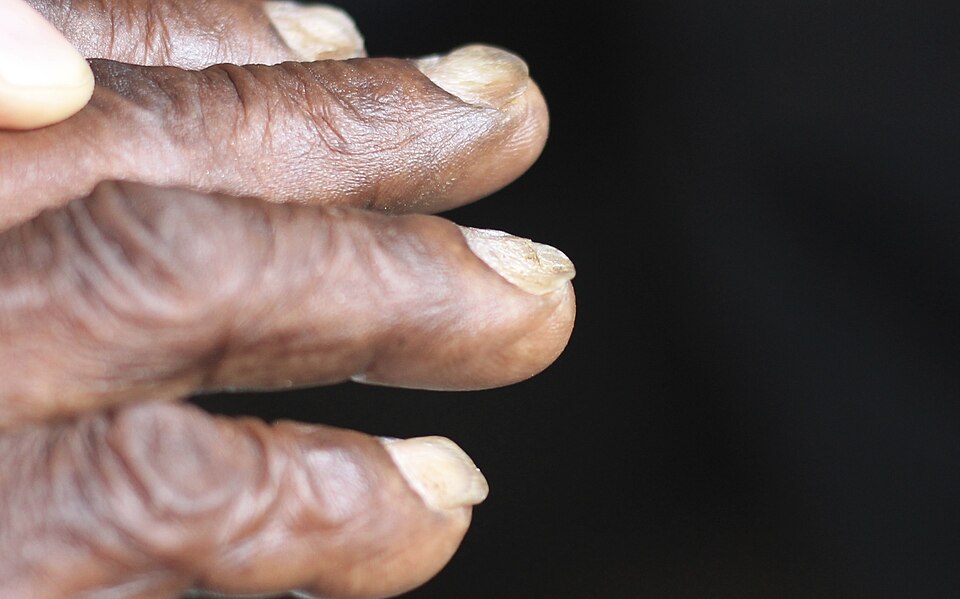
Image Source: Wikimedia Commons (2014). Koilo Nychia Iron Deficiency Anaemia, Licensed under a creative commons licence. Available for free at: https://commons.wikimedia.org/wiki/File:Koilonychia_iron_deficiency_anemia.jpg (Accessed 22 May 2025).
Leukonychia
Leukonychia, or white nails, is usually not an alarming sign, but it can sometimes unmask severe systemic disorders or congenital conditions. Examples of systemic disorders include; anaemia, hepatitis C, Wilson’s disease and ischemic cardiomyopathy and congenital conditions include; Bart–Pumphrey syndrome, keratoderma-hypotrichosis-leukonychia totalis syndrome and Carvajal/Naxos syndrome. The white colour can be due to nail plate or nail bed abnormalities.
Leukonychia consists of whitening of the nail and the morphology classifies the nail according to the distribution of the white lines: total, partial, transversal, and longitudinal leukonychia. Mees’ and Muehrcke’s lines are examples of transversal leukonychia, while Terry’s and Lindsay’s nails are examples of total and partial leukonychia. The anatomical classifies according to the structure responsible for the white colour: the nail plate in true leukonychia, the nail bed in apparent leukonychia, and the surface only in pseudo-leukonychia.
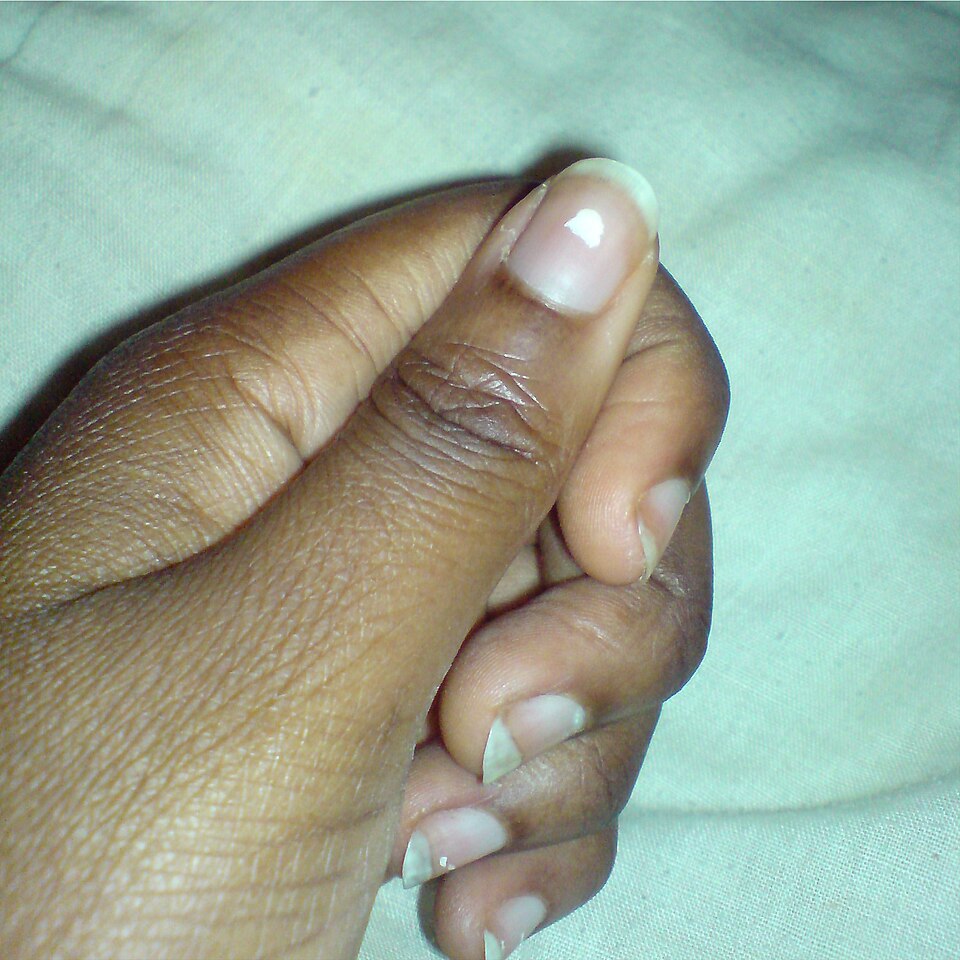
Image Source: Wikimedia Commons (2010). Leukonychia2, Licensed under a creative commons licence. Available for free at: https://commons.wikimedia.org/wiki/File:Leukonychia2.jpg (Accessed 22 May 2025).
Yellow Nail Syndrome
This is a rare condition defined by a presence of two of the following: (1) slow-growing, hard, yellow, and dystrophic nails, (2) lymphedema, and (3) respiratory tract disease. Yellow nail syndrome most often starts in middle age, although a similar condition has been described in younger children. The cause of yellow nail syndrome is unknown; however, it is seen in multiple conditions: rheumatoid arthritis, internal malignancies, pleural effusions and bronchiectasis.
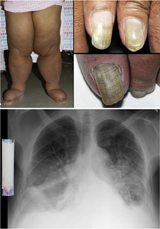
Image Source: Wikimedia Commons (2007). YNS, Licensed under a creative commons licence. Available for free at: https://commons.wikimedia.org/wiki/File:Yns.jpg (Accessed 22 May 2025).
Complete Guide to Clinical Genetics ST3 Application and Recruitment (2027)
Written by Medibuddy. Last updated: October 2026. Clinical Genetics is

Complete Guide to Clinical Radiology ST3 Application and Recruitment (2027)
Recruitment paused: NHS England is not running Clinical Radiology ST3+ recru

Complete Guide to Paediatric Surgery ST3 Application and Recruitment in United Kingdom (2026)
Written by Medibuddy. Last updated: October 2026. If you’re planning


Take your subscriptions with you
Our mobile app allows you to access your interview and exam question banks wherever you are.

