


 Close
Close
 7th June 2025
Diagnosis
History and examination
- Careful history regarding onset of symptoms (e.g. infancy or childhood), a positive family history of parents’ consanguinity may support the diagnosis
- Examination should include the entire skin surface, nails, hair and mucous membranes. E.g. diffuse/focal/punctate/striate
- Distribution:
- Presence or absence of extension to the dorsal area of palms and soles, around the digits
- Morphology:
- Presence of hyperkeratosis which presents as waxy and compact areas with fissures associated with erythema and desquamation
- Extracutaneous findings (e.g. ocular keratitis, hearing loss, cardiac abnormalities and internal malignancies)
- Distribution:
- Histopathology:
- Mainly shows hyperkeratosis and acanthosis. The presence of epidermolysis is important to note as it differentiates epidermolytic-PPK from non-epidermolytic-PPK
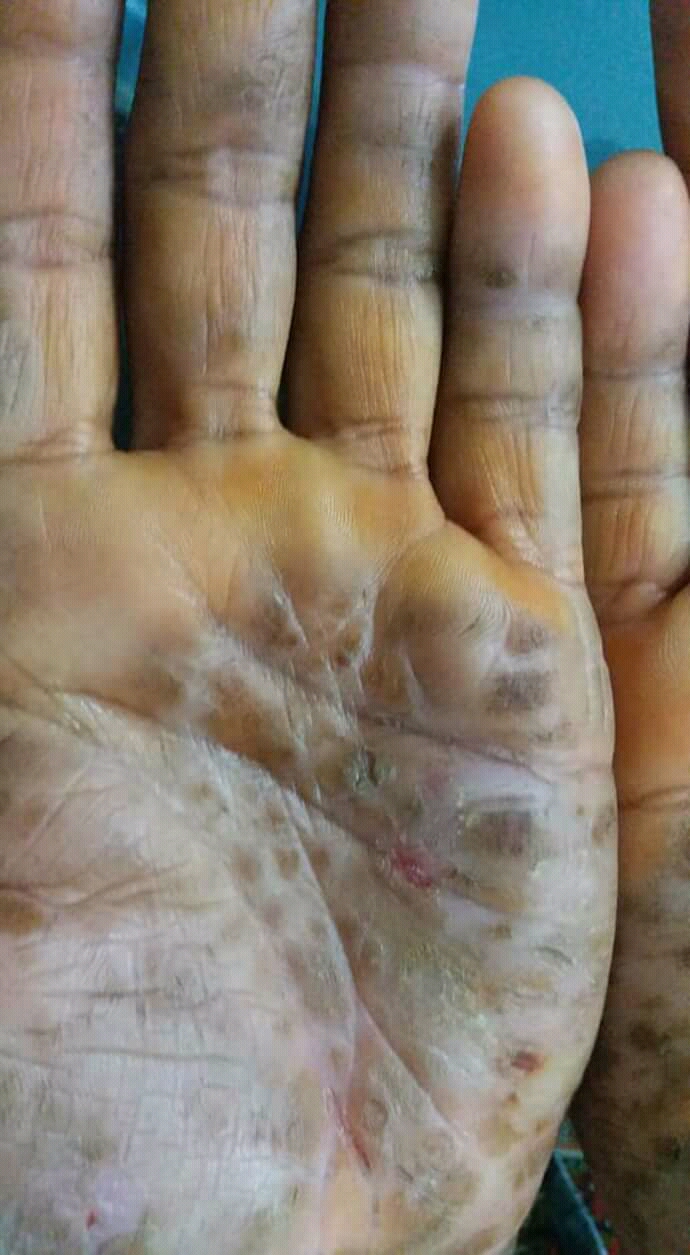 Image Source: Wikimedia Commons (2017). Palmoplanta Keratoderma, Licensed under a creative commons licence. Available for free at: https://en.wikipedia.org/wiki/Palmoplantar_keratoderma (Accessed 22 May 2025).
- Mainly shows hyperkeratosis and acanthosis. The presence of epidermolysis is important to note as it differentiates epidermolytic-PPK from non-epidermolytic-PPK
Complete Guide to Clinical Genetics ST3 Application and Recruitment (2027)
Written by Medibuddy. Last updated: October 2026. Clinical Genetics is
Clinical Genetics ST3

Complete Guide to Clinical Radiology ST3 Application and Recruitment (2027)
Recruitment paused: NHS England is not running Clinical Radiology ST3+ recru
Clinical Radiology ST3

Complete Guide to Paediatric Surgery ST3 Application and Recruitment in United Kingdom (2026)
Written by Medibuddy. Last updated: October 2026. If you’re planning
Paediatric Surgery ST3


Take your subscriptions with you
Our mobile app allows you to access your interview and exam question banks wherever you are.

