


 Close
Close
 9th June 2025
Neurofibromatosis
Neurofibromatosis is a genetic condition which causes tumours on nervous tissues. There are three types: Neurofibromatosis Type 1, Neurofibromatosis Type 2 and Schwannomatosis, with their diagnosis being based on their clinical features.
Neurofibromatosis Type 1 (NF1)
This is by far the prevalent form of Neurofibromatosis, occurring in over 95% of cases. Its inheritance pattern is autosomal dominant, although 50% of cases are due to de novo mutations.
Clinical Features
The cardinal dermatological features of NF1 are:
- Café au lait patches
- Lisch nodules
- Axillary freckling
The diagnosis of NF1 is made when there are greater than six café au lait spots and skin tumours.
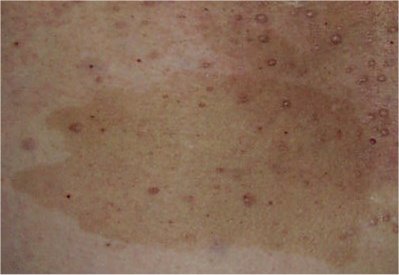
Image Source: Wikimedia Commons (2006). NF-1-Tache Café-au-lait, Licensed under a creative licence, Available for free at: https://commons.wikimedia.org/wiki/File:NF-1-Tache_cafe-au-lait.jpg (Accessed 23 May 2025).
Neurofibromatosis Type 2 (NF2)
This is less common than NF1. Its inheritance pattern is also autosomal dominant. Tumours typically arise on the Schwann cells.
Clinical Features
Neural tumours tend to arise with patients presenting with bilateral hearing loss and balance issues:
- Acoustic neuromas (bilateral)
- Meningiomas
- Cutaneous neurofibromas

Image Source: Wikimedia Commons (2021). Neurofibroma in Neurofibromatosis, Licensed under a creative commons licence. Available for free at: https://commons.wikimedia.org/wiki/File:Neurofibroma_in_neurofibromatosis_type_1.png (Accessed 23 May 2025).
Complete Guide to Clinical Genetics ST3 Application and Recruitment (2027)
Written by Medibuddy. Last updated: October 2026. Clinical Genetics is

Complete Guide to Clinical Radiology ST3 Application and Recruitment (2027)
Recruitment paused: NHS England is not running Clinical Radiology ST3+ recru

Complete Guide to Paediatric Surgery ST3 Application and Recruitment in United Kingdom (2026)
Written by Medibuddy. Last updated: October 2026. If you’re planning


Take your subscriptions with you
Our mobile app allows you to access your interview and exam question banks wherever you are.

