Close
Close

 25th September 2026
Complete Guide to Palliative Medicine ST4 Application and Recruitment (2026)
Written by Medibuddy. Last updated: September 2026.
If you’re applying for Palliative Medicine ST4, this 2027 application guide is for you. Palliative Medicine is a Group 1 specialty with national selection at ST4, delivered as a four‑year higher training programme that dual accredits with Internal Medicine.
We’ve put everything you need in one place: how eligibility works, what national recruitment expects, how self‑assessment and portfolio scoring are verified, and practical ways to strengthen your evidence.
Key Facts at a Glance
- Competition ratio (2025 Round 1): 2.3:1 (136 applications, 59 posts)
- Training length: Four years (ST4 to ST7), dual with Internal Medicine
- Entry requirement: IMT Stage 1 capabilities; MRCP(UK) Part 1 at application, full diploma by offer
- Recruitment platform: Oriel; national lead: PHST national recruitment
- Application window (2026 Round 1): 20 November – 11 December 2025 (2027 dates to follow)
- Evidence upload (2026 Round 1): Week commencing 22 December 2025
Table of Contents
- Palliative Medicine ST4 Curriculum
- Palliative Medicine ST4 Eligibility Criteria and Entry Requirements
- How to Apply for Palliative Medicine ST4 National Recruitment
- Palliative Medicine ST4 Recruitment Timeline and Key Dates (planning for 2027)
- How Competitive Is Palliative Medicine ST4?
- How Palliative Medicine ST4 Applications Are Scored (2027)
- Palliative Medicine ST4 Self-Assessment and Portfolio: How to Maximise Your Score
- The Palliative Medicine ST4 Interview: A Brief Overview
- Palliative Medicine ST4 Offers, Preferencing and What Happens Next
- Frequently Asked Questions About Palliative Medicine ST4 Application
- Palliative Medicine ST4 Useful Resources
- Conclusion
Palliative Medicine ST4 Curriculum
The current Palliative Medicine curriculum is capability based. It’s set by the Joint Royal Colleges of Physicians Training Board (JRCPTB) and approved by the GMC, and your progress is judged against a set of Capabilities in Practice (CiPs) underpinned by the Generic Professional Capabilities. Day to day, that means gathering clinical evidence in an e-portfolio, mapped to the generic physician CiPs and the specialty CiPs, and reviewed at your Annual Review of Competence Progression (ARCP) using the Decision Aid.
What does that look like in practice? You’ll collect workplace-based assessments and reflective evidence that demonstrate safe, independent practice across core areas of palliative care, alongside the broader physician capabilities. Educational supervisors use this evidence to make an entrustment judgement for each CiP, and panels look for a coherent, cross-referenced portfolio rather than isolated “ticks”.
Regional delivery varies. All programmes cover hospice, hospital palliative care teams and community work, but the mix and sequence differ by deanery. Many programmes start ST4 in an inpatient unit to consolidate core skills, while others place you early with hospital teams. On-call arrangements and opportunities for exposure to acute general medicine also vary, so check rotation maps and programme handbooks when preferencing.
Note: This summary reflects the 2022 GMC-approved curriculum and recent deanery handbooks; if JRCPTB issues updates for 2027, we’ll update this page.
Palliative Medicine ST4 Eligibility Criteria and Entry Requirements
If you’re applying for Palliative Medicine ST4 in 2027, here’s what you need to be eligible:
- Palliative Medicine is a Group 1 higher specialty dual-accredited with Internal Medicine; entry is at ST4 after Internal Medicine Training (IMT) Stage 1.
- Primary medical qualification: MBBS, MBChB or equivalent acceptable for GMC registration.
- Registration: full General Medical Council registration with a current licence to practise in place at the time of application.
- Core training and competence: completion of IMT Stage 1 (three years) by the post start date, with capabilities signed off (usually via ARCP completion), or equivalent competencies evidenced through the Alternative Certificate of Core Competence in Internal Medicine, as set out on NHS England’s Alternative Certificates pages.
- Examinations: MRCP(UK) Part 1 at the time of application, with the full MRCP(UK) diploma by the offer date. The 2026 person specification lists holding the full diploma at application as desirable rather than essential, and accepts two alternatives: eligibility for the specialist register in general internal medicine by the time of application, or Irish Basic Specialty Training with the full MRCPI by the offer date.
- English language: meet GMC English language requirements for registration; where a test is needed, the GMC accepts options such as IELTS or OET. Exact thresholds are set by the GMC rather than the specialty.
- Right to work: you must be able to take up the post lawfully in the UK on the start date. Where needed, many programmes can sponsor a Skilled Worker visa; sponsorship arrangements are administered within each nation’s training body.
- Prior experience: the focus is on meeting IMT Stage 1 capabilities rather than time served. The 2026 person specification does not state an upper limit on months of prior post-foundation experience.
Note: wording and evidence points above reflect the 2026 person specification and PHST guidance for Palliative Medicine. They’re a reliable planning guide for 2027, and we’ll update this section when the 2027 documents are published.
How to Apply for Palliative Medicine ST4 National Recruitment
If you’re mapping out your 2027 application, the steps below follow the 2026 Physician Higher Specialty Training (PHST) guidance as a planning guide.
- Check you’re ready, then note the timetable. Make sure you meet the criteria in the Eligibility section, then plan around the last published dates below. Palliative Medicine also runs a Round 2 later in the year; see the Timeline section for recent dates.
- Understand what’s assessed at shortlisting. Commitment to specialty is scored at application by two assessors alongside your verified self-assessment. Use the Supporting section to showcase genuine engagement with palliative medicine appropriate to your training stage.
- Complete the application and Supporting section carefully. Claim your self-assessment on the form and draft clear, evidenced answers showing commitment to the specialty. Refer back to the Eligibility section for qualification and exam requirements. You’ll also enter three referees (see step 6).
- Prepare your evidence for verification. You’ll upload evidence after applications close; scores can go up or down based on what you provide. See the Timeline section for the upload window. Typical documents include MRCP certificates, ARCP outcomes confirming IMT capabilities, publications and presentations, QI reports, leadership letters, and training-in-teaching certificates.
- Preference programmes. When preferencing opens on Oriel, rank regions and posts you’re willing to accept. You can reorder right up to the stated deadline; only prefer options you’d genuinely take.
- Nominate referees. Enter the details of three consultants or supervisors from the last two years (your current or most recent employer should be first). Oriel contacts referees after you accept an offer, not at application stage.
- Submit, then monitor your messages. Submit before the deadline, then watch Oriel for the evidence upload window and any queries from PHST while your application score is verified. If shortlisted, you’ll be invited to interview within the PHST window.
Note: Achievements gained between submitting the form and the evidence-upload deadline can usually be counted if you upload proof within the window.
Palliative Medicine ST4 Recruitment Timeline and Key Dates (planning for 2027)
Planning ahead will make the application process easier. Use the last published dates from the PHST 2026 Round 1 cycle as a guide while you plan your 2027 application.
| Stage | Date |
|---|---|
| Applications open | 20 November 2025 at 10am |
| Applications close | 11 December 2025 at 4pm |
| Evidence upload | Week commencing 22 December 2025 |
| Interviews | 16–17 March 2026 |
| Initial offers released | By 31 March 2026 |
| First offers deadline | 14 April 2026 |
| Offer hold deadline | 22 April 2026 |
| Upgrade deadline | 23 April 2026 |
Note: The 2027 timetable has not been published yet. The 2026 (Round 1) dates above are a useful planning guide, and we’ll update this page when the 2027 dates are released.
Palliative Medicine also runs a Round 2. In 2026, Round 2 evidence upload ran 18–25 August 2026, and interviews took place 21–22 September 2026.
How Competitive Is Palliative Medicine ST4?
PHST publishes the competition ratios for each round. Here are the most recent figures for Palliative Medicine ST4:
| Year (Round) | Applications | Posts | Competition ratio |
|---|---|---|---|
| 2025 (Round 1) | 136 | 59 | 2.3:1 |
| 2024 (Round 1) | 101 | 65 | 1.55:1 |
What this means for you
- Competition has tightened between 2024 and 2025, so small differences in your application score can move you several places on the shortlist and final ranking.
- Round 2 runs later in the year and can have different dynamics, so if you’re close in Round 1 it can still be worth applying again the same year.
- Preferencing strategy matters. If you’re open to a wider geography or a mix of hospice, hospital and community placements, include those programmes high on your list rather than only a handful of oversubscribed centres.
- Focus on bankable points you control: verified self-assessment evidence, clearly demonstrated commitment to specialty, and accurate, timely documentation. These are frequent tie-breakers when many applicants cluster around similar scores.
How Palliative Medicine ST4 Applications Are Scored (2027)
Palliative Medicine ST4 uses a clear, PHST-run scoring framework that splits into two parts: application shortlisting and final ranking. Your verified self-assessment and a scored commitment-to-specialty section determine whether you’re shortlisted; then your application score is combined with the interview using a defined weighting for offers.
Note: This section reflects the 2026 PHST guidance and scoring matrix for Palliative Medicine; we’ll update this page when the 2027 details are released.
Shortlisting and final weighting
| Component | Max marks | Counts toward |
|---|---|---|
| Verified self-assessment | 40 | Shortlisting (total 60) |
| Commitment to specialty | 20 | Shortlisting (total 60) |
| Application (weighted) | 20 | Final ranking (total 100) |
| Interview (weighted) | 80 | Final ranking (total 100) |
Notes: Evidence is uploaded and verified before shortlisting; scores can go up or down at verification, and achievements gained up to the evidence deadline can be scored. For commitment to specialty, two independent assessors each award 10 (good), 2 (satisfactory) or 0 (not appointable). A single score of 0 means not being shortlisted, regardless of self-assessment. The commitment score does not carry forward into the final ranking because commitment is reassessed at interview.
Self-assessment domains
Your self-assessment is scored across defined domains and then verified against uploaded evidence before shortlisting. PHST’s 2026 matrix sets the following maximums per domain:
| Domain | Max points |
|---|---|
| MRCP(UK) (Parts passed) | 8 |
| Publications | 8 |
| Presentations and posters | 6 |
| Teaching experience | 5 |
| Postgraduate degrees and qualifications | 4 |
| Quality improvement | 4 |
| Leadership and management | 4 |
| Additional achievements | 3 |
| Training in teaching | 3 |
Practical nuances to be aware of:
- MRCP points come from Part 2 Written and PACES (see the next section).
- Training in teaching includes 1 point for completing a live “Teach the Teacher” style course lasting at least six hours.
- In QI/audit, higher bands reflect leading a completed cycle with demonstrable change and dissemination; simple participation scores lower. PHST’s matrix determines the exact bands.
We explain what evidence unlocks points in each domain, and where applicants lose easy marks, in the Self-Assessment & Portfolio section.
Palliative Medicine ST4 Self-Assessment and Portfolio: How to Maximise Your Score
In recent years, PHST’s verified self-assessment has carried 40 of the 60 shortlisting marks for Palliative Medicine, with a separate commitment-to-specialty review providing the other 20. PHST’s application scoring page describes nine domains with fixed maxima; scores are verified against uploaded evidence before shortlisting and can go up or down.
How to score in each domain
- MRCP(UK) status (max 8): Completion of Part 2 Written and PACES at application will score you 8 marks, while PACES only scores 6 and Part 2 Written only scores 2. MRCP(UK) Part 1 is an eligibility requirement and does not score.
- Publications (max 8): You’ll score most for PubMed-cited original research publications as first or joint-first author (8 marks) or as co-author (6 marks). Authoring chapters in a medical book, other PubMed-cited publications and abstracts, non-peer-reviewed articles or published articles score lower.
- Presentations (max 6): Oral or poster presentations at regional, national or international level all score, but national or international medical meetings will gain you the most marks.
- Teaching experience (max 5): Sustained, structured teaching with feedback will score you highly; however, you can still gain 1 point for occasional teaching.
- Postgraduate degrees/qualifications (max 4): A PhD or MD by research scores maximum points, while Masters level degrees score 3 points and other relevant postgraduate diplomas or postgraduate certificates score 1. Intercalated degrees do not score here.
- Quality improvement (max 4): Closed‑loop QI or audit with measurable impact will score highly, as will demonstrating a leadership capacity within the project.
- Leadership and management (max 4): A national or regional leadership or managerial role held for six months or more scores 4 marks, while a local role, for example within one hospital or medical school, scores 2. You will need to show demonstrable impact, with appointment letters, minutes or similar to confirm the role and its dates.
- Additional achievements (max 3): Honours or a distinction in your primary medical qualification, awarded to no more than the top 18% of your year, scores 3 marks. An international or national prize related to medicine scores 2, and prizes, distinctions or merits for part of the course awarded to the top 20% score 1. Upload the certificate or a letter from the medical school confirming the award.
- Training in teaching (max 3): A PG Cert scores full marks, while a live “train the trainer” style course of at least six hours scores 1 point.
Alongside this, commitment to specialty is scored separately at shortlisting. Two independent assessors each award either 10 points (good), 2 (satisfactory) or 0 (not appointable). A single score of 0 means not being shortlisted, regardless of self-assessment. The commitment score does not carry forward into the final ranking because commitment is reassessed at interview.
Evidence and verification
- Evidence is uploaded after applications close and checked before shortlisting; achievements gained up to the evidence deadline can count. See the Recruitment Timeline section for the most recent upload window.
- Some domains require a PHST evidence pro forma; non‑English documents need a certified translation.
Common pitfalls: do and don’t
- Do map each claim precisely to the scoring descriptor; partial matches are marked down.
- Do include independent verification (signatures, emails, certificates) where asked.
- Don’t claim intercalated degrees under postgraduate qualifications; they don’t score.
- Don’t upload teaching without feedback; it weakens both teaching and commitment evidence.
- Don’t forget hospice/community exposure when evidencing commitment; assessors value activities that didn’t require you to pay to participate.
Actions to take before applications open
- Secure and sit MRCP(UK) Part 2 Written and PACES early if you can; the full diploma maximises points.
- Plan a closed‑loop QI project in symptom control, anticipatory prescribing or end‑of‑life care; close the loop and quantify impact.
- Take on a defined leadership role (e.g. IMT teaching lead, rota coordinator) and document outputs.
- Deliver a short teaching programme with feedback; complete a live Teach the Teacher course.
- Submit a hospice/palliative‑focused abstract to a regional or national meeting; aim for at least one presentation.
- Build commitment: hospice or community palliative tasters, OOH experience with hospital palliative care teams, and reflective logs from Internal Medicine Training and the Foundation Programme tied to palliative themes.
The Palliative Medicine ST4 Interview: A Brief Overview
Once you’re shortlisted, you’ll be invited to a structured national selection interview. It runs across two stations, which are about 15 minutes each, with the whole process taking approximately 40 minutes. Different assessor pairs score each station, exploring your overall suitability and commitment to Palliative Medicine alongside your communication and professionalism. Your interview performance is then combined with your application score to determine final ranking.
Keep your preparation focused on demonstrating clear, reflective evidence of registrar-level capability and ethical, patient‑centred communication. The detailed timings, domains and scoring are set out on our Interview Question Bank page.
Preparing for the interview? Work through the Palliative Medicine ST4 Interview Question Bank for the full station-by-station breakdown and realistic practice scenarios with model answers, written by high-scoring trainees.
Palliative Medicine ST4 Offers, Preferencing and What Happens Next
Offers and upgrades are issued and managed through Oriel under national rules. Here’s how the stage runs.
- Preferencing. Rank every programme you would genuinely accept, in your true order. You can reorder until the deadline, and you can only be offered something you have ranked.
- Initial offers. Offers are released in rank order by total score, matching you to your highest available preference. If nothing is available you may go onto a reserve list.
- Your choices. You can accept, decline, or hold an offer within the stated window. Holding keeps you eligible for an upgrade to a higher preference.
- Upgrades. If you opt in, Oriel moves you automatically to a higher-ranked preference when one becomes available, and releases your previous post. After the upgrade deadline, no further movement happens.
- Reserve list. As others decline or upgrade, posts recycle, so an offer can still arrive later in the cycle.
- Pre-employment and start. Once you accept, the employing organisation completes checks and issues your contract ahead of the start date.
See the Timeline section for the 2026 Round 1 offer, hold and upgrade deadlines.
Frequently Asked Questions About Palliative Medicine ST4 Application
Is Palliative Medicine ST4 getting more competitive?
Competition has risen recently. PHST reports Round 1 2024 at 1.6:1 (101 applications, 65 posts) and Round 1 2025 at 2.3:1 (136 applications, 59 posts). Round 2 2024 was undersubscribed at 0.8:1 (32 applications, 41 posts). Post numbers can increase during a round, and applicants often cluster around a few regions, so preferencing widely helps.
What are the eligibility requirements for Palliative Medicine ST4?
You need Internal Medicine Training (IMT) Stage 1 capabilities, MRCP(UK) Part 1 at application with the full diploma by the offer date, plus full GMC registration with a licence to practise. The 2026 NHS England person specification sets ST4 as the entry point on a Group 1 pathway, with Palliative Medicine dual accrediting with Internal Medicine. Evidence of commitment to palliative care is essential, shown through clinical exposure and activities relevant to the specialty.
Do I need MRCP(UK) to apply for Palliative Medicine ST4?
You need MRCP(UK) Part 1 at the time of application and the full diploma by the offer date; holding the full diploma at application is desirable, not essential. Part 1 earns no self-assessment points, so passing Part 2 Written and PACES before the evidence deadline is worth up to 8 points and meaningfully lifts your shortlisting score.
How do I apply for Palliative Medicine ST4?
Applications run through a single national process on Oriel, coordinated by Physician Higher Specialty Training (PHST). You submit one specialty application, then preference regions/programmes within it. Although 2027 dates aren’t published yet, the 2026 Round 1 window opened on 20 November 2025 and closed on 11 December 2025. We’ll update this page when the 2027 timetable is released.
How is the Palliative Medicine ST4 application scored?
Shortlisting is out of 60. PHST confirms verified self-assessment contributes 40 marks and commitment to specialty 20 marks. Two assessors score commitment independently; a score of 0 from either means not being shortlisted. Commitment does not carry into final ranking. The self-assessment has nine domains with maxima: MRCP 8; Publications 8; Presentations 6; Teaching experience 5; Postgrad degrees 4; QI 4; Leadership 4; Additional achievements 3; Training in teaching 3.
How many Palliative Medicine ST4 posts are there each year?
PHST publishes posts and applications for each round. Round 1 2024 listed 65 posts; Round 1 2025 listed 59 posts, with applications rising year on year. PHST also shows indicative regional vacancies on its specialty page. Post numbers often increase by 20–40% during the round as funding is confirmed, so keep your preferencing up to date on Oriel.
Can I reapply if I’m unsuccessful?
Yes. You can reapply in Round 2 or the following year. Focus on high-yield gains: complete MRCP Part 2 Written and PACES, deliver and evidence a live teaching course of at least six hours (worth 1 point), lead a QI project to completion, and secure presentations or publications.
How do offers and upgrades work for Palliative Medicine ST4?
Offers are released via Oriel in merit order. When you accept, you can opt in to automatic upgrades: if a higher-ranked preference becomes available later, Oriel upgrades you to the highest available choice and releases your previous post to the pool. Keep your preference list accurate throughout the offer window to maximise upgrade chances.
Palliative Medicine ST4 Useful Resources
Some useful links for your 2027 application are below:
- PHST Palliative Medicine ST4 recruitment page – official national recruitment guidance, dates and overview
- PHST application scoring guidance – the self-assessment domains, the options you choose and the marks for each
- Palliative Medicine ST4 Person Specification (2026) – NHS England entry criteria and required competences
- Palliative Medicine ST4 Interview Question Bank – full breakdown and practice scenarios written by high‑scoring trainees
Conclusion
Hopefully, this guide has provided all the information you need so you feel confident tackling your Palliative Medicine ST4 application. Use the Recruitment Timeline to plan early, and check the Interview section above for how the selection process works.
When you’re ready to prepare for the interview itself, the Palliative Medicine ST4 Interview Question Bank has scenario questions with model answers, put together by high-scoring trainees.
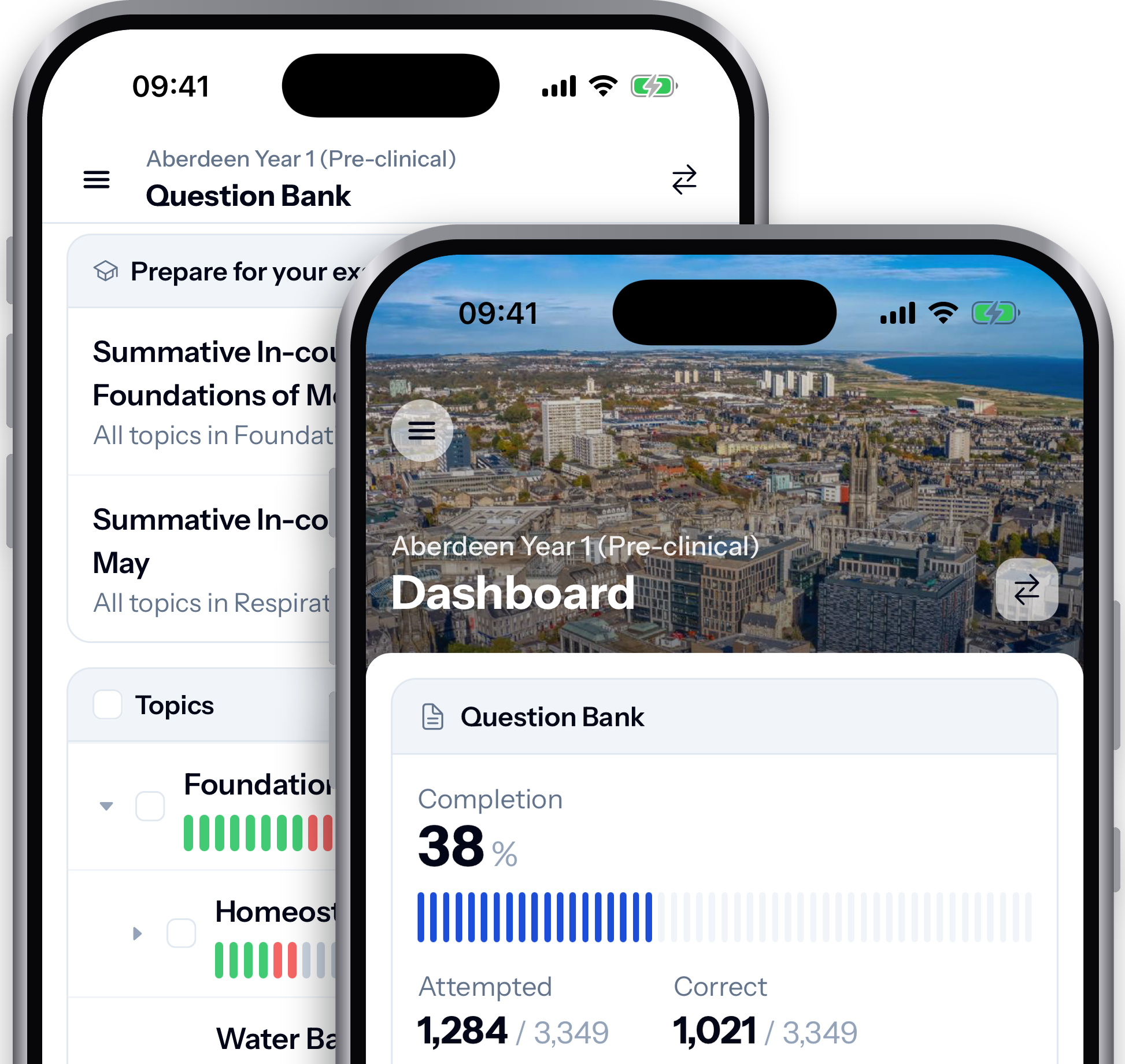
Take your subscriptions with you
Our mobile app allows you to access your interview and exam question banks wherever you are.