


 Close
Close
 4th June 2026
Classifications
Stanford
- Stanford Type A – A tear that involves the ascending aorta, even if it starts elsewhere. It is proximal to the brachiocephalic artery.
- Stanford Type B – A tear that involves the descending aorta only. Its origin is distal to the left subclavian artery.
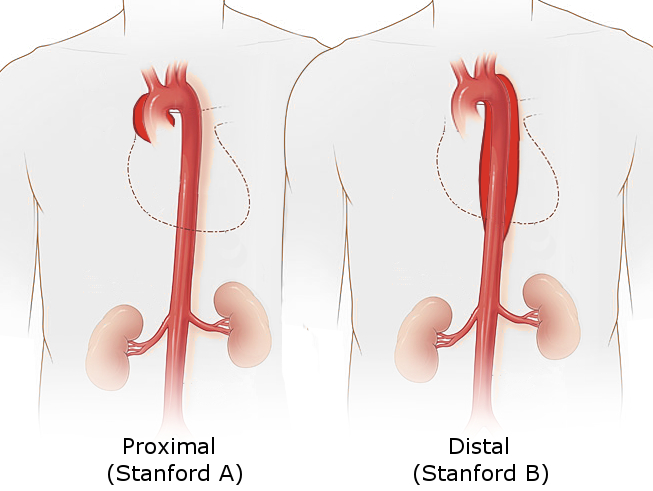
Figure 4: Stanford classifications of dissection
Image Source: Wikimedia Commons (2020), ECG AVNRT, Licenced under a creative commons licence. Available for free at: https://commons.wikimedia.org/wiki/File:Aortic_dissection_types.jpg (Accessed: 27 April 2026)
DeBakey
- DeBakey Type 1 – A dissection that involves the whole aorta – originating either in the ascending, arch or descending areas.
- DeBakey Type 2 – A dissection that originates in and involves only the ascending aorta/arch.
- DeBakey Type 3 – A dissection that originates in the descending aorta.
- 3a – Extends to above the diaphragm, and either proximal or distal to the left subclavian artery.
- 3b – Extends to below the diaphragm, and distal to the left subclavian artery.
Svensson
This classification has been developed more recently to include aortic ulcers, intramural haematomas and iatrogenic causes.
- Class 1 – A flap is created between the false lumen and true lumen – A ‘classic’ dissection.
- Class 2 – Caused by an intramural haematoma.
- Class 3 – A limited dissection with a bulge at tear site, and no haematoma.
- Class 4 – A atherosclerotic penetrating ulcer with a haematoma surrounding it.
- Class 5 – Traumatic or iatrogenic dissection.
Classification by timeframe
- Hyperacute – An aortic dissection <24 hours since initial symptoms
- Acute – 1-14 days
- Subacute — 15-90 days
- Chronic >90 days
Complete Guide to Clinical Genetics ST3 Application and Recruitment (2027)
Written by Medibuddy. Last updated: October 2026. Clinical Genetics is
Clinical Genetics ST3

Complete Guide to Clinical Radiology ST3 Application and Recruitment (2027)
Recruitment paused: NHS England is not running Clinical Radiology ST3+ recru
Clinical Radiology ST3

Complete Guide to Paediatric Surgery ST3 Application and Recruitment in United Kingdom (2026)
Written by Medibuddy. Last updated: October 2026. If you’re planning
Paediatric Surgery ST3


Take your subscriptions with you
Our mobile app allows you to access your interview and exam question banks wherever you are.

