Sport and Exercise Medicine ST3 Interview Questions 2026 | Medibuddy
Sport and Exercise Medicine ST3 • 2027 Interview

The 2027 Sport and Exercise Medicine ST3 Interview Revision Platform: Question Bank, Live Practice and Mocks with Other Candidates

The Medibuddy Sport and Exercise Medicine ST3 Question Bank includes over 35 scenarios that closely mirror the real interview, each with a model answer written/edited by high-scoring candidates who sat the Sport and Exercise Medicine ST3 interview in 2026.

However, knowing a strong answer isn't the same as delivering it well under pressure, which is why we provide:

10 years’ experience preparing doctors for interviews

Users of the Medibuddy Sport and Exercise Medicine ST3 Revision Platform have secured some of the most competitive training jobs in recent rounds. Ask around, there's a good chance the trainees in the year above you used us too.

Always up to date

Did you know the interviews change every year? That's why we review and update every Question Bank on the platform twice a year, so you know you're always practising with scenarios based on the latest interview structure.

Network and practise real interview scenarios with other candidates

Question Bank

See every scenario, and how to answer it well

Over 35 scenarios across all three stations, which tell you exactly how to respond to each question.
Study Groups

Connect with candidates across the country
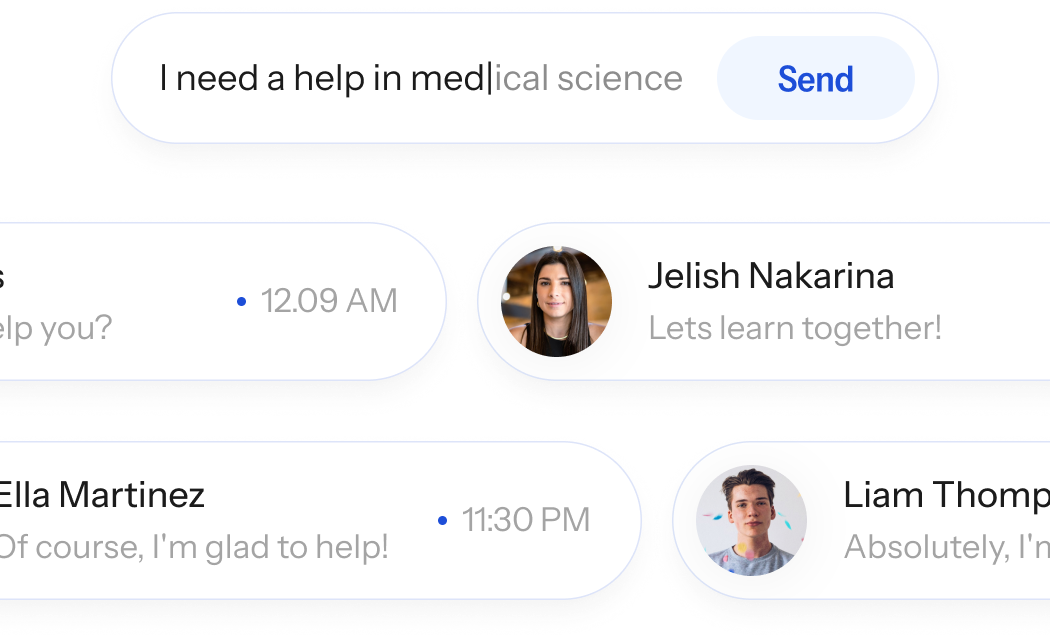
Most people only ever practise with one or two friends. Study Groups connect you with candidates right across the country sitting the same Sport and Exercise Medicine ST3 interview.
Live MocksBeta

Practise interview technique with different candidates
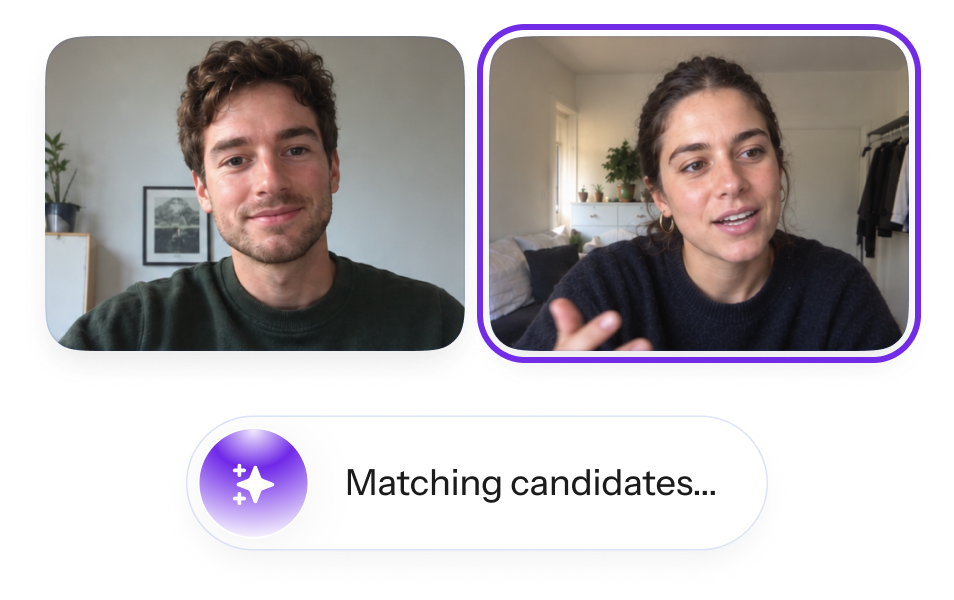
Arrange or get matched on demand with other candidates and run real scenarios out loud under interview conditions. Those who practise with the widest range of people tend to score the highest.
Peer FeedbackBeta

Reviewed by candidates across the platform

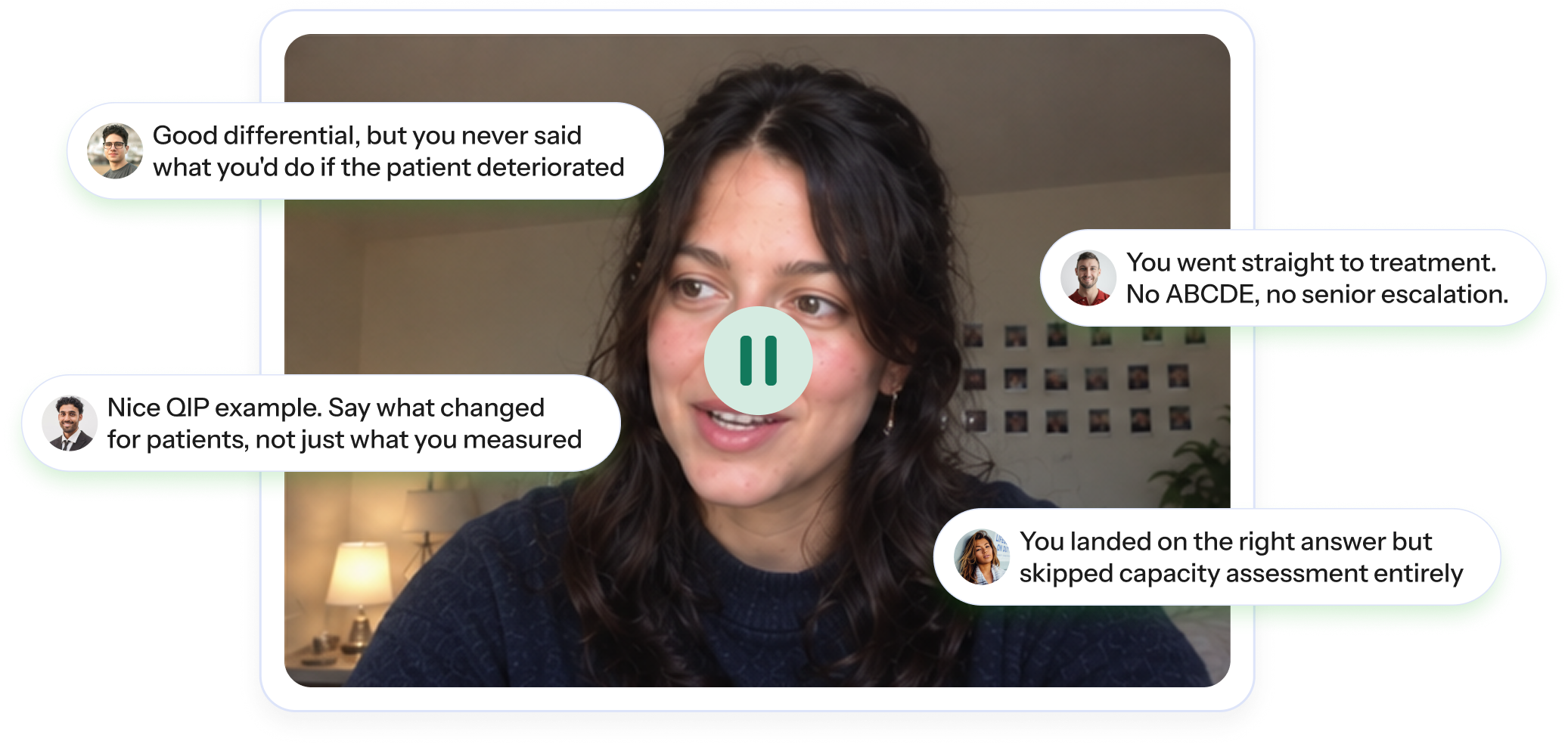
Submit your recorded mocks to candidates across the platform and get honest, varied feedback. Reviewing other people's mocks teaches you just as much.

The question bank, and other candidates to practise with, all in one platform.

Sport and Exercise Medicine ST3 Revision Platform • £144.99

Gain access to over 35 scenarios across all three stations, and collaborate with other candidates through Study Groups, Live Mocks and Peer Feedback.
Get instant access
What candidates say

Scored well, secured their post

A few of the candidates who prepared with us for the Sport and Exercise Medicine ST3 interview.

Verified candidateInterviewed 2026
"The clinical scenarios were pitched exactly right. Having a structure ready meant I could work through a complex SEM case calmly under pressure."
Secured first-choice deanery
Verified candidateInterviewed 2026
"Practising the ethical and suitability questions out loud with other candidates was the single most useful thing I did before the day."
Ranked highly
Part 1 • See the questions

The Medibuddy 2027 Sport and Exercise Medicine ST3 Question Bank

The interview has three stations, each lasting around 10 minutes, so you have a limited window to deliver the high-scoring answers you need to do well. That means every point has to land, and knowing how to structure each answer is essential. That's why each of our 35-plus scenarios comes with a model answer, written by candidates who scored highly in the 2026 Sport and Exercise Medicine ST3 interview, so you know exactly how to approach every question the interviewers throw your way.
What's inside

What's included in the Sport and Exercise Medicine ST3 Question Bank

There's nothing worse than getting to the interview and being handed a scenario you've never seen before. The panel draws on clinical, ethical, suitability and communication themes across the three stations, so the safest approach is to revise across all of them. We provide scenarios for every part of the interview, including the common ones and the more unusual cases that have come up before, so you don't get caught out.

Clinical Scenarios

Musculoskeletal, performance and exercise medicine cases where you play the registrar, each with a worked answer showing how to structure your response.

Ethical Scenarios

Realistic ethical dilemmas, from confidentiality and consent to athlete welfare and outside pressures, with structured model answers built on clear principles.

Suitability & Commitment

Your chance to show your motivation for sport and exercise medicine and why you're suited to ST3, with example questions and model answers.

Communication

Marked within the clinical station, so our model answers show how to communicate clearly and sensitively with patients, athletes and colleagues.
Reflecting how the interview is really assessed
Communication is marked within the clinical station, so everything you say holds weight. Our model answers are written with that in mind, alongside the ethical and suitability themes.
Try it

Try an example Sport and Exercise Medicine ST3 question

You are the sport and exercise medicine ST3 registrar in a musculoskeletal and performance clinic. A 19-year-old female long-distance runner is referred by her GP with a six-month history of amenorrhoea, recurrent stress fractures (a tibial stress fracture eight months ago and new anterior shin pain now), and persistent fatigue affecting her training.

Her coach reports she is training 80 to 90 km a week and recently lost around 5 kg ahead of the cross-country season. Her BMI is 17.8. She is otherwise fit, on no medications, and denies any eating disorder history.

How would you approach this?

Question
How would you approach her initial assessment?
Example answer
This is highly consistent with Relative Energy Deficiency in Sport (RED-S), a complex, multi-system problem, so I would take a thorough biopsychosocial history.
  • Nutrition and menstrual history: typical intake and meal timing around training, any restriction or disordered eating, and the pattern and duration of her amenorrhoea.
  • Training and bone health: current volume and recent changes, and previous fractures with their sites and healing.
  • Systems review: fatigue, mood, recurrent illness, cold intolerance and other features of low energy availability.
  • Psychological and social: screen her relationship with food and body image, using a tool such as the LEAF-Q, and explore coach and performance pressures, plus any hormonal contraception that could mask her cycle.
Question
What would you look for on examination?
Example answer
A full systems examination focused on low energy availability and its consequences.
  • General: BMI and signs of being significantly underweight, and signs of disordered eating such as lanugo, parotid enlargement or Russell's sign.
  • Vital signs: resting bradycardia, hypotension and temperature.
  • Endocrine and nutritional: skin, hair and nail changes, and signs of thyroid dysfunction.
  • Musculoskeletal: localised tibial tenderness and a tuning-fork test for a new stress fracture, plus a resting ECG for arrhythmia related to low energy availability.
Question
What investigations would you request, and why?
Example answer
To confirm low energy availability, find its consequences and exclude other causes.
  • Bloods: FBC, iron studies and ferritin, a bone profile, vitamin D and PTH, and LH, FSH and oestradiol to characterise hypothalamic amenorrhoea (low or normal LH and FSH with low oestradiol).
  • Prolactin and TSH to exclude a prolactinoma and thyroid dysfunction, plus glucose and a coeliac screen if appropriate.
  • Imaging: an X-ray of the tibia, with MRI if inconclusive as it is more sensitive for early stress reaction, and a DEXA scan for bone mineral density (a Z-score below -1.0 is concerning in a young athlete).
  • A 12-lead ECG.
Question
Investigations confirm hypothalamic amenorrhoea, a tibial stress reaction on MRI, and a lumbar spine Z-score of -1.8. How would you manage her?
Example answer
Management is multidisciplinary and centres on correcting low energy availability, guided by the IOC RED-S framework.
  • Energy availability: refer to a specialist sports dietitian to correct the deficit, aiming above 45 kcal/kg of fat-free mass per day, increasing intake and reviewing meal timing.
  • Bone health: optimise calcium and vitamin D, and manage the stress reaction with relative rest and a graded return to running via physiotherapy.
  • Hormones: hormone replacement may be considered only if amenorrhoea persists despite energy correction, which must come first.
  • Psychology and training: screen formally for disordered eating and refer if needed, and negotiate a training load reduction with the athlete and coach.
Question
How do you use the IOC return-to-play framework, and how would you handle the coach who wants her back in two weeks?
Example answer
The IOC RED-S tool uses a traffic-light system: red (no sport), amber (return with caution and monitoring) and green (unrestricted once health parameters and energy availability are corrected).
  • With her low BMI, low bone density, current stress reaction and amenorrhoea, she sits on the amber-to-red borderline, so I would restrict high-impact running until the stress reaction heals and work with the MDT to move her towards green.
On the coach: I would share no clinical information without her explicit consent, and be clear that returning her to full training in two weeks is not safe and risks a complete fracture. I would encourage him to support the rehabilitation, reinforce with her that the decision belongs to her and the clinical team, document the conversation, and, given her age, escalate any undue pressure to my consultant or the safeguarding lead.
Question
What are the long-term consequences she should understand, and how would you communicate the diagnosis?
Example answer
RED-S has wide-ranging and potentially irreversible consequences, so early intervention matters.
  • Bone: progressive loss of bone density and a failure to reach peak bone mass, which is not fully recoverable, raising lifelong osteoporosis and fracture risk.
  • Reproductive and cardiovascular: a prolonged low-oestrogen state with ongoing bone loss, an adverse lipid profile and possible effects on fertility.
  • Psychological and performance: worsening mood and disordered eating, and, paradoxically, impaired endurance, recovery and performance.
I would explain the diagnosis supportively and without judgement, linking her low energy availability to her symptoms and long-term health, involve her in the plan, and coordinate with dietetics, psychology and, with her consent, her coach.

That's one scenario. There are over 35 more.

Sport and Exercise Medicine ST3 Revision Platform • £144.99

Includes every scenario in the Question Bank, and access to Study Groups, Live Mocks with other candidates and Peer Feedback.
Get instant access
Actively maintained

How we keep our Question Banks up to date

The Sport and Exercise Medicine ST3 interview changes from year to year, and the biggest fear for any candidate is getting to interview day and realising you've revised with a question bank that's totally outdated.

That's why we review and update every Question Bank twice a year, so you know you're revising with scenarios that are likely to come up. We do this in April after the previous year's interviews, and again in the autumn when the new recruitment guidance is published.

For 2027, this process kept the Question Bank aligned with the current three-station format, across the clinical, ethical and suitability stations, so you always practise with the format the panel is using now.
Updated for 2027 Interviews
Part 2 • Practise them live

The only interview resource where you can practise live with other candidates from across the country

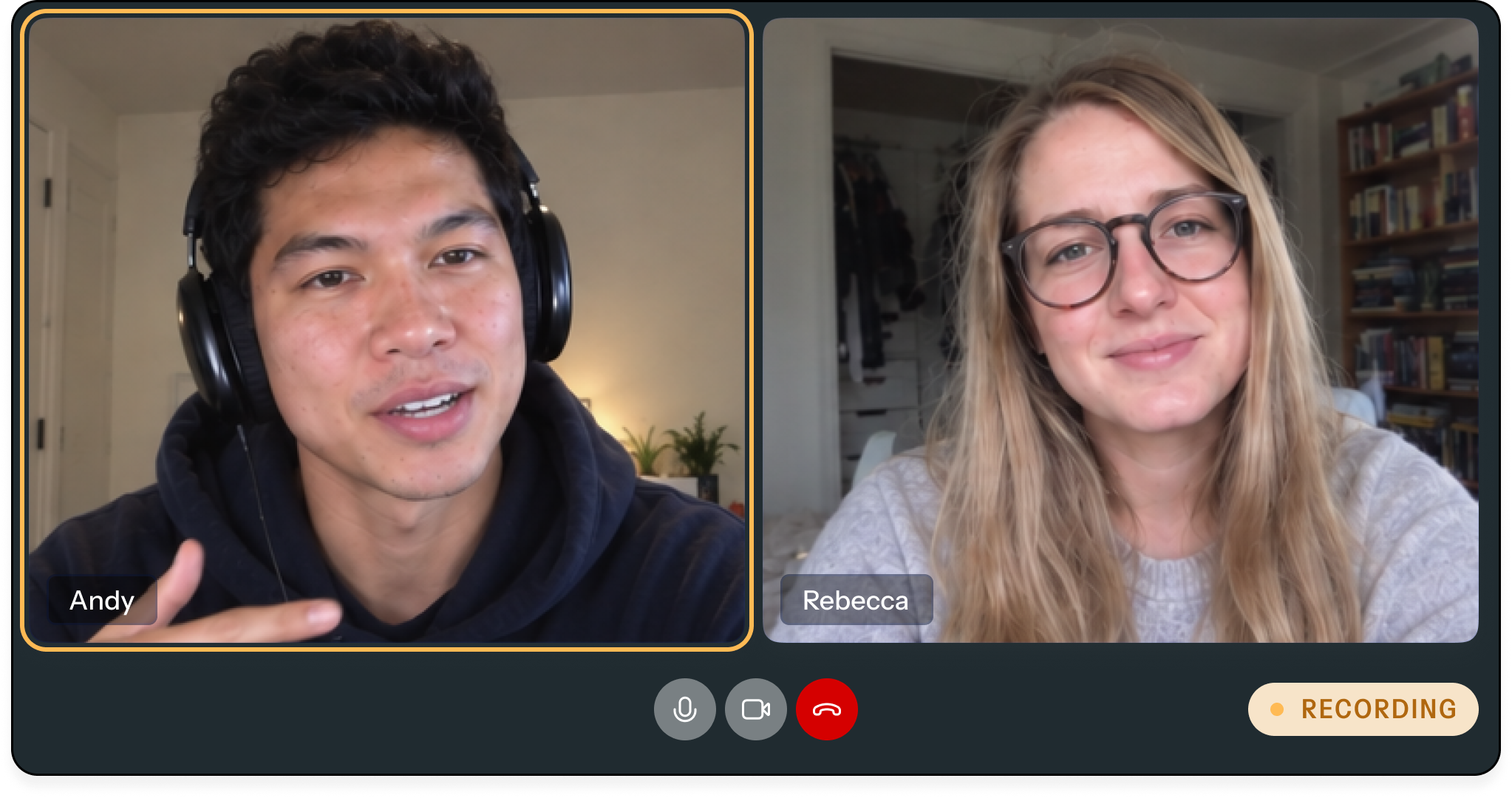
Our Sport and Exercise Medicine ST3 Question Bank tells you exactly how to answer real interview scenarios. But how you practise with them will determine how many marks you score. Simply reading answers off a screen won't prepare you for the intense scrutiny you'll face in the interview. And only practising with the same few colleagues or friends limits the amount of feedback you'll get. Medibuddy gives you unique access to Sport and Exercise Medicine ST3 candidates across the country, so you can learn from a variety of perspectives and hear a far wider range of feedback than your own circle could ever give you.
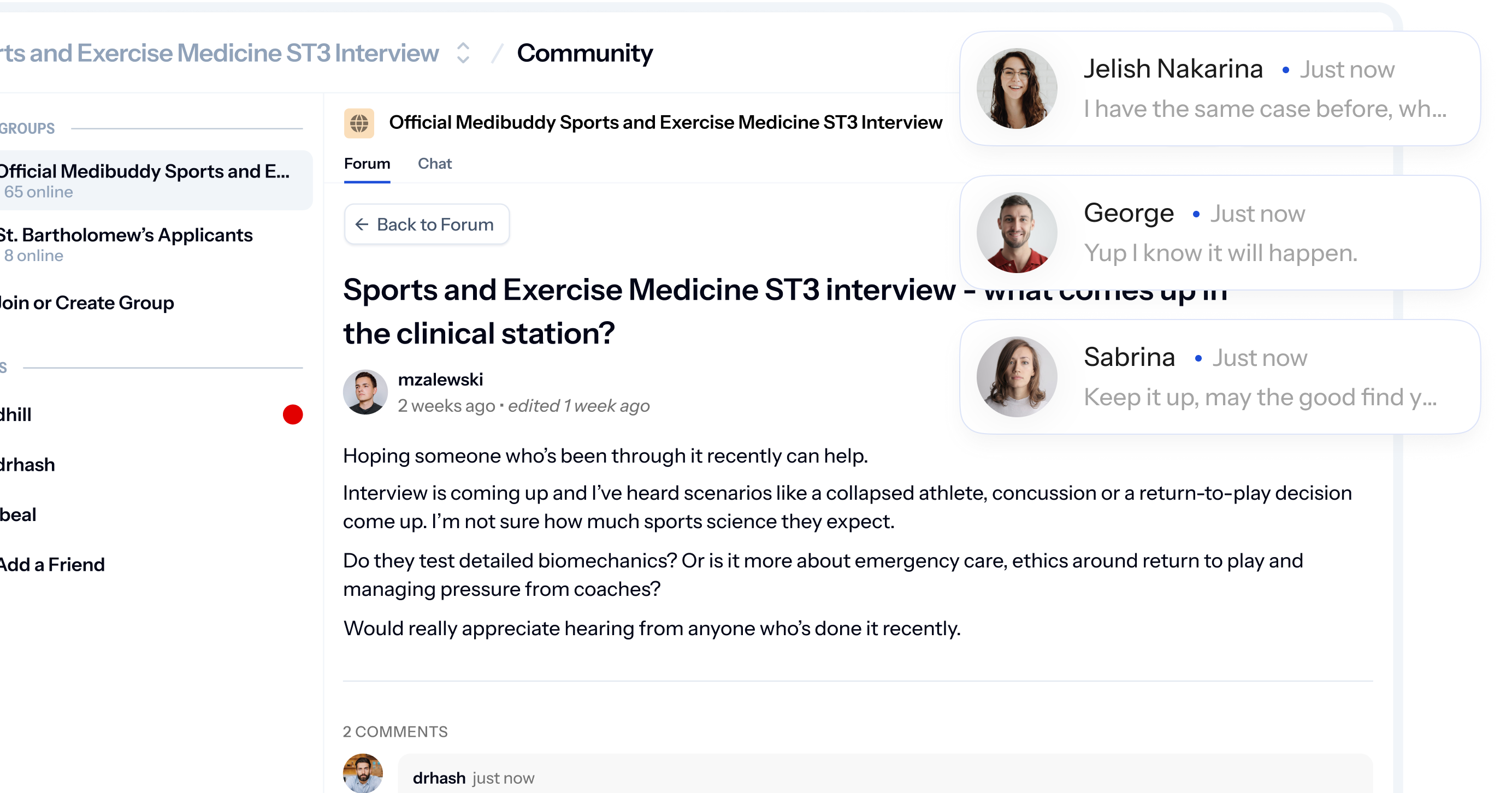
Study Groups
When you prepare in isolation, you're relying on your own interpretation of the interview process, which is one of the quickest ways to get found out on the day. Study Groups connect you with other doctors across the country who are also applying to Sport and Exercise Medicine ST3, so you can engage and network with people preparing for the same interview as you. Everyone brings different experience from different hospitals and deaneries, meaning you won't ever miss out on the key bits of information that could swing the interview in your favour.
Live MocksBeta
Candidates who don't take part in mocks often struggle to adapt to the pressure of the interview. Your knowledge might be correct, but without convincing delivery the interviewers will score you poorly. The best way to improve your delivery is to take part in as many live mocks as possible, which is why we haven't put a cap on how many you can do. We also know how difficult it can be to organise mocks with other people, so all you have to do is join the waiting room and we'll match you with a different Sport and Exercise Medicine ST3 candidate each time. Take turns as both the interviewer and candidate on real Question Bank scenarios, so you can see exactly how other candidates perform in real time, while refining your own interview technique.
Peer FeedbackBeta
Preparing alone means you won't know how you're coming across during the interview. And preparing with the same few candidates means you'll miss opportunities to improve, which is why it's so important to get as many opinions as possible on your performance. With Medibuddy, you can record a mock and submit it for feedback from other candidates on the platform, so you receive a wider range of feedback and refine your answers with each person you practise with. Reviewing other people's mocks is just as valuable, as it shows you how strong candidates handle the same scenarios, which is one of the fastest ways to improve.
The interview

What to expect from the Sport and Exercise Medicine ST3 interview

Sport and exercise medicine is a competitive specialty, and strong applicants are often separated by narrow margins at interview.

Station

Clinical Scenario

A sport and exercise medicine case where communication is also marked. Start with a safe, systematic approach before moving to more specialist management, and be ready to escalate.
Station

Ethical Scenario

An ethical dilemma, often involving confidentiality, athlete welfare or outside pressure. Explain your reasoning, refer to relevant guidance, and show how you would handle it safely.
Station

Suitability & Commitment

You’ll be asked about your motivation for sport and exercise medicine and why you’re suited to ST3. Go beyond listing achievements and show how your experience demonstrates your commitment.

How the interview is scored

The stations are marked against the Sport and Exercise Medicine ST3 person specification. Our model answers are structured against those criteria, so you know exactly what a strong, well-organised answer looks like at each station.
Get ready

How to prepare for the Sport and Exercise Medicine ST3 interview

Start with the Question Bank

Work through over 35 scenarios across all three stations, each with a worked answer from a candidate who scored well in the 2026 interview. Start by reading how a strong answer is formed, then think about how you'd deliver it.

Talk the hard ones through in Study Groups

Study Groups are your biggest opportunity to network and connect with other candidates sitting the same interview as you. Everyone on the platform is in the same boat, so don't be scared to get involved and ask questions. Someone in your study group might just help you work through a scenario you've been struggling with.

Rehearse out loud in Live Mocks

Live mocks are where you begin to put everything you've learned into practice, and we know from experience that those who practise with a wide range of candidates usually do the best. Organise mocks with people from one of your study groups, or get matched with a random Sport and Exercise Medicine ST3 candidate, then take turns as interviewer and candidate using real scenarios until answering out loud under pressure feels normal.

Get reviewed with Peer Feedback before the day

Once you've recorded a mock, you can have other community members review it. This lets you see how you come across to other people, and gives you time to refine your delivery as you revise, rather than being caught out on the day. Reviewing other people's mocks is just as crucial, as you see how other candidates navigate the same scenarios.
Questions

Frequently asked questions

What does the Sport and Exercise Medicine ST3 interview involve?
Three stations, each around 10 minutes with its own pair of interviewers, for a total of roughly 40 minutes: a Clinical Scenario (where communication is also marked), an Ethical Scenario, and a Suitability and Commitment station.
How competitive is the Sport and Exercise Medicine ST3 interview?
Sport and exercise medicine is a competitive specialty, and strong candidates are frequently separated by small margins at interview, which is why a structured, well-rehearsed approach matters.
Who writes the model answers?
High-scoring candidates who sat the Sport and Exercise Medicine ST3 interview in 2026 and secured some of the most competitive posts.
Can I practise with other candidates?
Yes. Every Revision Platform purchase gives you the opportunity to connect with other candidates through Study Groups, Live Mocks and Peer Feedback.
How do the Live Mocks work?
All you have to do is join the waiting room, and we match you with another Sport and Exercise Medicine ST3 candidate. You then take turns as interviewer and candidate on real Question Bank scenarios, so you gain experience answering out loud to a real person before you ever sit in front of the panel.
What are Study Groups and how do they help?
Study Groups are community forums for doctors across the country preparing for the same Sport and Exercise Medicine ST3 interview. You can ask questions, share what you're struggling with, and compare how you'd approach a scenario.
Can I get feedback on my interview performance?
Yes. After you've recorded a mock, you can ask other members to review it, so you can see which part of your answer needs fine-tuning.
How do you keep the Sport and Exercise Medicine ST3 Question Bank up to date?
We review and update it twice a year: in April after that year's interviews, and again in the autumn when the new recruitment guidance is published, so you always practise with the current three-station format.
How long do I get access for?
Access runs for 12 months from the purchase date.

Start preparing for the Sport and Exercise Medicine ST3 interview

The Revision Platform gives you over 35 scenarios to practise and refine with other candidates through Study Groups, Live Mocks and Peer Feedback.

Sport and Exercise Medicine ST3 Revision Platform • £144.99

Buy Now