Close
Close
 20th July 2026
Complete Guide to Sport and Exercise Medicine ST3 Application and Recruitment (2026)
If you’re planning your Sport and Exercise Medicine ST3 application for the 2026 UK recruitment round, this guide is written for you. We’ll walk you through the whole application side of things: eligibility, the entry routes into this four-year Higher Specialty Training programme (ST3–ST6), how national recruitment works through PHST and Oriel, what the self-assessment scores, and how to build a portfolio that actually earns points. Sport and Exercise Medicine is a small, competitive Group 2 specialty overseen by the Faculty of Sport and Exercise Medicine (FSEM), so getting the detail right really matters. The interview itself is covered in depth on the Sport and Exercise Medicine ST3 Interview Question Bank page. First, here’s the landscape at a glance.
Key Facts at a Glance
- Competition ratio (2025): 8.92:1 (107 applications, 12 posts)
- Training length: Four years, ST3 to ST6, leading to CCT
- Entry point: ST3, after Foundation plus a core programme (IMT, GP or equivalent)
- Key exam requirement: MRCP(UK) Part 1 by application, full MRCP by offer (physician route)
- Recruitment platform: PHST Recruitment, with the Midlands region as national lead
- 2026 interview date: 17 March 2026 (confirmed via the NHS England specialty recruitment interview schedule)
Table of Contents
- What Is Sport and Exercise Medicine ST3 Higher Specialty Training?
- Is Sport and Exercise Medicine ST3 Competitive and What Is the Lifestyle Like?
- Sport and Exercise Medicine ST3 Eligibility Criteria and Entry Requirements
- How to Apply for Sport and Exercise Medicine ST3 National Recruitment
- Sport and Exercise Medicine ST3 Recruitment Timeline and Key Dates (2026)
- Sport and Exercise Medicine ST3 Competition Ratios and Application Trends
- How Sport and Exercise Medicine ST3 Applications Are Scored (2026)
- Sport and Exercise Medicine ST3 Self-Assessment and Portfolio: How to Maximise Your Score
- The Sport and Exercise Medicine ST3 Interview: A Brief Overview
- Sport and Exercise Medicine ST3 Offers, Preferencing and What Happens Next
- Frequently Asked Questions About Sport and Exercise Medicine ST3 Application
- Sport and Exercise Medicine ST3 Useful Resources
What Is Sport and Exercise Medicine ST3 Higher Specialty Training?
Sport and Exercise Medicine (SEM) is a four-year Higher Specialty Training programme entered at ST3 as a “Group 2” specialty, running through to ST6 and leading to a Certificate of Completion of Training (CCT) in SEM. The curriculum is the GMC-approved 2021 SEM Curriculum, set by the Faculty of Sport and Exercise Medicine (FSEM UK) and administered through JRCPTB, with recruitment coordinated nationally by NHS England via the Physician Higher Specialty Training (PHST) process.
Because SEM is uncoupled, you’ll have completed a core stage before applying: Internal Medicine Stage 1, ACCS (Acute Medicine), GP training, or an equivalent route, and hold a relevant membership exam (typically MRCP(UK), MRCGP, MRCS or MRCEM depending on your route). The Foundation Programme sits before all of that.
Training itself is structured around Capabilities in Practice and Generic Professional Capabilities, with rotations spanning musculoskeletal medicine, rheumatology, orthopaedics, exercise medicine and chronic disease, team and event medicine, and rehabilitation. You’ll need to pass the SEM Specialty Exam by ST5, with progression signed off through ARCP. Delivery does vary by deanery. Scotland’s programme, for example, includes a distinctive 12-month attachment to the Scottish Institute of Sport, so it’s worth checking your preferred region’s rotation structure against the FSEM Rough Guide before you rank.
The end qualification is a CCT in SEM, granting entry to the GMC Specialist Register and eligibility for Fellowship of the Faculty (FFSEM). Post-CCT, roles combine NHS MSK and exercise medicine work with team, event and (for some) private practice. More on that in the lifestyle section below.
Is Sport and Exercise Medicine ST3 Competitive and What Is the Lifestyle Like?
Sport and Exercise Medicine (SEM) is one of the smallest and most competitive Group 2 specialties in the UK. Competition ratios reported by specialty-applications.co.uk sat at around 8.92:1 in 2025 (107 applications for 12 posts), having climbed from 2.91:1 in 2020. Numbers may shift under the Medical Training (Prioritisation) Act, so treat any single year’s ratio as a guide rather than a guarantee.
Lifestyle. Higher training runs four years (ST3–ST6) and is largely daytime, clinic-based work across MSK clinics, rehabilitation, rheumatology, orthopaedics, pain, radiology and general practice. There’s no GIM on-call because SEM is Group 2. It is not fully documented whether IMT-route entrants continue general medical on-call during ST3, though some accounts suggest a residual medical rota commitment may apply. Direct published data on weekly hours or rota intensity at ST3 remain scarce. The trade-off is evening and weekend event or pitch-side cover, often the reason people came to SEM in the first place. LTFT training is explicitly supported in the 2021 curriculum.
Pay. Trainees sit on the standard England resident doctor scale: roughly £65,048 at nodal point 4 (ST3–ST5) and £73,992 at nodal point 5 (ST6–ST8) for 2025/26, before out-of-hours supplements or London weighting. The June 2026 offer adds a 6.2% uplift plus an additional 3.5% specifically to the ST3 scale.
Career pathway. You’ll sit the SEM Specialty Exam by ST5 (full-time equivalent) and CCT at ST6. Post-CCT, be realistic: FSEM has flagged that only around 15 of 42 integrated care systems currently have SEM consultants, so most consultants combine NHS work with private MSK practice, team or federation roles. Elite sports work tends to be an add-on, not the core job.
Sport and Exercise Medicine ST3 Eligibility Criteria and Entry Requirements
Sport and Exercise Medicine is a Group 2 higher specialty, which means you enter at ST3 after completing Foundation training plus a recognised core programme. The 2026 Person Specification is published by NHS England (Workforce, Training and Education) and applies UK-wide across England, Northern Ireland, Scotland and Wales. Because the exact wording and accepted equivalents can shift year to year, always cross-check the current version on the PHST recruitment site before you commit to an entry route. The same principle applies to the application process detail in the next section.
To be eligible for SEM ST3 in 2026, you’ll need to evidence the following:
- Medical degree: MBBS or equivalent primary medical qualification.
- Registration: Full GMC registration with a current licence to practise by the post start date. IMGs need to secure this via PLAB, an approved postgraduate qualification, or another accepted route before taking up post.
- English language: Typically IELTS Academic 7.5 overall with 7.0 in each domain, or OET grade B, unless your primary medical qualification was taught and examined in English.
- Foundation competences: Successful completion of the two-year UK Foundation Programme or equivalent.
- Core training (one of): Two years of Internal Medicine Training (IMT stage 1), three years of GP training, or Core Surgical Training (or ACCS, or Irish basic specialty training).
- Postgraduate exam: MRCP(UK) Part 1 at application and full MRCP(UK) by offer for the physician route; MRCGP for GP-route applicants; or MRCS (or equivalent basic specialty exam such as FRCA) for the surgical/ACCS route.
- Competence sign-off: Evidence that all essential core competences have been achieved and signed off by the post start date, mapped to your ARCP outcomes.
- Right to work: Valid UK right-to-work documentation, or eligibility for Skilled Worker sponsorship, before starting post.
One point worth flagging: unlike some run-through ST1 specialties, SEM ST3 doesn’t publish a hard cap on months of post-foundation experience, so a longer non-training route into ST3 won’t automatically disqualify you.
How to Apply for Sport and Exercise Medicine ST3 National Recruitment
SEM ST3 is recruited annually through a single national round coordinated by the Physician Higher Specialty Training (PHST) office, with NHS England Midlands acting as the lead recruiter. Everything runs through the Oriel portal, and it’s worth reading the current PHST applicant guidance and the 2026 SEM ST3 person specification alongside this walkthrough. They’re the definitive reference for any detail-level query.
Here’s how the process runs in practice for the 2026 round:
- Check eligibility against the person specification. You’ll need MRCP(UK) Part 1 (or MRCGP for the GP route) by the application date, and the full MRCP(UK) diploma by the offer date. Competences from Foundation and core medical training must be signed off by the advertised post start date, not the day you apply.
- Register on Oriel (oriel.nhs.uk) if you don’t already have an account. There’s no application fee.
- Submit your application in the Round 1 window. For the 2026 cycle, PHST opened applications at 10am on 20 November 2025 and closed them at 4pm on 11 December 2025. A Round 2 window is scheduled for 28 July to 13 August 2026 for February–April 2027 start dates, if posts remain.
- Complete the application form sections: personal details, eligibility declarations, employment history, qualifications, fitness to practise, and the self-assessment domains (MRCP, additional degrees, publications, presentations/posters, prizes, and commitment to specialty).
- Upload supporting documents against every self-assessment claim. PHST provides pro formas in its document library and the Oriel Resource Bank for each domain, so use them. You’ll also upload evidence of GMC registration, MBBS, MRCP(UK)/MRCGP progress, and Foundation/core competences. Written references aren’t uploaded at this stage; structured NHS reference forms come later, at the offer/pre-employment stage.
- Rank your programme preferences. You can submit up to five specialty applications in Round 1 across all specialties combined, so factor that cap in if you’re also applying elsewhere. ACF applications are separately capped at three.
- Longlisting and shortlisting are then run by the Midlands recruitment team against the person specification and verified self-assessment scores. Shortlisted candidates are invited to the national interview (17 March 2026 for this cycle).
If you’re unsuccessful, you can reapply in a future round provided you still meet the person specification. There’s no cap on ST3 attempts. PHST releases written feedback and verified self-assessment scores to every candidate, and you have a short appeal window (typically 72 hours) to challenge scoring on evidential grounds. Disagreement with a score on its own isn’t accepted as grounds for appeal, so keep your evidence documents tidy from the start.
Sport and Exercise Medicine ST3 Recruitment Timeline and Key Dates (2026)
Sport and Exercise Medicine (SEM) ST3 is recruited nationally through the Physician Higher Specialty Training (PHST) office via Oriel, so all four UK nations follow the same core dates. Here’s how the 2026 Round 1 cycle is shaping up:
| Milestone | Date (2026 Round 1) |
|---|---|
| Applications open | 10am, Thursday 20 November 2025 |
| Applications close | 4pm, Tuesday 16 December 2025 |
| Shortlisting outcomes / interview invitations | By around early March 2026 (no later than 7 days before interview) |
| SEM ST3 interview date | 17 March 2026 |
| First offers released | By 5pm, Tuesday 14 April 2026 |
| Offer holding deadline | 1pm, Wednesday 22 April 2026 |
| Offer upgrade window | Shortly after the holding deadline |
Dates confirmed against the PHST timeline and the NHS England specialty recruitment interview schedule. Do check the PHST SEM ST3 page yearly, as individual interview slots and any Round 2 dates (applications open 28 July 2026, close 13 August 2026) are published closer to the time.
A few practical points worth flagging. Self-assessment evidence is entered directly into the Oriel form during the standard application window (there’s no separate portfolio upload portal), though verification happens at interview. If you’re sitting the FSEM Specialty Exam Part 1, note that its application window (typically late June) runs on its own timeline, so map both onto your calendar early to avoid a clash with MRCP revision or clinical commitments.
Sport and Exercise Medicine ST3 Competition Ratios and Application Trends
Sport and Exercise Medicine (SEM) is one of the smallest specialties in the UK by post numbers, and that scarcity is a big part of what makes it so competitive. In the most recent published round (2025 Round 1), NHS England data show 107 applications for 12 ST3 posts, a ratio of 8.92:1. Every post filled, as they have done consistently in recent years (9/9 in both 2023 and 2024 in England, and 2/2 in Scotland in 2025).
The trend over the last few cycles is clearly upward:
| Year | Applications | Posts | Ratio |
|---|---|---|---|
| 2019 | ~42 | 14 | ~3.0:1 |
| 2020 | N/A | N/A | 2.91:1 |
| 2021 | N/A | N/A | 5.83:1 |
| 2022 | N/A | N/A | 9.00:1 |
| 2025 | 107 | 12 | 8.92:1 |
Sources: NHS England competition ratios; Fahmy et al. 2025 (PMC12554911) for 2020–2022 figures.
In practical terms, competition has roughly tripled since 2020, while post numbers have actually drifted downward from 14 to 12. Because national numbers are so small and spread across the four UK nations via PHST Recruitment, a single well-scoring cohort can shift the ratio meaningfully year to year, but the direction of travel is unmistakable. You’re competing against a strong, self-selected field, so every self-assessment point matters.
How Sport and Exercise Medicine ST3 Applications Are Scored (2026)
SEM ST3 recruitment is unusual in one important respect: it’s run centrally by Physician Higher Specialty Training (PHST) rather than the larger NHS England hubs, and the scoring model reflects that. Two stages contribute to your overall outcome, the self-assessment (used for shortlisting) and the interview (used for final ranking), with the 2026 person specification setting the essential and desirable criteria that underpin every domain.
The self-assessment: your Rank Index Score
PHST scores the SEM ST3 self-assessment across 8 domains, each marked 1–5, producing a Rank Index Score (RIS) between 8 and 40. Every domain contributes equally to the shortlisting total. There’s no domain that’s officially weighted more heavily than another, so a weak score in one area can’t be rescued by strength in another. Community guides such as StudySEM describe the framework as roughly 38 points across the domains, with a small additional allocation (around 2 marks) for how clearly you present your evidence. Every claimed score must be backed by verifiable evidence uploaded via Oriel.
What the domains cover
The eight scored domains reflect the profile PHST wants to see in an incoming SEM registrar:
| Domain | What it captures |
|---|---|
| Postgraduate qualifications | PhD, MD, MSc, SEM-relevant diplomas |
| Publications | Peer-reviewed papers, authorship position |
| Presentations | Local, national, international; oral vs poster |
| Teaching experience | Sustained delivery, formal qualifications, programme design |
| Quality improvement / audit | Completed cycles, leadership role, SEM relevance |
| Leadership and management | Formal roles, project ownership |
| Commitment to specialty | Event cover, BASEM/FSEM engagement, MSK exposure |
| Prizes and achievements | Competitive, awarded on merit |
Self-assessment feeding into interview
Your RIS determines whether you’re shortlisted, and shortlisted candidates then progress to the multi-station interview scored out of 40 (each station marked out of 5 by two assessors, per the 2025 peer-reviewed comparison). An 80/20 interview-to-portfolio weighting is cited in that peer-reviewed comparison and by community sources such as StudySEM, but PHST hasn’t published an official confirmed split for 2026, so we’d treat both stages as decisive and verify against the current PHST guidance closer to interview.
We unpack the domains, and where SEM applicants tend to lose easy marks, in the next section.
Sport and Exercise Medicine ST3 Self-Assessment and Portfolio: How to Maximise Your Score
SEM ST3 uses the PHST self-assessment framework: 8 domains, each scored 1–5, giving a Ranking Index Score between 8 and 40 that feeds directly into your shortlisting outcome. Because SEM is a small specialty with tightly bunched scores at the top, a single extra point can be the difference between a shortlist and a rejection. Here’s how to work each domain hard.
The high-value domains for SEM
- Postgraduate qualifications. A Diploma or MSc in Sport and Exercise Medicine is one of the clearest ways to score, alongside relevant research degrees. Certificates must be uploaded as evidence.
- Teaching. SEM candidates repeatedly report that teaching is disproportionately rewarded. A postgraduate teaching qualification (PGCert, PGDip, Masters or CILT) scores in the PHST framework, with higher awards scoring more. Regular delivery with signed, dated feedback also counts.
- Publications and presentations. First-author, PubMed-indexed work sits at the top. Presentations and posters now need PHST’s standardised Evidence Verification Pro Forma, signed off to confirm the work was accepted and delivered.
- Audit and QI. Closed-loop projects with signed reports score better than one-off data collection.
- SEM-specific experience. Aim for breadth across the three SEM domains: MSK, exercise medicine, and team/event care. Pitchside cover, MSK clinics, tasters and SEM fellowships all count under commitment to specialty.
How evidence is verified
Everything you self-score gets checked against your uploaded evidence at longlisting. Assessors can (and do) adjust scores downwards if the evidence doesn’t back the claim. Standard format is a single combined PDF per question, uploaded to Oriel before the application window closes.
Where candidates lose easy points
- Don’t claim a presentation without the signed pro forma. Assessors will drop the score.
- Don’t upload undated or unsigned teaching feedback; it won’t count.
- Don’t rely on exercise medicine alone; examiners look for spread across all three SEM domains.
- Do merge multi-page evidence into one PDF per question.
- Do get supervisor sign-off on QI reports and SEM clinical experience letters early.
Build evidence before applications open
Start 12–18 months out. Enrol on a PGCert in medical education, register for an SEM Diploma or MSc, pin down an audit cycle with a supervisor who’ll sign it off, and log pitchside and MSK clinic exposure with dated confirmation. Check the annual PHST SEM self-assessment guidance the moment it drops, as point allocations per question can shift year to year.
The Sport and Exercise Medicine ST3 Interview: A Brief Overview
Once you’ve cleared shortlisting, selection moves on to a structured interview run through the Physician Higher Specialty Training (PHST) recruitment process, with the Midlands region leading for the 2026 round. It’s a three-station format, not a single panel: a Suitability and Commitment station, a Clinical Scenario station (where communication is also marked), and an Ethical Scenario station. Each station lasts around 10 minutes and has its own pair of interviewers, so you’re being assessed fresh three times over roughly 40 minutes.
That’s the shape at a glance. The real work is in how you prepare for each domain: the kind of clinical scenarios that come up in SEM, how ethical dilemmas are marked, and what “commitment to specialty” evidence lands well with panels.
Preparing for the interview? Head to the Sport and Exercise Medicine ST3 Interview Question Bank for a full station-by-station breakdown, scenario questions and model answers written by high-scoring SEM trainees.
Sport and Exercise Medicine ST3 Offers, Preferencing and What Happens Next
Because SEM ST3 offers only around 10-12 national posts a year across the four UK nations, the offers stage feels tight but the mechanics are standard Oriel. Here’s how it generally plays out from interview day to your ST3 start date:
- Rank your regional preferences in Oriel. You’ll be asked to order the available Deaneries/regions before offers are released. With so few posts, your preference list often shapes your eventual location more than your interview score alone.
- Receive your initial offer. For the 2026 round, PHST’s published timeline sets first offers by 5pm on Tuesday 14 April 2026, with offers cascading down the ranked candidate list.
- Hold, accept, decline or accept with upgrades. The offer holding deadline is 1pm on Wednesday 22 April 2026. Opting into upgrades is the key choice: it lets Oriel automatically move you to a higher-preferenced post if one frees up, with no further action needed.
- Watch for automatic upgrades. The offer upgrade deadline follows shortly after the holding deadline (confirm exact date via PHST). As other candidates decline, upgrades run silently in the background. You won’t be contacted first, your allocation simply changes.
- Complete pre-employment checks with your lead employer, coordinated via PHST Recruitment and NHS England Midlands.
- Start ST3 in August, entering the four-year higher training programme (ST3-ST6) overseen by FSEM.
There’s no published SEM-specific fast-track route, so confirm exact 2026 hold and upgrade windows against the current PHST offers guidance.
Frequently Asked Questions About Sport and Exercise Medicine ST3 Application
How competitive is Sport and Exercise Medicine ST3?
SEM ST3 is one of the more competitive smaller specialties in the UK. NHS England data shows 107 applications for 12 posts in 2025, a ratio of 8.92:1. Competition has climbed sharply from around 3:1 in 2019, driven by post numbers staying small (usually 12–16 nationally) while applicant interest has grown steadily year on year.
Who is eligible to apply for SEM ST3?
You need MBBS with full GMC registration, completion of the UK Foundation Programme (or equivalent), and a recognised core training route. Physician applicants need MRCP(UK) Part 1 by application and full MRCP(UK) by offer. Alternative routes include MRCGP after GP training, or a completed core surgical/ACCS programme with MRCS or equivalent basic specialty exam.
Do I need MRCP to apply for Sport and Exercise Medicine ST3?
Not always. SEM is unusual in accepting multiple core routes. If you’re applying from Internal Medicine Training, yes, you need MRCP(UK) Part 1 at application and full MRCP(UK) by the point of offer. GP-route applicants need MRCGP instead, and applicants from core surgical training use MRCS. Eligibility for the GP or GIM specialist register also satisfies the requirement.
How do I apply for SEM ST3 in the UK?
Applications are run through a single national process coordinated by Physician Higher Specialty Training (PHST) Recruitment, with the Midlands region acting as national lead recruiter. You apply via the national Oriel portal against the NHS England person specification. You don’t rank individual posts at application; deanery allocation follows the interview and scoring stage.
What is scored on the SEM ST3 self-assessment?
The PHST self-assessment scores portfolio domains including postgraduate degrees and qualifications, teaching experience and qualifications, quality improvement, research and publications, presentations and prizes, and commitment to specialty. Each domain is scored on a 1–5 scale, and every claim needs uploaded evidence via the specified PHST evidence forms. Unevidenced claims aren’t scored.
Do teaching qualifications count for SEM ST3?
Yes, within the teaching domain of the self-assessment. The 2026 person specification only requires evidence of teaching experience or training, but formal postgraduate qualifications (PGCert, PGDip, Masters, or Certificate in Learning and Teaching (CILT)) attract additional points under the PHST framework, with higher awards scoring more than a PGCert. You’ll need to upload the certificate on the teaching evidence form.
When are SEM ST3 interviews held in 2026?
According to the NHS England specialty recruitment interview schedule, SEM ST3 interviews for the 2026 Round 1 cycle are scheduled for 17 March 2026. Individual interview slots within the day are confirmed by PHST once shortlisting is complete. For the interview format and practice questions, see the Sport and Exercise Medicine ST3 Interview Question Bank.
What happens if I’m offered a lower-ranked post?
When you receive an SEM ST3 offer through Oriel, you can opt into the upgrade process. If a higher-preferenced post becomes available later (as other candidates decline or withdraw), your allocation is automatically upgraded. You won’t be contacted first. If you don’t opt in, you stay on the original offer. Upgrades continue running through the offer window.
Sport and Exercise Medicine ST3 Useful Resources
We’ve grouped the most useful sources below so you can go straight to the primary documents rather than piecing things together yourself.
Official selection documents
- NHS England person specification for SEM ST3 2026: essential and desirable criteria.
- PHST Sport and Exercise Medicine microsite and the PHST application scoring guidance: the self-assessment framework used for shortlisting.
- Scottish Medical Training person specifications if you’re applying to Scottish posts.
Curriculum and progression
- GMC-approved 2021 SEM curriculum and the SEM ARCP Decision Aid (updated Sept 2025), hosted via The Federation.
- FSEM training pathways, including the Diploma in MSK Medicine and Team Care reading lists.
Professional bodies and networks
- Faculty of Sport and Exercise Medicine (FSEM) and British Association of Sport and Exercise Medicine (BASEM), which runs conference sessions specifically on securing an ST3 post.
Medibuddy guides
- Sport and Exercise Medicine ST3 Interview Question Bank for scenario questions and model answers.
- Foundation Programme guide, our MRCS guide for surgical-route applicants, and the Medibuddy blog for wider training advice.
Applying to Sport and Exercise Medicine is competitive, but it rewards candidates who plan early. If you’ve mapped your evidence against the PHST self-assessment domains, kept your FSEM-aligned learning on track, and matched your portfolio to the ST3 person specification, you’re already in a strong position.
When you’re ready to turn that groundwork into a top-scoring interview performance, the Sport and Exercise Medicine ST3 Interview Question Bank has scenario questions with model answers, written by high-scoring SEM trainees. Give yourself time to practise out loud. It makes all the difference on the day.
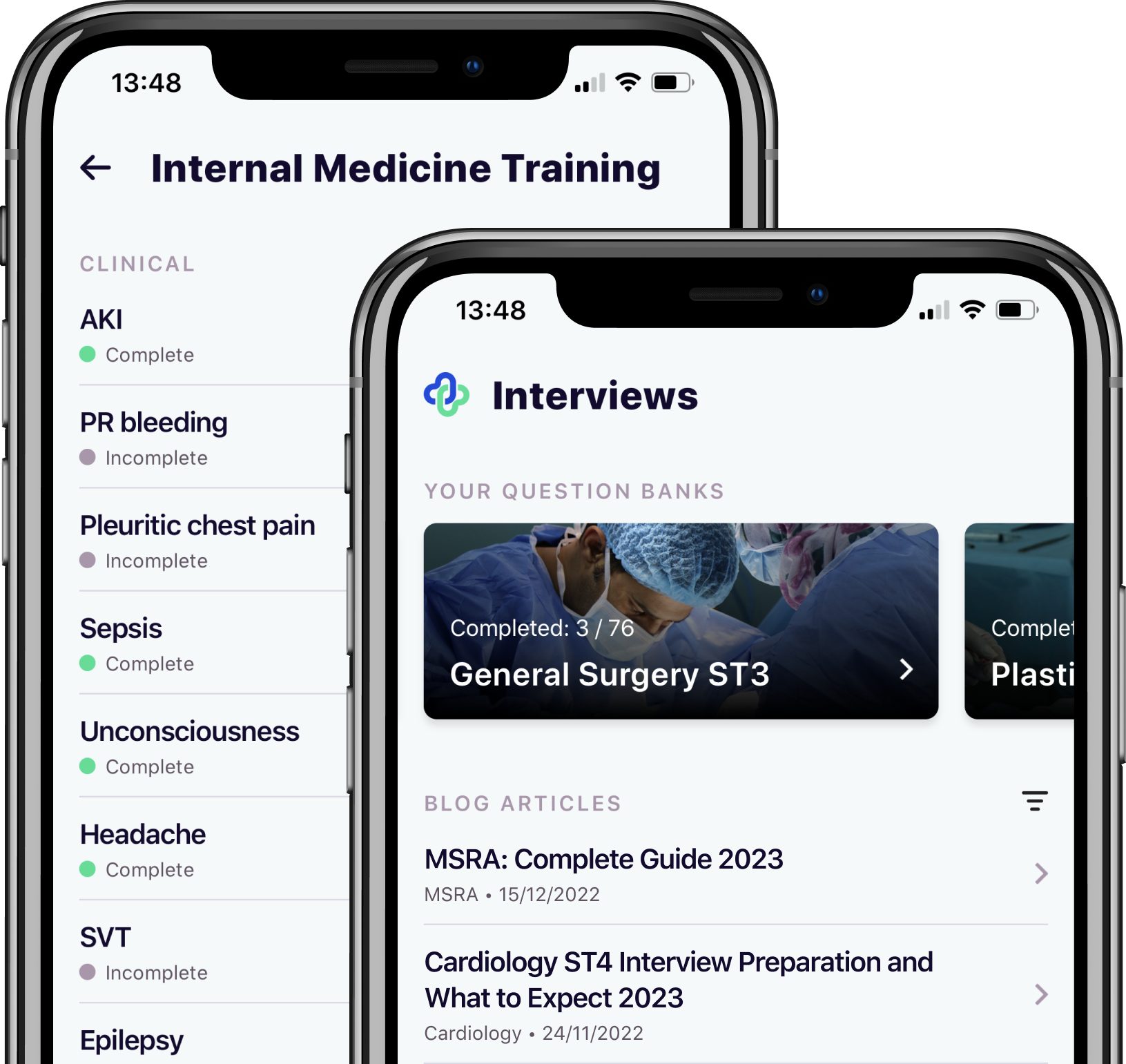
Take your subscriptions with you
Our mobile app allows you to access your interview and exam question banks wherever you are.