Close
Close

 20th July 2026
Complete Guide to Medical Ophthalmology ST3 Application and Recruitment (2026)
If you’re putting together a Medical Ophthalmology ST3 Application for the 2026 UK recruitment round, you’re aiming at one of the smallest and most specialised higher physician training programmes in the country. Entry sits at ST3, following either Internal Medicine Stage 1 with MRCP(UK) or Ophthalmic Specialist Training with FRCOphth Part 1, and recruitment runs nationally through NHS England on Oriel under a GMC-approved curriculum overseen by the Federation of the Royal Colleges of Physicians.
This guide walks you through eligibility, the application process on Oriel, the five-application Round 1 cap, self-assessment scoring and the portfolio evidence you’ll need. The interview itself is summarised briefly here and covered in depth on the Medical Ophthalmology ST3 Interview Question Bank page.
Here’s the shape of it at a glance.
Key Facts at a Glance
- Competition ratio (2025): 4.67:1 (14 applications, 3 posts)
- Higher training length: 5 years full-time to CCT
- Entry point: ST3, following IMT stage 1 or OST
- Key exam requirement: Full MRCP(UK) or FRCOphth Part 1 by offer date
- Recruitment platform: Oriel, coordinated by NHS England
- 2026 interview date: 18 March 2026 (national interview)
Table of Contents
- What Is Medical Ophthalmology ST3 Higher Specialty Training?
- Is Medical Ophthalmology ST3 Competitive and What Is the Lifestyle Like?
- Medical Ophthalmology ST3 Eligibility Criteria and Entry Requirements
- How to Apply for Medical Ophthalmology ST3 National Recruitment
- Medical Ophthalmology ST3 Recruitment Timeline and Key Dates (2026)
- Medical Ophthalmology ST3 Competition Ratios and Application Trends
- How Medical Ophthalmology ST3 Applications Are Scored (2026)
- Medical Ophthalmology ST3 Self-Assessment and Portfolio: How to Maximise Your Score
- The Medical Ophthalmology ST3 Interview: A Brief Overview
- Medical Ophthalmology ST3 Offers, Preferencing and What Happens Next
- Frequently Asked Questions About Medical Ophthalmology ST3 Application
- Medical Ophthalmology ST3 Useful Resources
What Is Medical Ophthalmology ST3 Higher Specialty Training?
Medical Ophthalmology is a small, recognised higher specialty training programme in the UK, entered at ST3 after either physician training (Internal Medicine Stage 1 with MRCP(UK)) or ophthalmology training (with FRCOphth Part 1). It sits within the Federation of the Royal Colleges of Physicians of the UK, with the curriculum delivered jointly by the JRCPTB and the Royal College of Ophthalmologists, and approved by the GMC. Recruitment runs nationally through NHS England on Oriel using a single UK-wide person specification covering England, Northern Ireland, Scotland and Wales.
Training is built around the 2021 GMC-approved curriculum, which has three integrated components: core medical ophthalmic skills, internal medicine, and higher medical ophthalmology training. Progression is assessed via Capabilities in Practice (CiPs) and Generic Professional Capabilities at each ARCP. The higher training component normally runs for five years full-time, giving an indicative total of around seven years from foundation completion to CCT (two years IMT plus five years HST).
On successful completion, you’re awarded a Certificate of Completion of Training (CCT) in Medical Ophthalmology and enter the GMC Specialist Register, the requirement for a substantive NHS consultant post as an ophthalmic physician. Consultants typically practise across ocular inflammation and uveitis, medical retina, neuro-ophthalmology, and public visual health (including diabetic retinopathy screening), often alongside related medical work in neurology, immunology or diabetes.
Key facts – Programme: Medical Ophthalmology Higher Specialty Training (ST3 entry) – Oversight: GMC (curriculum), JRCPTB & RCOphth (delivery), NHS England (recruitment) – Duration: ~5 years HST; ~7 years total from foundation to CCT – End qualification: CCT in Medical Ophthalmology → GMC Specialist Register – Coverage: Single UK-wide programme (England, NI, Scotland, Wales)
Is Medical Ophthalmology ST3 Competitive and What Is the Lifestyle Like?
Medical Ophthalmology is one of the smallest physician specialties in the UK, with only a handful of national training numbers each year. NHS England publishes official annual competition ratios for the specialty (see the competition section below), but because post numbers are so small, year-to-year figures are volatile and a single change in advertised posts can swing the ratio significantly. Applicants should be prepared to be flexible about location.
Lifestyle and day-to-day work. This is a predominantly outpatient specialty. Most of your week is spent in clinic managing uveitis, neuro-ophthalmology, diabetic and vascular eye disease, thyroid eye disease and joint clinics with rheumatology, neurology or endocrinology. You’ll do on-calls (the 2021 curriculum confirms this, pro-rata for LTFT trainees), but ophthalmology nights are generally described by deaneries as quieter than acute medicine, and the GMC’s 2024 National Training Survey showed ophthalmology trainee “very high burnout” fell from around 14% to 8% year-on-year. Many trainees cite the predictable weekday clinic pattern as a genuine draw.
Pay. You’re on the standard NHS resident doctor scale, not a specialty rate. ST3–ST5 basic pay in England for 2025/26 sits around £65,048 (Nodal Point 4), rising to roughly £73,992 at ST6+, plus on-call and London supplements where they apply.
Career trajectory. Training is five years, leading to CCT and a Consultant Medical Ophthalmologist post, typically hospital-based, often with a subspecialty interest (uveitis, neuro-ophthalmology or medical retina) and links to diabetic retinopathy screening services. LTFT is available and extends the programme pro-rata without changing CCT requirements.
Medical Ophthalmology ST3 Eligibility Criteria and Entry Requirements
Medical Ophthalmology is unusual because it has two distinct entry routes into ST3, so the first thing to check is which stream you’re applying through. The essential criteria are set out in the NHS England 2026 person specification, which applies across England, Northern Ireland, Scotland and Wales. Exact wording can shift year to year, so cross-check the current PHST applicant handbook before you submit.
Here’s what you need to be eligible:
- Medical degree: MBBS or an equivalent primary medical qualification recognised by the GMC.
- Registration: Full GMC registration with a licence to practise by the post start date. Non-UK graduates typically get there via PLAB or an accepted postgraduate qualification, plus English-language evidence (IELTS Academic 7.5 overall with 7.0 in each domain, or OET Medicine grade B).
- Foundation competences: Successful completion of a UK Foundation Programme or evidence of equivalent competences within the previous three and a half years.
- Physician route: Completion (or completion by start date) of Internal Medicine Stage 1, Core Medical Training or ACCS, with MRCP(UK) Part 1 at the point of application and the full MRCP(UK) diploma by the offer date. Irish BST with full MRCPI, or eligibility for the GIM Specialist Register, is also accepted.
- Ophthalmology route: Completion of Ophthalmic Specialist Training up to OST2, with FRCOphth Part 1 passed by the offer date. If you enter through this route, you’ll still need to complete MRCP(UK) by the end of ST4.
- Competence sign-off: A JRCPTB Alternative Certificate of Core Competence (or equivalent educational supervisor sign-off) is typically required to evidence readiness for higher training.
- Right to work: Valid UK immigration status. From 2026, offers are prioritised by immigration status under the Medical Training (Prioritisation) rules, so check where you sit before applying.
Note that MSRA is not required for this specialty.
How to Apply for Medical Ophthalmology ST3 National Recruitment
Medical Ophthalmology ST3 recruitment runs through the national Oriel portal, coordinated by the Physician Higher Specialty Training (PHST) office alongside NHS England. It’s a small, dual-entry specialty (only 3 posts nationally in 2025), so the mechanics matter: a missed document or a rushed self-assessment can genuinely cost you a place. The 2026 Medical Ophthalmology ST3 person specification is the definitive rulebook, so check it before you start.
Here’s the process, step by step:
- Confirm your entry route and exams. You’ll apply via either the physician route (MRCP(UK) Part 1 required at time of application, full diploma by offer date) or the ophthalmology route (FRCOphth Part 1 by offer date). If you’re coming through physician training, this ties in closely with your Foundation Programme sign-off and core/internal medicine competences.
- Register on Oriel. All UK specialty applications go through Oriel. There’s no application fee, though indirect costs (exams, courses, travel) are real.
- Choose your applications carefully. For 2026 Round 1, you’re capped at five applications across all specialties, a new limit set by NHS England under the Medical Training Prioritisation Act. Round 2 has no cap. Medical Ophthalmology counts as one of your five.
- Complete the application form. Expect these sections: personal details, eligibility (GMC registration, foundation competences, exam evidence), employment history, fitness to practise declarations, referee details, and the supporting information / self-assessment against the published scoring framework.
- Lock in your self-assessment. Scores are fixed at submission, so you can’t nudge them up later. Score conservatively and honestly. Evidence is verified at or before interview.
- Submit within the window. For the 2026 cycle, applications opened at 10:00 on 23 October 2025 and closed at 16:00 on 20 November 2025 per NHS England and Scotland MT sources. (Note: the PHST specialty page has separately listed a later window opening 20 November 2025 and closing 11 December 2025. Confirm the definitive dates against your Oriel account and the Medical Ophthalmology page on phstrecruitment.org.uk.) The interview is held on 18 March 2026, with offers by 31 March 2026 for August 2026 starts.
- Prepare your supporting documents. Have your GMC certificate, MBBS certificate, Part 1 exam certificate, evidence of foundation competences, and evidence backing each self-assessment claim (publications, presentations, teaching, degrees) ready to produce at verification. References are captured through Oriel and typically requested later, not uploaded up front.
If you’re reapplying: you’ll need a signed support for reapplication to a specialty training programme form, endorsed by both your Training Programme Director and your current educational supervisor. There’s no lifetime cap on attempts, but the reapplication form is non-negotiable. Structured feedback is issued after longlisting and after interview, and procedural appeals go through the PHST complaints and appeals route. Scores themselves generally aren’t appealable.
Medical Ophthalmology ST3 Recruitment Timeline and Key Dates (2026)
Medical Ophthalmology ST3 sits within the Physician Higher Specialty Training (PHST) round, so the dates line up with the national physician recruitment schedule rather than a standalone ophthalmology timeline. Because this is a small specialty with only a handful of posts, missing a deadline effectively costs you the year, so it’s worth pinning these dates to your calendar as soon as you decide to apply.
Here’s how the 2026 cycle is shaping up, drawing on the PHST recruitment portal and the NHS England specialty recruitment schedule:
| Stage | Date (2026 cycle) |
|---|---|
| Applications open (Oriel) | 23 October 2025, 10:00 |
| Applications close | 20 November 2025, 16:00 |
| Evidence upload window | 22 December 2025 – 26 January 2026 |
| Interviews | 18 March 2026 |
| First offers released | By 31 March 2026 |
| Offer hold deadline (national physician round) | 22 April 2026, 13:00 |
| Upgrade deadline | 23 April 2026 |
The application window shown here reflects the NHS England and Scotland MT published Round 1 dates. The PHST specialty page has separately listed a 20 November 2025 – 11 December 2025 window for this specialty, so always cross-check against your Oriel account and the Medical Ophthalmology page on phstrecruitment.org.uk before relying on any date.
A few practical points. The evidence upload on 26 January 2026 is a separate step from submitting your application form, and it’s easy to overlook because it sits weeks after applications close. Once offers are released, you’ll have 48 hours to accept, hold or reject via Oriel. Holding with upgrades is usually the sensible default if you’ve ranked multiple regions.
Medical Ophthalmology ST3 Competition Ratios and Application Trends
Medical Ophthalmology is one of the smallest physician training rounds in the UK, and that shapes everything about the competition picture. With only a handful of national training numbers each year, small changes in post numbers swing the ratio dramatically. Here’s what the official NHS England competition ratio data shows for the most recent cycles:
| Year | Applications | Posts | Ratio |
|---|---|---|---|
| 2019 | 12 | 7 | 1.71:1 |
| 2023 | 15 | 7 | 2.14:1 |
| 2024 | 16 | 7 | 2.29:1 |
| 2025 | 14 | 3 | 4.67:1 |
The headline story for the 2025 round is the jump to 4.67:1, but it’s worth understanding what actually happened. Applicant numbers have stayed remarkably stable at 12–16 per year. The sharp rise came almost entirely from post numbers being cut from 7 to 3, not from a surge of new applicants. NHS England’s 2025 England fill-rate table also flags a discrepancy worth knowing about: it lists 2 posts with only 1 acceptance, suggesting not every advertised post was filled that year.
Don’t confuse this pathway with surgical Ophthalmology ST1, which is a completely separate route and has climbed to over 21:1. Medical Ophthalmology sits in the physician training family, entered at ST3 after Internal Medicine Training, and its competition profile is genuinely different. Because recruitment is run as a single national process, regional breakdowns aren’t published for this specialty.
How Medical Ophthalmology ST3 Applications Are Scored (2026)
Medical Ophthalmology ST3 is recruited through the Physician Higher Specialty Training (PHST) process on Oriel, and the scoring framework has two clear parts: a self-assessment score at shortlisting and an interview score on the day. There’s no MSRA for this specialty. Differentiation rests entirely on your portfolio evidence and how you perform at interview.
The two scoring components
1. Self-assessment (shortlisting). You claim points against defined domains on the Oriel form and upload evidence. PHST’s general guidance indicates up to 38 points are available across self-assessment domains for physician higher training. Every claim you make must be backed by verifiable evidence. Unsupported claims are struck out at verification, which is one of the most common ways candidates lose easy points.
2. Interview. PHST confirms the Medical Ophthalmology ST3 interview runs across two stations with four scored questions in total. Each of the four areas is marked 1–5 by two interviewers, giving eight scores that sum to a Raw Interview Score (RIS) of 8–40. The interview then dominates the final ranking.
How the components combine
PHST does not publish an explicit percentage weighting between self-assessment and interview for Medical Ophthalmology ST3. Based on published Dermatology figures, where the raw interview score is scaled to 80/100 and the application score to 20/100, an analogous 80/20 split is a reasonable working assumption for planning, but confirm the exact Medical Ophthalmology ST3 split on the PHST specialty page before planning around it.
| Component | Purpose |
|---|---|
| Self-assessment / portfolio | Shortlisting + verified evidence carried into ranking |
| Interview (2 stations, 4 scored questions) | Primary differentiator for offers |
| Eligibility (MRCP(UK) or FRCOphth Part 1, etc.) | Threshold, not scored (pass/fail) |
Appointability thresholds
To be classed as appointable, PHST guidance for physician higher training indicates candidates must meet three criteria: no interview score of 1/5, no more than two scores of 2/5 across the eight, and an RIS of at least 24. These thresholds reflect published PHST guidance and should be confirmed on the current phstrecruitment.org.uk specialty page, as the exact numerical cut-off appears to be set per round by the panel.
What this means in practice
With only a handful of national posts (3 in 2025, 14 applicants), single-point margins decide outcomes. The self-assessment is where you bank points in advance (you can’t add evidence after submission), and the interview is where the majority of the final score is generated. The next section breaks down each scored domain (postgraduate degrees, publications, presentations, teaching, QIP) and where candidates typically lose marks.
Medical Ophthalmology ST3 Self-Assessment and Portfolio: How to Maximise Your Score
Medical Ophthalmology is a small, dual-entry specialty recruited through Physician Higher Specialty Training (PHST), so your self-assessment sits inside the standard PHST framework: around 38 points spread across defined domains, with each option typically scored on a 1–5 scale. Attribute those figures to the PHST recruitment portal; the specialty-specific rubric is refreshed annually, so cross-check the 2026 guidance when it lands. Because posts are tiny (just 3 in 2025), every domain point matters.
The domains that actually score
In recent years the self-assessment has rewarded:
- Postgraduate degrees and qualifications: MD, PhD, MSc; higher tiers score more
- Additional exams: FRCOphth Part 1 for IMT-background candidates, or MRCP(UK) for ophthalmology-background candidates, beyond your essential entry route
- Presentations and posters: regional, national, international tiers
- Publications: first-author, PubMed-indexed items score highest
- Teaching qualifications: a CPD-accredited “teach the teacher” course scores at entry level; a PGCert (or PGDip/MEd) in Medical Education is needed for the top tier
- Quality improvement: completed cycles with measurable change, not one-off audits
- Commitment to specialty: where ophthalmology-specific tasters, meetings and society membership are captured
Notably, there’s no scored operative logbook at ST3 entry (surgical DOPS and eyelogbook belong to ARCP later), no separate score for breadth of rotations or MDT working, and no sole-application bonus of the kind IMT offers.
How evidence is verified
PHST verifies every claim against documentary proof. Evidence is uploaded outside Oriel, via a separate portal on the PHST timetable, not at initial application submission. You’ll need PDFs of certificates, formal feedback forms, acceptance emails, programme extracts and supervisor sign-off. Claims without acceptable evidence get downgraded at verification, which is where candidates lose easy points.
Where points slip away
Do: get your PGCert enrolment paperwork in early if you’re aiming for the top teaching tier; keep first-author PubMed IDs to hand; save formal feedback for every teaching session you deliver; complete QI cycles fully with re-audit data.
Don’t: claim a poster without the acceptance email; count a single-cycle audit as QI; assume ophthalmology ST1 (OST) advice applies here (it’s a completely different scheme); leave “commitment to specialty” evidence until the last month. For a medical-route candidate, this evidence is best built through Medical Ophthalmology Society events, JRCPTB-affiliated meetings, UK Neuro-Ophthalmology Society activities, or RCOphth meetings relevant to the medical ophthalmology subspecialty (uveitis, medical retina, neuro-ophthalmology).
If you’re building your portfolio alongside physician training such as Internal Medicine Training or an ophthalmology ST1/ST2 pathway, treat evidence collection like an exam: log it as you go, not the week before Oriel opens.
The Medical Ophthalmology ST3 Interview: A Brief Overview
Medical Ophthalmology ST3 recruitment, run through Physician Higher Specialty Training (PHST), uses a formal selection centre alongside your application form and pre-employment checks. The interview is structured as two stations lasting roughly 35–40 minutes in total, with four scored questions in total across the two stations. Each station is scored independently by its own panel, so both carry real weight on your final ranking.
We’ve kept this section short on purpose. The full station-by-station breakdown, worked examples and preparation strategy live on our dedicated interview page.
Preparing for the interview? Head over to the Medical Ophthalmology ST3 Interview Question Bank for a full station-by-station breakdown, scenario questions and model answers written by high-scoring trainees.
Medical Ophthalmology ST3 Offers, Preferencing and What Happens Next
Because Medical Ophthalmology ST3 is such a small national programme (just 3 posts against 14 applications in 2025, per NHS England), the offers stage can feel unusually high-stakes. The good news is the mechanics themselves are the standard Oriel process shared with the rest of Physician Higher Specialty Training, so here’s how it generally runs from interview to start date:
- Interview and ranking. Once interviews close, applicants are ranked nationally on their combined interview score. Given only a handful of posts nationally, ranking position matters more here than in larger specialties.
- Preferencing on Oriel. You’ll be asked to rank the available posts/locations in order of preference on Oriel. Rank every post you’d genuinely accept, in true order. The system allocates the highest-ranked post your score can reach.
- Initial offer. Offers are released via Oriel. You’ll typically have a hold-down period (historically around 48 hours) to accept, hold, decline or accept with upgrade.
- Upgrades. If you accept or hold and opt in to upgrades, Oriel will automatically move you to a higher-preferenced post if one becomes available as others decline. You don’t need to do anything further, but you do need to opt in.
- Pre-employment checks and start. Once you firmly accept, your employing trust picks up pre-employment checks ahead of the standard August start.
Confirm the exact 2026 hold-down and upgrade cut-off dates in your Oriel offer email, as these shift slightly year to year.
Frequently Asked Questions About Medical Ophthalmology ST3 Application
How competitive is Medical Ophthalmology ST3?
Medical Ophthalmology is a very small round. NHS England’s 2025 competition ratios show 14 applications for 3 posts (4.67:1), up from 2.29:1 in 2024 (16 applications, 7 posts) and 1.71:1 in 2019. The 2025 jump was driven by fewer posts rather than a surge in applicants, so year-to-year swings are large in absolute terms.
Who is eligible to apply for Medical Ophthalmology ST3?
Applicants need MBBS with GMC registration and a licence to practise, plus completed Foundation training. Beyond that, there are two entry routes: the physician route (Internal Medicine/Core Medical Training with MRCP(UK) Part 1 at application and the full diploma by offer date), or the ophthalmology route (completion of Ophthalmic Specialist Training to OST2 with FRCOphth Part 1 by offer date).
Which exams do I need for Medical Ophthalmology ST3?
It depends on your route. Physician applicants must hold MRCP(UK) Part 1 at the point of application and the full MRCP(UK) diploma by the offer date (equivalents such as MRCPI, or eligibility for the GIM specialist register, are also accepted). Ophthalmology-background applicants need FRCOphth Part 1 by the offer date. There’s no MSRA requirement for this specialty.
How do I apply for Medical Ophthalmology ST3?
Applications go through Oriel, the national NHS recruitment portal, coordinated by the Physician Higher Specialty Training (PHST) recruitment office on behalf of England, Northern Ireland, Scotland and Wales. You submit one application against the nationally agreed person specification, complete the self-assessment, and, if shortlisted, attend a national interview. For 2026, interviews are scheduled for 18 March 2026.
What scores well on the Medical Ophthalmology ST3 self-assessment?
The PHST scoring framework awards up to 38 points across domains including postgraduate qualifications, teaching, quality improvement, research and publications, and presentations. Higher-tier points typically require substantive evidence: a PGCert in Medical Education rather than a short course, first-author peer-reviewed publications rather than posters, and completed QI cycles with measurable outcomes. Every claim needs certificate-level documentary evidence held at application.
How many Medical Ophthalmology ST3 posts are there each year?
Post numbers are small and vary annually. Official NHS England data shows 7 posts in 2019 (12 applications), 7 posts in 2023 (15 applications), 7 posts in 2024 (16 applications), and just 3 posts in 2025 (14 applications). Because the round is so small, a single training location choosing not to recruit can noticeably change national numbers. Always check the current round’s advert on Oriel for confirmed post counts.
Can I reapply if I’m not successful?
Yes. There’s no cap on reapplication for Medical Ophthalmology ST3, and many candidates strengthen their portfolio over a year before reapplying. Common areas to build on include completing MRCP(UK) if still outstanding, adding a PGCert in Medical Education, publishing further peer-reviewed work, and gaining ophthalmology-relevant clinical exposure such as taster weeks or medical retina/neuro-ophthalmology clinics.
How does the Oriel offer and upgrade process work?
Once offers are released via Oriel, you can accept, hold or decline. If you accept or hold, you can opt in to the upgrade process, meaning that if a higher-ranked preference becomes available (through withdrawals or declines), Oriel automatically moves you to it. You must actively opt in; otherwise you won’t be upgraded even if a preferred post opens up.
Medical Ophthalmology ST3 Useful Resources
We’ve grouped the most useful sources below so you can go straight to what you need.
Official recruitment and eligibility
- NHS England 2026 Person Specification – Medical Ophthalmology ST3: the definitive entry criteria, including the MRCP(UK) and FRCOphth Part 1 dual-route requirements.
- PHST Recruitment – Medical Ophthalmology: the national recruitment guidance, effectively the applicant handbook for this specialty.
- Oriel: the application portal where you submit and track everything.
- NHS England Competition Ratios: official cycle-by-cycle numbers.
Curriculum and colleges
- Federation of Royal Colleges of Physicians – Medical Ophthalmology
- Royal College of Ophthalmologists – Training (relevant if you’re on the ophthalmology entry route)
- 2021 GMC-approved Medical Ophthalmology curriculum
Community
- r/doctorsUK on Reddit and the Eyedocs Medical Ophthalmology ST3 feedback thread: small but useful during application cycles.
Medibuddy resources
When you’re ready for the interview, the Medical Ophthalmology ST3 Interview Question Bank has scenario questions with model answers. You may also find our Foundation Programme guide helpful earlier in the journey.
Applying for Medical Ophthalmology ST3 is a real commitment, but it’s a manageable one when you break it down: get your MRCP(UK) or FRCOphth Part 1 route sorted, build portfolio evidence that reflects the curriculum’s subspecialty domains, and treat the self-assessment form with the care it deserves. Every point counts in a specialty this small.
When you’re ready to turn your attention to interview day, the Medical Ophthalmology ST3 Interview Question Bank walks you through scenario questions with model answers from high-scoring trainees. Good luck. You’ve got this.
Take your subscriptions with you
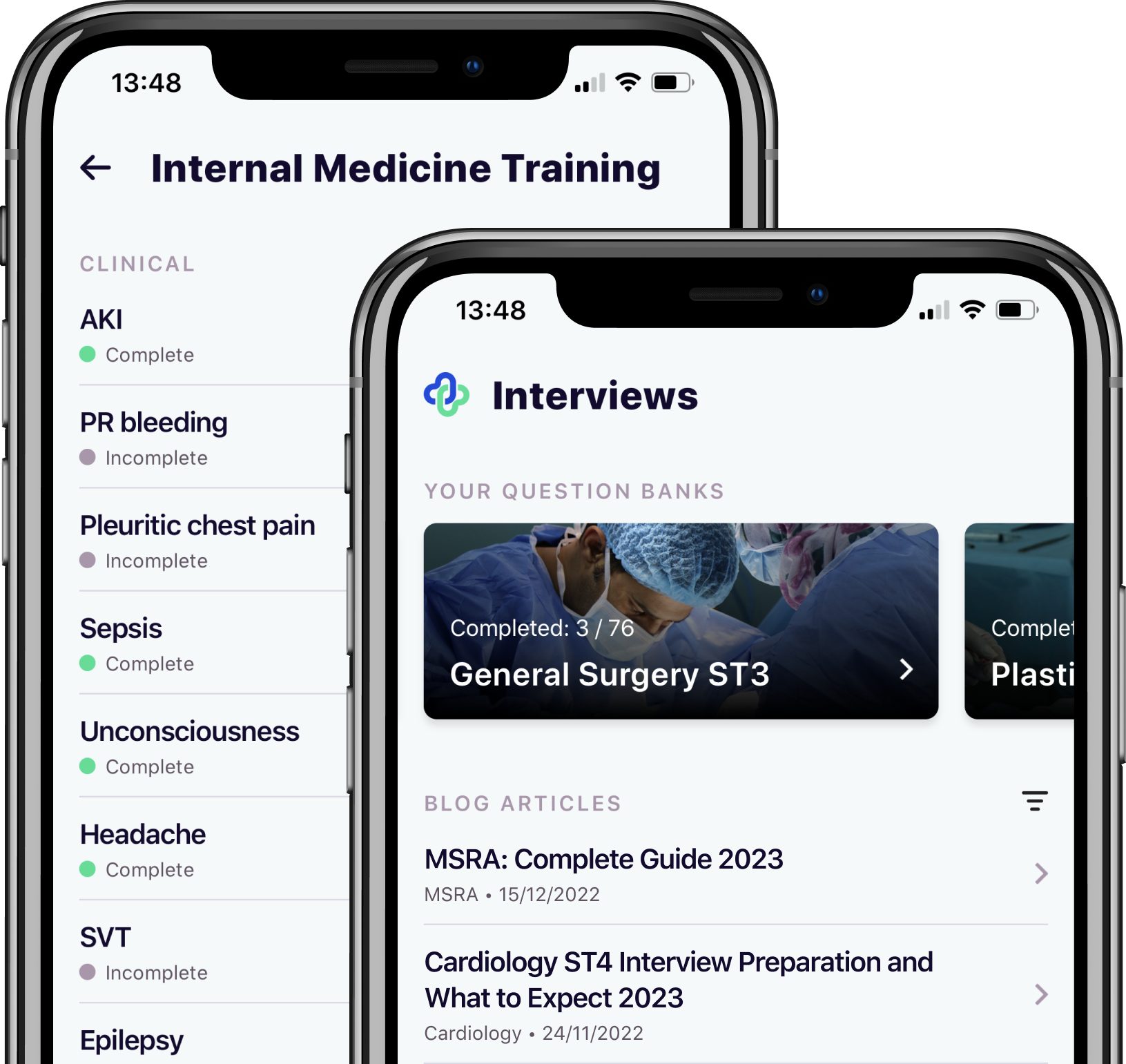
Our mobile app allows you to access your interview and exam question banks wherever you are.