


 Close
Close
 30th July 2026
Clinical manifestations
Photoallergic reactions are uncommon and occur >24 hours after exposure to the agent. The reaction is categorised as a dermatitis and in most often affects exposed skin, but does have the potential to spread to unexposed areas also. Pigmentary changes are uncommon.
Common agents responsible for photoallergic reaction:
- Sunscreen
- Non-steroidal anti-inflammatory drugs
- Fragrances
- Phenothiazines
- Quinine
- Sulphonamides
- Quinidine
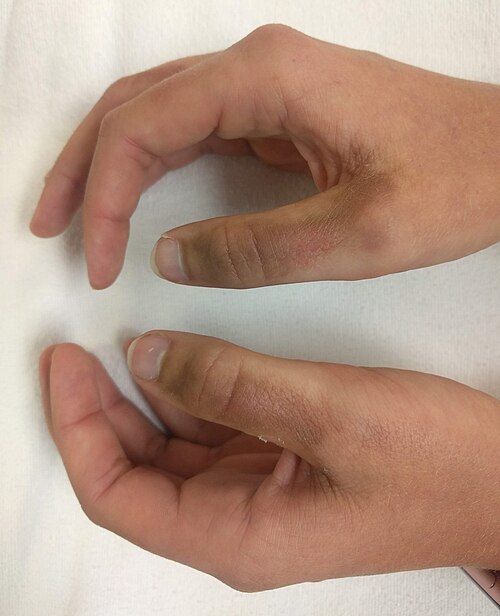
Photodermatitis secondary to lemons on both thumbs. Source: Wikipedia.
Image Source: Wikimedia Commons (2018). Photodermatitis, Licensed under a creative commons licence. Available for free at: https://commons.wikimedia.org/wiki/File:Photodermatitis.jpg (Accessed 19 May 2025).
Phototoxic reactions are more common but require a large amount of exposure for the reaction to occur. The onset is shorter, occurring between minutes to hours from exposure. It is characterised by a typical sunburn rash only on exposure areas of the body and can also lead to pigmentary changes. Severe cases may develop bullae.
Common agents responsible for phototoxic reactions:
- Metformin
- Non-steroidal anti-inflammatory drugs (NSAIDs)
- Sulfonamides
- Vemurafenib
- Voriconazole
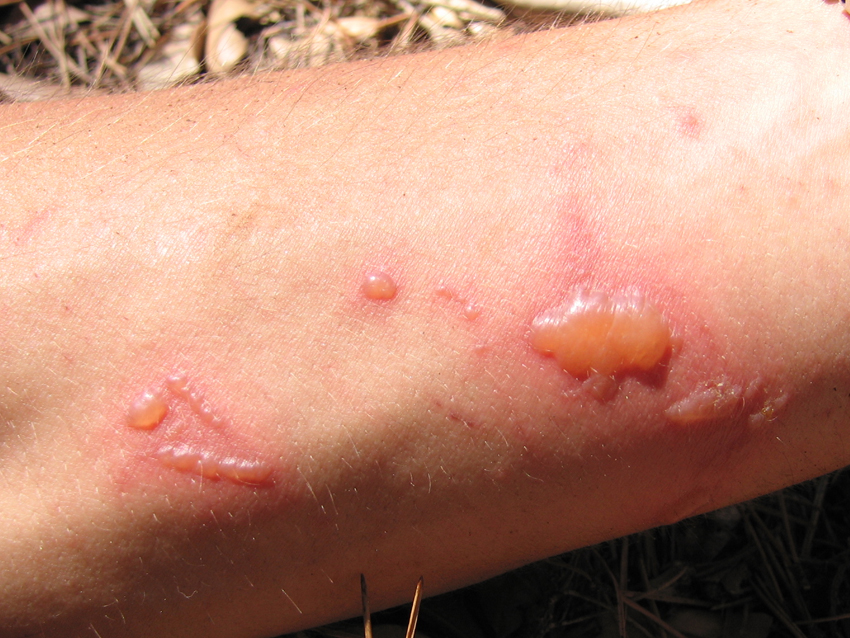
Phototoxic reaction secondary to commons rue on the forearm. Source: Wikipedia
Image Source: Wikimedia Commons (2006). Effet de la rue Officinale, Licensed under a creative commons licence. Available for free at: https://commons.wikimedia.org/wiki/File:Effet_de_la_rue_officenale.jpg (Accessed 19 May 2025).
- Amiodarone
- Retinoids
- Psoralens
Complete Guide to Clinical Genetics ST3 Application and Recruitment (2027)
Written by Medibuddy. Last updated: October 2026. Clinical Genetics is

Complete Guide to Clinical Radiology ST3 Application and Recruitment (2027)
Recruitment paused: NHS England is not running Clinical Radiology ST3+ recru

Complete Guide to Paediatric Surgery ST3 Application and Recruitment in United Kingdom (2026)
Written by Medibuddy. Last updated: October 2026. If you’re planning


Take your subscriptions with you
Our mobile app allows you to access your interview and exam question banks wherever you are.

