Close
Close

 30th September 2026
Complete Guide to Occupational Medicine ST3 Application and Recruitment (2026)
Written by Medibuddy. Last updated: September 2026.
If you’re applying for Occupational Medicine ST3 in 2027, we’ve created this guide to support you through the application process. Occupational Medicine is an uncoupled higher specialty entered at ST3 and runs for four years full time (ST3–ST6), with national recruitment run by NHS England on Oriel.
We’ll take you through the whole process, including eligibility, how national selection scores your self‑assessment, the scored prioritisation task on the application form, what portfolio evidence to upload and how it’s verified, plus how preferencing, ranking and offers work.
Key Facts at a Glance
- Competition ratio (2025): 17.0:1 (119 applications, 7 posts)
- Training length: 4 years full-time from ST3 entry
- Key entry requirement: Full GMC registration; at least 24 months post-registration experience
- Recruitment platform: Oriel (applications); Qpercom (online interviews)
- Interview date (2026): Friday 9 October (2027 dates to follow)
- Shortlisting: Self-assessment and a scored prioritisation task
Table of Contents
- Occupational Medicine ST3 Curriculum
- Occupational Medicine ST3 Eligibility Criteria and Entry Requirements
- How to Apply for Occupational Medicine ST3 National Recruitment
- Occupational Medicine ST3 Recruitment Timeline and Key Dates (2027)
- How Competitive Is Occupational Medicine ST3?
- How Occupational Medicine ST3 Applications Are Scored (2027)
- Occupational Medicine ST3 Self-Assessment and Portfolio: How to Maximise Your Score
- The Occupational Medicine ST3 Interview: A Brief Overview
- Occupational Medicine ST3 Offers, Preferencing and What Happens Next
- Frequently Asked Questions About Occupational Medicine ST3 Application
- Occupational Medicine ST3 Useful Resources
- Conclusion
Occupational Medicine ST3 Curriculum
The GMC‑approved OMST 2022 curriculum, set by the Faculty of Occupational Medicine (FOM), is built around high‑level Learning Outcomes underpinned by defined Professional Capabilities. You’ll evidence progression through an electronic portfolio, which includes workplace‑based assessments, reflective practice, case reviews, quality‑improvement activity and mapped portfolio entries against each capability. Annual Review of Competence Progression (ARCP) panels judge whether your evidence shows you’re meeting the capabilities for your stage. The MFOM examinations are aligned to the curriculum; MFOM Part 1 is often targeted early in training and Part 2 later, but exact timing is set locally and by FOM guidance.
Delivery is coordinated nationally but organised locally by deanery specialty training committees, who set your rotation plan, supervisors and ARCP logistics. The core expectations don’t change between regions; what varies is the mix of placements. Some programmes are predominantly NHS occupational health services, while others include industry or public‑sector employers (for example utilities, transport, civil service) or academic time. That variation changes the day‑to‑day case mix and project opportunities, but you’re assessed against the same capabilities and portfolio standards everywhere.
Note: This summary reflects the OMST 2022 curriculum and the April 2024 Assessment Strategy published by FOM; if updated guidance is released for 2027, we’ll update this page.
Occupational Medicine ST3 Eligibility Criteria and Entry Requirements
If you’re applying for Occupational Medicine ST3 in 2027, here’s what you need to be eligible:
- Primary medical qualification: MBBS or equivalent medical degree.
- GMC registration: Full registration with the General Medical Council and a current licence to practise by the post start date.
- Right to work: Evidence of your right to work in the UK (visa sponsorship via the Health and Care Worker route is used for eligible posts).
- Prior clinical experience: At least 24 months of relevant post-registration clinical experience.
- Core capabilities/competence: Evidence of the common professional capabilities expected at ST3 entry. If you have not completed an approved UK core training route, you’ll need a completed and signed Certificate of Completion of Common Professional Capabilities (CCCPC) confirming you meet these capabilities.
Note: The 2027 person specification has not yet been published. The bullets above reflect the 2026 NHS England person specification for Occupational Medicine ST3, which is a reliable guide for planning, and we’ll update this page when the 2027 version is released.
Practical clarifications
- No upper cap on experience: The 2026 person specification does not set a maximum amount of prior post-foundation experience that would make you ineligible.
- International graduates: Full GMC registration (with EPIC primary source verification where applicable) must be in place by the post start date; immigration checks and right-to-work evidence are completed as part of pre-employment.
- Desirable, not essential: Postgraduate qualifications (for example DOccMed, MRCP parts or similar) can strengthen your self-assessment but are not required to apply.
The 2026 NHS England person specification for Occupational Medicine ST3 lists the qualification, registration, experience and capability requirements above, and applicants submit any required competence sign‑off within the Oriel application. If you expect to need the CCCPC, start early so your supervising consultant has time to assess and sign off the required capabilities before you apply.
How to Apply for Occupational Medicine ST3 National Recruitment
Although the 2027 application guidance has not yet been published, the 2026 application process is useful for understanding the different stages. We have included this below as a guide, and will update the information when the 2027 guidance becomes available.
- Set up Oriel. In preparation for applying, you can create or update your Oriel profile, set alerts, and search for Occupational Medicine ST3.
- Complete the OM‑specific elements. Check the Occupational Medicine ST3 Eligibility Criteria and Entry Requirements, then complete the Occupational Medicine ST3 self‑assessment within Oriel and the scored prioritisation task included in the application form.
- Submit before the deadline. Submit in good time and save the confirmation.
- Prepare and upload your evidence. After applications close, you’ll be instructed to upload self-assessment evidence via Qpercom, which NHS England uses for uploads and interviews. Only achievements completed by the point of application submission can be claimed; late evidence scores nothing.
- Shortlisting and interview booking. A combination of your verified self-assessment and the prioritisation task is used to shortlist. If invited, you’ll book your slot on Oriel; interviews run online on Qpercom.
- Preferencing, benchmarking and offers. If you’re applying for NHS posts, you’ll preference programmes and then receive offers based on your total weighted score; offers typically allow 48 hours (excluding weekends) to respond. Applicants training in industry or the Armed Forces attend the same national interview to be benchmarked and do not preference NHS posts. References are requested only after you accept an offer.
Occupational Medicine ST3 Recruitment Timeline and Key Dates (2027)
Planning around the key recruitment dates is half the battle. Once the 2027 recruitment timeline has been published, we’ll provide full details here.
For 2026, Occupational Medicine ST3 ran two recruitment rounds, with the Round 2 interview planned for 9 October 2026.
How Competitive Is Occupational Medicine ST3?
NHS England publishes the official applicant and post numbers each year. The most recent confirmed figures are below.
| Year | Applications | Posts | Competition ratio |
|---|---|---|---|
| 2025 | 119 | 7 | 17.00:1 |
Note: The 2025 figures come from NHS England’s competition ratios table; the 2024 table records 84 applications but no confirmed post count. We’ll update this section when NHS England publishes the next set of ratios.
What this means for your 2027 application
- Occupational Medicine is a small specialty, so single‑digit post numbers make ratios swing sharply from year to year. Don’t be put off by a headline figure; focus on maximising your score across all selection components.
- Region-by-region comparisons aren’t very meaningful here. Some programmes advertise a single post, so “competitiveness” varies more with tiny denominators than with true differences in demand. Prioritise a strong application nationally, then preference posts you’d genuinely take.
- Appointability matters as much as rank. NHS England confirms you must score at least 70% of the total weighted score to be appointable; only then are NHS posts matched by rank and preferences. Aim to clear that benchmark comfortably so you’re in the mix when offers go out.
With only a few marks often separating candidates in small rounds, every verified self‑assessment point and a well-executed prioritisation task can make a real difference to your final ranking.
How Occupational Medicine ST3 Applications Are Scored (2027)
How you’ll be scored
Putting your Occupational Medicine application together is easier when you know how you’ll be scored. NHS England sets a clear scoring framework with three scored components: your self-assessment (with uploaded evidence), a prioritisation task completed in Oriel, and a structured interview. A combination of your verified evidence score, prioritisation task score and interview score determines your final rank and appointability.
Scoring components at a glance
| Component | What it is | How it’s used |
|---|---|---|
| Self-assessment (with evidence) | You select statements across defined domains and upload proof; a senior Occupational Health Physician verifies your claims and may amend scores. | Used for shortlisting and contributes to final ranking. Verified scores are released after interviews. |
| Prioritisation task | A scored task completed within the Oriel application form. | May be used for shortlisting and contributes to final ranking. NHS England does not publish its share of marks. |
| Interview | One online station, split into two subsections (via Qpercom) with structured scoring. | Contributes to final ranking and benchmarking (see threshold below). |
Note: The 2027 scoring pages are not yet published. The outline above reflects the 2026 NHS England guidance and we’ll update this page when the 2027 detail is released.
Full domain-by-domain advice sits in the Self-Assessment and Portfolio section.
See “Evidence and verification” in the Self-Assessment and Portfolio section for upload rules and timing.
Weighting and appointability
NHS England does not publish percentage weighting between the self‑assessment, the prioritisation task and the interview. However, the appointability threshold is provided and outlines that you must achieve at least 70% of the total weighted score to be appointable. Applicants training in industry or the Armed Forces attend the same national interview for benchmarking, receive their benchmarking status in Oriel, and do not preference NHS posts.
Occupational Medicine ST3 Self-Assessment and Portfolio: How to Maximise Your Score
If you’re applying for Occupational Medicine ST3 in 2027, your self-assessment and evidence upload will carry a lot of weight. The 2027 guidance hasn’t been published yet, but the 2026 NHS England self-assessment guidance is a reliable guide for planning. We’ll update this page when the 2027 guidance lands.
How to score in each domain
NHS England’s 2026 self-assessment guidance sets out nine scored domains, each with fixed statements and a maximum score:
- Postgraduate medical qualifications (max 1): The DOccMed scores 1 mark. Membership of, or exams from, other colleges does not score in this domain.
- Prizes and awards (max 2): A distinction awarded during your undergraduate medical training or a postgraduate qualification scores 2 marks, and a prize or merit scores 1. Letters of thanks, and awards from before you entered higher education, do not count.
- Clinical governance (max 4): The top band of 4 marks goes to chairing a national committee, leading a national policy, or leading a significant postgraduate audit or quality improvement project where you contributed to every aspect, made recommendations, completed a second cycle to close the loop, and presented the results at least locally. Equivalent work at regional level scores 3, at local level 2, and a significant contribution to a local committee, policy or project scores 1.
- Academic research (max 4): A PhD or MD involving original research scores the full 4 marks. An MSc with original research, or leading a research project where you contributed to every aspect, scores 3. Contributing significantly to at least one aspect of a project other than data collection scores 2 at postgraduate level, and 1 for a lesser contribution or significant undergraduate work.
- Teaching (max 4): A recognised teaching qualification, such as a PG Cert, Diploma or Masters in Medical Education, scores the full 4 marks. Attending a Teach the Teacher, regularly delivering formal teaching on a recognised course, or organising a national teaching programme each score 3. Occasional formal teaching on a course, or organising a regional programme, scores 2, and informal teaching of students or nurses scores 1.
- Academic publications (max 4): Being first author on more than one peer-reviewed publication scores 4 marks. First author on one postgraduate publication, or a named author on more than one, scores 3. A named author on one postgraduate publication, or first author on more than one undergraduate publication, scores 2, and a named author on one undergraduate publication scores 1.
- Presentations, excluding audit presentations (max 4): A presentation at an international meeting on a medical or health and safety topic scores 4 marks, a national meeting 3, a regional meeting 2 and a local meeting 1. You will need the slide deck and the event programme showing you as the presenter, and the verifying physician decides whether the subject is relevant.
- Posters (max 2): A poster presented at a national or international meeting scores 2 marks, and one presented regionally or locally scores 1. Promotional posters, for example, introducing a service, do not count.
- Self-reflective practice (max 4): Full reflection covering all aspects of reflective practice on more than one occasion, with at least one piece relating to occupational health, scores the full 4 marks. One full reflection relating to occupational health scores 3, partial reflection relating to occupational health scores 2, and partial reflection on any topic scores 1.
Each domain includes a short text box (typically 100–300 words) where you must justify the score you claim.
Evidence and verification
- Evidence is uploaded after the application window closes through Qpercom, where a senior Occupational Health Physician verifies it and can raise or lower your claimed scores.
- Only achievements completed by the time you submit your application can be claimed; late achievements or uploads score nothing.
- Non‑English documents must be formally translated by an approved service or they’re disregarded.
- The same item generally cannot be scored in more than one domain.
- Name files with the domain first, then a clear descriptor.
- Verified self‑assessment scores are released after interviews.
Easy points people miss (do/don’t)
- Do align your reflections explicitly to occupational health to access the top band.
- Do close the loop on QI/audit and show impact on practice.
- Do evidence authorship and contribution (first author, senior author, presenter).
- Do include certificates, programmes and feedback for teaching.
- Do attend a live teaching course to score 3 points in the teaching domain.
- Don’t claim audit presentations under the “Presentations” domain; they’re excluded.
- Don’t double‑claim the same output across multiple domains.
- Don’t upload after the deadline or without certified translations.
- Don’t rely on attendance at non‑recognised teaching courses; they won’t score at the top band.
Actions to take now
- Plan and complete DOccMed if feasible.
- Target at least one national presentation or poster and submit manuscripts for peer‑review.
- Lead a QI project with measurable outcomes and a closed loop.
- Deliver regular, structured teaching and book a Teach the Teacher course to secure the 3‑point band.
- Draft OH‑focused reflective pieces and gather corroborating evidence early.
The Occupational Medicine ST3 Interview: A Brief Overview
Occupational Medicine ST3 uses a single online interview delivered via Qpercom, lasting about 35 minutes and split into two sections: Portfolio and Scenario. You book your slot in Oriel. For more information on the interview format, and for targeted preparation materials, use the Occupational Medicine ST3 Interview Question Bank. For context, interviews in 2026 were held on Friday 9 October 2026; we’ll update this page when the 2027 dates are released. Final ranking is calculated as described in the Scoring section.
Occupational Medicine ST3 Offers, Preferencing and What Happens Next
Once interviews finish, Occupational Medicine ST3 uses Oriel’s national offer mechanism below:
- Ranking. You’re ranked by total score, which combines your verified self-assessment, the on‑form prioritisation task and your interview. Only those over 70% are appointable for NHS posts. Industry or Armed Forces applicants are benchmarked the same way but are withdrawn from NHS post matching.
- Preferencing. In Oriel, you rank programmes in order of preference; allocation follows your rank and these choices. You can reorder until the preferencing deadline.
- Offers and responses. Offers are released in batches. You usually have 48 hours (excluding weekends) to accept, hold or reject. If you opt in, any accepted or held offer can auto‑upgrade to a higher‑preferenced post if one becomes available, without advance contact. References are requested only after you accept.
- After acceptance. Your employer completes pre‑employment checks and issues a contract; your region will confirm the start date and induction. Scoresheets are released to all applicants on a date set by the recruitment office.
Note: Applicants training in industry or the Armed Forces do not preference posts; they’re told their benchmarking status via Oriel and do not enter NHS post matching.
Frequently Asked Questions About Occupational Medicine ST3 Application
How competitive is Occupational Medicine ST3 in recent years?
The short answer is very competitive. In 2025 there were 119 applications for 7 posts (17.00:1). Post numbers are tiny, so the ratio can swing year to year. Focus on maximising your self‑assessment score, completing the prioritisation task carefully, and preparing well for the interview to clear the 70% appointability threshold.
What are the eligibility requirements for Occupational Medicine ST3?
The 2026 person specification requires MBBS or equivalent, full GMC registration with licence to practise by start date, right to work, at least 24 months’ relevant post‑registration experience, and evidence of ST3‑level common professional capabilities. The 2027 specification isn’t published yet; we’ll update this information when it is.
Do I need MRCP(UK) or another exam to apply for Occupational Medicine ST3?
No specific postgraduate exam is required for entry, including MRCP(UK). Postgraduate qualifications are desirable and score on self‑assessment (for example, DOccMed attracts 1 point), but they aren’t mandatory. Concentrate on meeting the essential eligibility and evidencing core capabilities.
How do I apply for Occupational Medicine ST3 through Oriel?
You submit your application via Oriel, complete the specialty self‑assessment and the on‑form prioritisation task, then upload evidence via Qpercom after applications close. Shortlisting uses your claims (later verified). If invited, you book an online interview slot through Oriel. Final ranking combines components as outlined in the Scoring section.
What scores well on the Occupational Medicine ST3 self-assessment?
The self-assessment covers nine domains. High‑value items include PhD/MD with original research (4 points), multiple first‑author peer‑reviewed papers (4), international presentations (4), and strong teaching (a recognised PG teaching qualification scores 4; a Teaching‑the‑Teachers course scores 3).
How many Occupational Medicine ST3 posts are there each year?
Numbers are small. NHS England’s 2025 ratios show 7 national posts. Indicative vacancy numbers appear on the OM ST3 recruitment pages before preferencing. With such low numbers, building points across several domains is important.
Can I reapply if I’m unsuccessful this year?
Yes. You can reapply in a later round if eligible. Use the time to strengthen research, presentations, teaching and OH‑linked reflective practice, and ensure your evidence is watertight. Many succeed on a subsequent attempt after targeted improvements.
How do offers, preferencing and upgrades work for Occupational Medicine ST3?
Appointable applicants (≥70% total weighted score) are ranked and matched to their Oriel preferences. Offers allow 48 hours (excluding weekends) to accept, hold or decline. If opted in, upgrades automatically move you to a higher preference if it becomes available. References are requested after you accept.
Occupational Medicine ST3 Useful Resources
The following links provide useful information and resources for completing your application and preparing for your interview:
- NHS England Occupational Medicine ST3 recruitment hub
- Occupational Medicine ST3 Person Specification (2026)
- Occupational Medicine ST3 Interview Question Bank
Note: The 2027 guidance has not been published yet. The 2026 documents are a reliable guide while you plan your 2027 application, and we’ll update this page when the 2027 versions are released.
Conclusion
We’ve covered how Occupational Medicine ST3 selection uses your self-assessment across defined domains, verified against the evidence you upload, and how the Oriel prioritisation task contributes to shortlisting and final ranking. The practical next steps are to finalise your domain statements, organise your evidence, and plan timelines so everything is ready at submission.
When you’re ready to prepare for the interview itself, the Occupational Medicine ST3 Interview Question Bank has scenario questions with model answers, written by high-scoring trainees. Use it alongside targeted mock practice and feedback to convert a strong application into an offer.
Take your subscriptions with you
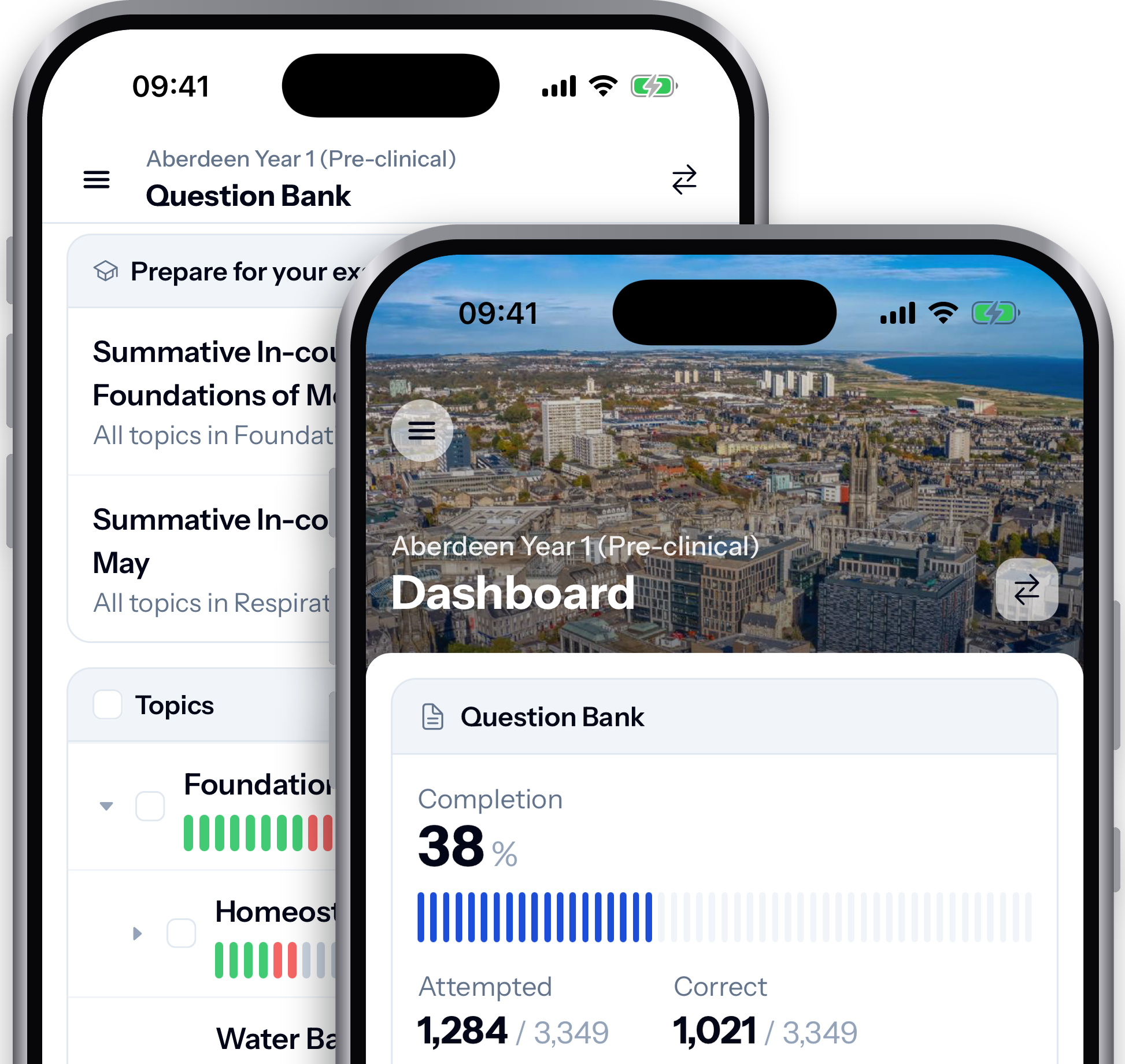
Our mobile app allows you to access your interview and exam question banks wherever you are.