


 Close
Close
 1st June 2023
Thrombocytopenia
Normal platelet counts fall between 150 – 400 x 10⁹/L. The definition of thrombocytopenia is a platelet count of <150 x 10⁹/ l.
Causes
Thrombocytopenia can be classified into three main categories: a decrease in platelet production, an increase in platelet destruction and platelet sequestration.
Conditions which decrease platelet production include:
- Leukaemia, myelodysplastic syndrome (MDS), aplastic anaemia
- Paroxysmal nocturnal haematuria (PNH)
- B12 or folate deficiencies
- Liver failure
- Inherited thrombocytopenia disorders
- Systemic viral or bacterial infection
- Certain drugs can cause bone marrow suppression, for example sodium valproate, daptomycin, certain chemotherapy agents
Conditions which increase platelet destruction include:
- Immune thrombocytopenic purpura
- Thrombotic thrombocytopenic purpura
- Haemolytic uraemic syndrome
- Disseminated intravascular coagulation
- Systemic lupus erythematosus
Platelet sequestration:
- Conditions which cause splenomegaly, such as liver cirrhosis and portal hypertension, some leukaemias and lymphomas.

Blood film from a patient with TTP showing a lack of platelets, and fragmented red blood cells. TTP can cause a pentad of symptoms/signs: fever, renal failure, haemolytic anaemia, thrombocytopenia, and neurological symptoms. Caused by decreased activity of ADAMTS-13. Plasma exchange is the main treatment for TTP.
Image Source: Wikimedia Commons (2014). Thrombocytopenia 1, Licensed under a creative commons licence. Available for free at: https://commons.wikimedia.org/wiki/File:Thrombocytopenia_1.jpg (Accessed on: 30 January 2023).

Immune thrombocytopenia purpura
Immune thrombocytopenia purpura (ITP) usually occurs when autoantibodies are formed against platelets, leading to platelet destruction and inhibition of their production. The trigger of this process in adults is unknown.
Symptoms/Signs
Most patients are asymptomatic and thrombocytopenia is discovered on FBC performed for another reason. The most common signs/symptoms include petechiae (see image below of petechiae on the lip), mucosal bleeding, menorrhagia, epistaxis, and purpura. More rarely, patients can present with GI haemorrhage and intracranial haemorrhages.
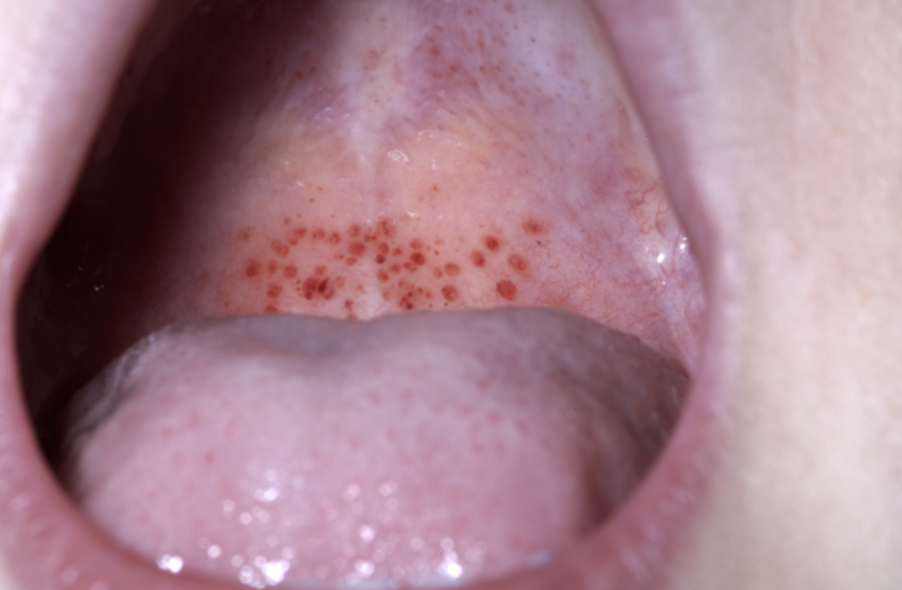
Petechiae on the lip in a case of ITP.
Image Source: Wikimedia Commons (2008). Oral petechiae, Licensed under a creative commons licence. Available for free at: https://commons.wikimedia.org/wiki/File:Oral_petechiae.JPG (Accessed on: 30 January 2023).

Investigations
The suspicion of ITP is raised by isolated thrombocytopenia with an otherwise normal FBC. A peripheral blood film should be visualised. Other causes of isolated thrombocytopenia should be excluded; the patient will therefore have bloods sent for U+Es, LFTs, a coagulation screen, a screen for Hepatitis B, C and HIV. A bone marrow biopsy is rarely performed but should be performed if the FBC or blood film reveals other abnormalities other than thrombocytopenia, if the clinical features are not typical, or if the patient is failing to respond to standard therapies.
Treatments
Patients with a platelet count of >30 x 10⁹/l with no symptoms and no bleeding can be monitored and treatment is not required. First line treatment for symptomatic patients/patients with a platelet count of <30 x 10⁹/l is oral prednisolone, usually given at a dose of 1mg/kg/day. Corticosteroids usually increase a patient’s platelet count (although this can take up to a month for some patients). When a response is achieved, corticosteroids should be weaned gradually. However, there is a risk of relapse of the ITP when corticosteroids are weaned. Other treatment options available for ITP include IV immunoglobulin (IVIG), rituximab, IV anti-D immune globulin and thrombopoietin receptor agonists (e.g., romiplostim, eltrombopag).
Splenectomy can be considered in patients with severe thrombocytopenia (platelet count <15 x 10⁹/l) who have failed medical therapies and the disease persists after a year. There can be potential complications for patients undergoing splenectomy, such as thrombosis or infection (especially infection with encapsulated bacteria). In patients undergoing splenectomy, vaccinations (to S. pneumoniae, H. influenzae, N. meningitidis) are advised at least 2 weeks prior to the procedure.
Complete Guide to Clinical Genetics ST3 Application and Recruitment (2027)
Written by Medibuddy. Last updated: October 2026. Clinical Genetics is

Complete Guide to Clinical Radiology ST3 Application and Recruitment (2027)
Recruitment paused: NHS England is not running Clinical Radiology ST3+ recru

Complete Guide to Paediatric Surgery ST3 Application and Recruitment in United Kingdom (2026)
Written by Medibuddy. Last updated: October 2026. If you’re planning


Take your subscriptions with you
Our mobile app allows you to access your interview and exam question banks wherever you are.

