


 Close
Close
 29th May 2023
Chronic myeloid leukaemia (CML)
Overview
CML is a type of (usually) slow-growing myeloproliferative neoplasm. The affected cells are haematological pluripotent stem cells, and these cells continue to undergo maturation into all three subsequent myeloid lineages – erythroid, platelet and granulocytes.
More than 90% of CML is associated with the Philadelphia chromosome BCR-ABL, which is caused by the gene translocation t(9;22). This fusion gene codes for the synthesis of a constitutively active tyrosine kinase signalling protein which leads to uncontrolled cell division and loss of cell cycle regulation in affected cells.
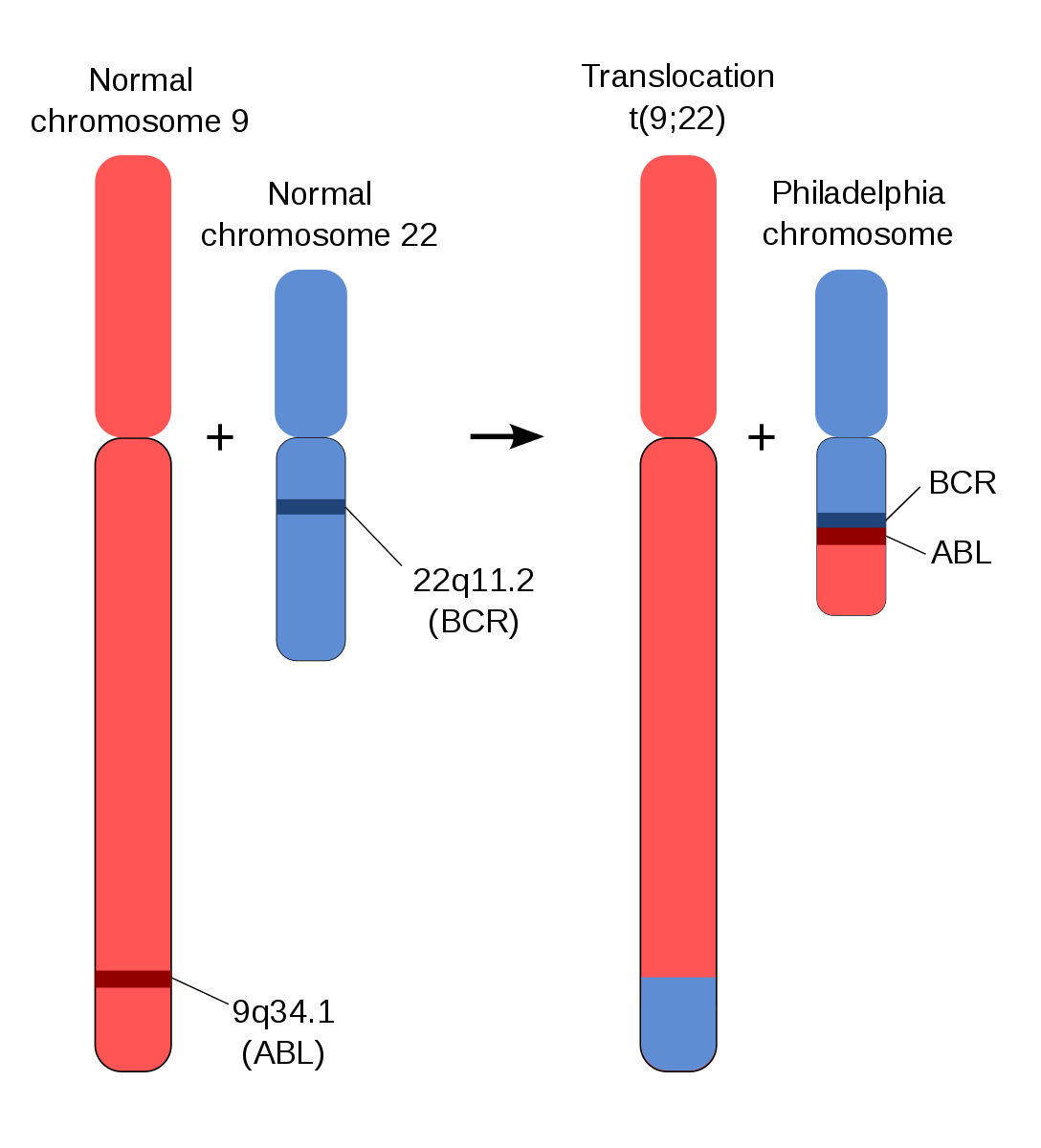
Schematic of Philadelphia chromosome translocation.
Image Source: Wikimedia Commons (2012). Schematic of the Philadelphia Chromosome, Licensed under a creative commons licence. Available for free at: https://commons.wikimedia.org/wiki/File:Schematic_of_the_Philadelphia_Chromosome.svg (Accessed on: 10 January 2023).

The incidence is 4.2 per 100,000 people per year. It can present at any age but the median age at diagnosis is 72 years.
Most cases are detected asymptomatically on routine bloods, but features can include:
- Constitutional symptoms
- Splenomegaly
- Symptomatic cytopenia – anaemia, bleeding, infections
- Gout (due to high cell turnover)
- Hyperviscosity (due to high WCC)
The following tests are usually performed during workup for suspected CML:
- Bloods – full panel, especially:
- FBC – leukocytosis is common with neutrophils, basophils and eosinophils. Thrombocytopenia and anaemia (normocytic) develop over time usually
- Blood film shows granulocytes of all stages of maturation
- BCR:ABL analysis can often be run on peripheral blood and is quantifiable – the percentage of BCR:ABL positive cells can be monitored as response to treatment
- Bone marrow is essential for evaluating blast percentages and staging disease and cytogenetics can also be sent
CML can be divided into three stages:
- Chronic phase – Most people are diagnosed in the chronic stage – counts are relatively well maintained and symptoms are minimal. This often lasts years.
- Accelerated phase – With rising blast counts (up to 29%), falling RBC and platelets and increasing symptoms.
- Blast phase – Finally in the blast phase the blast percentage rises to over 30% and the disease behaves like AML but with a very poor response to chemotherapy. The blast phase of CML is often rapidly fatal.
Treatment for CML has been revolutionised by the development of targeted therapy. The target is the tyrosine kinase protein produced by the BCR:ABL gene. These drugs are known as tyrosine kinase inhibitors; the first example of this class of drug was imatinib but there are now also second and third generation forms. They are generally well tolerated and have drastically changed prognosis for patients diagnosed with CML. The ten-year life expectancy has risen from around 11% to 84%, and patients diagnosed in the chronic phase have an almost normal life expectancy.
Complete Guide to Clinical Genetics ST3 Application and Recruitment (2027)
Written by Medibuddy. Last updated: October 2026. Clinical Genetics is

Complete Guide to Clinical Radiology ST3 Application and Recruitment (2027)
Recruitment paused: NHS England is not running Clinical Radiology ST3+ recru

Complete Guide to Paediatric Surgery ST3 Application and Recruitment in United Kingdom (2026)
Written by Medibuddy. Last updated: October 2026. If you’re planning


Take your subscriptions with you
Our mobile app allows you to access your interview and exam question banks wherever you are.

