


 Close
Close
 26th June 2023
Brown-Séquard Syndrome
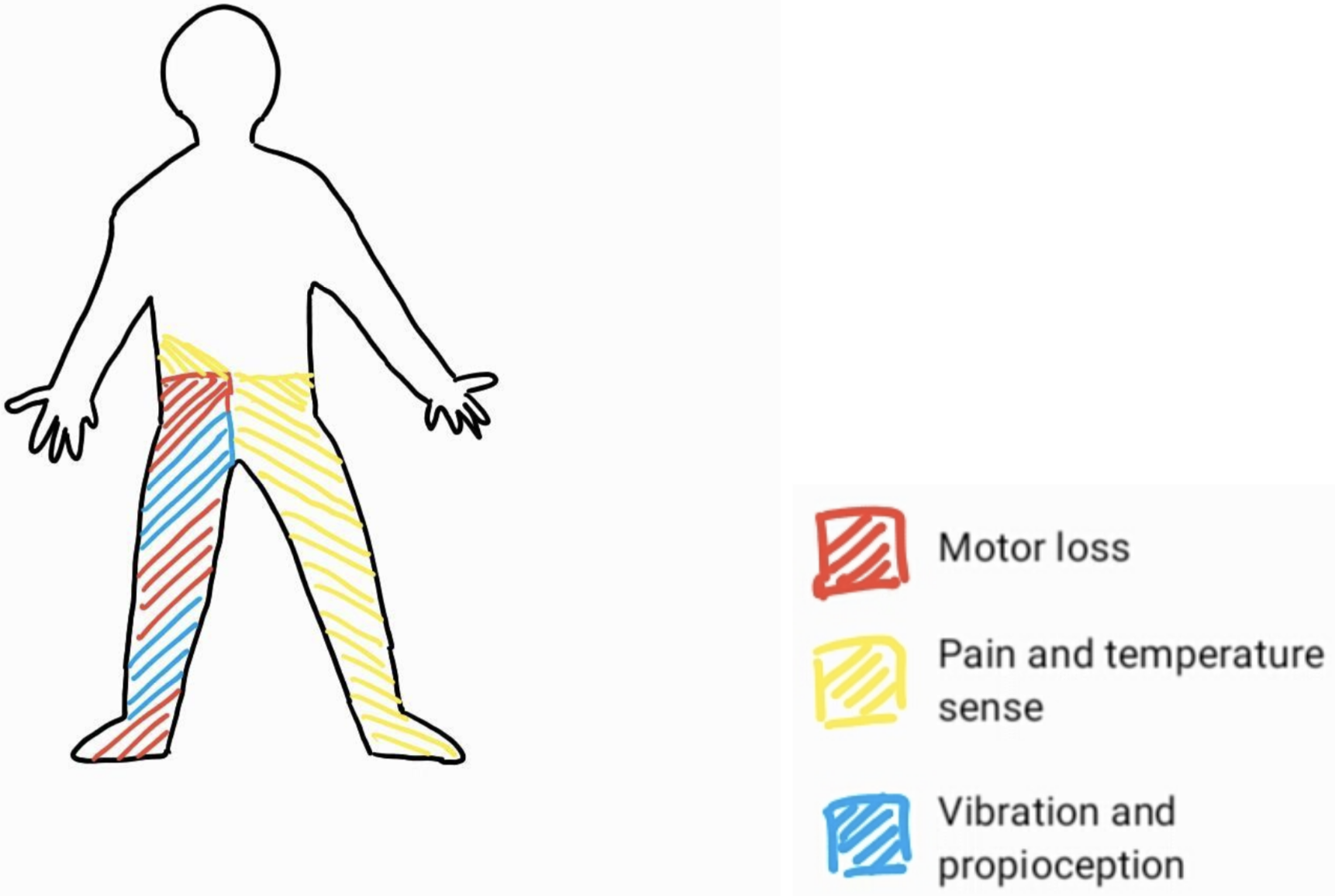
Distribution of motor and sensory loss in right hemisection of the lower thoracic spinal cord.
Image Source: Dr D Chang – own work
Brown-Séquard syndrome describes a pattern of sensorimotor loss resulting from damage to one half of the spinal cord (i.e. hemisection of the cord) causing:
- Ipsilateral loss of vibration sense and proprioception, with hemiparesis.
- Contralateral loss of pain and temperature sense, with a clinical sensory level usually 1 to 2 levels below the actual lesion.
- Ipsilateral loss of all sensory modalities at the level of the lesion, with radicular pain.
- Ipsilateral flaccid paralysis at the level of the lesion.
Brown-Séquard syndrome is usually caused by a traumatic spinal injury or intramedullary tumours confined to one side of the spinal cord, but an important cause of Brown-Séquard syndrome is transverse myelitis (see below).
This syndrome has the most favourable prognosis among the incomplete spinal cord syndromes, with 75% of patients able to ambulate independently at discharge from rehabilitation (75%) and nearly 70% perform functional skills and activities of daily living independently and favourable bladder and bowel function profile with continent bladder and bowel function achieved in 89% and 82%, respectively.
Complete Guide to Clinical Genetics ST3 Application and Recruitment (2027)
Written by Medibuddy. Last updated: October 2026. Clinical Genetics is

Complete Guide to Clinical Radiology ST3 Application and Recruitment (2027)
Recruitment paused: NHS England is not running Clinical Radiology ST3+ recru

Complete Guide to Paediatric Surgery ST3 Application and Recruitment in United Kingdom (2026)
Written by Medibuddy. Last updated: October 2026. If you’re planning


Take your subscriptions with you
Our mobile app allows you to access your interview and exam question banks wherever you are.

