


 Close
Close
 31st January 2024
Eating Disorders
Background
Introduction
Eating disorders, like many psychiatric disorders, are hard to define and are categorised based on subjective (i.e., patient-reported) symptoms, which vary around the world. What makes eating disorders different from other psychiatric disorders is the impact on physical health, and this is often included in diagnostic manuals. This will focus on the ICD-11, as the adopted standard by the World Health Organisation since January 2022, which is very similar to the previous and more familiar ICD-10. Eating disorders can broadly be split into three key conditions: Anorexia Nervosa, Bulimia Nervosa, and Avoidant-Restrictive Food Intake Disorder. Also under this category are a series of miscellaneous presentations of Pica, Rumination-Regurgitation Disorder and “feeding or eating disorders not otherwise specified.” For the psychiatrist, differentiating these disorders is important as it impacts upon the psychological treatment. For the physician, what is key to identifying a disordered relationship with food and eating is that they must impact on the patient’s physical health, which could be syndromes related to nutritional deficiencies, dehydration or electrolyte imbalances.
Epidemiology
The eating disorder charity BEAT estimates there are 725,000 people in the UK who suffer from an eating disorder (around 90% of patients are female, although the true percentage of male sufferers is likely 25% as many are undiagnosed). The most common disorder is Anorexia Nervosa, affecting around 15% of those who suffer an eating disorder. Most disorders start in childhood or adolescence and, if untreated, have a chronic course. There is a rough rule of thirds for treatment prognosis, 1/3 will make a full recovery, 1/3 will make a partial recovery, and 1/3 will not respond. All eating disorders, especially anorexia, have one of the highest mortality rates – not just from the physical health impact but also from suicide – up to 10-15%.
References
- World Health Organisation (2019). International Statistical Classification of Diseases and Related Health Problems, Chapter 6: Feeding or eating disorders (11th ed.). https://icd.who.int/
- National Institute for Health and Care Excellence (2017). Eating disorders: recognition and treatment. (NICE Guideline number 69). https://www.nice.org.uk/guidance/ng69
- Royal College of Psychiatrists (2022). MEED. Medical Emergencies in Eating Disorders. RCPsych Guideline CR 233
Presentation
Anorexia Nervosa
Anorexia nervosa is defined by a low body weight for an individual compared to their demographics, and not due to another health condition or due to the unavailability of food. A typical threshold for diagnosis is an adult BMI of 18.5kg/m2, or in adolescents, BMI-for-age of under the 5th percentile. However, this may miss many people in the early stages of the disorder, where psychological treatments are more likely to be effective, and so there is now recognition of rapid weight loss of 20% total body weight within 6 months. Presence of the starvation syndrome is not required to make a diagnosis.
The psychological symptoms can be split into cognitive and behavioural symptoms:
Cognitive symptoms
- Fear of weight gain
- Body image distortion of seeing themselves as overweight when of a healthy or underweight
- Unrealistic concept of a healthy weight, often with an unachievable goal
These thoughts are overvalued (i.e., difficult to argue, but will show some insight) and obsessive, dominating the person’s thinking. Sometimes fear of being overweight is attributed to other cognitions, e.g., religious fasting, gastrointestinal complaints, or to pursue a more muscular appearance (often seen in men). Cognition drives the behavioural symptoms, which are aimed at reducing energy intake:
- Restricted eating
- Choosing lower calorie foods (or believed lower in calories)
- Slow eating, e.g., playing with food or trying to conceal it from being eaten
- Purging (e.g., vomiting, laxative use)
- Increasing energy consumption: usually excessive exercise, but can be increasing exposure to cold
- Avoidance of insulin if diabetic
- Use of stimulants and thyroxine
- Preoccupation with body image will lead to frequent checking behaviours (e.g., weighing frequently, checking in mirrors) or avoidance by wearing loose clothing or getting rid of mirrors at home
There may be a depressive-type syndrome, often due to the psychological changes caused by starvation – the brain’s response to lack of food is to go into a “power save” mode similar to a mobile phone on low battery, which mimics depression. All these symptoms will often impact social functioning, e.g., being late for work due to checking appearance, causing arguments with friends and family and being unable to function due to poor concentration.
Bulimia Nervosa
Bulimia nervosa is defined by periods of food binges, a discrete period of time (e.g., 2 hours) where a person loses control over what they eat, eating more or different foods than usual, and not feeling satiety or able to limit their intake, occurring on a regular basis (at least once a week). This is then counteracted by methods to avoid weight gain, in a similar fashion seen in Anorexia Nervosa. Binge eating is usually accompanied by emotional distress, and the patient will experience similar psychological symptoms as anorexia. Binge eating is usually triggered by stress or the hunger drive due to a period of restriction. If purging is severe, it can present with symptoms and signs of hypokalaemia due to vomiting or laxative use. However, starvation syndrome (see below) tends to be less severe but can still have risks of refeeding syndrome if compensatory behaviours are severe.
A bulimia nervosa presentation without the compensatory behaviours is termed a binge-eating disorder, and is usually accompanied by weight gain.
Purging most often associated with Bulimia but also seen in other disorders, especially anorexia, which has its own characteristic signs and symptoms that you should be aware of.
Specific symptoms, signs and comorbidities for purging:
- Russell’s sign – Rough skin on backs of knuckles from induced vomiting
- Erosion of teeth and dental caries from stomach acid and exacerbated by immediately brushing teeth.
- Gastric and duodenal ulcers
- Oesphageal erosions
- Pancreatitis
- Arrthymias secondary to electrolyte disturbance.
Avoidant-restrictive food intake disorder (ARFID)
A recently recognised disorder which presents similarly to anorexia, though the psychological symptoms of food refusal are not based on a fear of fatness but rather due to other thoughts or beliefs around food. This will then cause the patient to fail to gain sufficient calories for healthy social functioning, therefore can present similar with the starvation syndrome. They can also present with specific nutritional deficiencies if the belief is about a particular food group, e.g. fruit and vegetables. This is usually due to avoidance of certain food characteristics (e.g., smell, colour, texture), lack of recognition of hunger, fear of choking or vomiting and emotional distress at mealtimes. There is often an overlap with sensory processing, similar to difficulties seen in autism spectrum disorders.
Starvation Syndrome
The presentation of the physical health complications of Anorexia Nervosa, sometimes ARFID will be that of starvation syndrome, namely. Symptoms include:
- Amenorrhea
- Lack of adolescent growth
- Fainting, especially during exercise
Signs on examination:
- Emaciation
- Cold extremities
- Hair thinning or loss
- Growth of fine ‘lanugo’ hair over the face and body
- Proximal muscles weakness
- Bradycardia
- Hypotension and orthostatic hypotension
- Hypothermia
Muscle power is measured by the sit-up-squat-stand (SUSS) test. A score of <2 is indication of proximal muscle weakening
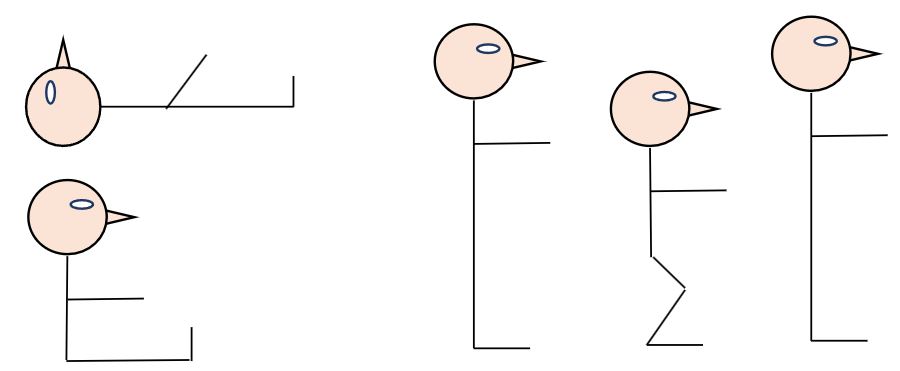
Sit up: sit up from lying unaided by arms. Stand-Squat-Stand: squat without using hands
Scoring: 0 – unable. 1 – able only with hands 2- with difficulty 3 – no difficulty
Adapted from Royal College of Psychiatrists (2022). MEED. Medical Emergencies in Eating Disorders. RCPsych Guideline CR 233
Differential diagnoses
There are two types of differential diagnoses to be considered, but in all cases less common than anorexia or bulimia.
Psychiatric differentials
Firstly, there are other psychiatric disorders that can present physical health impacts from reduced eating, but the psychological factors driving disordered eating are different. These would include:
- Depressive disorders, where motivation and anhedonia lead to self-neglect and reduced eating. This often requires quite a severe depressive episode and delayed presentation to impact on physical health.
- Obsessive-compulsive disorder, where obsessive thoughts and corresponding compulsion lead to reduced intake, e.g., needing to complete a ritual means there is no time to eat in the person’s schedule.
- Psychotic disorders (e.g., schizophrenia), where delusions or gustatory (taste) hallucinations mean a person believes food is poisoned or inedible items are food. Rarely a person might have a delusional belief of being overweight as part of their psychotic disorder. This is not usually the presenting symptom.
- Attention Deficit Hyperactivity Disorder, either due to appetite reduction secondary to amphetamines, or where hyperactivity and distractibility lead to unintentional excessive exercise and inability to finish a meal.
- Personality disorders, where food refusal, excessive exercise or purging is a form of self-harm
Physical health differentials
Organic disorders leading to weight loss tend to be less common than the disorders above, and it is important not to fall into the trap of ordering a series of investigations for organic disorders whilst there is a person rapidly losing weight. The key point to determine the difference between an eating disorder and their differentials is the history of food avoidance. The only exception might be those who struggle to communicate and may be refusing food due to pain on swallowing or indigestion. Key organic differentials would include:
- Malabsorption disorders: Coeliac disease or inflammatory bowel disease. If comorbid coeliac is suspected, then it may be falsely negative in someone with low gluten intake. A CRP can be useful to add to blood tests to investigate inflammatory bowel disease.
- Malignancy. Especially those causing brain-occupying lesions that might also induce vomiting
- Chronic infections, e.g. HIV, tuberculosis
- Endocrine disorders, which may also cause a secondary amenorrhea
- Diabetes, though there is a high comorbidity between type 1 diabetes and anorexia
References
- National Institute for Health and Care Excellence (2017). Eating disorders: recognition and treatment. (NICE Guideline number 69). https://www.nice.org.uk/guidance/ng69
- Royal College of Psychiatrists (2022). MEED. Medical Emergencies in Eating Disorders. RCPsych Guideline CR 233
- Semple, D. & Smyth, R (ed). Oxford Handbook of Psychiatry 2nd Edition.(2009) Oxford University Press
Diagnosis and investigations
For the psychiatrist, the presentation is usually made by encouragement from a concerned family member, who encourages the sick patient to see a GP, who will usually refer to an appropriate secondary mental health team for assessment and management. Onset is typical in adolescence or early adulthood, with later onset quite rare. Usually, it is gradual, following a stressful life event, and onset so insidious it can often be missed for many months. For the physician, presentation is often on the advice of the psychiatrist due to weight loss and the physical health impact of starvation or dehydration, with careful monitoring of bone profile with gradual refeeding to avoid refeeding syndrome. Sometimes, the person will present due to the physical health complications, especially in those who live alone or whose family and friends are in denial, and can present with significant dehydration and acute kidney injury.
Physical health examinations and investigations inform risk of refeeding syndrome and risk of death in a person suffering from any eating disorder. This can then inform the medical management of the patient and where the patient would be managed, as general inpatient psychiatric units are often ill-equipped to manage physical ill health. These are informed by the Royal College of Psychiatrists “MEED” guidelines, which replaced the “MaRSIpAn” guidance in May 2022. It does not provide a score but a series of red flags, with local teams often having their own set of guidelines on how meeting these will trigger an admission to medical beds. These red flags indicate a serious risk of physical health complications of the eating disorder, including severe malnutrition and risk of refeeding syndrome.
Physical observation – red flags
It is important to examine for dehydration and severe starvation syndrome, as these are red flags for admission for refeeding within a physical health capacity.
Dehydration
- Decreased skin tugor
- Dry mucosal membranes
- Sunken eyes
Starvation Syndrome
- Weight loss >1kg over 2 weeks
- BMI<13
- HR <40
- Systolic BP <90 OR postural hypotension with systolic difference >20mmHg
- Temperature <35.5C
- A raised or normal heart rate in the context of other red flags may be falsely reassuring and often a sign of concurrent infection or dehydration.
Blood tests
- U&Es – hyponatraemia may indicate water loading, where a patient tries to disguise weight loss by drinking large amounts of water prior to their appointments. This can be checked by testing urine osmolality. Hypokalaemia could indicate purging or laxative abuse, and <2.5mmol/L is a red flag. Both can occur in malnutrition. Also, look for acute kidney injury. A normal creatinine might reassure, but note the low muscle mass and low protein intake, a creatinine within reference ranges may be raised for that individual.
- VBG: metabolic acidosis can indicate laxative abuse, whereas alkalosis can indicate vomiting.
- Liver function tests – transanimases are often raised. This is thought to be due to the process of gluconeogenesis, especially from body proteins. Transanimases 3x the baseline is a reg flag. A raised gamma GT could indicate vomiting, as could a raised amylase.
- Bone profile: Hypomagnesemia is found in malnutrition. Phosphate is key to monitor for refeeding syndrome. A normal phosphate is not necessarily reassuring, as does not indicate body stores. It can suddenly drop without warning, especially in someone who has not eaten for more than 48 hours.
- Thyroid function tests: hypothyroid picture caused by low iodine diet
- Vitamin D: if low can exacerbate psychological symptoms and give a depressive picture
- Blood glucose: hypoglycaemia usually indicates poor body reserves, a red flag is <3mmol/L
- FBC: WCC can drop, especially neutrophils in starvation. Also to look for anaemia, a Hb <10g/L is a red flag.
- B12, Folate and Ferritin: to investigate the nutritional deficiency that can cause anaemia
- Creatinine Kinase: can sometimes be done to investigate excessive exercise
- HbA1c – useful if a patient had diabetes and omitting insulin. >86mmol/mol is a red flag for admission.
ECG
Often, to investigate bradycardia and inform management, especially looking for a prolonged QTc (450ms in females or 430ms in males, mildly longer is acceptable in under 18s). Might also see ECG changes associated with hypokalaemia.
Bone density scanning
Bone density scanning is not to be done routinely, as the initial management does not change if osteopenia exists or not. The key message should be that eating healthily and maintaining a healthy BMI is the key to prevent or treat osteopenia. In women, an adolescent (13-18) is underweight for 1 year, or an adult underweight for 2 years (practically, without a period for this time) or they have a history or recurrent fractures of bone pain, then a DEXA scan may be useful, with consideration of oestradiol with cyclic progesterone, or bisphosphonates in adults who have a chronic low body weight, and unrealistic to expect a full recovery to a healthy BMI.
Screening questionnaire
Like most psychiatric conditions, there is a lack of screening questionnaires, severity scores and other useful tools. The only useful screening tool is the SCOFF questionnaire, indicative of Bulimia Nervosa, where the score is >2. Someone with anorexia should also score at least 2, and is recommended for use in screening for anorexia by NICE. However, it has a very low sensitivity. It can be useful to quote in making referrals to psychiatric liaison teams or distinguishing between differentials, but should not be used as a diagnosis or an alternative to a full psychiatric assessment:
Do you make yourself SICK because you feel uncomfortably full?
Do you worry you have lost CONTROL over how much you eat?
Have you lost more than ONE stone in a 3-month period?
Do you believe yourself to be FAT when others say you are too thin?
Would you say that FOOD dominates your life?
References
- World Health Organization (2019). International Statistical Classification of Diseases and Related Health Problems, Chapter 6: Feeding or eating disorders (11th ed.). https://icd.who.int/
- National Institute for Health and Care Excellence (2017). Eating disorders: recognition and treatment. (NICE Guideline number 69). https://www.nice.org.uk/guidance/ng69
- Royal College of Psychiatrists (2022). MEED. Medical Emergencies in Eating Disorders. RCPsych Guideline CR 233
- Morgan JF, Reid F and Lacey JH (1999)). The SCOFF questionnaire: assessment of a new screening tool for eating disorders. BMJ, 219, 1467-8.
Management
Refeeding
Gradual refeeding can be commenced in the community or a psychiatric unit in a patient with a low risk of refeeding syndrome. There is a careful balance required to feed gently enough to avoid refeeding syndrome but also to avoid underfeeding the patient. Therefore, decisions on how to feed are usually informed by a dietitian, though manuals, meal plans, and more intricate guidance exist. In medical inpatient settings, refeeding and meal plans are often advised by dietitians, especially when needing to use NG tubes. Food is usually commenced at 20calories/kg/day, increasing gradually over 14 days to aim for a weight gain of 500g/week. Lower rate feeds are used where risk of refeeding syndrome is greater. In addition, supplements are often required, usually as Forceval once daily and Pabrinex (1 pair daily) or Vitamin B Co-strong 1-2 tablets TDS, Thiamine (50mg QDS), and in inpatient environments, phosphate supplements (500mg BD) often as a prophylaxis for refeeding syndromes. Although refeeding is necessary to save the patient’s life, it will also treat some of the psychological symptoms, as a starved brain exacerbates a negative body image, increases obsession with food, and produces a depression-like syndrome to reduce activity and conserve energy. Daily bloods (in those with red flags) to twice weekly or once weekly bloods for at least 2 weeks are needed to monitor for improvement and refeeding syndrome.
Assessing risk of refeeding syndrome is complex, and little research exists to create a good risk stratification. Indeed, doctors can be falsely reassured as physical signs, including blood tests of significant malnutrition, do not appear until just before the patient collapses. Definitions of refeeding syndrome are also varied and complex; however, the MEED guidelines provide a definition of :
- Phosphate <0.32mmol/L
- Potassium <2.5mmol/L
- Magnesium <0.5mmol/L
- Oedema and/or organ dysfunction, i.e. cardiac failure, respiratory failure, pulmonary oedema or significantly raised transanimases.
Legal aspects
A person with an eating disorder can and often will consent to refeeding, as insight is often intact. Sympathy, negotiation and avoiding arguments are key to finding a treatment plan that allows a patient to regain a healthy weight without resorting to restrictive measures. A key part of negotiation is finding food that is initially acceptable to the patient (though returning to these foods later is a key part of treatment) and addressing the person’s life goals and how treatment allows them to achieve goals (whereas continuation of the eating disorder could stop them) could help with motivation with treatment plan adherence. However, for some who lack insight or are overwhelmed by the compulsion to not eat or to purge, then feeding against their will is necessary to save their lives. There may also be need for other restrictions on liberties, including admission to hospital against their will, to restrict exercise, advising to be on complete bed rest, use of a wheelchair for mobilising to the bathroom, and supervision of toilet and bathroom use (to avoid purging) and constant nursing observation to help the patient from sabotaging their treatment, including by doing disguised exercise such as muscle clenching.
The tools available to legally deprive someone of their liberties would be the Mental Capacity Act or Mental Health Act. Whilst it can be argued a patient’s inability to weigh up a decision is influenced by the presence of the eating disorder, usually the Mental Health Act is used, as there are provisions for force-feeding as a treatment. Indeed, this is the only time the Mental Health Act can be used to treat a physical illness or physical manifestations of a mental illness. That is because feeding, even against the patient’s wishes, can improve the patient’s anorexic cognitions. Often, a medical SHO will be tasked with placing a patient on a section 5(2) of the Mental Health Act as the hospital’s ‘nominated deputy’. This allows them to keep the patient admitted to an inpatient ward (i.e. not A&E or outpatient clinic) against the patient’s consent for 72 hours. This does not allow for treatment against the person’s wishes; it will trigger a full Mental Health Act assessment, and the resulting section the patient moves to – either section 2 or section 3 – allows force-feeding, and only if all other methods (referred to in the act as least restrictive options) have been exhausted, i.e. negotiation and adaptation. Only when compliance with treatment plans ends and negotiation and discussion are exhausted, are the skills of mental health nurses required, who are trained in restraint. Often, psychiatric medications, including benzodiazepines and the antipsychotic medication Olanzapine, are helpful for anxiety around refeeding.
A patient with an eating disorder does not require a medical bed for the entirety of their refeeding. Decision to transfer to a psychiatric unit is often made based on what facilities are available within the psychiatric unit. This usually means that if a patient requires daily or two daily blood tests, frequent monitoring of physical observations, IV fluids and electrolytes, this is beyond the capacity of most psychiatric inpatient units, although available in some eating disorder specialist units. Care needs to be given with IV fluids, as overhydration is common, and use of 5% dextrose can trigger refeeding syndrome.
Psychiatric
The initial treatment is psychoeducation and setting regular weekly, then fortnightly appointments for monitoring of weight, as well as assessment of height to determine the patient’s ‘healthy’ weight, determined by BMI. In adults, the main treatment is a modified form of cognitive behavioural therapy (CBT) where thoughts, emotions, physical sensations and actions are linked to understand how the eating disorder behaviour is linked and perpetuated and understand how to break the cycle. In children and adolescents, the main treatment is family therapy.
Assessing and addressing emotional needs is very important too, as this population has the highest rate of suicide of all mental disorders.
References
- World Health Organization (2019). International Statistical Classification of Diseases and Related Health Problems, Chapter 6: Feeding or eating disorders (11th ed.). https://icd.who.int/
- National Institute for Health and Care Excellence (2017). Eating disorders: recognition and treatment. (NICE Guideline number 69). https://www.nice.org.uk/guidance/ng69
- Royal College of Psychiatrists (2022). MEED. Medical Emergencies in Eating Disorders. RCPsych Guideline CR 233
Complete Guide to Clinical Genetics ST3 Application and Recruitment (2027)
Written by Medibuddy. Last updated: October 2026. Clinical Genetics is

Complete Guide to Clinical Radiology ST3 Application and Recruitment (2027)
Recruitment paused: NHS England is not running Clinical Radiology ST3+ recru

Complete Guide to Paediatric Surgery ST3 Application and Recruitment in United Kingdom (2026)
Written by Medibuddy. Last updated: October 2026. If you’re planning


Take your subscriptions with you
Our mobile app allows you to access your interview and exam question banks wherever you are.

