


 Close
Close
 7th March 2024
Background
An appreciation of the four chambers of the heart (see image below) and their orientation in the body will facilitate understanding of the location of murmurs and their radiation. Cardiac murmurs are heard loudest at the area above the respective valve and radiate in the direction of the turbulent flow. Systolic and diastolic murmurs are summarised in Tables 1 and 2.
To understand heart valve disorders, the following points are to be kept in mind for the MRCP:
- Blood normally moves towards ventricles in diastole
- Blood normally moves away from ventricles in systole
- The left sided circulation is a high-pressure system and the right side is a low-pressure system
- Stenosis produces pressure overload on the place from where blood is going
- Regurgitation produces volume overload on the place where it is coming back to
- Ventricles hypertrophy in response to pressure overload and dilate in response to volume overload
Table 1. Diastolic murmurs
| Diastolic murmurs
(Blood flows towards ventricle) |
Stenosis: | Mitral stenosis (MS) |
| Tricuspid stenosis (TS) | ||
| Regurgitation: | Aortic Regurgitation (AR) | |
| Pulmonary Regurgitation (PR) | ||
Table 2. Systolic murmurs
| Systolic Murmurs
(Blood flows away from ventricle) |
Stenosis: | Aortic stenosis (AS) |
| Pulmonary stenosis (PS) | ||
| Regurgitation: | Mitral Regurgitation (MR) | |
| Tricuspid Regurgitation (TR) | ||
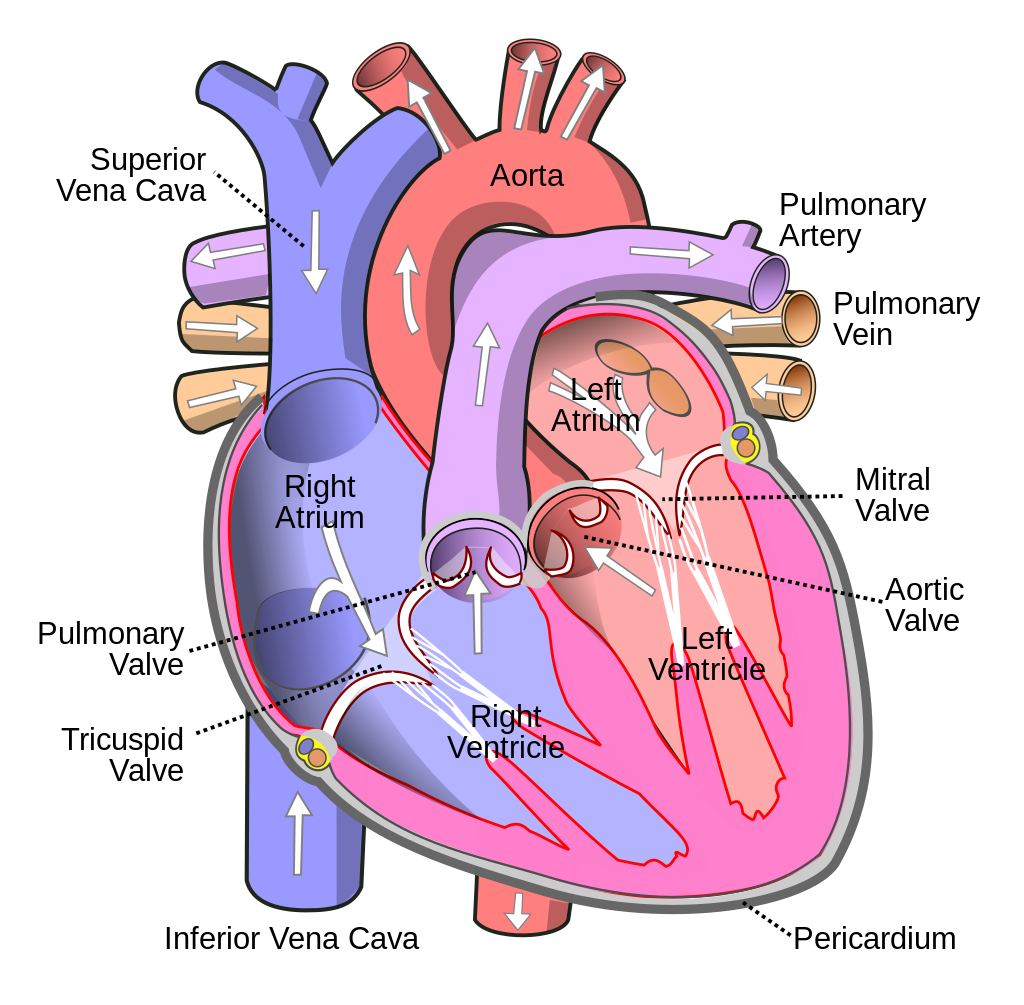 Image Source: Wikimedia Commons (2006). Heart, Licensed under a creative commons licence. Available for free at: https://simple.wikipedia.org/wiki/Heart (Accessed: 25 January 2024).
Complete Guide to Clinical Genetics ST3 Application and Recruitment (2027)
Written by Medibuddy. Last updated: October 2026. Clinical Genetics is

Complete Guide to Clinical Radiology ST3 Application and Recruitment (2027)
Recruitment paused: NHS England is not running Clinical Radiology ST3+ recru

Complete Guide to Paediatric Surgery ST3 Application and Recruitment in United Kingdom (2026)
Written by Medibuddy. Last updated: October 2026. If you’re planning


Take your subscriptions with you
Our mobile app allows you to access your interview and exam question banks wherever you are.

