


 Close
Close
 2nd July 2023
Lichen Planus
A chronic inflammatory skin condition that affects the skin and mucosal surfaces. It can cause many different clinical presentations, but all the conditions share similar features on histopathological testing. The different types include:
- Cutaneous lichen planus
- Mucosal lichen planus
- Lichen planus of nails
- Lichenoid drug eruption
Lichen planus is common and is thought to affect around 1 in 100 people worldwide, primarily in adults over the age of 40. The most common type is oral lichen planus, which is more common in women.
It is an autoimmune disorder mediated by T-cell attacking protein within the skin and mucosal keratinocytes. There are various contributing factors, including genetics, stress, skin injury, localised skin infection, systemic viral infection, contact allergy and various drugs.
Clinical features
Lesions on the skin and mucosal surfaces are often described as papules and polygonal plaques that appear shiny, flat-topped, and firm. They often have fine white lines that form a lace-like pattern across the lesions, called Wickham striae (see image). Symptoms can range from no symptoms to intense itching. Oral lichen planus tends to involve the cheeks and sides of the tongue. The most common drugs that can cause lichenoid reactions are gold, hydroxychloroquine, and captopril.

Oral Lichen planus on mucosal surfaces
Image Source: Wikimedia Commons (2019). Lichen planus, Licensed under a creative commons licence. Available for free at: https://commons.wikimedia.org/wiki/File:Lichen_planus.jpg (Accessed on: 14 March 2023).

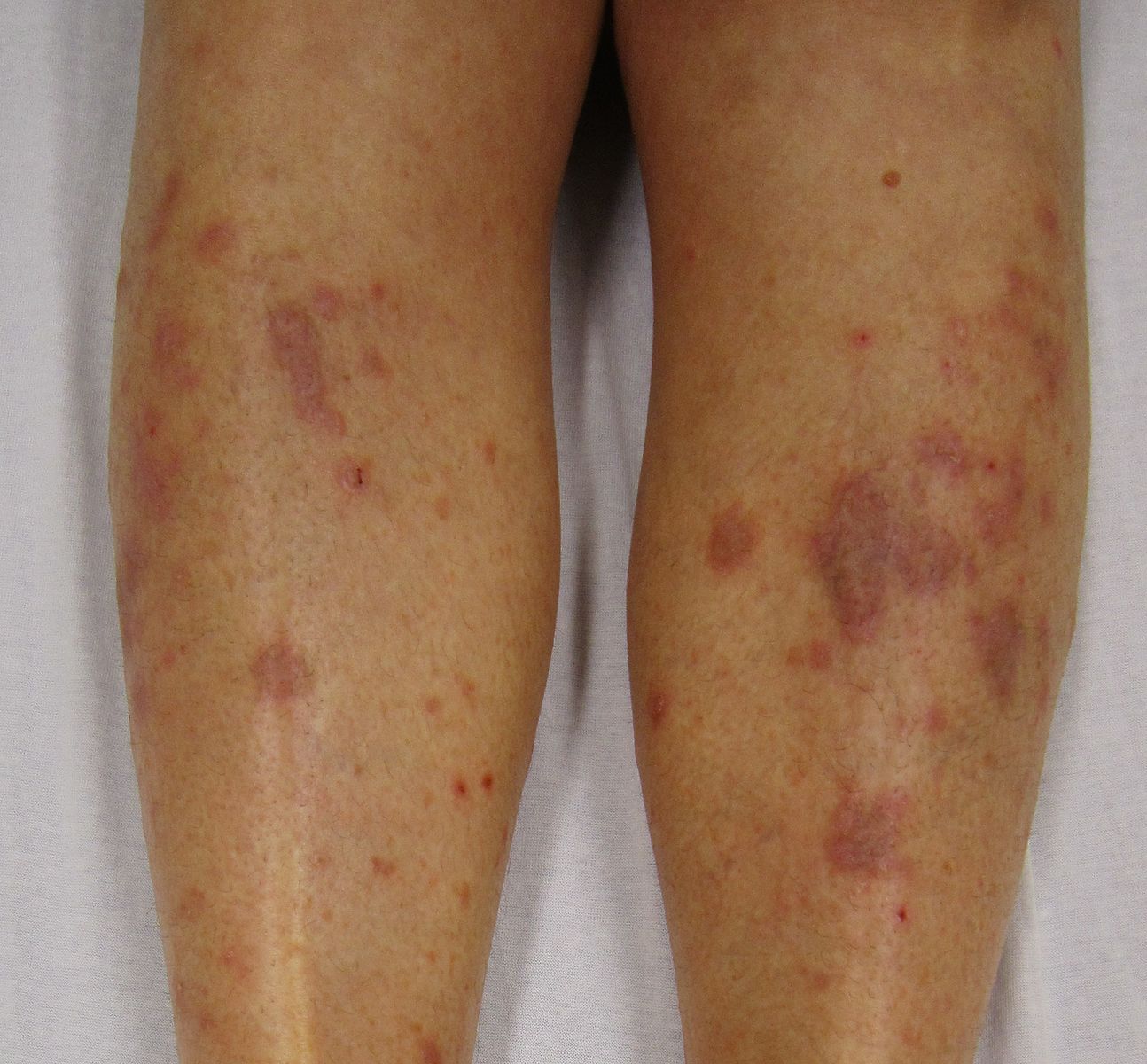
Lichen planus seen on legs – violaceous polygonal plaques
Image Source: Wikimedia Commons (2010). Lichen Planus (2), Licensed under a creative commons licence. Available for free at: https://commons.wikimedia.org/wiki/File:Lichen_Planus_(2).JPG (Accessed on: 14 March 2023).
.JPG)
Investigations and management
Primarily a clinical diagnosis which can be confirmed with a skin biopsy to look for epidermal lichenoid tissue reactions. Treatment is with potent topical agents such as steroids, topical calcineurin inhibitors (such as tacrolimus), topical retinoids and intralesional steroid injections.
A course of oral prednisolone or other immunosuppressive agents may be considered in more severe cases. Most lesions resolve within 2-3 years, but mucosal/oral lichen planus tends to be more persistent and more likely to recur.
Complete Guide to Clinical Genetics ST3 Application and Recruitment (2027)
Written by Medibuddy. Last updated: October 2026. Clinical Genetics is

Complete Guide to Clinical Radiology ST3 Application and Recruitment (2027)
Recruitment paused: NHS England is not running Clinical Radiology ST3+ recru

Complete Guide to Paediatric Surgery ST3 Application and Recruitment in United Kingdom (2026)
Written by Medibuddy. Last updated: October 2026. If you’re planning


Take your subscriptions with you
Our mobile app allows you to access your interview and exam question banks wherever you are.

