


 Close
Close
 26th January 2024
Management
The main treatment goal in OA is symptomatic control of joint pain and stiffness, which in turn can improve function. NICE recommends a holistic management strategy for OA, formulated in partnership with the patient and tailored to their individual needs, considering their preferences and comorbidities. The management of OA can be divided into non-pharmacological approaches, pharmacological therapies and surgery.
Non-pharmacological management
The first step in the management of OA is non-pharmacological approaches. All patients should be given access to appropriate information regarding their condition in a way that they can best understand. This can be offered through verbal advice, websites (e.g. Versus Arthritis, www.versusarthritis.org, Arthritis and Musculoskeletal Alliance ARMA, www.arma.uk.net) or NHS information leaflets. Weight loss should be recommended to those who are overweight, and advice should be given on local muscle-strengthening exercises and aerobic fitness training to protect the joints. Examples of helpful exercises are balance exercises, tai chi, yoga and water-based exercise. Additional advice on appropriate footwear, use of walking sticks, and alternative methods of pain management, for example, heat or cold packs and transcutaneous electrical nerve stimulation (TENS) can be suggested. No evidence has been reported in the literature for alternative therapies, such as the use of glucosamine or acupuncture. Patients can also be offered support for their condition and its associated psychological impact.
Pharmacological management
If non-pharmacological approaches do not achieve adequate symptom control, pharmacological management strategies are required, although these can often be used on an as-required basis in some patients.
Patients are initially advised to use simple analgesia such as paracetamol and topical non-steroidal anti-inflammatory drugs (NSAIDs), especially in hand or knee involvement, provided there are no contraindications to treatment. Potential adverse effects of paracetamol include hepatic toxicity, although this is rare at low doses. Patients using topical ibuprofen should be advised against the risk of severe burns in the presence of naked flames. If these drugs fail to produce sufficient symptomatic control, oral NSAIDs such as ibuprofen or COX 2 inhibitors such as etoricoxib and celecoxib can be used in conjunction with a proton pump inhibitor. Care should be taken, especially when prescribing these drugs in the elderly or those with renal, cardiac or gastrointestinal problems. NSAIDs and COX-2 inhibitors should be used at the lowest effective dose for the shortest period of time possible. Selective COX-2 inhibitors are associated with reduced risk of gastrointestinal side effects compared with NSAIDs, but carry a similar risk of renal toxicity. A careful selection of drugs and adequate patient education are required to maximise the risk-to-benefit ratio. If oral NSAIDs are being used, treatment with topical NSAIDs should be stopped. If the above treatment is ineffective, opioids such as codeine can be used if there are no contraindications. Topical capsaicin can be considered, especially for hand or knee involvement. In patients with acute exacerbations of OA in the knee or hip with moderate to severe pain, intra-articular corticosteroid injections can be considered as adjuncts to treatment.
Referral to other specialties
As part of the management strategy for OA, patients should be reviewed regularly to reinforce education and self-help advice and assess response to treatment. For patients who do not experience symptom resolution despite optimal self-management strategies and pharmacological therapies, referrals can be made to other members of the multidisciplinary team, including physiotherapists, occupational therapists, podiatrists, orthopaedic surgeons or pain clinics, depending on clinical scenario.
Surgery
Prior to referral for surgery, patients must have been offered non-pharmacological and pharmacological therapies. Surgical therapy should be considered for those patients who experience symptoms with a substantial impact on their function and quality of life and who are refractory to non-surgical management. Patient factors such as age, sex, smoking status, and BMI should not be considered as barriers to referral for surgery. Surgical treatment usually involves joint replacement or fusion; for patients with knee osteoarthritis with a history of mechanical locking, arthroscopic lavage and debridement may be considered. Complications associated with surgery include infection, aseptic loosening, pain and dislocation.
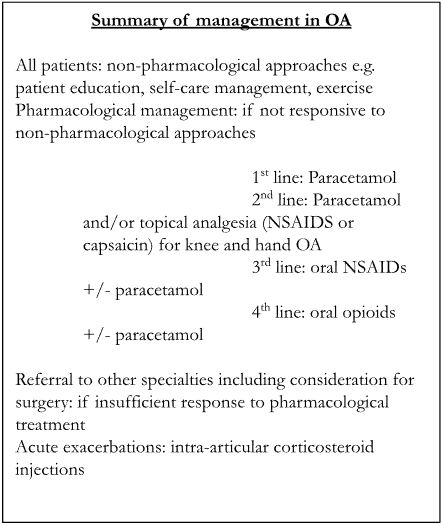
Adapted from: NICE guidelines: Osteoarthritis: care and management. National Institute for Health and Care Excellence (NICE); 2014
References
- Conaghan PG, Dickson J, Grant RL. Care and management of osteoarthritis in adults: summary of NICE guidance. Bmj. 2008 Feb 28;336(7642):502-3.
- Graham DJ, Campen D, Hui R, Spence M, Cheetham C, Levy G, Shoor S, Ray WA. Risk of acute myocardial infarction and sudden cardiac death in patients treated with cyclo-oxygenase 2 selective and non-selective non-steroidal anti-inflammatory drugs: nested case-control study. The Lancet. 2005 Feb 5;365(9458):475-81.
- National Institute for Health and Care Excellence (Great Britain). Osteoporosis: assessing the risk of fragility fracture. National Institute for Health and Care Excellence (NICE); 2017
Complete Guide to Clinical Genetics ST3 Application and Recruitment (2027)
Written by Medibuddy. Last updated: October 2026. Clinical Genetics is

Complete Guide to Clinical Radiology ST3 Application and Recruitment (2027)
Recruitment paused: NHS England is not running Clinical Radiology ST3+ recru

Complete Guide to Paediatric Surgery ST3 Application and Recruitment in United Kingdom (2026)
Written by Medibuddy. Last updated: October 2026. If you’re planning


Take your subscriptions with you
Our mobile app allows you to access your interview and exam question banks wherever you are.

