


 Close
Close
 7th February 2024
Lung volumes and capacities
As clinicians, we need to be aware of several lung volumes and capacities.
Lung volumes and their definitions:
- Tidal volume (TV): volume of air that is inspired or expired during normal resting breathing.
- Inspiratory reserve volume (IRV): additional volume of air that can be maximally inspired on top of normal tidal volume inspiration.
- Expiratory reserve volume (ERV): additional air volume that can be forcefully expired after normal tidal volume expiration.
- Residual volume (RV): volume of air remaining in the lung after maximal expiration.
Lung capacities are a combination of two or more lung volumes. Lung capacities and their definitions:
- Vital capacity (VC): air volume that can be maximally expired after maximum inspiration.
- VC = IRV + TV + ERV
- Functional residual capacity (FRC): volume of air remaining in the lung at the end of resting expiration.
- FRC = ERV + RV
- Total lung capacity (TLC): volume of air in the lung after maximal inspiration
- TLC = IRV + TV + ERV + RV
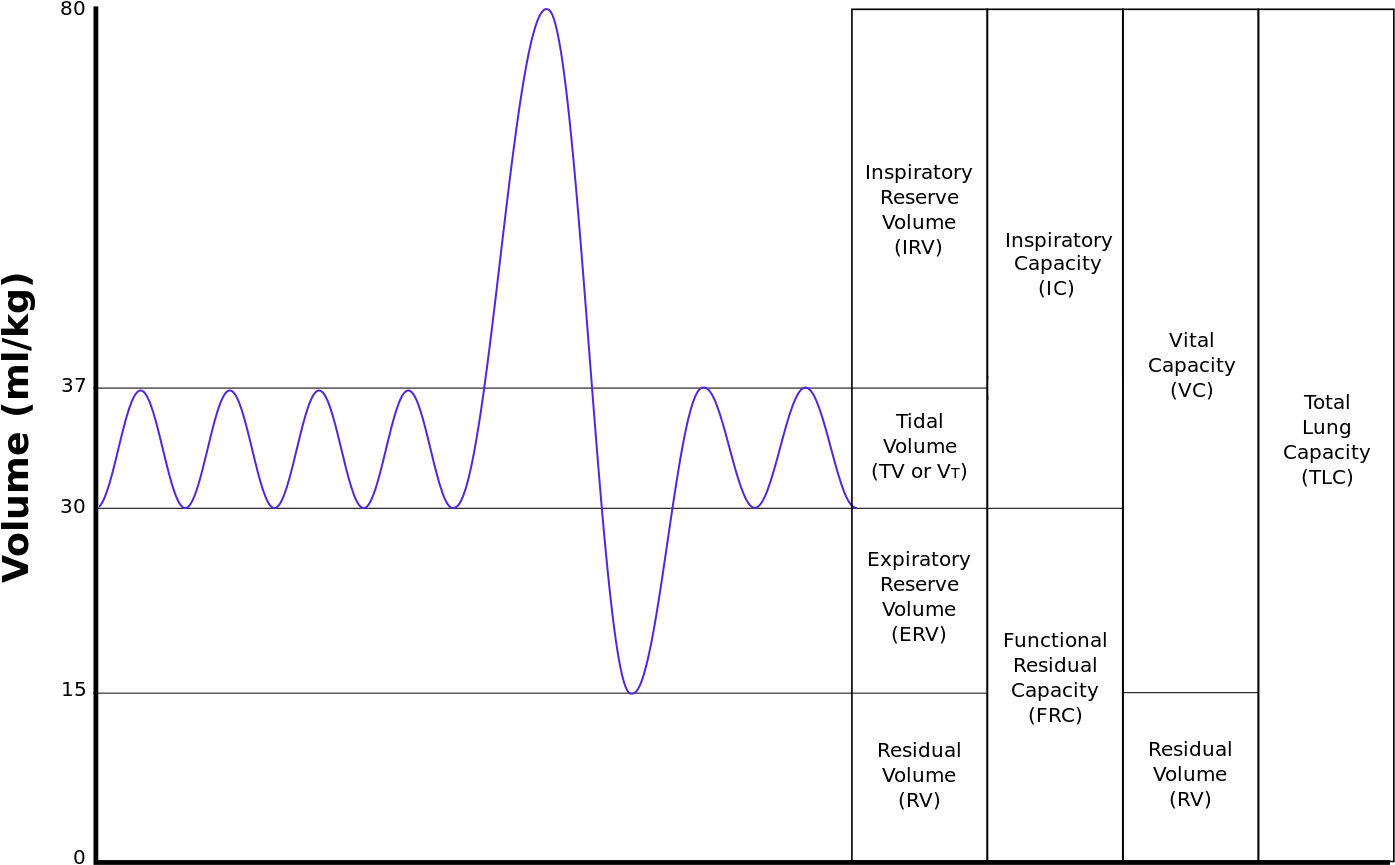
Image Source: Wikimedia Commons (2012). Lung Volumes Updated, Licensed under a creative commons licence. Available for free at: https://upload.wikimedia.org/wikipedia/commons/1/16/Lungvolumes_Updated.png (Accessed: 4 January 2024).
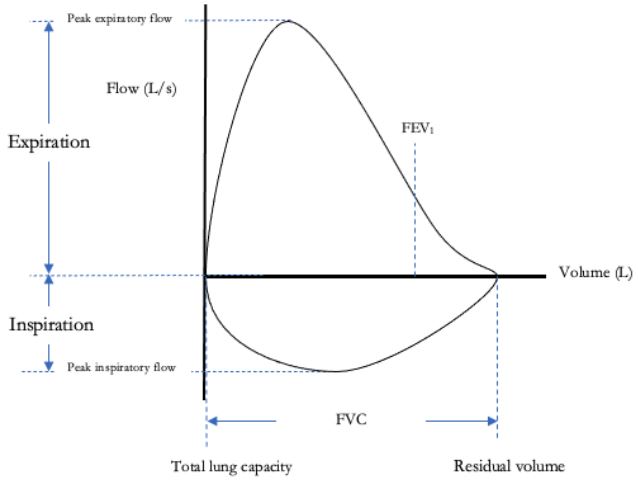
Other important measurements that can be obtained by the spirometry measurements include:
- Forced vital capacity: Volume of air that can be forcibly expired after maximal inhalation.
- FEV1: Air volume that can be forcibly expired during the first second of expiration after maximal inhalation.
This information can be summarised in a flow-volume loop. Changes in the contour of the loop can help support the diagnosis of restrictive or obstructive pulmonary conditions.
Complete Guide to Clinical Genetics ST3 Application and Recruitment (2027)
Written by Medibuddy. Last updated: October 2026. Clinical Genetics is

Complete Guide to Clinical Radiology ST3 Application and Recruitment (2027)
Recruitment paused: NHS England is not running Clinical Radiology ST3+ recru

Complete Guide to Paediatric Surgery ST3 Application and Recruitment in United Kingdom (2026)
Written by Medibuddy. Last updated: October 2026. If you’re planning


Take your subscriptions with you
Our mobile app allows you to access your interview and exam question banks wherever you are.

