


 Close
Close
 11th April 2024
Management
All patients with features suggestive of gynaecological cancer (see Table 4) should be referred for a two-week wait assessment. Referral for specialist advice should be considered if there is heavy menstrual bleeding, fertility issues, fibroids measuring ≥3cm or rapid growth in post-menopausal women.
| Cervical Cancer | Appearance of cervix consistent with cervical cancer |
| Endometrial Cancer | Post-menopausal bleeding in women ≥55 |
| Ovarian Cancer | Any abdominal or pelvic mass which is not obviously uterine fibroids |
| Ascites and/or a pelvic or abdominal mass identified by physical examination which is not obviously uterine fibroids | |
| Vaginal Cancer | Unexplained vulval bleeding |
| Unexplained vulval lump or ulceration | |
| Unexplained and palpable vaginal mass | |
Table 4. Criteria for two-week wait referrals for suspected gynaecological malignancy. Source: NICE.
Medical management options include the treatment of menorrhagia with tranexamic acid, NSAIDs, the combined oral contraceptive pill or oral progestogen. Tranexamic acid is an anti-fibrinolytic that inhibits plasminogen conversion and thus reducing bleeding. NSAIDs reduce uterine blood loss via the inhibition of prostaglandin synthesis. Both the copper coil (Cu-IUD) and Mirena (LNG-IUS) are suitable for use in women with fibroids without distortion of the uterine cavity and often result in a decrease in symptoms and fibroid size. Hormonal contraception reduces the size of fibroids via the negative feedback loop within the HPG axis, in which increased oestrogen and progesterone suppress the production of FSH and LH that, in turn, inhibits ovulation (see image below).
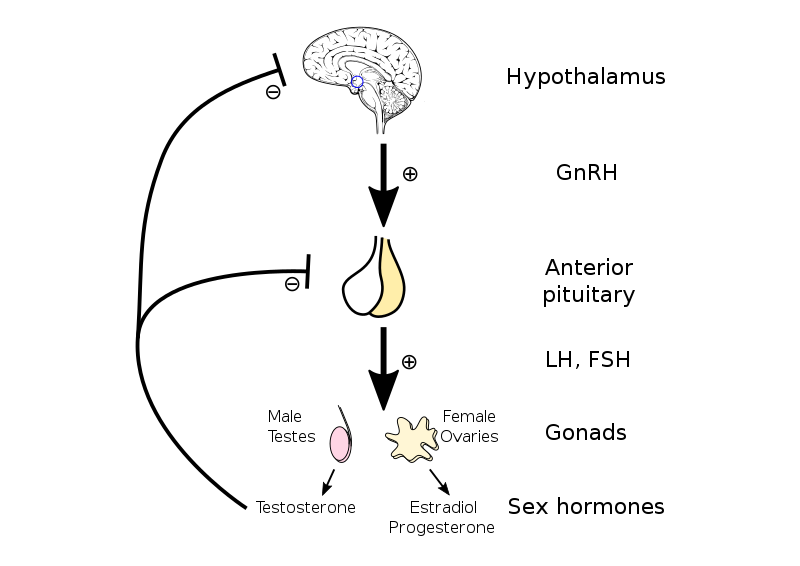
Image source: Wikimedia Commons (2019). Hypothalamic–pituitary–gonadal axis, Licensed under a Creative Commons licence. Available for free at: https://commons.wikimedia.org/wiki/File:Hypothalamic%E2%80%93pituitary%E2%80%93gonadal_axis.svg (Accessed: 07 February 2024).
Gonadotropin-releasing hormone (GnRH) agonists such as leuprorelin and goserelin may be used to shrink uterine fibroid size prior to surgical intervention. These function by initially increasing the production of gonadotrophins, which results in receptor desensitisation, leading to a hypogonadal state that simulates menopause.
Complete Guide to Clinical Genetics ST3 Application and Recruitment (2027)
Written by Medibuddy. Last updated: October 2026. Clinical Genetics is

Complete Guide to Clinical Radiology ST3 Application and Recruitment (2027)
Recruitment paused: NHS England is not running Clinical Radiology ST3+ recru

Complete Guide to Paediatric Surgery ST3 Application and Recruitment in United Kingdom (2026)
Written by Medibuddy. Last updated: October 2026. If you’re planning


Take your subscriptions with you
Our mobile app allows you to access your interview and exam question banks wherever you are.

