


 Close
Close
 29th January 2024
Takayasu’s arteritis (aortic arch syndrome)
Background
Epidemiology
This is a rare disease with a 9:1 female predominance. It typically occurs in people aged between 15-45 years and is more commonly seen in those of Asian heritage.
Aetiology
The cause is unknown, with evidence suggestive of infection of some kind (viral, bacterial, other) predisposing to the disease.
Pathophysiology
Granulomatous inflammation of the aorta and its major branches occur. This results in thickening and stenosis of the involved blood vessels. The chronic inflammation then causes subsequent vascular symptoms.
Clinical features
Patients initially present with systemic symptoms associated with an active inflammatory illness. Typical features include generalised malaise, fever, arthralgia, weight loss and night sweats. There can be tenderness overlying the affected arteries.
As the disease develops, patients begin to develop symptoms associated with narrowing of the affected arteries. Specific vascular symptoms and signs include: syncope, angina pectoris, bilateral carotid bruits, headache, impaired vision, movement-induced muscular pain in one or more limbs and Raynaud phenomenon. Hypertension is common, but blood pressure readings can be falsely low, associated with decreased bilateral brachial and radial pulses. Skin manifestations include erythema nodosum and urticaria.
Major complications associated with the disease include aortic aneurysms, aortic root dilatation, critical limb ischemia and stroke.
Diagnosis
Blood tests demonstrating raised inflammatory markers, primarily a high ESR is indicative of disease. Angiography is the gold standard for diagnosis, which detects vascular stenosis in the large arteries. Biopsy of the affected vessel will demonstrate granulomatous thickening of the aortic arch, plasma cells and lymphocytes in media and adventitia and vascular fibrosis. These findings are indistinguishable with giant cell arteritis.
The diagnosis of Takayasu’s arteritis requires three or more of the following criteria to be fulfilled:
- Age of onset: ≤ 40 years
- Claudication of upper or lower extremities while in use
- Audible bruit over the subclavian artery or abdominal aorta
- Decreased brachial artery pulse
- Blood pressure difference > 10 mm Hg between arms
- Abnormal arteriography of the aorta or large blood vessels in the extremities that is not due to arteriosclerosis or fibromuscular dysplasia
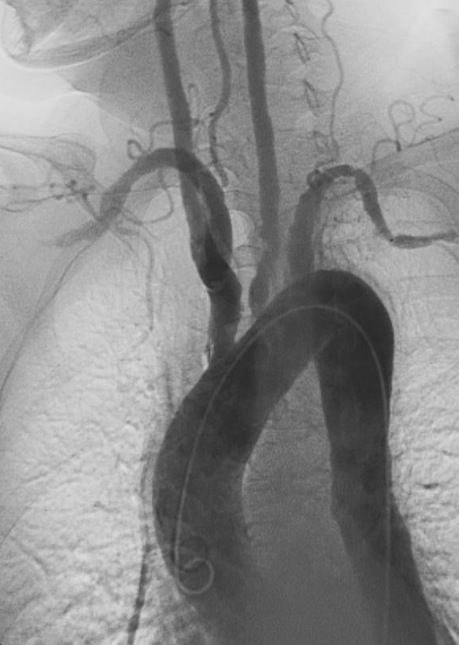
Image Source: Wikipedia (2021). Takayasu’s_arteritis, Licensed under a creative commons licence. Available for free at: https://en.wikipedia.org/wiki/Takayasu%27s_arteritis (Accessed: 16 February 2022).
Treatment
The mainstay of treatment is prednisolone, with a generally good response. This is tapered down to reduce the side effects of long-term steroid use. Steroid-sparing agents such as methotrexate, cyclophosphamide and azathioprine can also be used.
Surgical interventions such as aortic valve or large vessel repair may be required. Bypass surgery may be performed if critical stenosis of the aortic arch or its branches occurs.
References
- About vasculitis, Vasculitis UK. Available at: https://www.vasculitis.org.uk/about-vasculitis [Accessed 28th January 2022].
- Takayasu’s Arteritis, Johns Hopkins Vasculitis Center. Available at: https://www.hopkinsvasculitis.org/?s=+Takayasu%E2%80%99s+arteritis+ [Accessed 16th January].
- Vasculitides, Amboss. Available at: https://www.amboss.com/us/knowledge/Vasculitides/ [Accessed 17th January 2022].
Complete Guide to Clinical Genetics ST3 Application and Recruitment (2027)
Written by Medibuddy. Last updated: October 2026. Clinical Genetics is

Complete Guide to Clinical Radiology ST3 Application and Recruitment (2027)
Recruitment paused: NHS England is not running Clinical Radiology ST3+ recru

Complete Guide to Paediatric Surgery ST3 Application and Recruitment in United Kingdom (2026)
Written by Medibuddy. Last updated: October 2026. If you’re planning


Take your subscriptions with you
Our mobile app allows you to access your interview and exam question banks wherever you are.

