


 Close
Close
 5th June 2025
Clinical features & Pathophysiology
The specific signs and symptoms and their severity depends on the EDS subtype and also on the individual – some individuals are asymptomatic or only develop minor symptoms, whereas others can experience significant complications. The features generally seen in all subtypes are related to the connective tissue abnormality – ligament laxity leads to hypermobility, resulting fragility of tissues leads to easy bruising and impaired healing can be seen with atrophic scars.
Other clinical features include:
- Translucent skin with underlying vessels and/or tendons easily visible
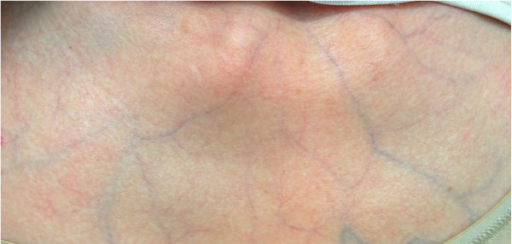 Image Source: Wikimedia Commons (2013). Stomach blood supply, Licensed under a creative commons licence. Available for free at: https://commons.wikimedia.org/wiki/File:PMC3567970_1752-1947-7-35-1_(cropped).png (Accessed 19 May 2025).
 - Soft skin with a velvet feel
- Hyperelastic skin
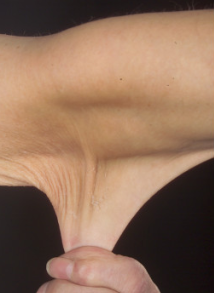 Image Source: Wikimedia Commons (2012). Hyperelastic Skin in a case of Ehlers-Danlos Syndrome, Licensed under a creative commons licence. Available for free at: https://commons.wikimedia.org/wiki/File:Hyperelastic_skin_in_a_case_of_Ehlers-Danlos_syndrome_(cropped).png (Accessed 19 May 2025).
 - Atrophic scars
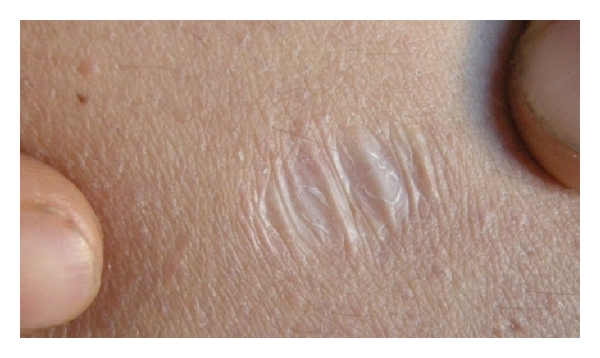 Image Source: Wikimedia Commons (2012). Atrophic Scar of Ehlers-Danlos Syndrome, Licensed under a creative commons licence. Available for free at: https://commons.wikimedia.org/wiki/File:Atrophic_scar_of_Ehlers_Danlos_syndrome.jpg (Accessed 19 May 2025).
 - Molluscoid pseudotumours, fleshy calcified lesions that form at pressure points
- Subcutaneous spheroids, former fat cells that lose their blood supply and become calcified, seen on forearms and shins
- Easy bruising
- Generalised hypermobility
- Recurrent joint dislocation
- Hypotonia
- Congenital or early-onset kyphoscoliosis
- Congenital talipes equinovarus (clubfoot), feet point downwards and inwards
- Arachnodactyly
- Thin cornea
- Autonomic dysfunction resulting in palpitations, postural hypotension, dizziness, chest pain, shortness of breath
- Motor delay in infancy – once walking initiated, motor delay resolves
- Chronic pain
- Fatigue
- History of delayed onset to local anaesthetic – seen in two thirds of patients
- Presence of hernias
- Non-specific GI signs
- Pneumothorax
- Heart murmur
Complete Guide to Clinical Genetics ST3 Application and Recruitment (2027)
Written by Medibuddy. Last updated: October 2026. Clinical Genetics is

Complete Guide to Clinical Radiology ST3 Application and Recruitment (2027)
Recruitment paused: NHS England is not running Clinical Radiology ST3+ recru

Complete Guide to Paediatric Surgery ST3 Application and Recruitment in United Kingdom (2026)
Written by Medibuddy. Last updated: October 2026. If you’re planning


Take your subscriptions with you
Our mobile app allows you to access your interview and exam question banks wherever you are.

