


 Close
Close
 30th July 2026
Photosensitivity
Background
Photosensitivity also known as photodermatoses relate to abnormal skin reactions secondary to sun exposure. Photodermatoses can be split into the following major categories: idiopathic, endogenous/exogenous, photoexacerbated dermatoses and photosensitive genodermatoses.
Idiopathic photodermatoses refer to photodermatoses where the underlying pathology is unknown. The most significant endogenous dermatoses is porphyria where there is an abnormality in one of the eight enzymes involved in haem biosynthesis. Exogenous photosensitivity refers to an abnormal sun reaction secondary to exposure to drugs or chemicals. Photoexacerbated dermatoses are skin disorders that are worsened by sun exposure such as dermatomyositis or systemic lupus erythematosus and genodermatoses, are genetic conditions that also trigger a photosensitive reaction.
This chapter will focus on exogenous photosensitivity. They can be split into phototoxic or photoallergic reactions. The majority of drug reactions are phototoxic.
Epidemiology
Exogenous photosensitivity can be relatively common drug reaction, with one study noting it to be responsible for 20% of all adverse drug reactions in adults.
Aetiology
Phototoxic photosensitivity occurs due to ultraviolet irradiation of the agent leading to tissue damage, whereas photo allergy a delayed hypersensitivity reaction to a previously sensitised agent, with a similar pathophysiology to allergic contact dermatitis.
Clinical manifestations
Photoallergic reactions are uncommon and occur >24 hours after exposure to the agent. The reaction is categorised as a dermatitis and in most often affects exposed skin, but does have the potential to spread to unexposed areas also. Pigmentary changes are uncommon.
Common agents responsible for photoallergic reaction:
- Sunscreen
- Non-steroidal anti-inflammatory drugs
- Fragrances
- Phenothiazines
- Quinine
- Sulphonamides
- Quinidine
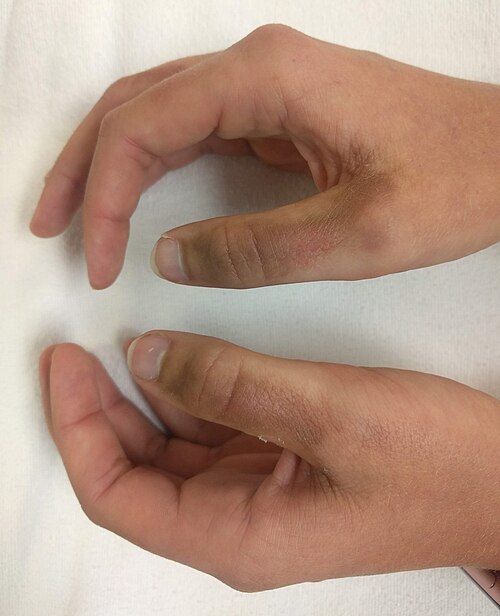
Photodermatitis secondary to lemons on both thumbs. Source: Wikipedia.
Image Source: Wikimedia Commons (2018). Photodermatitis, Licensed under a creative commons licence. Available for free at: https://commons.wikimedia.org/wiki/File:Photodermatitis.jpg (Accessed 19 May 2025).
Phototoxic reactions are more common but require a large amount of exposure for the reaction to occur. The onset is shorter, occurring between minutes to hours from exposure. It is characterised by a typical sunburn rash only on exposure areas of the body and can also lead to pigmentary changes. Severe cases may develop bullae.
Common agents responsible for phototoxic reactions:
- Metformin
- Non-steroidal anti-inflammatory drugs (NSAIDs)
- Sulfonamides
- Vemurafenib
- Voriconazole
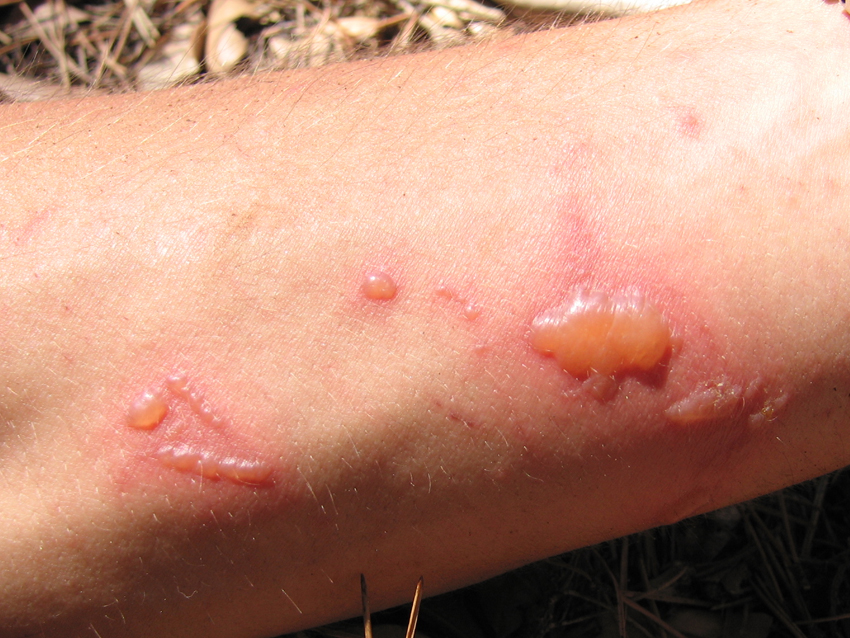
Phototoxic reaction secondary to commons rue on the forearm. Source: Wikipedia
Image Source: Wikimedia Commons (2006). Effet de la rue Officinale, Licensed under a creative commons licence. Available for free at: https://commons.wikimedia.org/wiki/File:Effet_de_la_rue_officenale.jpg (Accessed 19 May 2025).
- Amiodarone
- Retinoids
- Psoralens
Investigations
- ANA, anti-dsDNA, anti-Ro, anti-La: if suspecting SLE
- Porphyrin studies: suspecting porphyria
- Skin biopsy
- Phototesting: test the minimal dose of UV radiation which causes as erythematous reaction
- Photopatch testing: suspecting a topical photo allergen
Medical management
- Stop offending agent
- Sun protection:
- Window films for windows
- Sun screen with UVA and UVB protection
- Sun avoidance at midday
- Protective clothing
- Phototoxic reaction: (treat as sunburn)
- Cool compress
- Emollients
- Analgesia
- Photoallergic reaction (treat as contact allergy)
- Topical/oral steroids
- Anti-histamine
Complete Guide to Clinical Genetics ST3 Application and Recruitment (2027)
Written by Medibuddy. Last updated: October 2026. Clinical Genetics is

Complete Guide to Clinical Radiology ST3 Application and Recruitment (2027)
Recruitment paused: NHS England is not running Clinical Radiology ST3+ recru

Complete Guide to Paediatric Surgery ST3 Application and Recruitment in United Kingdom (2026)
Written by Medibuddy. Last updated: October 2026. If you’re planning


Take your subscriptions with you
Our mobile app allows you to access your interview and exam question banks wherever you are.

