


 Close
Close
 9th June 2025
Ataxia telangiectasia
Ataxia telangiectasia is an autosomal recessive condition whereby patients have defective DNA repair genes. Patients often have low levels of immunoglobulins e.g., IgA and IgG.
Clinical features
The characteristic features of ataxia telangiectasia are:
Ataxia, which is cerebellar in nature and first apparent in the toddler age group. Children demonstrate difficulties standing still and walking, with patients often requiring use of a wheelchair after the age of ten.
Telangiectasia within the conjunctivae of the sclera or over the sun-exposed areas of the skin typically appear by the age of five. Other clinical features are seen below.
- Learning difficulties
- Chronic lung disease
- Lymphomas and leukaemias (~25%)
- Poor growth
- Infertility due to gonadal atrophy
- Dysphagia – Due to lack of coordination between mouth and pharynx
Investigations
- Low immunoglobulin levels e.g. IgA and IgG
- Elevated Alpha- fetoprotein levels (~95% of patients)
- Cerebellar atrophy on MRI
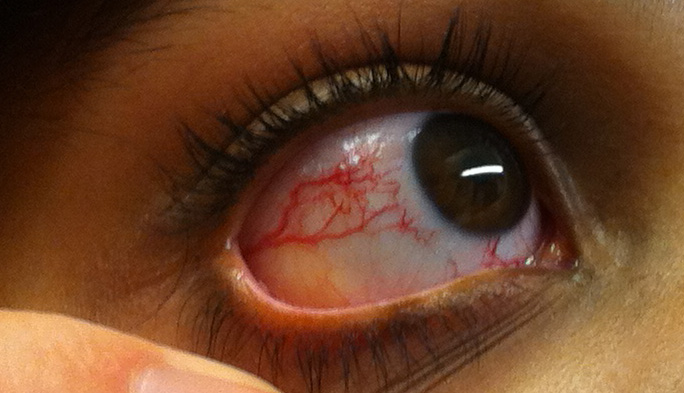
Image Source: Wikimedia Commons (1968). Ataxia Telangiectasia, Licensed under a creative commons licence. Available for free at: https://commons.wikimedia.org/wiki/File:Photo_Ocular_telangiectasia_in_a_person_with_A-T.jpg (Accessed 16 June 2025).
Complete Guide to Clinical Genetics ST3 Application and Recruitment (2027)
Written by Medibuddy. Last updated: October 2026. Clinical Genetics is

Complete Guide to Clinical Radiology ST3 Application and Recruitment (2027)
Recruitment paused: NHS England is not running Clinical Radiology ST3+ recru

Complete Guide to Paediatric Surgery ST3 Application and Recruitment in United Kingdom (2026)
Written by Medibuddy. Last updated: October 2026. If you’re planning


Take your subscriptions with you
Our mobile app allows you to access your interview and exam question banks wherever you are.

