


 Close
Close
 5th June 2025
Endocrine causes of hyperpigmentation
Addison’s Disease
Addison’s disease (primary adrenal insufficiency) is the failure of the adrenal glands to synthesise enough hormones such as glucocorticoid (cortisol) and/or mineralocorticoid (aldosterone). Secondary insufficiency is where there is insufficient pituitary or hypothalamic stimulation of the adrenal glands. Addison disease affects more women than men and the commonest age of onset is 30-50 years old.
The most characteristic feature in Addison’s disease is the hyperpigmentation. There is generalised mucosal and cutaneous hyperpigmentation, which is more prominent in areas of increased friction like elbow, knuckles, knees, palms, and scars. The hyperpigmentation is as a result of high levels of adrenocorticotrophic hormone (ACTH), which stimulates dermal melanocortin receptors. It is only present in Addison’s disease and not in secondary adrenal insufficiency.
Other clinical features:
- Progressive fatigue
- Generalised weakness
- Weight loss
- (Postural) hypotension due to salt loss and dehydration
- Hyponatraemia
- Hyperkalaemia
- Gastrointestinal symptoms- nausea, vomiting, abdominal pain
- Changes in blood count (anaemia, eosinophilia and lymphocytosis)
- Hypoglycaemia
- Salt craving
- Loss of axillary and pubic hair in premenopausal women
- Life threatening adrenal crisis- hypotension, circulatory failure
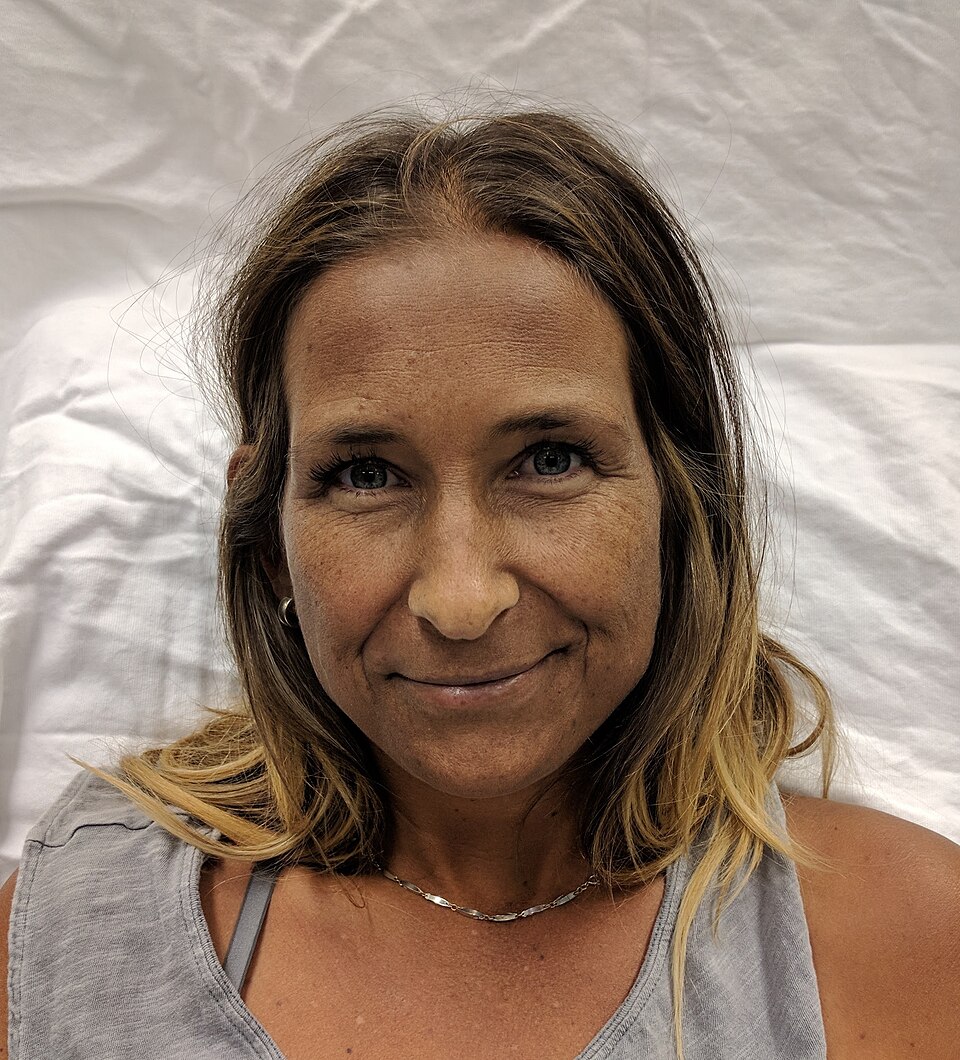
Image Source: Wikimedia Commons (20187). Women With Addison, Licensed under a creative commons licence. Available for free at: https://commons.wikimedia.org/wiki/File:WomenWithAddison.jpg (Accessed 20 May 2025).
Investigations for Addison’s disease include measuring serum cortisol and ACTH, an ACTH stimulation chest, and imaging of the adrenal glands.
First line treatment includes mineralocorticoid and glucocorticoid replacement therapy to mimic endogenous hormonal secretions, which are given for life.
Cushing Syndrome
Cushing syndrome is caused by prolonged multiorgan exposure to elevated levels of endogenous or exogenous glucocorticoids.
The most common cause of Cushing syndrome is exogenous corticosteroid exposure.
Cushing syndrome can cause skin pigmentation, but this is only seen in ACTH- dependent causes. More common cutaneous manifestations include skin thinning, violaceous striae and easy bruising.
Other clinical features:
- Weight gain with central obesity
- Facial rounding and plethora
- Unexplained fractures (premature osteoporosis)
- Hirsutism
- Menstrual irregularities
- Proximal muscle weakness
- Supraclavicular and dorsocervical fat pad
- Deep vein thrombosis and pulmonary embolism (due to hypercoagulable state)
- Metabolic complications- diabetes mellitus, dyslipidaemia, metabolic bone disease, hypertension
To confirm Cushing syndrome, check for elevated cortisol levels in urine, blood, or saliva. The dexamethasone suppression test can also be done. Then investigations for determining the cause of Cushing syndrome should be done.
The hyperpigmentation and skin changes that are associated with Cushing syndrome can be treated by targeting the underlying cause. This may include surgical or medical management.
Nelson’s syndrome
Nelson’s syndrome is a rare but potentially life-threatening condition. It is when an ACTH secreting tumour develops after total bilateral adrenalectomy for Cushing’s disease. The pathophysiology is poorly understood but risk factors include rapid rise in ACTH following trans-sphenoidal surgery, longer duration of Cushing’s disease, younger age, and lack of cortisol suppression on high dose dexamethasone test before a trans-sphenoidal surgery.
The most common and early symptom of Nelson’s syndrome is noticeable hyperpigmentation due the action of ACTH on the melanocytes. Pigmentation can occur in scars, areolae, and creases of hands. A dark line from the pubis to umbilicus may also be visible which is called linea nigra. Some patients that develop hyperpigmentation after bilateral adrenalectomy may not fully develop Nelson syndrome.
Other clinical features:
- Visual field defects
- Headaches
- Testicular pain
- Delayed puberty
- Diplopia and cranial nerve lesions
- Papilloedema
- Hypopituitarism: diabetes insipidus, hypothyroid, galactorrhoea, amenorrhoea, erectile dysfunction
To confirm Nelson’s syndrome, increasing levels of ACTH with an enlarging pituitary mass after total bilateral adrenalectomy is needed. The mass can be identified by pituitary imaging. Other hormones such as thyroxine, thyroid-stimulating hormone and sex hormones may be low, but prolactin may be high.
Nelson’s syndrome is managed by trans-sphenoidal resection of the pituitary tumour. Adjunctive irradiation will improve prognosis and reduce recurrence of the tumour. In the long-term hormone replacement may be needed.
Pregnancy
During pregnancy there may be changes to the skin due to alteration in sex hormones, immune system, and cardiovascular system. The cutaneous features in pregnancy are common and considered physiological.
Hyperpigmentation is a common feature in pregnancy due to the synergistic increases in oestrogen and progesterone which stimulates melanogenesis. Linea nigra, darkening of pigmented areas (i.e., nipples, areolae, genitals) and generalised pigmentation usually presents in the first trimester and is more common in Fitzpatrick skin types IV-VI. Melasma is more typical in the second half of pregnancy and in darker skinned individuals. In Melasma the lesions are irregular, symmetrical, and sharply marginated on the face.
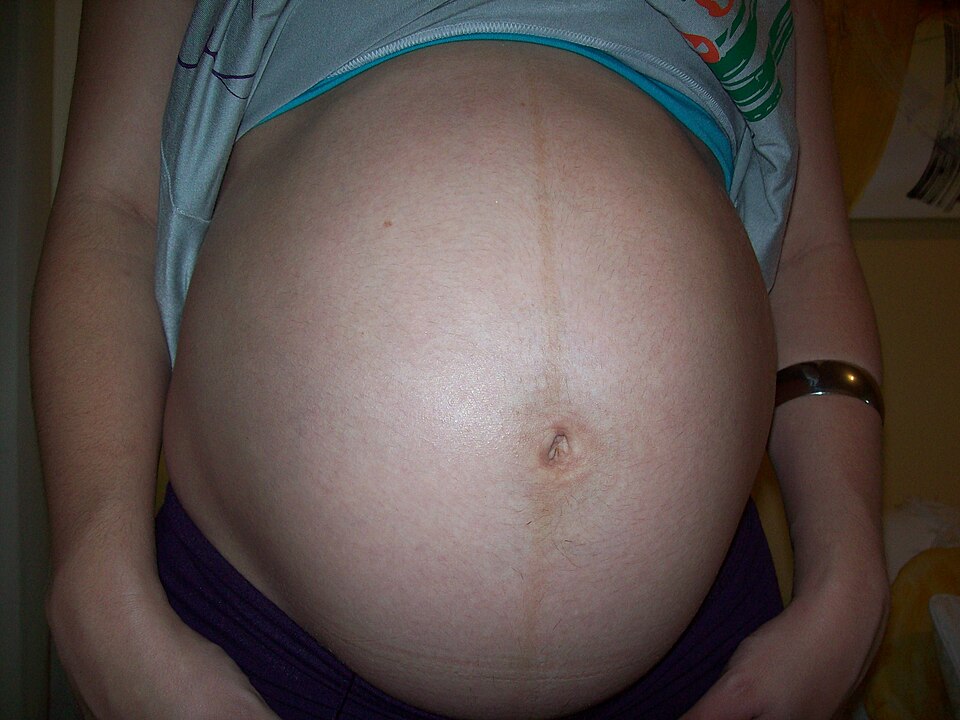
Image Source: Wikimedia Commons (2007). Giovana, Licensed under a creative commons licence. Available for free at: https://commons.wikimedia.org/wiki/File:Giovana.jpg (Accessed 20 May 2025).
Pre-existing melanocytic naevi may darken in pregnancy due to increased circulating melanocyte stimulating hormone. With changing pigmented lesions, melanoma should be investigated for early referral, skin biopsy and with the use of dermoscopy.
Hyperpigmentation may also be seen in the nails as benign, uniform, and symmetrical across multiple nails. However, they should be investigated for melanoma when there is irregular pigmentation with cuticle involvement.
Management is not usually required as the physiological skin changes during pregnancy improve postpartum. However, the hyperpigmentation may take many months and sometimes may not be completely clear. With melasma, sun protection is advised.
Complete Guide to Clinical Genetics ST3 Application and Recruitment (2027)
Written by Medibuddy. Last updated: October 2026. Clinical Genetics is

Complete Guide to Clinical Radiology ST3 Application and Recruitment (2027)
Recruitment paused: NHS England is not running Clinical Radiology ST3+ recru

Complete Guide to Paediatric Surgery ST3 Application and Recruitment in United Kingdom (2026)
Written by Medibuddy. Last updated: October 2026. If you’re planning


Take your subscriptions with you
Our mobile app allows you to access your interview and exam question banks wherever you are.

