


 Close
Close
 5th June 2025
Genetic causes of hyperpigmentation
Peutz-Jeghers Syndrome
Peutz-Jeghers syndrome is a rare, autosomal dominant disorder characterised by multiple intestinal hamartomatous polyps caused by a germline mutation in the STK11 gene.
Symptoms and signs:
- Characteristic pigmented macules of lips and gum. Can also be seen on hands, feet, anus, and genitals. With macules on the lips they cross the vermillion border and compared to freckles they are darker and densely clustered. Pigmentation presents in infancy and fades with time however buccal pigmentation may persist.
- Polyp growth leading to bleeding, abdominal pain, intussusception, obstruction, iron deficiency anaemia and fatigue
- Abdominal pain in young patient from obstruction or intussusception
- Unexplained intestinal bleeding or iron deficiency anaemia in a young patient
- Rectal prolapse, precocious puberty or nasal/bronchial/biliary tract/ uterine/ bladder polyps
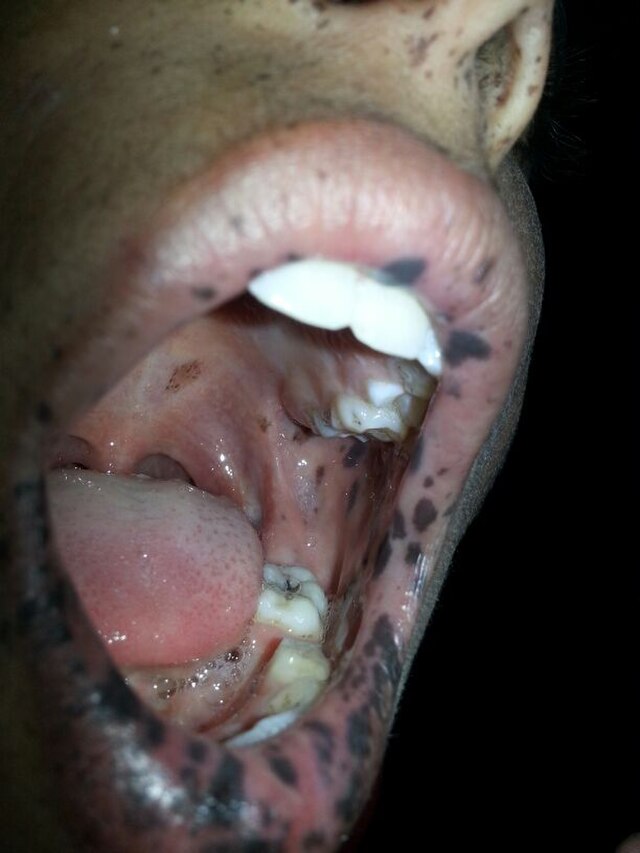
Image Source: Wikimedia Commons (2013). Peutz-Jeghers Syndrom, Licensed under a creative commons licence. Available for free at: https://commons.wikimedia.org/w/index.php?search=Peutz-Jeghers-Syndrom.JPG&title=Special:MediaSearch&type=image (Accessed 20 May 2025).
There is a high cancer risk (up to 93%) including gastro-oesophageal, colorectal breast, small bowel, and pancreas cancers.
It is diagnosed if a person satisfies one from the clinical criteria:
- Two or more histologically confirmed Peutz-Jeghers-type hamartomatous polyps
- Any number of Peutz-Jeghers-type polyps with a family history of Peutz-Jeghers syndrome in a first degree relative
- Characteristic mucocutaneous pigmentation with a family history of Peutz- Jeghers syndrome
- Any number of Peutz-Jeghers-type polyps and characteristic mucocutaneous pigmentation
If the above is met, then the individual should also undergo genetic evaluation for mutations in STK11 gene. Endoscopic evaluation can also be done as surveillance in these patients. It can show diffuse hamartomatous polyposis.
Management includes surgical excision of the lesion and gene counselling for affected family members.
Xeroderma Pigmentosum
This is a rare, autosomal recessive genetic disorder characterised by a DNA repair defect which consequently prevents the response to DNA damaged by UV radiation.
It presents as photophobia, blistering or persistent erythema after sun exposure, or the development of facial freckle-like pigmentations (lentigos) within the first few years of life. This is due to the severe sensitivity to sunlight and ultraviolet radiation. Patients are also at increased risk of developing hearing loss, neurologic impairment, and cutaneous cancers.
It is diagnosed clinically from presentation and family history. It can also be confirmed by genetic testing by identifying the pathogenic gene mutation.
The mainstay of management is reducing exposure to ultraviolet radiation. Premalignant and malignant skin lesions should also be treated depending on the type. These patients should have regular follow up assessment for skin, eyes, and neurologic development. Genetic counselling may also be beneficial to patients.

Image Source: Wikimedia Commons (2008). Xeroderma Pigmentosum, Licensed under a creative commons licence. Available for free at: https://commons.wikimedia.org/w/index.php?search=Xeroderma_pigmentosum_02.jpg&title=Special:MediaSearch&type=image (Accessed 20 May 2025).
McCune-Albright Syndrome
McCune-Albright syndrome is a rare condition caused by a spontaneous mutation in the GNAS1 gene occurring in the development of an embryo. It only affects a subset of the patient’s cells.
These are the following clinical characteristics for McCune-Albright syndrome:
- Cutaneous features such as café au lait macules seen in birth or infancy. The macules are large and have irregular margins.
- Polyostotic fibrous dysplasia of bone affecting craniofacial, axial and/or appendicular skeleton
- Precocious puberty
- Hyperparathyroidism and hyperthyroidism
The diagnosis is based on the above clinical manifestations and genetic sequencing can be used to confirm diagnosis in ambiguous cases.
There are no specific treatments for the dermatological lesions associated with McCune-Albright syndrome, and treatment focuses on the management of skeletal lesions and precocious puberty.
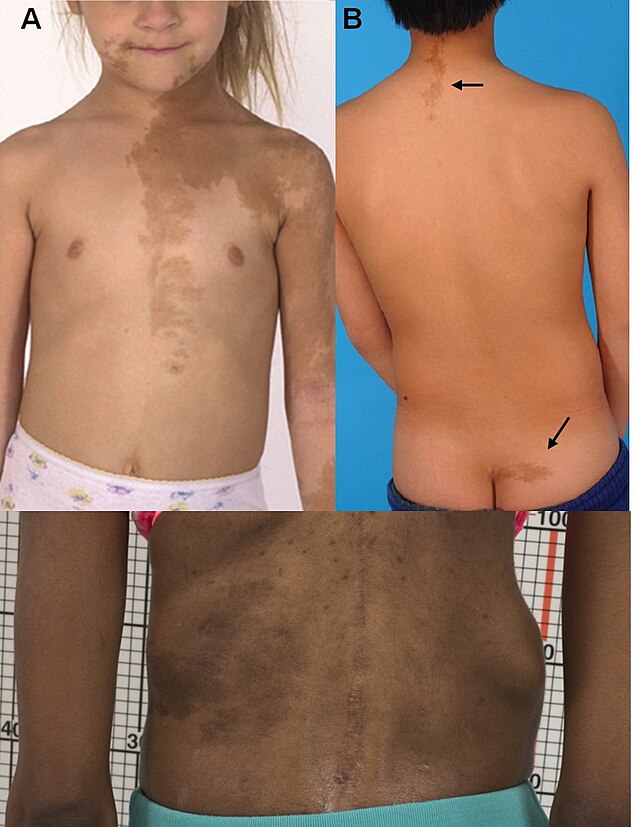
Image Source: Wikimedia Commons (2008). Mccune-Albright Syndrome, Licensed under a creative commons licence. Available for free at: https://commons.wikimedia.org/w/index.php?search=Mccune-albrightsyndrome1.jpg&title=Special:MediaSearch&type=image (Accessed 20 May 2025).
Complete Guide to Clinical Genetics ST3 Application and Recruitment (2027)
Written by Medibuddy. Last updated: October 2026. Clinical Genetics is

Complete Guide to Clinical Radiology ST3 Application and Recruitment (2027)
Recruitment paused: NHS England is not running Clinical Radiology ST3+ recru

Complete Guide to Paediatric Surgery ST3 Application and Recruitment in United Kingdom (2026)
Written by Medibuddy. Last updated: October 2026. If you’re planning


Take your subscriptions with you
Our mobile app allows you to access your interview and exam question banks wherever you are.

