


 Close
Close
 5th August 2024
Idiopathic intracranial hypertension (IIH)
IIH is a disorder of raised intracranial pressure in patients with a normal ventricular system. The cause remains unknown, however we do know that it predominantly occurs in overweight females of childbearing age.
- Symptoms include a throbbing headache, transient loss of vision, blurring of vision, pulse -synchronous tinnitus, photophobia and nausea.
- Cranial nerve exam may show signs of raised intracranial pressure including papilloedema, visual field deficits and cranial nerve VI paresis.
- The Modified Frisen Scale is used to grade papilledema. Those with grade 3 to 5 papilloedema are at high risk of visual loss. The major criteria for each grade are shown below:
| Grade | Key feature |
|---|---|
| Grade 0 | Normal optic disc |
| Grade 1 | C-shaped halo with a temporal gap obscuring the retinal details |
| Grade 2 | A circumferential halo |
| Grade 3 | Obscuration of 1 or more segments of major blood vessels leaving the disc |
| Grade 4 | Total obscuration of a segment of a major blood vessel on the disc |
| Grade 5 | Obscuration of all vessels both on the disc and leaving the disc |
- The modified Dandy criteria states that CSF pressure must be >25 cmH2O on lumbar puncture for a diagnosis of IIH to be made.
- MRI brain may show an empty sella or flattening of the posterior globe.
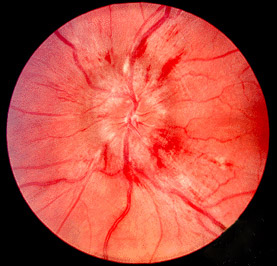
Image Source: Wikimedia Commons (2011). Papilledema, Licensed under a creative commons licence. Available for free at: https://commons.wikimedia.org/wiki/File:Papilledema.jpg (Accessed: 16 January 2024)
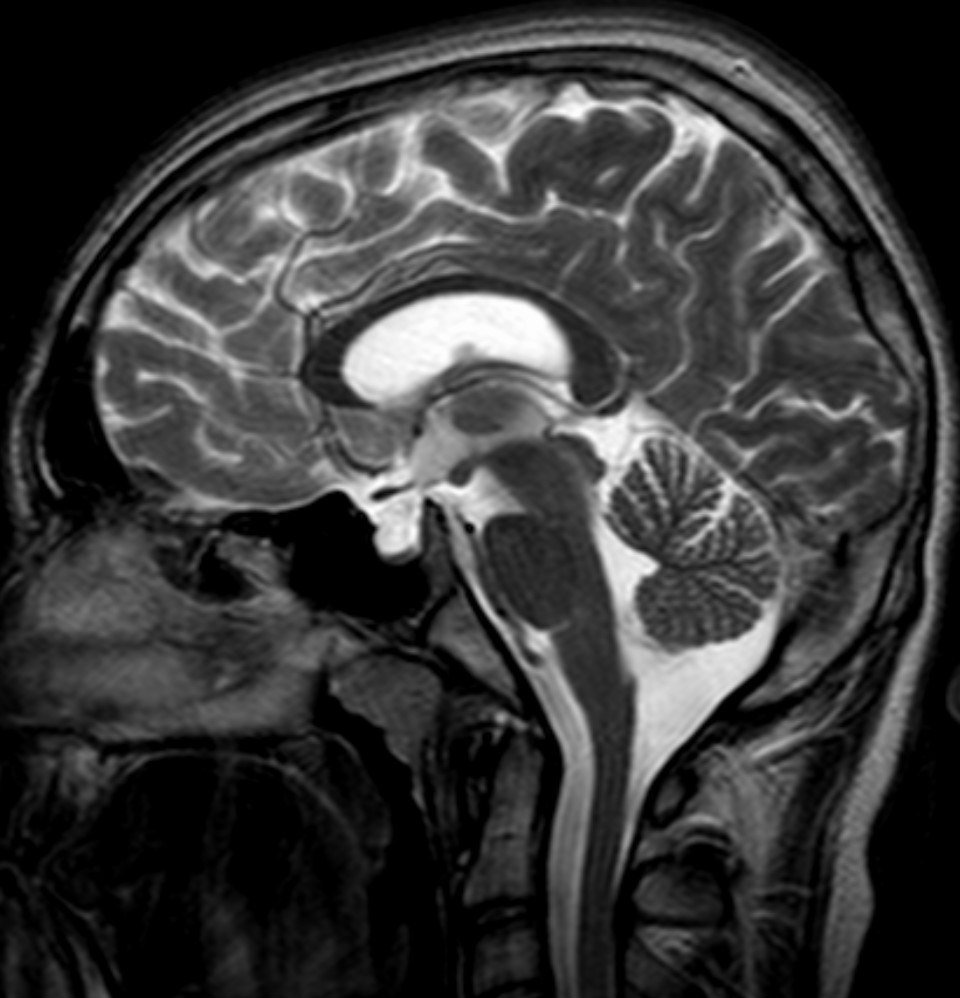
Image Source: Wikimedia Commons (2011). Empty SellaMRT T2 sag 002, Licensed under a creative commons licence. Available for free at: https://commons.wikimedia.org/wiki/File:Empty_Sella_MRT_T2_sag_002.jpg (Accessed: 16 January 2024)
- Initial treatment is with weight reduction, a low salt diet, fluid restriction, analgesia and stopping any medications which are known to increase intracranial pressure (for example, tetracyclines, retinoids and vitamin A). In patients with moderate papilloedema, acetazolamide or furosemide may also be started.
- If symptoms do not respond to medical treatment then optic nerve sheath fenestration or CSF shunting may be performed. The prognosis varies and symptoms can be transient or chronic. Evidence shows that with treatment about half of patients have significant improvement in their vision.
Complete Guide to Clinical Genetics ST3 Application and Recruitment (2027)
Written by Medibuddy. Last updated: October 2026. Clinical Genetics is

Complete Guide to Clinical Radiology ST3 Application and Recruitment (2027)
Recruitment paused: NHS England is not running Clinical Radiology ST3+ recru

Complete Guide to Paediatric Surgery ST3 Application and Recruitment in United Kingdom (2026)
Written by Medibuddy. Last updated: October 2026. If you’re planning


Take your subscriptions with you
Our mobile app allows you to access your interview and exam question banks wherever you are.

